Hip Impingement Rehabilitation: What Patients Need to Know

Hip impingement rehabilitation aims to improve movement, strength, and symptom control rather than simply resting the joint. A personalized exercise program often targets the hip, core, pelvis, and movement patterns that overload the joint.
Key Takeaways
- Hip impingement rehabilitation aims to improve movement, strength, and symptom control rather than simply resting the joint.
- A personalized exercise program often targets the hip, core, pelvis, and movement patterns that overload the joint.
- Persistent groin pain, clicking, stiffness, or reduced range of motion should be assessed by a qualified clinician.
- Imaging may be used when symptoms do not improve or when structural hip problems are suspected.
- Some patients recover with physical therapy alone, while others may need injections or surgery followed by rehabilitation.
Hip impingement rehabilitation usually focuses on reducing pain, improving hip movement, and building strength so the joint can work more comfortably during daily life and sport. Most patients benefit from a structured plan that combines activity modification, targeted exercise, and medical review when symptoms persist or limit function.
Overview: What hip impingement rehabilitation involves
Hip impingement rehabilitation is a step-by-step recovery plan used to ease pain, improve hip motion, and help a person return to normal daily activities, work, or sport. It is most often used for femoroacetabular impingement, sometimes called FAI, a condition in which the ball and socket of the hip do not move together smoothly. Rehabilitation does not only focus on the hip joint itself; it also addresses muscle strength, posture, balance, walking mechanics, and movements such as squatting, climbing stairs, and turning.
Many people expect recovery to mean complete rest, but this is usually not the goal. In most cases, guided movement is more helpful than avoiding activity altogether. A rehabilitation plan typically reduces movements that provoke symptoms while gradually rebuilding strength and mobility in a safe way. This helps the hip tolerate load better and may reduce repeated pinching at the front of the joint.
The exact program depends on the person’s symptoms, anatomy, age, activity level, and whether there is associated damage such as labral irritation or cartilage wear. Some patients improve with conservative care alone, while others need specialist review for hip impingement that continues to interfere with function. Rehabilitation may be used before surgery, after surgery, or as the main treatment.
Common symptoms and how they affect daily life
Hip impingement often causes pain in the groin, front of the hip, or sometimes the outer hip or buttock. The discomfort may be sharp with certain movements or more of a deep ache after sitting, walking long distances, running, pivoting, or bending. Some people notice clicking, catching, or a feeling of stiffness, especially when bringing the knee toward the chest or rotating the leg inward.
Symptoms can build gradually. A person may first notice trouble with sports that involve twisting, kicking, or sprinting. Later, simple tasks such as getting out of a car, putting on shoes, sitting for long periods, or climbing stairs may become uncomfortable. This is one reason rehabilitation often includes practical retraining for daily movements rather than exercises alone.
Not every painful hip has impingement, and not every structural hip shape seen on imaging causes symptoms. Conditions such as muscle strain, bursitis, tendon problems, hip pain from other causes, lower back pain, or early arthritis can overlap. A careful assessment helps determine whether rehabilitation should focus mainly on impingement, surrounding soft tissues, or another problem.
Why rehabilitation matters: causes, mechanics, and risk factors

Hip impingement usually develops when there is repeated contact between parts of the hip joint during certain movements. In cam-type impingement, the ball of the hip is not perfectly round. In pincer-type impingement, the socket covers too much of the ball. Some people have a combination of both. These shape differences can increase stress on the labrum and cartilage, especially during deep flexion, rotation, or pivoting movements.
Rehabilitation matters because symptoms are often influenced by more than bone shape alone. Poor movement control, reduced hip mobility, muscle weakness, pelvic instability, and training errors can all increase loading across the front of the hip. Tightness in surrounding tissues or weakness in the gluteal and core muscles may change how the hip moves, making discomfort more likely during sport or repetitive daily tasks.
Risk factors include sports that involve frequent twisting, kicking, or deep hip bending, previous hip injury, intense training during adolescence, and jobs or hobbies requiring repeated squatting or lifting. Some patients also develop secondary irritation in nearby muscles or tendons. A rehabilitation plan aims to identify these contributors and modify them, which is why the same diagnosis can require very different recovery strategies from one person to another.
How doctors and therapists assess hip impingement
Diagnosis usually begins with a medical history and physical examination. The clinician asks where the pain is felt, what movements trigger it, how long symptoms have been present, and whether there is clicking, locking, or loss of function. During the examination, they assess range of motion, muscle strength, walking pattern, single-leg control, and specific positions that may reproduce symptoms.
Rehabilitation planning is more useful when the assessment looks beyond pain alone. A therapist may examine how the person squats, climbs steps, balances, sits, or changes direction. This can show whether the hip is being overloaded by weak gluteal muscles, limited hip extension, trunk instability, or compensations from the spine or knee. These findings help shape an individualized program.
X-rays are often used to look at hip structure, while MRI or MR arthrography may be considered if labral injury, cartilage damage, or another internal joint problem is suspected. Imaging is especially helpful when symptoms are persistent or when surgery is being considered. In some cases, a specialist may recommend MRI scanning or further orthopedic evaluation to confirm the source of pain and guide treatment choices.
What a hip impingement rehabilitation program may include
Rehabilitation usually starts with symptom control and load management. This may include reducing activities that repeatedly pinch the front of the hip, such as deep squats, low seating, sprint starts, or forceful twisting. The goal is not to avoid movement forever, but to calm irritation enough for the joint and surrounding muscles to respond to exercise. Some patients also benefit from temporary changes in training volume, footwear, work tasks, or sitting posture.
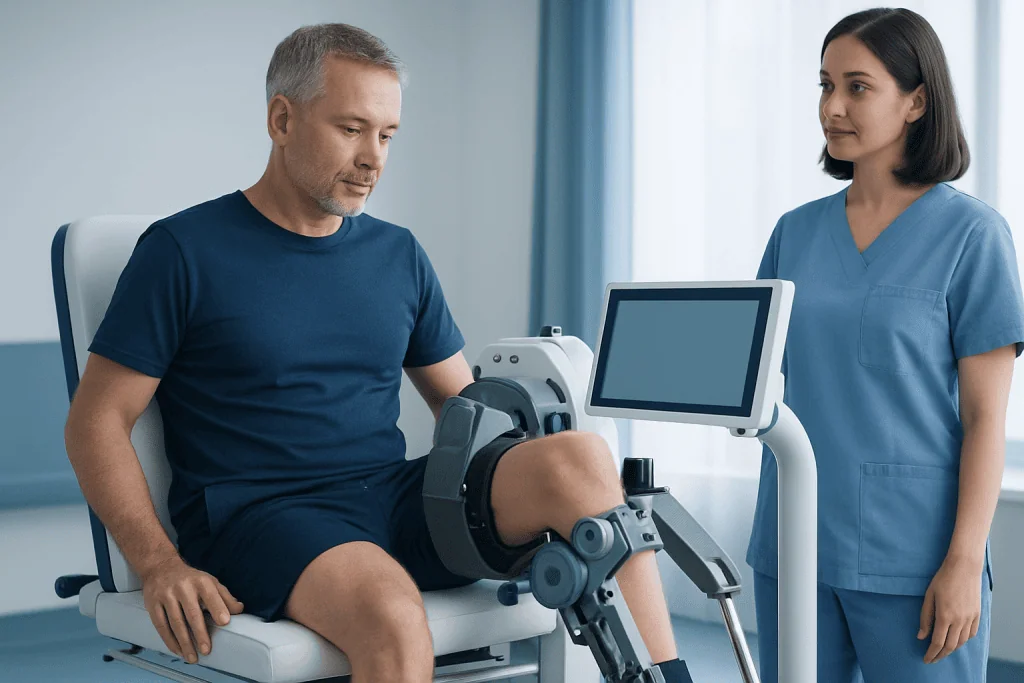
Exercise is the central part of most programs. Early treatment often focuses on gentle hip mobility within a comfortable range, activation of the gluteal and core muscles, and better control of the pelvis during basic tasks. As symptoms improve, the program commonly progresses to strengthening, balance, functional drills, and movement retraining for sport or daily life. Exercises should be challenging enough to build capacity without causing a prolonged pain flare.
Physical therapy may also include education, manual therapy, stretching of selected muscle groups, and advice on pacing. A useful program usually targets several areas together:
- Hip and gluteal muscle strength
- Core and pelvic stability
- Movement control during bending, stepping, and turning
- Gradual return to running, sport, or gym training
- Strategies to reduce symptom-provoking positions
When symptoms continue despite a well-designed rehabilitation plan, other options may be discussed. These can include pain-relieving medication under medical guidance, image-guided injections in selected cases, or surgical correction of structural impingement. Patients with significant functional limitation may be referred for specialist physical therapy and rehabilitation and, if appropriate, review by teams experienced in orthopedic surgery.
Recovery timeline, daily self-care, and preventing setbacks
Recovery from hip impingement varies. Some people begin to feel better within several weeks of consistent therapy, while others need a longer period of rehabilitation, especially if symptoms have been present for months or if they want to return to high-level sport. Improvement is often gradual rather than immediate. Better tolerance for sitting, walking, or exercise may appear before the hip feels fully normal.
At home, self-care usually focuses on protecting the hip from repeated aggravation while staying as active as possible. Practical measures may include avoiding very low chairs, limiting deep hip flexion for a period, warming up before activity, and breaking up long sitting time with standing or short walks. Weight management, sleep, and general conditioning can also support recovery by reducing stress on the joint and improving overall function.
Preventing setbacks means progressing activity at a sensible pace. Pain that settles soon after exercise may be acceptable, but pain that is stronger the next day or repeatedly worsens with the same movement may signal that the plan needs adjustment. A therapist can help the person modify exercise intensity, range of motion, or technique rather than stopping rehabilitation completely.
For patients who require more advanced treatment, rehabilitation remains important after procedures as well. Recovery after specialist hip treatment and surgical care or joint-preserving procedures may include phased mobility work, strengthening, gait retraining, and supervised return to activity. Near the end of the care pathway, multidisciplinary specialists at Acibadem International and its JCI-accredited hospitals also assess and treat hip conditions for international patients.
When to seek medical care
Medical review is important if hip or groin pain lasts more than a few weeks, keeps returning, or limits walking, work, sleep, or exercise. A person should also seek care if there is persistent clicking, catching, reduced range of motion, or a feeling that the hip cannot move normally. Early assessment can help identify whether symptoms are due to impingement or another hip problem that needs different treatment.
Urgent assessment is needed after a fall or significant injury, or if hip pain is accompanied by inability to bear weight, fever, marked swelling, severe night pain, numbness, or sudden worsening. These symptoms can suggest conditions other than routine impingement and should not be managed with exercise alone. A qualified doctor can decide whether examination, imaging, or referral is needed.
If a home exercise program is not helping, that does not necessarily mean surgery is required. Sometimes the diagnosis needs to be reviewed, the exercise plan needs to be adjusted, or another source of pain needs attention. Consulting a healthcare professional is the safest way to choose the next step.
Frequently asked questions
Can hip impingement rehabilitation help without surgery?
Yes. Many patients improve with a structured program that combines activity modification, targeted exercise, and monitoring by a clinician or physical therapist. Surgery is usually considered only when symptoms remain significant despite appropriate conservative care or when structural damage is affecting function.
How long does hip impingement rehabilitation usually take?
The timeline varies depending on symptom duration, activity goals, joint changes, and how consistently the program is followed. Some people notice early improvement within weeks, but meaningful recovery often takes several months. Return to sport may take longer than return to routine daily activities.
What exercises are usually included in hip impingement rehabilitation?
Programs often include hip and gluteal strengthening, core stability work, controlled mobility exercises, and retraining of movements such as squatting, stepping, and turning. Exercises should be personalized rather than copied from a general online list. A therapist can help choose movements that build strength without repeatedly provoking the hip.
Should a person rest completely if hip impingement is painful?
Complete rest is not usually the best long-term approach. Short-term reduction of aggravating activities may help calm symptoms, but guided movement is typically needed to restore strength and control. The aim is to stay active within tolerable limits while avoiding repeated pinching positions.
Is walking good for hip impingement?
For many people, walking is a helpful low-impact activity if it does not significantly worsen symptoms. However, long walks, hills, or fast pacing may irritate the hip in some cases. A rehabilitation plan can help determine the right amount of walking and how to progress safely.
When is imaging needed for hip impingement?
Imaging may be recommended when symptoms persist, when the diagnosis is uncertain, or when labral or cartilage injury is suspected. X-rays help show the shape of the hip joint, while MRI can provide more detail about soft tissues. Imaging is also commonly used when surgery is being considered.
References
- American Academy of Orthopaedic Surgeons
- National Institute of Arthritis and Musculoskeletal and Skin Diseases
- American Physical Therapy Association
- National Health Service
- American Academy of Family Physicians
This article is for general information only and is not a substitute for professional medical advice. Please consult a qualified doctor about your individual situation.
Joint and spine care in Turkey — expert assessment & treatment
JCI-accredited · board-certified surgeons · reply within 24h
Add us as a Preferred Source to see more of our trusted health content across Google Search, AI Overviews and Discover.

More from the Health Library

Ent product: Symptoms, Causes, and Treatment — Complete Patient Guide

Achromatopsia: An Evidence-Based Guide for Patients

Shield Facial — Explained by Medical Evidence, Not Myths

Spots on Vagina Lips — Explained by Medical Evidence, Not Myths

Calf Strain Recovery Time: What Patients Need to Know

Calendula: A Complete Medical Overview
Orthopedic Surgery & Traumatology Specialists at Acibadem

Fzt. A.Sercan Soyarslan
Physical Medicine & Rehabilitation
Dr. Abdullah Yener İnce
Orthopedic Surgery & Traumatology
Dr. Adnan Abbasoğlu
Orthopedic Surgery & Traumatology
Prof. Dr. Ahmet Alanay
Orthopedic Surgery & Traumatology