Hirsutism: A Complete Medical Overview

Hirsutism is a symptom, not a diagnosis, and it often reflects hormone-related changes. Common causes include polycystic ovary syndrome, certain medications, and, less often, adrenal or ovarian disorders.
Key Takeaways
- Hirsutism is a symptom, not a diagnosis, and it often reflects hormone-related changes.
- Common causes include polycystic ovary syndrome, certain medications, and, less often, adrenal or ovarian disorders.
- Evaluation may include a medical history, physical exam, and hormone testing to guide treatment.
- Treatment can combine lifestyle measures, hair-removal methods, and medicines that reduce androgen effects.
- Sudden or rapidly worsening hair growth, especially with deepening voice or irregular periods, needs prompt medical assessment.
Hirsutism is excess coarse, dark hair growth in women in areas where men commonly grow hair, such as the face, chest, abdomen, or back. It is often related to higher androgen activity or increased hair-follicle sensitivity, and treatment depends on identifying the underlying cause.
Overview: What hirsutism means
Hirsutism means excess coarse, pigmented hair growth in women in areas that are more typical of male-pattern hair distribution, including the upper lip, chin, chest, lower abdomen, back, or inner thighs. It is different from the fine, light body hair that many people naturally have. In most cases, hirsutism is linked to androgen hormones or to hair follicles that are more sensitive to normal hormone levels.
Hirsutism itself is not usually dangerous, but it can affect self-confidence, daily routines, and quality of life. It may also be a visible sign of an underlying medical condition, especially when it appears with acne, irregular periods, scalp hair thinning, weight changes, or trouble becoming pregnant. For that reason, medical evaluation is helpful even when symptoms seem mainly cosmetic.
Not all excess hair growth is hirsutism. Generalized increased hair growth can also occur as hypertrichosis, which is a broader term for excess hair in areas that are not typically hormone-sensitive. A doctor can help distinguish between these patterns and decide whether hormone testing is needed.
How hirsutism may look and feel
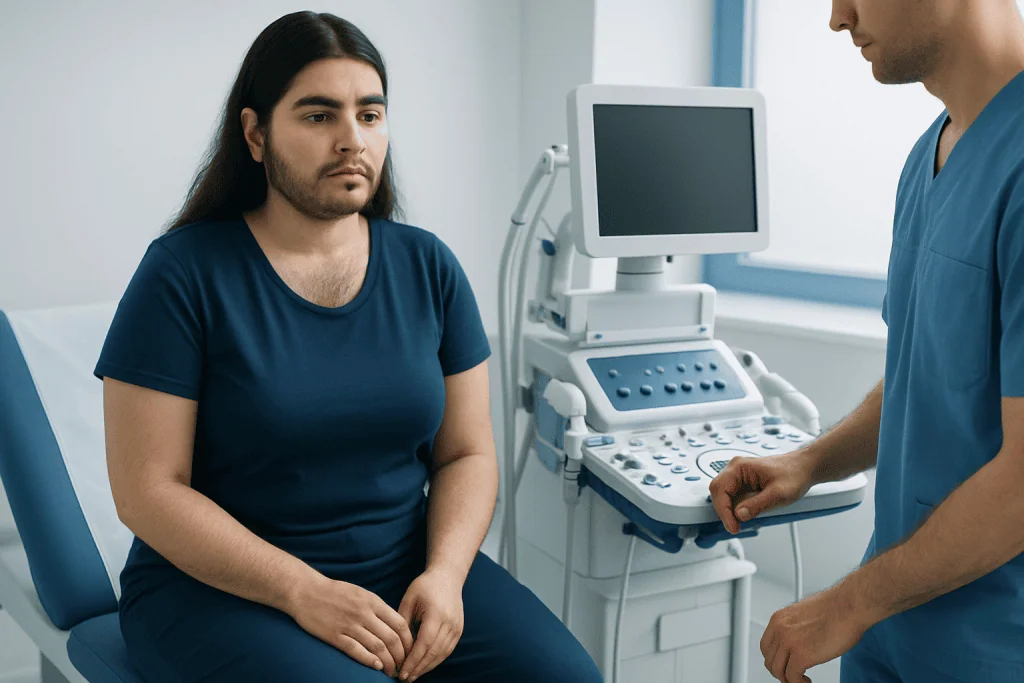
The main feature of hirsutism is thicker, darker terminal hair growing in androgen-sensitive areas. Some women notice a gradual increase over years, while others experience a more noticeable change over months. The amount of hair does not always match how much distress it causes; even mild changes on the face can be very upsetting.
Symptoms that may occur alongside hirsutism can offer clues to the cause. These include acne, oily skin, irregular or absent menstrual periods, difficulty with ovulation, weight gain, or scalp hair thinning in a pattern similar to male-pattern hair loss. Some people also report skin darkening in body folds, which can be associated with insulin resistance.
Rarely, signs of stronger androgen excess can appear. These may include deepening of the voice, increased muscle mass, breast size reduction, or enlargement of the clitoris. When these changes develop quickly, doctors consider this an important clue that prompt assessment is needed.
- Common sites: upper lip, chin, sideburn area, chest, lower abdomen, back
- Associated concerns: acne, irregular periods, infertility, weight gain, scalp hair thinning
- Urgent clues: sudden onset, rapid progression, or signs of virilization
Causes and risk factors

The most common cause of hirsutism is polycystic ovary syndrome (PCOS), a hormonal condition that can disrupt ovulation and increase androgen activity. In PCOS, hair growth may develop gradually and may be accompanied by irregular periods, acne, or difficulty conceiving. Insulin resistance often plays a role as well.
Other possible causes include idiopathic hirsutism, in which hair growth is increased despite normal hormone tests and regular menstrual cycles. This pattern may reflect increased sensitivity of hair follicles to androgens and can run in families. Ethnic background also influences how much body and facial hair is considered typical, so clinicians interpret symptoms in context.
Less common causes include adrenal gland disorders, ovarian conditions that produce excess androgens, Cushing syndrome, thyroid problems, and high prolactin levels. Some medications can contribute too, such as anabolic steroids, certain hormonal medicines, and a few drugs used for other chronic conditions. Obesity can worsen hirsutism because it may increase insulin resistance and androgen production.
In many patients, the medical goal is to identify whether the hair growth reflects a common endocrine condition or a rarer cause needing targeted treatment. When symptoms suggest a broader hormone imbalance, specialists may also evaluate related conditions such as Cushing syndrome.
How doctors diagnose hirsutism
Diagnosis starts with a careful history and physical examination. A doctor usually asks when the hair growth began, how quickly it has changed, whether menstrual cycles are regular, and whether there are related symptoms such as acne, scalp hair loss, or weight changes. Family history, medication use, and reproductive history are also important.
During the examination, clinicians look at the pattern and extent of hair growth and check for signs of androgen excess or other hormone disorders. A scoring method may be used to assess hair growth in different body areas, but the individual’s own concern and symptom burden remain important parts of the evaluation.
Blood tests may be recommended to measure hormone levels, especially if hair growth is moderate to severe, starts suddenly, or is associated with irregular periods. Testing can include testosterone and other androgens, and sometimes thyroid, prolactin, glucose, or cortisol-related studies depending on the clinical picture. If a structural cause is suspected, imaging such as pelvic ultrasound or adrenal imaging may be needed. In some cases, doctors may recommend broader endocrine assessment and imaging through services such as endocrinology and metabolic diseases check-up.
Treatment options and what to expect
Treatment depends on the cause, the severity of symptoms, and the patient’s preferences. If an underlying disorder is identified, treating that condition is the first step. For example, managing PCOS or changing a contributing medication may reduce further hair growth. Because hair cycles are slow, visible improvement often takes several months even after treatment begins.
Medical treatment may include hormonal therapies that lower androgen production or reduce androgen effects at the hair follicle. These options are usually considered when pregnancy is not planned, because some medicines are not safe during pregnancy. A doctor chooses treatment after reviewing menstrual history, contraceptive needs, other health conditions, and blood test results.
Cosmetic and procedural methods are also important and can be used alone or with medication. Shaving, threading, waxing, depilatory creams, and bleaching are common temporary options. Longer-lasting approaches include laser hair removal, which works best on darker hair, and electrolysis for selected cases. Some patients may also benefit from broader hormone-focused care through gynecologic evaluation or endocrine management depending on the cause.
If weight gain, insulin resistance, or PCOS is present, lifestyle measures can support treatment. Even modest weight loss in some individuals may help lower androgen levels and improve menstrual regularity. A personalized plan usually gives the best results, combining medical treatment with a realistic hair-removal strategy.
Self-care, emotional wellbeing, and practical management
Living with hirsutism can be emotionally demanding, especially when hair growth affects visible areas such as the face. Many women spend significant time managing symptoms, and this can lead to frustration, embarrassment, or social withdrawal. Acknowledging that impact is an important part of care, not a secondary issue.
Practical self-care starts with choosing hair-removal methods that fit skin sensitivity, budget, and routine. Gentle skincare before and after hair removal can help reduce irritation or ingrown hairs. If acne, discoloration, or razor bumps are present, a dermatologist may suggest products or treatments that protect the skin barrier while symptom control is underway.
General health habits can also support hormone balance in some patients. These include regular physical activity, balanced eating patterns, adequate sleep, and follow-up for insulin resistance or menstrual irregularity when present. Toward the end of the care pathway, some international patients may seek multidisciplinary assessment; Acibadem International’s specialists in JCI-accredited hospitals diagnose and treat hormone-related conditions, including hirsutism, with coordinated endocrine, gynecologic, and dermatologic care.
When to seek medical care
Medical evaluation is advisable when excess facial or body hair is new, bothersome, or becoming more noticeable over time. It is especially important if hirsutism occurs with irregular periods, infertility, acne, scalp hair thinning, or unexplained weight gain. These patterns may point to a treatable hormonal condition.
Prompt assessment is recommended when hair growth starts suddenly or worsens quickly over a few months. The same is true if there are signs of stronger androgen effects, such as voice deepening, increased muscle bulk, or breast size reduction. These changes do not always mean a serious problem, but they should be checked without delay.
People who are using medicines that may affect hormones should not stop them on their own. Instead, they should discuss symptoms with the prescribing doctor, who can review alternatives if appropriate. Early medical review can help clarify the cause and make treatment more effective and less stressful.
Frequently asked questions
Is hirsutism the same as normal facial hair in women?
No. Many women have fine, light facial or body hair, which is normal. Hirsutism refers specifically to excess coarse, dark hair in a male-pattern distribution, often related to hormone activity.
What is the most common cause of hirsutism?
Polycystic ovary syndrome, or PCOS, is the most common cause. It often leads to irregular ovulation and increased androgen activity, which can promote excess facial and body hair growth.
Can hirsutism happen even if hormone tests are normal?
Yes. Some women have idiopathic hirsutism, which means increased hair growth despite normal hormone levels and often regular menstrual cycles. In these cases, hair follicles may be more sensitive to normal androgen levels.
How long does hirsutism treatment take to work?
Treatment usually takes time because hair grows in cycles. Improvement often becomes clearer after several months, and many patients use a combination of medical treatment and hair-removal methods during that period.
Does losing weight help hirsutism?
For some people, especially those with PCOS or insulin resistance, weight loss may help reduce androgen levels and improve related symptoms. It is not a cure on its own, but it can be a useful part of a broader treatment plan.
When should someone worry about sudden hair growth?
Sudden or rapidly worsening hair growth should be assessed by a doctor, particularly if it appears with voice deepening, scalp hair loss, or menstrual changes. These signs can suggest higher androgen levels and may need prompt investigation.
References
- American College of Obstetricians and Gynecologists
- Endocrine Society
- Mayo Clinic
- National Institute of Diabetes and Digestive and Kidney Diseases
- Office on Women's Health
This article is for general information only and is not a substitute for professional medical advice. Please consult a qualified doctor about your individual situation.
Hair transplant in Turkey — costs, graft counts & a free assessment
JCI-accredited · board-certified surgeons · reply within 24h
Add us as a Preferred Source to see more of our trusted health content across Google Search, AI Overviews and Discover.
Check your numbers in seconds
BMI, calories, due date, blood pressure and 30+ more clinical calculators — free, instant, doctor-reviewed ranges.