Holep: What Patients Need to Know

HoLEP stands for holmium laser enucleation of the prostate. It is used to treat urinary blockage caused by benign prostatic hyperplasia, also called an enlarged prostate.
Key Takeaways
- HoLEP stands for holmium laser enucleation of the prostate.
- It is used to treat urinary blockage caused by benign prostatic hyperplasia, also called an enlarged prostate.
- The procedure removes obstructing prostate tissue through the urethra without an external incision.
- Many patients experience stronger urine flow and better bladder emptying after recovery.
- A urologist helps decide whether HoLEP, medication, or another procedure is the best option.
HoLEP is a laser procedure used to treat urinary symptoms caused by an enlarged prostate. It removes the part of the prostate blocking urine flow and is often considered when medicines are not enough or when the prostate is significantly enlarged.
Overview: what HoLEP is and who it helps
HoLEP, or holmium laser enucleation of the prostate, is a minimally invasive operation used to treat urinary problems caused by benign prostatic hyperplasia (BPH), a non-cancerous enlargement of the prostate. In this procedure, a surgeon uses a laser to separate and remove the part of the prostate tissue that is blocking urine flow. The tissue is removed through the natural urinary passage, so there is no cut on the skin.
Patients usually consider HoLEP when symptoms of an enlarged prostate begin to affect daily life. These symptoms can include a weak urine stream, trouble starting urination, waking often at night to urinate, a feeling that the bladder does not empty fully, or repeated urinary retention. HoLEP is one of several established options for men whose symptoms do not improve enough with medication.
One reason HoLEP receives attention is that it can be effective for both moderate and very large prostates. Unlike some other methods that may be limited by prostate size, HoLEP can often remove a substantial amount of obstructing tissue while avoiding open surgery. This makes it an important option in modern treatment for enlarged prostate.
Why it is done and what symptoms it aims to improve
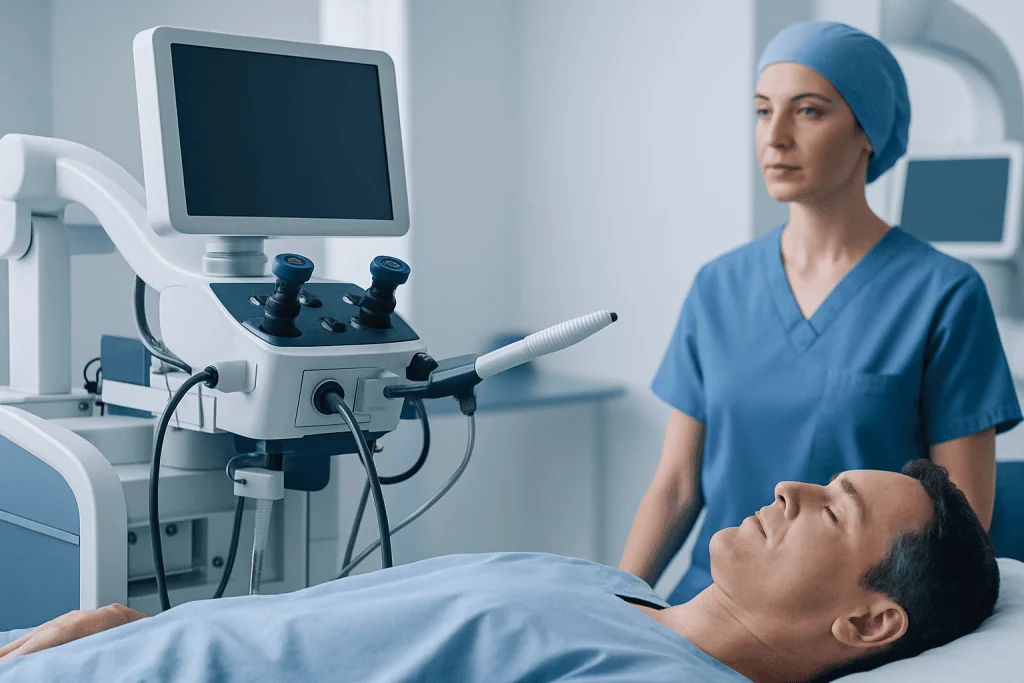
The prostate sits below the bladder and surrounds the urethra, the tube that carries urine out of the body. As the prostate enlarges with age, it can press on the urethra and interfere with normal urination. HoLEP is designed to remove the inner prostate tissue causing that obstruction, helping urine pass more freely.
The procedure may be recommended for people with bothersome lower urinary tract symptoms related to benign prostatic hyperplasia or with complications from blockage. These complications can include repeated urinary retention, bladder stones, recurrent urinary tract infections, blood in the urine related to prostate enlargement, or kidney problems caused by severe obstruction.
Symptoms that may improve after HoLEP include:
- Weak or slow urine stream
- Difficulty starting urination
- Stop-and-start urine flow
- Urgent need to urinate
- Frequent urination, especially at night
- Dribbling after urination
- Sensation of incomplete bladder emptying
Not every urinary symptom is caused by BPH, so a proper medical evaluation is important. Similar symptoms can also occur with prostate inflammation, bladder problems, neurological conditions, or, less commonly, prostate cancer.
How HoLEP differs from other prostate procedures

Patients often hear about several procedures for enlarged prostate, and the differences can be confusing. HoLEP is distinct because it removes the obstructing tissue almost completely from the inside of the prostate using a holmium laser. After the tissue is separated, it is broken into smaller pieces and taken out through the urethra. This differs from methods that only shave or vaporize tissue.
Compared with traditional transurethral surgery, HoLEP may offer durable symptom relief and can be used in larger prostates. Many patients also appreciate that it avoids an external incision and may reduce the need for more invasive surgery. A benefit for some patients is that the removed tissue can be sent for laboratory examination.
However, no single procedure is best for everyone. The right choice depends on prostate size, overall health, medications such as blood thinners, bladder function, and personal priorities such as recovery time or sexual side effects. A urologist may compare HoLEP with approaches such as prostate surgery or other endoscopic procedures before recommending the most suitable plan.
Evaluation before surgery and how diagnosis is confirmed
Before recommending HoLEP, the doctor confirms that the urinary symptoms are most likely due to prostate enlargement and not another condition. The evaluation usually starts with a discussion of symptoms, medical history, current medications, and prior urinary problems. A physical examination, including a digital rectal exam, may be part of the assessment.
Tests often include a urine test to check for infection or blood, blood work when needed, and a prostate-specific antigen test if clinically appropriate. Many patients also have imaging or bladder function tests, such as ultrasound measurement of residual urine after voiding, flow rate testing, or cystoscopy to look inside the urethra and bladder. These tests help show how much blockage is present and whether the bladder is working well.
In some cases, the doctor also assesses for related conditions such as bladder stones or kidney effects from urinary obstruction. If there is concern about another prostate condition, further evaluation may be needed. This step-by-step approach helps ensure that HoLEP is being used for the right reason and that the expected benefits are realistic.
What happens during the procedure and recovery
HoLEP is usually performed in the hospital by a urologist, commonly under general or spinal anesthesia. The surgeon passes a scope through the urethra to reach the prostate, then uses a holmium laser to separate the enlarged tissue from the outer capsule of the prostate. The tissue is pushed into the bladder, cut into smaller pieces, and removed. A temporary urinary catheter is usually placed at the end of the procedure.
After surgery, some blood in the urine and mild burning with urination can occur for a short time. Many patients go home after a short hospital stay, although this varies depending on age, other medical conditions, and how quickly the bladder recovers. The catheter is typically removed when the doctor is satisfied that urination is safe and adequate.
Recovery involves drinking fluids as advised, avoiding heavy lifting for a period recommended by the surgeon, and allowing time for the urinary tract to heal. The urine stream may improve quickly, but irritation symptoms can take longer to settle. Follow-up visits help monitor healing and check that the bladder is emptying well.
As with any procedure, there are possible risks and side effects. These can include temporary bleeding, urinary urgency, leakage for a short period, urinary tract infection, urethral narrowing, or retrograde ejaculation, in which semen goes backward into the bladder rather than out through the penis. The doctor explains these risks in relation to the patient’s age, prostate size, and overall health.
Benefits, limitations, and who may be a good candidate
HoLEP is often chosen because it can provide significant relief from urinary blockage and has a strong record of long-term effectiveness. It may be especially useful for patients with larger prostates, recurrent urinary retention, or complications related to obstruction. Because the obstructing tissue is removed rather than simply reduced, many patients experience durable improvement in flow and bladder emptying.
That said, improvement is not identical for every person. Some symptoms, especially urgency and frequency, may partly come from bladder overactivity rather than blockage alone. If the bladder muscle has been strained for a long time, recovery of bladder function may take time and may not be complete in every case.
A good candidate is usually someone with confirmed BPH causing troublesome symptoms or complications, who is healthy enough for anesthesia and surgery. Suitability also depends on whether there are other urinary tract issues, prior prostate procedures, or neurological conditions affecting bladder control. In centers with broad urology expertise, patients can also be assessed for related needs such as urology care tailored to the whole urinary system.
Self-care after HoLEP and when to seek medical care
After HoLEP, simple self-care steps can support recovery. Patients are often advised to rest, avoid straining, and increase activity gradually. Hydration may help keep urine flowing clearly, while alcohol, excess caffeine, and heavy exertion may need to be limited for a period if they worsen irritation symptoms. It is important to follow the surgeon’s instructions about medications, bathing, driving, and returning to work.
Pelvic floor exercises may be recommended for temporary leakage in some patients, especially in the early recovery period. Constipation should be avoided because straining can increase discomfort and bleeding. A doctor may suggest a bowel-friendly diet, good fluid intake, and, when appropriate, medication to keep stools soft.
Medical advice should be sought promptly if there is an inability to urinate, fever, worsening pain, heavy bleeding or large clots in the urine, severe dizziness, or symptoms of infection. Patients should also contact their doctor if urinary symptoms fail to improve, become worse again, or if new symptoms appear. Early review can help identify treatable issues and provide reassurance.
For international patients needing evaluation and treatment, Acibadem International’s multidisciplinary specialists and JCI-accredited hospitals diagnose and manage prostate enlargement and related urinary conditions with individualized planning.
Frequently asked questions
What does HoLEP stand for?
HoLEP stands for holmium laser enucleation of the prostate. It is a surgical treatment for urinary blockage caused by an enlarged prostate.
Is HoLEP used to treat prostate cancer?
HoLEP is primarily used to treat benign prostatic hyperplasia, which is a non-cancerous enlargement of the prostate. It is not a standard treatment for prostate cancer, although removed tissue may sometimes reveal unexpected findings that need further evaluation.
How long does it take to recover from HoLEP?
Initial recovery is often fairly quick, but full healing can take several weeks. Urine flow may improve early, while urgency, frequency, or mild burning can settle more gradually during follow-up.
Will HoLEP affect sexual function?
Some patients notice retrograde ejaculation after HoLEP, which means semen enters the bladder instead of coming out through the penis. Erectile function is often preserved, but the effect on sexual health can vary, so this should be discussed with the surgeon before treatment.
Can HoLEP be done for a very large prostate?
Yes. One of the strengths of HoLEP is that it can be effective even when the prostate is quite large. This is one reason it is often considered when other procedures may be less suitable.
Does HoLEP cure enlarged prostate permanently?
HoLEP removes the obstructing tissue causing symptoms and can provide long-lasting relief. However, no procedure can guarantee that urinary symptoms will never return, and ongoing follow-up may still be recommended.
References
- American Urological Association
- European Association of Urology
- National Institute of Diabetes and Digestive and Kidney Diseases
- National Health Service
- Mayo Clinic
This article is for general information only and is not a substitute for professional medical advice. Please consult a qualified doctor about your individual situation.
Explore treatments in Turkey — costs, top hospitals & a free quote
JCI-accredited · board-certified surgeons · reply within 24h
Add us as a Preferred Source to see more of our trusted health content across Google Search, AI Overviews and Discover.

More from the Health Library



Related Specialists

Dr. Cennet Nalan Soyder
Neurology
Dr. Melike Erdener Çalışkan
Anesthesiology
Prof. Dr. Umut Yavuz
Orthopedic Surgery & Traumatology
Assoc. Prof. Dr. Onur Taşar
Cardiology