Home Pregnancy Test at Home: A Complete Clinical Guide for Patients

Most home pregnancy tests are most reliable after a missed period. First-morning urine may improve accuracy, especially very early in pregnancy.
Key Takeaways
- Most home pregnancy tests are most reliable after a missed period.
- First-morning urine may improve accuracy, especially very early in pregnancy.
- A negative test does not always rule out pregnancy if testing was done too soon.
- A positive result should be confirmed with a healthcare professional.
- Heavy bleeding, severe pain, dizziness, or one-sided pelvic pain need prompt medical evaluation.
A home pregnancy test at home can reliably detect pregnancy by measuring the hormone hCG in urine, especially after a missed period. The most accurate result depends on correct timing, careful use, and knowing when to repeat the test or seek medical advice.
Overview: What a Home Pregnancy Test at Home Can Tell You
A home pregnancy test at home is designed to answer a common question quickly and privately: is pregnancy likely or not? These tests detect human chorionic gonadotropin (hCG), a hormone the body starts producing after a fertilized egg implants in the uterus. When used at the right time and according to the instructions, home tests are generally very accurate.
Even so, a home test is a screening tool rather than a full medical evaluation. It can suggest pregnancy, but it cannot confirm whether the pregnancy is developing normally, how far along it is, or whether symptoms might have another cause. A healthcare professional may confirm the result with a clinical urine test, blood test, examination, or ultrasound when needed.
Patients often wonder why results can vary from one day to the next. The main reason is timing. hCG levels rise over the first days and weeks of early pregnancy, so testing too early may lead to a negative result even when pregnancy has begun. Understanding how the test works can make the result easier to interpret and can reduce unnecessary worry.
How Home Pregnancy Tests Work and When to Take One
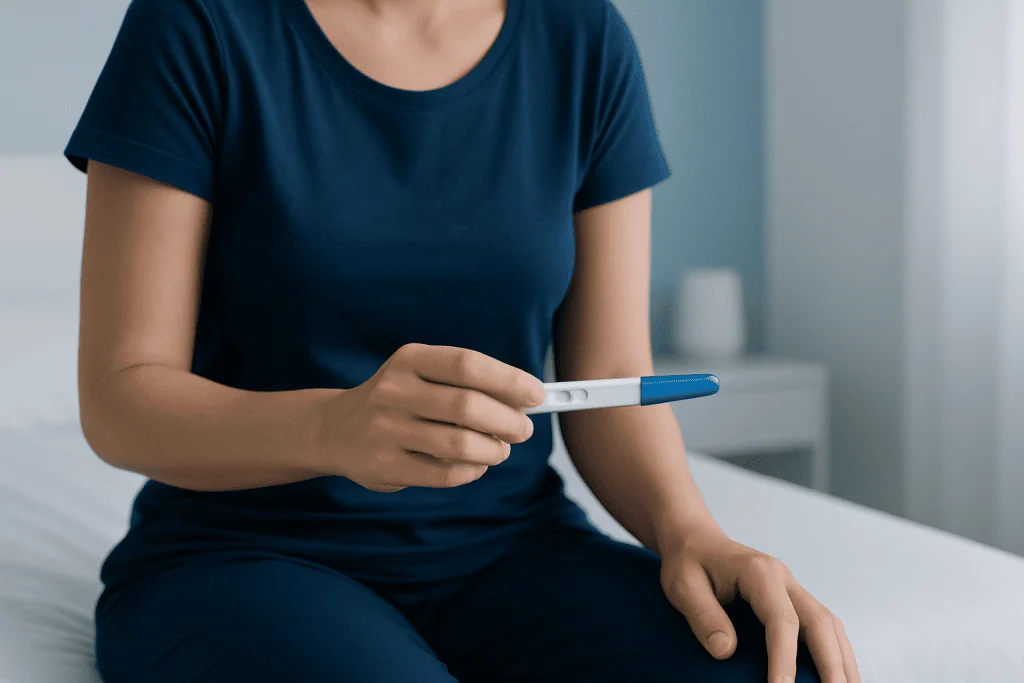
Home pregnancy tests measure hCG in urine. After implantation, hCG enters the bloodstream and then the urine. Different brands detect different minimum hCG levels, but all work on the same general principle: if enough hCG is present, the test becomes positive.
For most patients, the best time to take a home pregnancy test at home is after a missed menstrual period. Some early-result tests may detect pregnancy sooner, but testing before the expected period increases the chance of a false negative. If cycles are irregular, counting about two weeks from ovulation or waiting at least 21 days after unprotected sex may be more helpful.
Using first-morning urine can improve the chance of an accurate result, especially very early in pregnancy, because the urine is usually more concentrated. It is also important to avoid drinking large amounts of fluid just before testing, since diluted urine can make hCG harder to detect.
- Check the expiration date before use.
- Read the brand-specific instructions carefully.
- Use the test at the recommended time window.
- Read the result only within the stated number of minutes.
- If the result is unclear, repeat the test in 48 to 72 hours.
Understanding Results: Positive, Negative, Faint, or Invalid

A positive result usually means pregnancy is likely. Even a faint positive line can indicate hCG is present, particularly in early pregnancy. In most cases, a positive home result should be followed by an appointment with a healthcare professional, who may recommend further evaluation such as blood testing or ultrasound imaging to confirm the pregnancy and assess how it is progressing.
A negative result means the test did not detect enough hCG at that time. This may happen because pregnancy is not present, but it can also happen if the test was taken too early, urine was diluted, instructions were not followed, or ovulation occurred later than expected. If a period still does not start, repeating the test after 2 to 3 days is reasonable.
An invalid result means the test did not work properly. This may happen if too little urine was applied, the kit was expired, or there was a testing error. In that situation, using a new test is best. If repeated tests remain confusing, a clinician can arrange a medical check-up and laboratory testing.
Patients should also know that home pregnancy tests cannot diagnose conditions such as miscarriage or ectopic pregnancy. A positive test with pain, bleeding, or dizziness needs prompt medical attention because those symptoms require assessment beyond a home kit.
What Can Affect Accuracy
The biggest factor affecting accuracy is testing too soon. hCG levels may still be below the detection threshold in the first days after implantation. This is why a negative result before a missed period is less dependable than a negative result after a missed period.
Irregular menstrual cycles can also make timing difficult. If ovulation happens later than expected, conception and implantation happen later as well, and hCG may not be detectable when a patient assumes it should be. Recent pregnancy loss, childbirth, or fertility treatment involving hCG can also affect interpretation because hCG may still be present in the body for some time.
Reading the result outside the recommended time window may create confusion. A line that appears much later can be an evaporation line rather than a true positive. Storage conditions matter too: heat, moisture, and expired packaging can reduce performance.
Some medical situations deserve professional guidance. If periods are very irregular, symptoms strongly suggest pregnancy despite repeated negative tests, or there are concerns about fertility, it may be helpful to speak with a specialist in fertility and reproductive care for a more complete evaluation.
Common Symptoms and What They Mean
Patients often take a home pregnancy test because of symptoms such as a missed period, nausea, breast tenderness, fatigue, frequent urination, bloating, or light spotting. These can occur in early pregnancy, but they are not specific to pregnancy alone. Hormonal changes, stress, illness, and changes in weight or routine can sometimes cause similar symptoms.
Light spotting in very early pregnancy can occur around the time of implantation, but bleeding can also have other explanations. Menstrual bleeding, hormonal fluctuations, infections, and gynecologic conditions may all affect vaginal bleeding patterns. This is one reason a home test result should always be interpreted alongside symptoms and timing.
Lower abdominal discomfort may be mild in early pregnancy, but severe or one-sided pain is not something to monitor at home without medical input. That type of pain, especially if paired with bleeding, shoulder pain, weakness, or dizziness, needs urgent assessment because it may suggest a complication rather than a normal early pregnancy change.
What Happens After a Positive Test
After a positive home pregnancy test at home, the next step is usually to contact a healthcare professional. A clinician can estimate how far along the pregnancy may be based on the last menstrual period, symptoms, and test timing. They may also recommend prenatal vitamins with folic acid, review current medications, and discuss lifestyle habits such as smoking, alcohol, and nutrition.
Confirmation may include an office urine test, blood test, or ultrasound, depending on the situation. Blood tests can be helpful when timing is uncertain, symptoms are concerning, or there is a history of previous pregnancy complications. Ultrasound is often used later to confirm the pregnancy location and development.
Early prenatal care supports both maternal and fetal health. This can include screening for anemia, thyroid problems, diabetes risk, infections, and other conditions that may affect pregnancy. If patients have had prior miscarriages, fertility treatment, or symptoms such as pain or bleeding, closer follow-up may be advised.
Near the start of care, some patients also benefit from broader evaluation through departments such as gynecology care when there are menstrual concerns, pelvic symptoms, or questions about reproductive health. Acibadem International’s multidisciplinary specialists in JCI-accredited hospitals also diagnose and manage early pregnancy concerns for international patients.
When to Seek Medical Care
Medical advice is appropriate any time a patient is unsure how to interpret a result, especially if periods are irregular or if symptoms are significant. A doctor should also be consulted if pregnancy tests are repeatedly negative but menstruation does not begin, or if there are ongoing symptoms that suggest pregnancy or another hormonal issue.
Prompt medical care is especially important for warning signs. These include heavy vaginal bleeding, severe abdominal or pelvic pain, one-sided pain, fainting, marked dizziness, fever, or shoulder pain. These symptoms need professional evaluation because they can be associated with urgent conditions, including miscarriage or ectopic pregnancy.
Care should also be sought after a positive result in people with a history of ectopic pregnancy, tubal surgery, infertility treatment, or an intrauterine device in place. In these situations, the pregnancy may need earlier monitoring to confirm that it is located in the uterus and developing safely.
Practical Self-Care While Waiting for Confirmation
While waiting to repeat a test or attend an appointment, practical self-care can help. Patients who think they may be pregnant may wish to avoid alcohol, smoking, and recreational drugs, and to check with a clinician before starting or stopping any medication. Beginning a prenatal vitamin with folic acid is commonly recommended if pregnancy is possible.
It can also help to keep a simple record of menstrual dates, test results, symptoms, and any bleeding or pain. This information can make medical appointments more efficient and can improve interpretation of uncertain results. If cycles are irregular, tracking can be especially useful over time.
Finally, reassurance matters. Unclear results are common in very early pregnancy and do not necessarily mean something is wrong. Repeating the test at the correct interval and seeking medical advice when symptoms or uncertainty continue is usually the safest and most helpful approach.
Frequently asked questions
How accurate is a home pregnancy test at home?
A home pregnancy test can be very accurate when it is used correctly after a missed period. Accuracy is lower if the test is taken too early, instructions are not followed, or the result is read outside the recommended time window.
Can a negative pregnancy test still mean pregnancy?
Yes. A negative result can happen if testing was done before hCG levels were high enough to detect. If the period does not start, repeating the test in 48 to 72 hours or speaking with a doctor is a sensible next step.
What does a faint positive line mean?
A faint positive line often means hCG is present, which may happen in very early pregnancy. It is usually best to repeat the test in a couple of days or arrange medical confirmation, especially if there are symptoms such as pain or bleeding.
What time of day should a pregnancy test be taken?
First-morning urine is often best, particularly if the test is being taken early. It is usually more concentrated, which can make hCG easier to detect.
Can medications affect a home pregnancy test result?
Most common medications do not cause a positive result. However, fertility medications that contain hCG can affect the test, and recent pregnancy loss or childbirth may also leave hCG in the body for a time.
When should a doctor confirm a positive home pregnancy test?
A positive result should be followed by medical confirmation, even if the patient feels well. Earlier review is especially important if there is bleeding, pelvic pain, a history of ectopic pregnancy, or fertility treatment.
References
- American College of Obstetricians and Gynecologists
- National Health Service
- Mayo Clinic
- Office on Women's Health
- Cleveland Clinic
This article is for general information only and is not a substitute for professional medical advice. Please consult a qualified doctor about your individual situation.
Explore treatments in Turkey — costs, top hospitals & a free quote
JCI-accredited · board-certified surgeons · reply within 24h
Add us as a Preferred Source to see more of our trusted health content across Google Search, AI Overviews and Discover.
Check your numbers in seconds
BMI, calories, due date, blood pressure and 30+ more clinical calculators — free, instant, doctor-reviewed ranges.