Home Respiratory Therapy and Equipment for Children: How It Works, Results and What to Expect

Home respiratory care is individualized and should be prescribed, taught and monitored by a pediatric clinical team. A respiratory therapist helps families use equipment safely, recognize changes in breathing and follow the child’s care plan.
Key Takeaways
- Home respiratory care is individualized and should be prescribed, taught and monitored by a pediatric clinical team.
- A respiratory therapist helps families use equipment safely, recognize changes in breathing and follow the child’s care plan.
- Possible equipment includes nebulizers, inhalers with spacers, oxygen systems, suction devices, airway-clearance devices and ventilatory support.
- The goal is to support breathing, comfort, sleep, activity and participation in daily life while reducing avoidable complications.
- Urgent evaluation is needed for severe breathing difficulty, blue or gray lips, unusual sleepiness, pauses in breathing or equipment failure with symptoms.
Home respiratory therapy and equipment for children helps infants, children and teenagers manage breathing needs outside the hospital with an individualized plan, trained caregivers and regular clinical review. It may include inhaled treatments, oxygen, airway-clearance techniques, suction equipment, non-invasive ventilation or tracheostomy-related support, depending on the child’s diagnosis and needs.
Overview: how home respiratory therapy and equipment for children works
Home respiratory therapy and equipment for children is a coordinated form of care for children who need support with breathing, oxygen levels, airway clearance or respiratory equipment after leaving hospital or while living with a long-term condition. The plan is tailored to the child’s diagnosis, age, daily routine and level of support needed. It is not a single treatment; it is a combination of prescribed therapies, equipment, caregiver education and scheduled follow-up.
Some children need a short period of support after an illness or surgery. Others may need longer-term care because of chronic lung disease, neuromuscular weakness, sleep-related breathing problems, airway differences or complex medical needs. The pediatrician, pediatric pulmonologist and respiratory therapist determine which equipment is appropriate and how it should be used.
At home, care usually focuses on maintaining clear airways, supporting adequate oxygenation or ventilation, and helping the child take part in feeding, sleep, school and play as safely as possible. Families should use only the settings, medicines and routines provided in the child’s individualized care plan.
Candidacy and the four types of respiratory problems in children
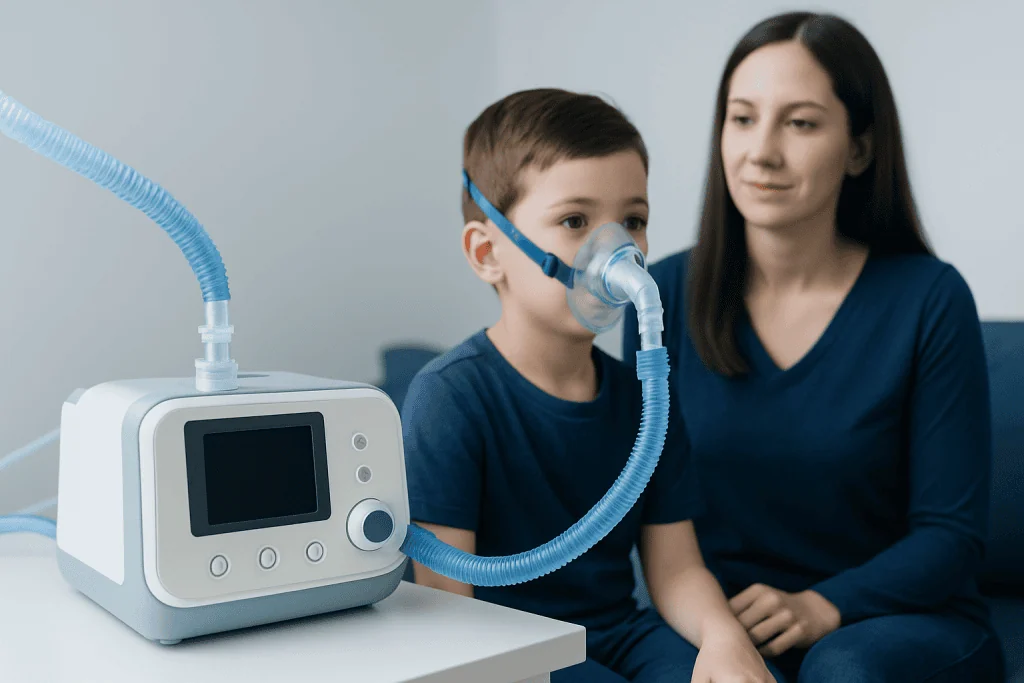
What are the four types of respiratory problems in children? Respiratory problems are often grouped by where or how they affect breathing. These broad categories can overlap, and a child may have more than one type.
- Airway obstruction: narrowing or blockage in the nose, throat or lower airways, as can occur with asthma, bronchiolitis, croup or anatomical airway conditions.
- Lung tissue or gas-exchange problems: conditions that affect how oxygen moves from the lungs into the blood, including pneumonia, chronic lung disease of prematurity and some interstitial lung conditions.
- Ventilation problems: reduced ability to move air in and out of the lungs because of neuromuscular weakness, chest wall conditions, obesity-related hypoventilation or some sleep-related breathing disorders.
- Airway-clearance problems: difficulty coughing up mucus or protecting the airway, which can occur with weak cough, swallowing difficulties, tracheostomy dependence or chronic conditions that produce thick secretions.
Home respiratory support may be considered when the child is clinically stable, the family has been trained, appropriate equipment is available, and a clear follow-up and emergency plan is in place. A stable home setting, reliable electricity where relevant, access to supplies and the ability to communicate with the care team are also important parts of planning.
Not every child with a cough, wheeze or short-term viral infection needs home equipment. A clinician should identify the underlying cause of breathing symptoms before recommending therapy, particularly for infants and children with recurrent, severe or unexplained symptoms.
What does a respiratory therapist do in home care?
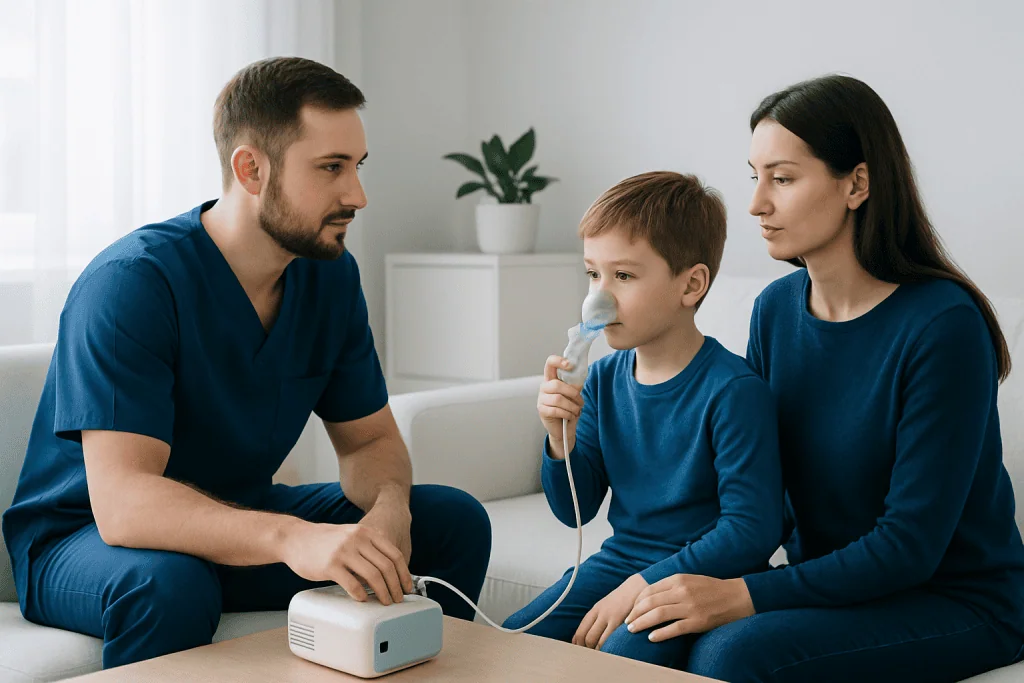
What does a respiratory therapist do in home care? A respiratory therapist is a healthcare professional trained in assessing breathing and supporting respiratory treatments. In pediatric home care, the therapist works with the child, family and medical team to translate a hospital or clinic plan into safe day-to-day care.
The therapist may teach caregivers how to assemble, clean and check equipment; use inhalers, spacers or nebulizers; give prescribed oxygen; perform suctioning when indicated; and apply airway-clearance methods. For children using non-invasive ventilation, tracheostomy equipment or a ventilator, education commonly includes interface fit, alarms, tubing, humidification, backup arrangements and basic troubleshooting.
Home visits or remote follow-up may include reviewing symptoms, oxygen saturation records when these are prescribed, sleep and activity patterns, secretion management and equipment use. The respiratory therapist does not replace emergency services or the child’s physician. New symptoms, changing oxygen needs or concerns about device settings should be reported promptly to the supervising clinical team.
Step by step: starting respiratory therapy and equipment at home
Before discharge or initiation of home care, the medical team confirms the child’s diagnosis, clinical stability and treatment goals. They select the equipment and develop written instructions that explain when to use it, how to maintain it, which symptoms to monitor and whom to contact. Families should receive hands-on teaching and have the opportunity to practice while a clinician observes.
A typical setup process includes fitting equipment to the child, checking the home environment, arranging delivery of supplies and confirming access to replacement parts. If oxygen or powered equipment is used, the family should understand the safety rules, including avoiding smoking and open flames around oxygen and having a plan for travel or power interruptions. Equipment should be kept clean and stored according to the manufacturer’s and care team’s instructions.
Once home, caregivers follow the prescribed daily schedule. This may include inhaled medication, airway clearance, oxygen during sleep or activity, or ventilatory support overnight. A diary of symptoms, treatments, sleep, feeding concerns and equipment alarms can be useful at follow-up appointments, especially when the care team is adjusting the plan.
Families should not change flow rates, ventilator settings or medication schedules independently unless their written plan specifically instructs them to do so. If an equipment issue occurs, the child’s backup plan and the equipment provider’s contact process should be followed.
What to expect from respiratory therapy
What to expect from respiratory therapy? The experience depends on the child’s condition and prescribed treatment. At first, the main focus is learning: caregivers become familiar with the equipment, hygiene routines and signs that the child is comfortable or struggling. Children may need time to adapt to a face mask, nasal cannula, airway-clearance routine or changes to their usual sleep routine.
Expected benefits may include easier breathing, improved secretion clearance, more stable oxygen levels when oxygen is indicated, better sleep, fewer symptoms during activity and greater confidence for caregivers. Improvement may be gradual rather than immediate. Respiratory therapy manages support needs; it may not cure the underlying condition.
Some children experience mild discomfort, dry nose or throat, skin irritation from masks or tubing, disturbed sleep while adapting, or anxiety about equipment. Proper fitting, humidification when prescribed, skin checks, gradual acclimatization and early communication with the care team can often help. Persistent discomfort, repeated alarms or difficulty completing therapy should be reviewed rather than ignored.
Follow-up may involve reassessing symptoms, growth, feeding, school participation, oxygen needs, sleep quality and device data where available. As a child grows or recovers, the type or amount of support may need to change.
Benefits, risks and practical safety at home
The central benefit of home respiratory care is that it allows eligible children to receive necessary breathing support in a familiar setting while remaining connected to family routines, education and community life. It can also help families develop skills to respond calmly to everyday respiratory needs. The best outcomes depend on appropriate equipment selection, consistent training and regular communication with the clinical team.
Risks vary by therapy. Poorly cleaned equipment may increase exposure to germs; poorly fitting masks can irritate skin; incorrect use may make treatment less effective; and tubing or cords can create practical safety hazards. Oxygen increases fire risk, so smoking, candles, gas flames and other ignition sources must be kept well away from oxygen equipment. Secure tubing and follow safe sleep guidance appropriate to the child’s age and condition.
Caregivers should know their child’s emergency plan, keep contact numbers accessible and ensure that other trusted adults, school staff or caregivers understand the relevant instructions. Supplies should be checked before travel, and families using electrically powered equipment should discuss backup power arrangements with their provider.
For children with complex respiratory needs, coordinated care may involve pediatric pulmonology, sleep medicine, neurology, otolaryngology, nutrition, physiotherapy and nursing. Acibadem International’s multidisciplinary specialists and JCI-accredited hospitals can assess and treat respiratory conditions for international patients when specialist evaluation is needed.
What is the next step after respiratory therapy?
What is the next step after respiratory therapy? The next step is usually a planned review rather than automatically stopping treatment. The care team considers whether the child’s symptoms, oxygenation, sleep, growth, activity tolerance and underlying condition are improving, stable or changing. They may continue the same plan, simplify it, adjust equipment, arrange further testing or refer to another specialist.
Children whose respiratory needs improve may be gradually weaned from selected therapies under medical supervision. This may involve reassessment during sleep, activity or illness, depending on the original indication. Families should not stop prescribed oxygen, ventilation or airway-clearance treatment without discussing it with the clinician who manages the plan.
If therapy is not meeting its goals, the team may review technique, mask or cannula fit, equipment function, adherence, mucus management, medication delivery or whether another diagnosis is contributing. A follow-up appointment is also an opportunity to discuss school plans, travel, physical activity and emotional adjustment for the child and family.
When to seek medical care
Families should seek urgent medical care or contact local emergency services if a child has severe or worsening difficulty breathing, blue, gray or very pale lips or skin, pauses in breathing, marked chest pulling-in, inability to speak or feed because of breathlessness, confusion, unusual drowsiness, or a sudden decline that does not improve with the child’s prescribed rescue plan. A child who is unresponsive requires emergency help immediately.
Prompt medical advice is also appropriate for fever with worsening respiratory symptoms, repeated vomiting that prevents treatment or hydration, a new need for more support than prescribed, persistent low oxygen readings when monitoring has been specifically recommended, blood in secretions, or repeated equipment alarms. If a tracheostomy, ventilator or oxygen device malfunctions and the child develops symptoms, follow the written emergency plan while seeking help.
For non-urgent concerns, families should contact the pediatric care team if the child’s cough, wheeze, sleep disruption, fatigue, secretion burden or tolerance of therapy changes over several days. Regular review helps ensure that home respiratory therapy remains appropriate as the child develops.
Frequently asked questions
Can children use oxygen therapy at home?
Yes, some children can use prescribed oxygen therapy at home when it is clinically appropriate and caregivers have received training. The oxygen flow, delivery method and duration should be set by the child’s medical team. Families should follow oxygen fire-safety precautions and should not alter prescribed settings without advice.
Which equipment may be used for pediatric respiratory care at home?
Equipment may include inhalers with spacers, nebulizers, oxygen concentrators or cylinders, nasal cannulas, suction machines, pulse oximeters when prescribed, airway-clearance devices, CPAP or BiPAP devices, and ventilator or tracheostomy supplies. The exact equipment depends on the child’s diagnosis and care goals. A clinician should provide training before home use.
How long does home respiratory therapy last for a child?
The duration varies widely. Some children need support for a limited recovery period, while others need longer-term treatment for chronic or complex conditions. Regular medical reviews help determine whether therapy should continue, be adjusted or be gradually reduced.
Can a child go to school while receiving respiratory therapy?
Many children can attend school or childcare with an individualized plan and appropriate support. Parents or caregivers should discuss the child’s needs with the school, healthcare team and, where available, school nurse. Staff may need training in the child’s routine treatments, warning signs and emergency plan.
How should respiratory equipment be cleaned?
Cleaning instructions differ by device and manufacturer, so families should use the written guidance supplied with the equipment and advice from their care team. In general, parts should be cleaned and dried as instructed, and disposable items should be replaced on schedule. Equipment that appears damaged, contaminated or not functioning correctly should be reported to the provider.
When should parents call the child’s respiratory therapist or doctor?
Parents should call for new or worsening symptoms, trouble using equipment, persistent alarms, skin irritation from an interface, increased secretions, or concern that treatment is no longer helping. Emergency symptoms such as severe breathing difficulty, blue or gray coloring, unresponsiveness or breathing pauses require immediate emergency medical care. When uncertain, it is safer to seek professional advice promptly.
References
- American Academy of Pediatrics
- American Thoracic Society
- European Respiratory Society
- Centers for Disease Control and Prevention
- World Health Organization
This article is for general information only and is not a substitute for professional medical advice. Please consult a qualified doctor about your individual situation.
Explore treatments in Turkey — costs, top hospitals & a free quote
JCI-accredited · board-certified surgeons · reply within 24h
Add us as a Preferred Source to see more of our trusted health content across Google Search, AI Overviews and Discover.