Homeopathic Remedies for Kidney Stones: Safety Facts

Homeopathic products should not replace medical evaluation or proven treatment for kidney stones. The right treatment depends on stone size, location, symptoms, kidney function, and whether infection or blockage is present.
Key Takeaways
- Homeopathic products should not replace medical evaluation or proven treatment for kidney stones.
- The right treatment depends on stone size, location, symptoms, kidney function, and whether infection or blockage is present.
- Some small stones may pass with medical guidance, pain control, fluids, and sometimes medicines that help the ureter relax.
- Fever, chills, severe pain, vomiting, reduced urine output, or pregnancy with stone symptoms require urgent medical assessment.
- Long-term prevention is based on stone analysis, urine testing, hydration, and individualized dietary guidance.
Homeopathic remedies for kidney stones have not been shown in reliable clinical studies to dissolve stones, relieve an obstruction, or prevent complications. People with possible kidney stones should seek medical advice for an accurate diagnosis and evidence-based treatment, while using supportive measures such as appropriate fluid intake when advised.
Overview: Can Homeopathy Treat Kidney Stones?
Homeopathic remedies for kidney stones are sometimes promoted as a gentle way to dissolve stones or help them pass. However, there is no reliable scientific evidence that homeopathic products can break down kidney stones, remove a urinary blockage, treat a urinary infection, or prevent stone-related kidney damage. For this reason, they should not be used instead of medical assessment or recommended treatment.
Kidney stones are hard deposits that form from minerals and salts in the urine. They may stay in the kidney without causing symptoms, or move into the ureter, the narrow tube that carries urine from the kidney to the bladder. A moving stone can cause intense, wave-like pain and may occasionally block urine flow.
Because several conditions can resemble a kidney stone, diagnosis matters. Blood in the urine, abdominal or back pain, nausea, and urinary symptoms can also occur with infection and other urinary or abdominal conditions. An evaluation can clarify whether a stone is present, how large it is, and whether it is causing a problem that needs prompt care. More information about kidney stones can help patients understand the condition and its usual management.
Why Medical Assessment Comes Before Any Remedy

A kidney stone is not simply a pain problem. Its location and effect on urine drainage are important. A small stone may pass without a procedure, while a larger stone or one lodged in the ureter may need active treatment. Stones can also occur alongside a urinary tract infection, and an infected blocked kidney is a medical emergency.
Clinicians assess symptoms, medical history, urine and blood tests, and imaging when appropriate. Ultrasound or computed tomography may be used to identify the stone and look for swelling of the kidney caused by backed-up urine. Testing helps guide care and avoids delays when another condition is responsible for the symptoms.
Homeopathy is based on highly diluted substances chosen according to homeopathic principles. Even when a product seems harmless, relying on it can delay pain relief, imaging, infection treatment, or intervention for an obstruction. Patients who use complementary products should tell their doctor, especially if they take prescribed medicines, are pregnant, have kidney disease, or have recurrent stones.
Symptoms and Factors That Affect Kidney Stone Risk
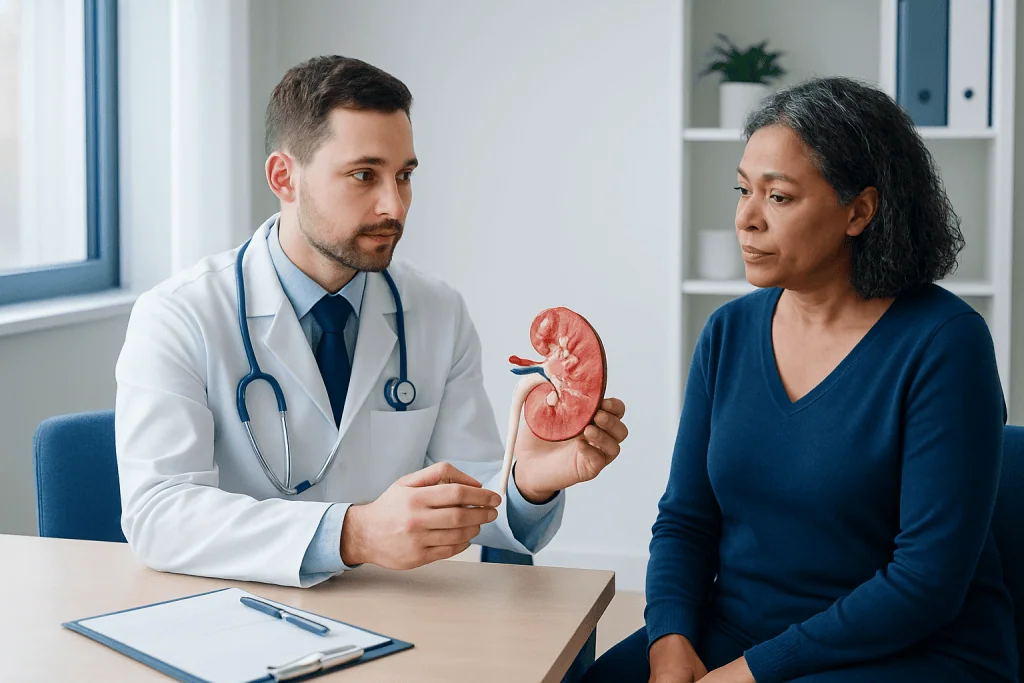
Symptoms often begin when a stone moves or obstructs urine flow. Typical features include sharp pain in the side or back that may travel toward the lower abdomen or groin, nausea or vomiting, discomfort during urination, urgency, and blood in the urine. The intensity of pain does not reliably indicate the stone’s size or whether it will pass on its own.
Some people have no symptoms until a stone is discovered during imaging for another reason. Others develop repeated stones over time. Risk can be influenced by not drinking enough fluid, a history of stones in close relatives, high salt intake, certain dietary patterns, obesity, recurrent urinary infections, and medical conditions that affect the gut, metabolism, or parathyroid glands.
Stone composition also varies. Calcium-based stones are the most common, but uric acid, struvite, and cystine stones require different preventive approaches. This is why broad claims that one natural or homeopathic remedy works for every stone type are not medically reliable.
- Previous stones or a family history can increase future risk.
- Dehydration, particularly in hot conditions or with heavy sweating, can concentrate urine.
- Some medicines and supplements may contribute to stones in susceptible people.
- Repeated infections or unusual stone types may need specialist evaluation.
Evidence-Based Treatment Options
Treatment is individualized. For a small stone without infection, severe blockage, or kidney impairment, a clinician may recommend observation, pain management, and follow-up to confirm that the stone has passed. Depending on the location and circumstances, a doctor may prescribe medicine to help a ureteral stone pass. Drinking fluids is generally important for health, but forcing large volumes during severe colicky pain or obstruction does not push a stone out and may worsen discomfort.
If a stone is too large to pass, causes persistent symptoms, blocks urine flow, affects kidney function, or is associated with infection, a procedure may be needed. Options can include shock wave treatment to break selected stones into smaller pieces, ureteroscopy to remove or fragment a stone through the urinary tract, or other procedures for larger or more complex stones. Kidney stone treatment options are selected according to the stone and the patient’s overall health.
Antibiotics are used when there is a confirmed or suspected urinary infection, but they do not dissolve a stone. Similarly, pain medicines can make symptoms more manageable but do not address every cause of obstruction. A urologist can explain the likely benefits and limitations of each approach and arrange follow-up imaging when needed.
Safe Self-Care and Preventing Future Stones
For people who have been assessed and advised that a stone can be managed conservatively, following the care plan is the safest approach. This may include taking prescribed medicines as directed, staying reasonably hydrated, using a urine strainer if requested to collect a passed stone, and attending follow-up appointments. Capturing a stone for laboratory analysis can provide useful information for prevention.
Long-term prevention should be tailored to stone type and personal risk factors. Many people benefit from drinking enough fluid throughout the day to keep urine relatively pale, unless they have been given a fluid restriction for a heart, kidney, or other condition. Reducing excess salt intake can be helpful for many calcium stone formers. Maintaining normal dietary calcium intake is often recommended rather than eliminating calcium, since overly restricting dietary calcium may not prevent stones.
A clinician or dietitian may also advise adjustments involving animal protein, high-oxalate foods, added sugars, or citrate-rich foods, but these choices should reflect test results and medical history. High-dose supplements and unverified herbal or homeopathic products should not be assumed safe or effective. People with recurring stones may benefit from metabolic testing and individualized prevention planning.
When to Seek Medical Care
Anyone with new symptoms that could be caused by a kidney stone should arrange medical assessment, particularly if the pain is significant, symptoms persist, or there is a previous history of stones. Urgent evaluation is important when pain is severe or uncontrolled, when vomiting prevents fluid intake, or when urine output becomes very low or stops.
Fever, chills, feeling very unwell, confusion, or burning urination alongside flank pain can indicate infection and need immediate care. Prompt assessment is also important for people who are pregnant, have one functioning kidney, have known kidney disease, are immunocompromised, or have had urinary tract surgery.
Acibadem International’s multidisciplinary specialists and JCI-accredited hospitals diagnose and treat kidney stone conditions for international patients. The appropriate next step is based on clinical assessment rather than on symptoms alone or the use of unproven remedies.
Frequently asked questions
Can homeopathic remedies dissolve kidney stones?
There is no reliable clinical evidence that homeopathic remedies dissolve kidney stones or reliably help them pass. A stone should be assessed by a healthcare professional, as size, location, blockage, and infection risk determine the safest treatment.
Is it safe to use homeopathy while waiting for a kidney stone to pass?
A patient should not delay medical assessment or prescribed treatment in favor of homeopathy. If a clinician has confirmed that observation is appropriate, any complementary product should still be discussed with that clinician, particularly if symptoms change or other medicines are being taken.
What is the fastest way to get relief from kidney stone pain?
Severe or new pain should be medically assessed to confirm the cause and check for complications. A clinician may recommend or prescribe appropriate pain relief and, in selected cases, medicine that can assist passage of a ureteral stone.
Can drinking a lot of water force a kidney stone out?
Regular hydration supports urinary health and may help prevent future stones, but rapidly drinking large amounts of water does not force a lodged stone out. During severe pain, vomiting, or possible obstruction, a person should seek medical advice rather than trying to manage the problem with excessive fluids.
When is a kidney stone an emergency?
Kidney stone symptoms with fever, chills, vomiting, severe uncontrolled pain, little or no urine, confusion, or feeling very unwell need urgent medical care. These signs can indicate infection, significant obstruction, dehydration, or another condition requiring prompt treatment.
How can future kidney stones be prevented?
Prevention depends on the stone’s composition and a person’s health history. Adequate fluid intake, lower salt intake, balanced nutrition, and follow-up testing are common parts of prevention, while recurrent stones may require individualized dietary or medical treatment.
This article is for general information only and is not a substitute for professional medical advice. Please consult a qualified doctor about your individual situation.
Explore treatments in Turkey — costs, top hospitals & a free quote
JCI-accredited · board-certified surgeons · reply within 24h
Add us as a Preferred Source to see more of our trusted health content across Google Search, AI Overviews and Discover.

More from the Health Library

Mango Benefits: What Patients Need to Know

Copaiba Oil: A Complete Medical Overview

Bladder Polyps and When They Need Medical Assessment

Redundant Colon: An Evidence-Based Guide for Patients

Broken Jaw: A Complete Medical Overview