

How Do Hair Transplants Work? FUE, DHI, and Graft Placement Explained

Hair transplants use a person’s own hair follicles from a donor area to restore thinning or balding areas. FUE removes follicular units individually, while DHI uses a specialized implanter to place grafts directly.
Key Takeaways
- Hair transplants use a person’s own hair follicles from a donor area to restore thinning or balding areas.
- FUE removes follicular units individually, while DHI uses a specialized implanter to place grafts directly.
- Natural-looking results depend on careful graft selection, hairline design, and the angle and density of graft placement.
- Results develop gradually over months, and some shedding after the procedure is expected.
- Not everyone is a candidate; donor hair quality, pattern of hair loss, and overall health matter.
Hair transplants work by moving healthy hair follicles from a donor area, usually the back or sides of the scalp, to areas with thinning or baldness. Techniques such as FUE and DHI differ mainly in how grafts are collected and placed, but both aim to create natural-looking, lasting hair growth.
Overview: How hair transplants work
Hair transplants are surgical procedures that restore hair by moving healthy hair follicles from one part of the scalp to another. The donor area is usually the back or sides of the head, where hair is often more resistant to the hormone-related effects that commonly cause pattern hair loss. Once transplanted, these follicles can continue to grow hair in their new location.
The basic principle is straightforward: a surgeon removes follicular units, which are tiny natural groupings of one to four hairs, and places them into areas with thinning or absent hair. The goal is not only to add hair, but to recreate a natural appearance that matches the person’s hairline, hair direction, and existing density.
Two commonly discussed modern techniques are follicular unit extraction (FUE) and direct hair implantation (DHI). Both rely on transplanting living follicles. The main differences involve how the grafts are harvested and how they are inserted into the recipient area. In many cases, these techniques are part of the broader field of hair transplant treatment.
Who may benefit from a hair transplant
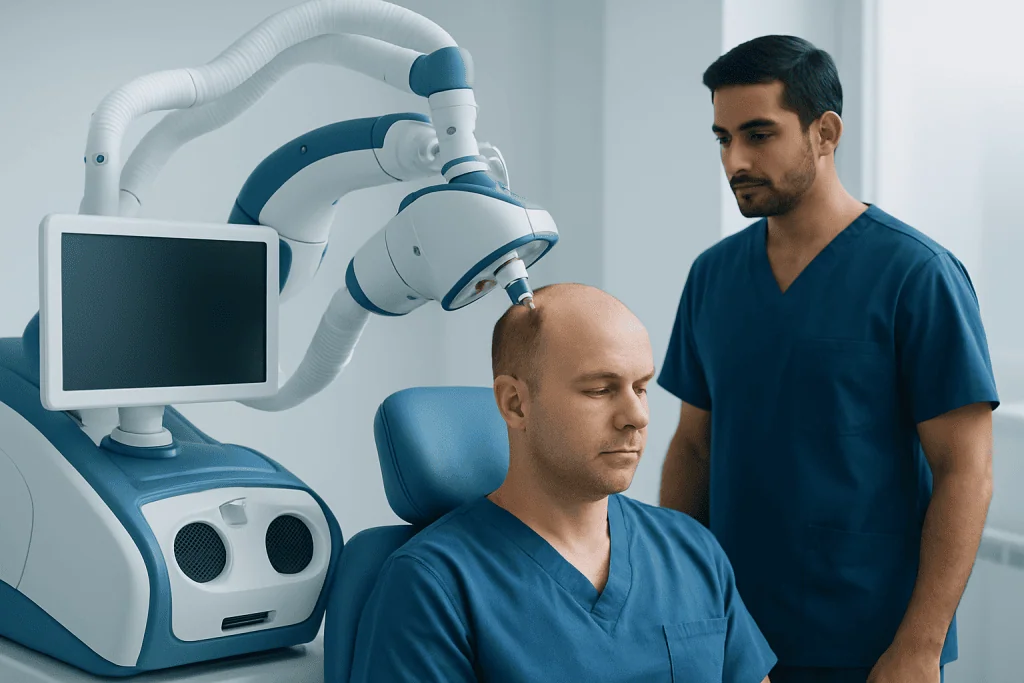
Hair transplants are most often used for androgenetic alopecia, also called male or female pattern hair loss. They may also be considered for some people with hair loss related to scars, prior surgery, burns, or traction in selected cases. A transplant is usually most effective when the pattern of hair loss is relatively stable and there is enough healthy donor hair available.
A good candidate generally has realistic expectations, a healthy scalp, and adequate hair density in the donor area. The procedure can improve coverage and frame the face, but it does not create unlimited hair. Because the donor supply is finite, planning is important, especially for younger people whose hair loss may continue over time.
Some causes of hair loss are not well suited to transplantation until the underlying issue is diagnosed and controlled. For example, active inflammatory scalp disease or sudden diffuse shedding may need medical evaluation first. In that setting, doctors may assess conditions such as alopecia before recommending surgery.
FUE and DHI: what is the difference?

FUE stands for follicular unit extraction. In FUE, the surgeon removes individual follicular units directly from the donor area using a very small punch tool. These grafts are then prepared and later inserted into tiny sites made in the recipient area. FUE is widely used because it avoids a long linear scar and can offer a flexible, minimally invasive approach.
DHI, or direct hair implantation, is closely related to FUE because the follicles are still typically harvested individually. The difference is mainly in the implantation step. With DHI, the graft may be loaded into a special pen-like implanter, which allows the surgeon to create the site and place the graft in a controlled manner. This technique is often discussed as a type of DHI hair transplant.
Neither method is automatically better for every person. The right choice depends on hair characteristics, the size of the area being treated, desired density, the surgeon’s experience, and the treatment plan. Some clinics may also discuss FUE hair transplant as the preferred option when covering larger areas or when shaving and donor access are more straightforward.
- FUE: grafts are extracted one by one, then placed into prepared recipient sites.
- DHI: grafts are extracted individually and implanted using a specialized implanter device.
- Both methods aim to preserve graft survival and achieve a natural result.
Why graft placement matters so much
Successful hair transplantation depends on far more than simply moving follicles. Graft placement is one of the most important parts of the procedure because it shapes how the final result will look. The surgeon must consider the hairline, the angle of growth, the direction of each graft, and the density that can be safely created without harming the blood supply of the scalp.
Single-hair grafts are often used along the front hairline to create a soft, natural transition. Multi-hair grafts may be placed slightly farther back to add fullness. This artistic and technical planning helps avoid an artificial or plug-like appearance. The exact placement pattern also varies depending on whether the goal is to restore the frontal hairline, crown, temples, or scarred areas.
Spacing also matters. If grafts are packed too tightly in an unsuitable scalp area, blood flow may be affected and graft survival can be reduced. If they are placed too sparsely, the result may look thin. A balanced plan takes into account current hair, future hair loss, and whether the person may later benefit from additional options such as sapphire FUE hair transplant in selected cases.
What happens during the procedure
Before the procedure, the scalp and donor area are examined carefully. The surgical team usually plans the hairline and estimates the number of grafts needed. Photographs may be taken for planning and follow-up. The scalp is cleaned, and local anesthesia is used so the person remains comfortable while awake.
During the donor harvesting stage, the surgeon removes follicular units from the chosen donor area. The grafts are then sorted and kept in conditions designed to protect them before implantation. In FUE, recipient sites are generally created first and grafts are placed afterward. In DHI, a special implanter may be used to place grafts more directly.
The length of the procedure depends on how many grafts are needed. Larger sessions can take several hours and may sometimes be divided into stages. The team monitors the grafts carefully throughout the process because gentle handling and minimal time outside the body help support graft survival.
After the procedure, tiny crusts or scabs usually form around the implanted follicles. Mild redness, swelling, or tenderness can occur for a short time. Most people return home the same day with detailed instructions for washing, sleeping position, activity limits, and scalp care.
Recovery, growth timeline, and results
Recovery after a hair transplant is usually gradual and manageable. In the first days, the scalp may feel tight, sensitive, or mildly swollen, especially near the forehead. Small scabs typically fall away over one to two weeks. Patients are usually advised to avoid scratching, rubbing, intense exercise, and direct sun exposure during early healing.
It is common for the transplanted hairs to shed in the weeks after the procedure. This can be unsettling, but it is usually a normal part of the process called shock shedding. The follicles remain in place under the skin and later begin a new growth cycle. New visible growth often starts after several months, with continued improvement over 9 to 12 months and sometimes longer.
Results vary from person to person. Factors include donor hair quality, the extent of hair loss, scalp characteristics, and ongoing changes in native hair. A transplant improves coverage, but it does not stop future hair loss in untreated areas. For this reason, doctors may also discuss long-term follow-up and medical treatment options to help preserve existing hair.
Risks, limitations, and how doctors choose the best approach
Hair transplants are generally considered safe when performed by qualified professionals, but like any procedure they have potential risks. These can include temporary swelling, bleeding, infection, numbness, folliculitis, visible scarring, or an uneven cosmetic result. Some people may also need more than one session to reach their desired coverage.
There are also practical limitations. The donor area provides a limited number of grafts, so surgeons must use them carefully. People with advanced hair loss, very fine donor hair, poor scalp laxity, or certain medical or inflammatory scalp conditions may have more limited options. In some cases, the focus may shift from maximum density to creating an appearance of natural framing and improved coverage.
A specialist usually chooses the approach based on the pattern of hair loss, donor supply, hair curl and thickness, scalp health, and cosmetic goals. A thoughtful consultation is important because the best plan should fit both current needs and likely future hair changes. Near the end of care planning, some international patients choose centers such as Acibadem International, where multidisciplinary specialists in JCI-accredited hospitals diagnose and treat hair loss and perform restoration procedures.
Self-care, preparation, and when to see a doctor
Preparation often begins with a medical assessment to understand the cause of hair loss and review medications, allergies, and general health. Patients may be advised to stop smoking if possible, avoid certain blood-thinning products if medically appropriate, and follow specific hair-washing or scalp-care instructions. Clear preoperative guidance can help reduce complications and support healing.
After the procedure, gentle aftercare is essential. Patients should follow the clinic’s instructions on washing, sleeping with the head elevated, and avoiding trauma to the scalp. They should also attend follow-up appointments so the team can check healing and discuss the growth timeline. Patience is important, since final results are not immediate.
A doctor should be contacted if there is increasing pain, spreading redness, fever, pus, heavy bleeding, or sudden worsening swelling. Medical advice is also important if hair loss is rapid, patchy, associated with itching or scaling, or happening together with other symptoms. These features may suggest a cause that needs diagnosis before any cosmetic treatment is considered.
Frequently asked questions
Is FUE better than DHI?
Neither technique is universally better for everyone. FUE and DHI both transplant living follicles, but they differ mainly in the implantation method. The best option depends on the pattern of hair loss, donor area quality, treatment goals, and the experience of the surgical team.
Do transplanted hairs last permanently?
Transplanted follicles are usually taken from areas that are more resistant to common pattern hair loss, so they can provide long-lasting growth. However, natural aging and continued loss of non-transplanted hair can still affect the overall appearance over time. Long-term planning is an important part of treatment.
How long does it take to see results after a hair transplant?
Visible growth usually does not happen right away. It is common for transplanted hairs to shed first, then begin growing again after several months. Many people see progressive improvement over 9 to 12 months, with final maturation sometimes taking longer.
Does a hair transplant hurt?
The procedure is usually performed under local anesthesia, so discomfort during the surgery is generally limited. Mild soreness, tightness, swelling, or tenderness can happen afterward, especially in the first few days. The care team usually provides guidance to help manage recovery comfortably.
Can women have hair transplants too?
Yes, some women are good candidates for hair transplantation, especially when hair loss follows a stable pattern and the donor area is suitable. Women with diffuse shedding or certain medical causes of hair loss may need further evaluation first. A specialist can help determine whether surgery or medical treatment is more appropriate.
Will the transplanted hair look natural?
A natural appearance depends heavily on surgical planning and graft placement. The hairline design, the use of single-hair grafts at the front, and the angle and direction of implanted hairs all matter. When these details are handled carefully, the result can blend well with existing hair.
References
- American Academy of Dermatology
- International Society of Hair Restoration Surgery
- National Health Service
- Mayo Clinic
- American Society of Plastic Surgeons
This article is for general information only and is not a substitute for professional medical advice. Please consult a qualified doctor about your individual situation.
Hair transplant in Turkey — costs, graft counts & a free assessment
JCI-accredited · board-certified surgeons · reply within 24h
Add us as a Preferred Source to see more of our trusted health content across Google Search, AI Overviews and Discover.

More from the Health Library



Related Specialists

Prof. Dr. Taner Güneş
Orthopedic Surgery & Traumatology
Assoc. Prof. Dr. Burçin Beken
Pediatric Allergy
Prof. Dr. Erkan Vardareli
Nuclear Medicine
Assoc. Prof. Dr. A. Erdem Kilavuz
Ear Nose & Throat