How Long Breast Milk Can Sit Out? A Doctor-Reviewed Answer

Fresh breast milk is generally considered safe at room temperature for up to 4 hours. Cooler room temperatures are safer than warm environments, and heat shortens safe storage time.
Key Takeaways
- Fresh breast milk is generally considered safe at room temperature for up to 4 hours.
- Cooler room temperatures are safer than warm environments, and heat shortens safe storage time.
- If there is uncertainty about how long milk has been out, it is usually safest not to use it.
- Milk left over after a feeding should usually be used within 2 hours or discarded.
- Most exposure concerns do not cause harm, but signs of illness in a baby should prompt medical advice.
Freshly expressed breast milk can often sit out at room temperature for up to 4 hours and still be used safely, which is reassuring for many families. Risk rises with heat, repeated handling, and longer storage, so it helps to know when milk can still be used, when it should be chilled, and when it is better to discard it.
Overview: the short answer parents often need
For most healthy full-term babies, freshly expressed breast milk can usually sit out at room temperature for up to 4 hours. In many everyday situations, a brief period on the counter is harmless, especially if the room is not hot and the milk was expressed and handled cleanly.
The main concern is not that breast milk suddenly becomes unsafe at one exact minute, but that bacteria can grow more easily over time, especially in warm conditions. This is why storage guidance focuses on practical time windows rather than an all-or-nothing rule.
If breast milk has been out longer than recommended, has an unusual odor that is clearly different from its normal smell, or was kept in a very warm place, it is generally safer to discard it. If a baby drinks milk that may have been left out too long, most babies remain well, but caregivers should watch for vomiting, diarrhea, fever, poor feeding, or unusual sleepiness.
What affects how long breast milk can sit out
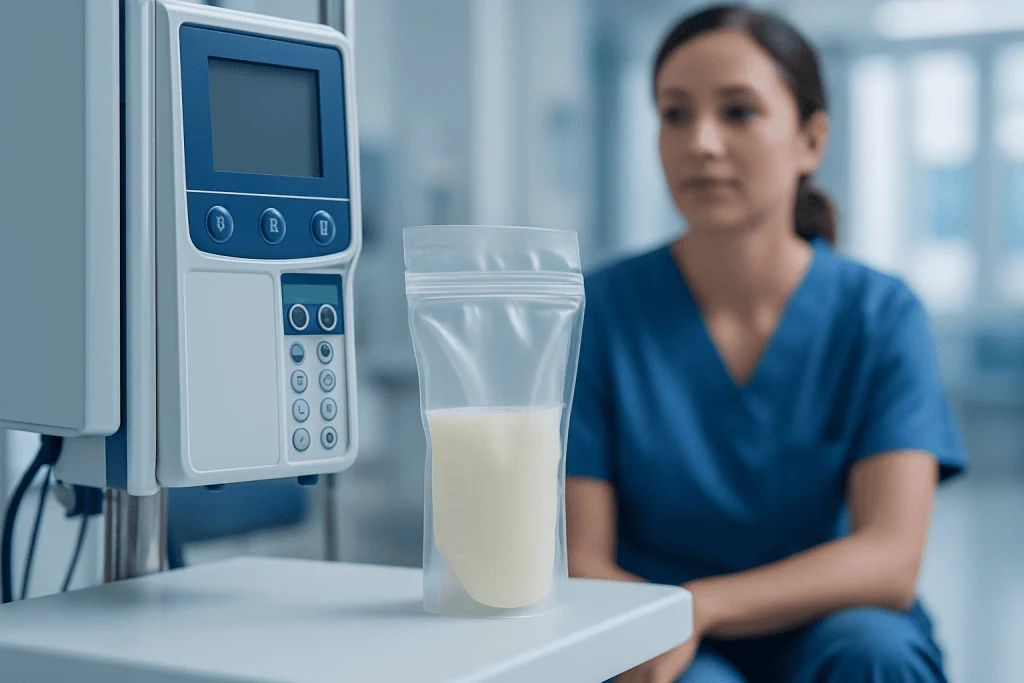
Several factors influence safe storage time. The most important are room temperature, how clean the pump parts and containers were, whether the milk was freshly expressed or previously refrigerated, and whether the baby has already started feeding from that bottle.
Freshly expressed milk keeps better than milk that has already been warmed. Once milk is warmed or once a baby has fed from the bottle, bacteria from the baby’s mouth can enter the milk, which shortens how long it should be kept.
General guidance used by many clinicians includes the following:
- Freshly expressed milk: usually up to 4 hours at room temperature.
- If the room is especially cool and conditions are very clean: some guidance allows a bit longer, but many families find 4 hours the simplest rule.
- Previously refrigerated or thawed milk: it should not stay out as long as fresh milk.
- Leftover milk after a feeding: it is usually best used within 2 hours.
Warm environments matter. A bottle left in direct sunlight, a hot car, or near a radiator is more likely to warm quickly and should not be treated the same way as milk kept in a cool indoor room.
When breast milk should be discarded
Breast milk should usually be discarded if the safe room-temperature window has clearly passed, if the milk was exposed to significant heat, or if there is no reliable way to know how long it has been sitting out. When timing is uncertain, a cautious approach is best, especially for newborns or medically vulnerable infants.
Milk that remains after a feeding should also be handled differently from untouched milk. Because a baby has already fed from the bottle, the remaining milk is more likely to contain bacteria. Many clinicians advise using it within 2 hours after the feeding ends, then discarding anything left.
Parents sometimes notice that stored breast milk smells different after refrigeration or freezing. A change in smell does not always mean spoilage, because breast milk can naturally vary and may develop a soapy odor due to lipase activity. However, if milk smells clearly sour or rancid and something seems off, it is reasonable not to use it.
For babies who were born early, have immune problems, or are medically fragile, storage questions deserve extra caution. In those situations, a pediatrician, neonatologist, or lactation specialist can give more individualized advice.
Why storage guidance matters for baby health
Breast milk has natural protective properties, including immune factors that help limit bacterial growth. That is one reason brief room-temperature storage is often acceptable. Even so, breast milk is still a biologic food, and over time bacteria from the skin, pump parts, containers, or the environment can multiply.
If milk has been mishandled, the main risk is a gastrointestinal illness. This may cause symptoms such as vomiting, diarrhea, fussiness, poor feeding, or fever. In many cases, if a baby drinks milk that was left out too long, nothing serious happens, but parents should still observe the baby over the next day.
Babies at higher risk of complications include newborns in the first weeks of life, premature infants, and babies with underlying medical conditions. Families who are already navigating issues such as reflux, feeding difficulty, or poor weight gain may be working with pediatric specialists for related concerns such as reflux in babies.
If feeding concerns are ongoing, evaluation may also include broader support around infant nutrition and swallowing. In some settings, doctors may involve services linked to pediatric care or feeding assessment to help determine whether symptoms are related to storage issues or another cause.
What to do if a baby drank breast milk that sat out too long
First, it helps to stay calm. In most cases, a single accidental feeding does not lead to serious illness. The safest next step is usually simple observation, not emergency treatment.
Caregivers can monitor for symptoms over the next several hours to day. Watch for repeated vomiting, diarrhea, fever, unusual irritability, refusal to feed, signs of dehydration such as fewer wet diapers, or marked sleepiness that is different from the baby’s usual pattern.
If no symptoms appear and the baby continues feeding normally, no testing is usually needed. If mild stomach upset develops, a doctor may recommend continued feeding, hydration monitoring, and close follow-up. If symptoms are more significant, medical review is important because babies can become dehydrated more quickly than adults.
When a doctor evaluates a baby after a possible feeding exposure, the clinician usually starts by asking how long the milk was out, whether the milk was fresh or previously warmed, how old the baby is, and what symptoms are present. The examination focuses on hydration, temperature, alertness, abdominal findings, and feeding tolerance. Tests are not always necessary, but they may be considered if the baby appears unwell or if another infection is possible.
Safe handling and storage tips at home
Many storage problems are preventable with a simple routine. Parents can label containers with the date and time expressed, refrigerate or freeze milk promptly when possible, and store milk in clean, food-grade containers or breast milk storage bags. Smaller portions can also reduce waste.
Before expressing milk, hands should be washed well, and pump parts should be cleaned according to manufacturer and clinical guidance. If milk will be used soon, it can stay at room temperature within the recommended time window. If there is any doubt that it will be needed right away, refrigeration is the safer option.
Additional practical tips include:
- Keep milk away from direct sunlight and other heat sources.
- Use insulated cooler bags with ice packs when traveling.
- Warm only the amount likely to be used for one feeding.
- Avoid repeatedly warming and cooling the same milk.
- When in doubt about timing, choose safety and discard the milk.
Families who need support with breastfeeding, pumping, or infant feeding technique may benefit from guidance connected to obstetrics and gynecology care or pediatric follow-up. Sometimes concerns about feeding volume, latch, or maternal breast discomfort overlap with conditions such as mastitis, which can also affect the feeding experience.
When to seek medical care
Most cases do not require a doctor, especially if the baby seems well after the feeding. Medical advice is more important if the baby is younger than 3 months, was born prematurely, has an immune disorder, or has another medical condition that raises infection risk.
Parents should contact a healthcare professional promptly if the baby develops repeated vomiting, persistent diarrhea, fever, fewer wet diapers, poor feeding, unusual limpness, trouble waking, breathing difficulty, or signs of dehydration such as a dry mouth and no tears when crying. These symptoms do not always mean the milk was the cause, but they deserve evaluation.
Urgent care is also appropriate if there is blood in the stool, green vomit, severe lethargy, or the baby appears seriously unwell. In a clinical setting, doctors may assess hydration, feeding, temperature, and whether another illness is present. If needed, further support may involve neonatal intensive care for very young or medically fragile infants, though this is not required in most routine exposure situations.
For international patients who need pediatric or maternal-infant evaluation, Acibadem International’s multidisciplinary specialists and JCI-accredited hospitals provide diagnosis and treatment support based on the baby’s age, symptoms, and overall health.
Frequently asked questions
How long can breast milk sit out at room temperature?
Freshly expressed breast milk is generally considered safe at room temperature for up to 4 hours. If the room is warm, it is safer to use or refrigerate it sooner.
Can breast milk sit out for 6 hours?
Six hours is usually beyond the commonly recommended room-temperature window for fresh breast milk. In a very cool room some guidance may be more flexible, but if there is uncertainty, it is safer to discard it.
How long can leftover breast milk stay out after a feeding?
Once a baby has fed from a bottle, the leftover milk should usually be used within 2 hours. After that, it is generally best to discard what remains.
What if the baby drank breast milk that was left out too long?
Most babies do not become seriously ill after one accidental exposure, so families should not panic. The baby should be observed for vomiting, diarrhea, fever, poor feeding, or unusual sleepiness, and a doctor should be contacted if symptoms appear.
Does breast milk spoil faster in hot weather?
Yes. Higher temperatures allow bacteria to multiply more quickly, so milk should not stay out as long in warm rooms, cars, or outdoor settings.
How can parents tell if breast milk has gone bad?
There is no perfect home test, so timing and storage conditions matter most. If milk smells clearly sour, has been left out too long, or the storage history is uncertain, it is usually safest not to use it.
References
- Centers for Disease Control and Prevention
- American Academy of Pediatrics
- Academy of Breastfeeding Medicine
- La Leche League International
- World Health Organization
This article is for general information only and is not a substitute for professional medical advice. Please consult a qualified doctor about your individual situation.
Explore treatments in Turkey — costs, top hospitals & a free quote
JCI-accredited · board-certified surgeons · reply within 24h
Add us as a Preferred Source to see more of our trusted health content across Google Search, AI Overviews and Discover.