How Long Can Head Lice Live Off the Host? Here Is What the Evidence Says

Head lice usually live only 1 to 2 days away from the human scalp. Lice eggs are less likely to hatch off the head because they need warmth close to the scalp.
Key Takeaways
- Head lice usually live only 1 to 2 days away from the human scalp.
- Lice eggs are less likely to hatch off the head because they need warmth close to the scalp.
- Head-to-head contact is the main way lice spread; objects like hats and bedding are a less common source.
- Most cases are harmless, but persistent itching, scalp sores, or signs of infection should be checked by a doctor.
- Doctors diagnose head lice by finding live lice or viable eggs close to the scalp.
How long can head lice live off the host? In most cases, head lice survive only about 1 to 2 days away from a person’s scalp, while eggs usually do not hatch at room temperature unless they stay close to scalp-like warmth. This means lice are usually managed with direct treatment of the person and sensible cleaning, rather than aggressive whole-home disinfection.
Overview: the short answer
For most people, head lice are more unpleasant than dangerous. The answer to the main question is usually straightforward: head lice generally live only 1 to 2 days off the human host. They depend on regular blood meals and the warmth and humidity of the scalp, so they do not survive well on furniture, floors, or other household surfaces.
This matters because many families worry that a home, school bag, or mattress will stay infested for a long time. In reality, prolonged survival away from the scalp is uncommon. Eggs, often called nits, are also less likely to develop normally once they are removed from hair near the scalp, because they need specific conditions to hatch.
That is why experts usually recommend a practical response: treat the affected person, check close contacts, and clean recently used personal items sensibly. Most situations do not require extensive spraying, fogging, or throwing away belongings.
How head lice survive away from the scalp
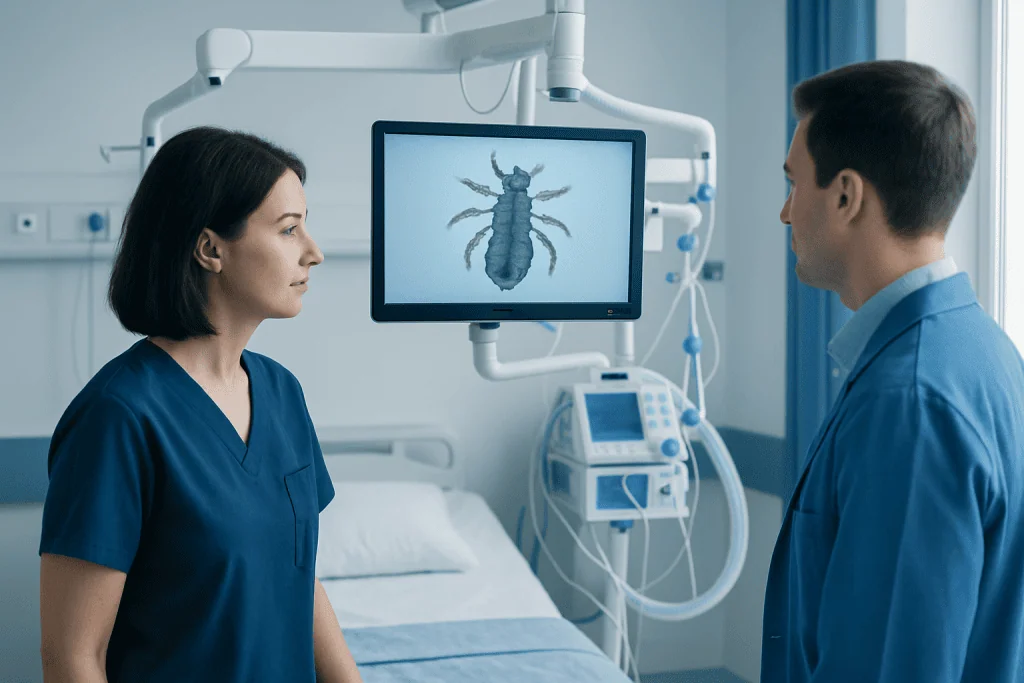
Head lice are small insects adapted to live on human scalp hair. They feed several times a day on blood from the scalp and are built to cling to hair shafts rather than to live in carpets, pets, or household dust. Once separated from a person, they begin to dehydrate and lose access to food, so survival is brief.
Under typical indoor conditions, a live louse found on a pillow, hat, or hairbrush is unlikely to stay alive beyond 24 to 48 hours. Some may die sooner depending on temperature, humidity, and how long it has been since the insect fed. This is why transmission through objects can happen, but it is much less common than direct head-to-head contact.
Eggs behave differently from live lice. A nit that is firmly attached very close to the scalp may still be viable, but eggs found farther down the hair shaft are often already empty or nonviable. If eggs are removed from the scalp environment, many will not hatch because room conditions do not reliably provide the warmth they need.
Where lice spread most often—and where they usually do not

Head lice spread mainly through close head-to-head contact. This is why they are common among school-aged children, siblings, and others who play, rest, or sit closely together. Lice do not jump or fly; they crawl from one hair shaft to another when people are in direct contact.
Spread through objects is possible but less efficient. Shared hats, scarves, hair accessories, combs, pillows, or headphones can occasionally transfer a live louse if used soon after an infested person. However, because lice survive poorly off the scalp, the risk from the environment drops quickly over time.
It is also helpful to know what does not usually spread head lice. They are not a sign of poor hygiene, and they do not come from pets. Families sometimes confuse scalp conditions such as dandruff or eczema with lice, so a visual check is important before treatment. If scalp symptoms seem unusual, a doctor may also consider other causes such as seborrheic dermatitis.
Symptoms and what families often notice first
The most common symptom is an itchy scalp, especially behind the ears and at the back of the neck. The itching is caused by a reaction to louse bites and may take time to appear, so a person can have lice before symptoms become obvious. Some people have very mild itching or none at all.
Families may also notice small moving insects in the hair or tiny oval eggs attached to hair shafts. Unlike dandruff, nits are usually difficult to slide off with the fingers because they are cemented to the hair. Scratching can sometimes lead to redness, irritation, or small sores.
These signs can be upsetting, but they are usually not medically serious. Still, heavy scratching may damage the skin and allow a secondary bacterial infection to develop. If there is significant rash, pus, crusting, swelling, or pain, medical review is sensible.
How doctors diagnose head lice
Diagnosis is based on finding live lice or viable eggs, not on itching alone. A doctor or other trained clinician will usually examine the scalp closely, especially the nape of the neck and behind the ears. Good lighting and a fine-toothed lice comb can make detection easier.
Doctors often look for crawling lice first, because this confirms an active infestation. Eggs close to the scalp may support the diagnosis, but eggs farther from the scalp may reflect an old infestation rather than a current one. The clinician may also ask when symptoms started, whether close contacts are itchy, and what treatments have already been tried.
If the scalp is inflamed or the diagnosis is unclear, the doctor may check for other conditions that can mimic lice. These can include dandruff, hair casts, eczema, or skin irritation from hair products. When needed, dermatology assessment may help clarify whether symptoms relate to lice or another scalp disorder.
Treatment and practical cleaning steps
Treatment focuses on the scalp and hair, because that is where lice live and feed. Doctors may recommend over-the-counter or prescription lice treatments depending on the person’s age, local guidance, and whether resistance or treatment failure is suspected. Careful combing to remove lice and eggs is often part of treatment, either alone in selected cases or together with medicated products.
It is important to follow product instructions closely and repeat treatment if advised, since some products do not kill all eggs. If several household members have close contact, they may need checking on the same day. A clinician may recommend dermatology care when the diagnosis is uncertain, symptoms are persistent, or the scalp is badly irritated.
Cleaning after lice should be focused and realistic rather than extreme. Useful steps include washing recently worn clothes, pillowcases, hats, and bed linens in hot water when appropriate for the fabric, and drying them with heat if possible. Combs and brushes can be soaked in hot water. Items that cannot be washed may be sealed aside for a couple of days, which is usually enough because live lice do not survive long off the host.
Aggressive environmental measures are usually unnecessary. Insecticide sprays for the home are generally not recommended. Vacuuming soft furnishings and floors can be reasonable for reassurance, but extensive deep-cleaning is not usually needed.
When to seek medical care
Most head lice cases can be managed without urgency, and many are harmless apart from discomfort and inconvenience. However, medical advice is helpful if a person has severe or persistent scalp itching, visible sores from scratching, swollen skin, or signs of infection such as increasing redness, tenderness, crusting, or discharge.
Professional review is also wise if treatment has not worked, if live lice are still seen after properly timed treatment, or if the affected person is very young, pregnant, has sensitive skin, or has another medical condition that makes treatment choices more complicated. A doctor can confirm whether lice are still present and suggest a safer or more effective plan.
If scalp symptoms are not typical for lice, a clinician may look for another skin condition or infection. In some cases, referral for pediatric dermatology or general skin assessment may be helpful, especially in children with recurrent scalp irritation. Near the end of the care pathway, Acibadem International’s multidisciplinary specialists and JCI-accredited hospitals diagnose and treat scalp and skin conditions for international patients.
Frequently asked questions
Can head lice live on pillows or bedding for a long time?
Usually no. Head lice generally survive only 1 to 2 days away from the scalp, so they do not tend to live for long on pillows, sheets, or blankets. Washing recently used bedding is sensible, but prolonged infestation of household fabrics is not typical.
Do lice eggs hatch off the head?
Most eggs do not hatch successfully once they are away from the warm conditions near the scalp. Eggs attached close to the scalp are more likely to be viable than eggs found farther down the hair shaft. This is one reason doctors focus treatment on the hair and scalp rather than the whole home.
Can a child get head lice from a couch or carpet?
It is possible, but this is not the usual way lice spread. Head-to-head contact is the main route because lice crawl directly from one person’s hair to another’s. Since lice survive poorly away from the scalp, environmental spread is much less efficient.
How can someone tell the difference between nits and dandruff?
Nits are typically attached firmly to the hair shaft and do not brush away easily. Dandruff flakes are usually loose and can be moved or shaken off. If the difference is not clear, a doctor or pharmacist can help check the scalp.
Should the whole family be treated if one person has lice?
Not always. Close contacts should usually be checked carefully, and only people with evidence of lice or according to a clinician’s advice generally need treatment. Treating everyone without checking first may expose people to unnecessary products.
When is head lice a reason to see a doctor?
Medical care is worth seeking if there are signs of skin infection, severe irritation, uncertain diagnosis, or treatment failure. A doctor can also help when the affected person is very young, has sensitive skin, or needs a treatment plan tailored to other health issues.
References
- Centers for Disease Control and Prevention
- American Academy of Pediatrics
- National Health Service
- Mayo Clinic
- American Academy of Dermatology
This article is for general information only and is not a substitute for professional medical advice. Please consult a qualified doctor about your individual situation.
Hair transplant in Turkey — costs, graft counts & a free assessment
JCI-accredited · board-certified surgeons · reply within 24h
Add us as a Preferred Source to see more of our trusted health content across Google Search, AI Overviews and Discover.