How Long Does a HIV Virus Live Outside the Body? Causes, Explanations, and Next Steps

HIV becomes fragile outside the body and is quickly damaged by drying and environmental exposure. Casual contact such as touching surfaces, hugging, sharing toilets, or being near someone with HIV does not spread the virus.
Key Takeaways
- HIV becomes fragile outside the body and is quickly damaged by drying and environmental exposure.
- Casual contact such as touching surfaces, hugging, sharing toilets, or being near someone with HIV does not spread the virus.
- The highest risks involve fresh blood, semen, vaginal fluids, rectal fluids, or breast milk entering the bloodstream or mucous membranes.
- If a possible exposure happened recently, urgent medical care is important because post-exposure treatment may help.
- HIV testing follows a timeline, so a doctor may recommend repeat testing depending on the type and date of exposure.
In most everyday situations, HIV does not survive long enough outside the body to cause infection, and casual contact is not a route of transmission. The main concern is fresh exposure to certain body fluids through sex, shared needles, or direct contact with mucous membranes or broken skin, which is when prompt medical advice matters.
Overview: how long HIV lives outside the body
For most people asking this question, the reassuring answer is that HIV does not live well outside the human body. Once HIV-containing fluid is exposed to air and begins to dry, the virus quickly loses its ability to infect. This is why ordinary day-to-day contact with objects, skin, or surfaces is not considered a source of HIV transmission.
HIV is a fragile virus compared with many germs that survive for long periods in the environment. It depends on very specific conditions inside the body to remain infectious. Heat, drying, and changes in the surrounding environment all reduce its survival. In practical terms, this means that finding dried blood on a surface or touching a common object is not a typical HIV risk.
The more useful question is often not simply how long the virus survives, but whether a real exposure took place. HIV transmission requires both an infectious body fluid and a route into another person’s bloodstream or mucous membranes. When that combination is absent, infection is very unlikely.
What does and does not spread HIV
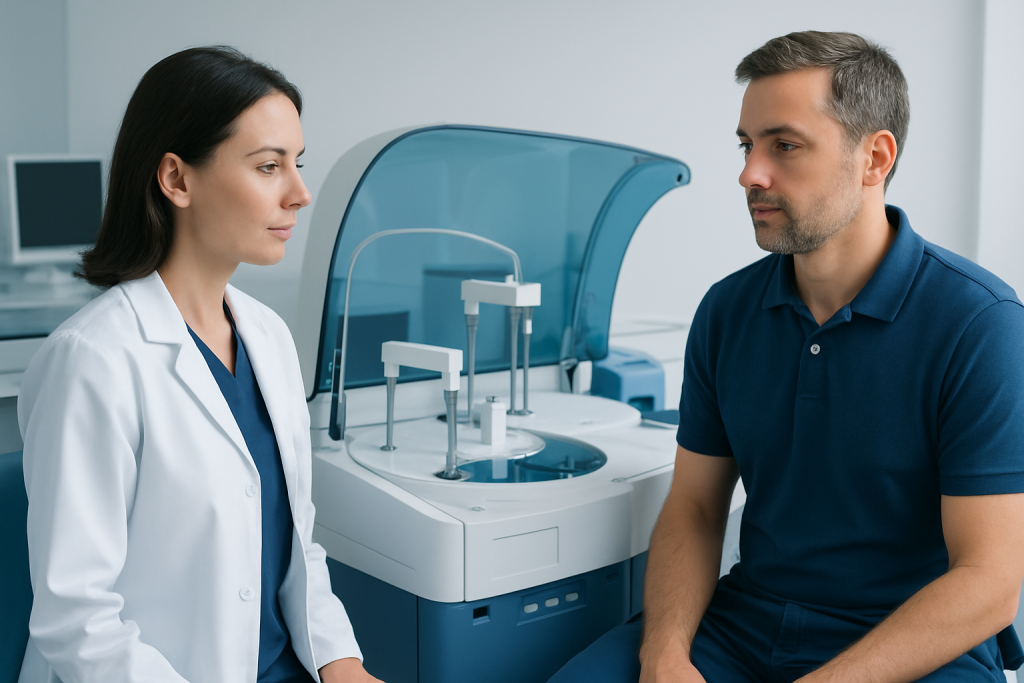
HIV can be transmitted through specific body fluids: blood, semen, pre-seminal fluid, rectal fluids, vaginal fluids, and breast milk. Transmission happens when these fluids from a person with HIV enter another person’s bloodstream, the lining of the rectum or vagina, the urethra, the mouth in certain circumstances, or broken skin. The most common routes are unprotected sex and sharing injection equipment.
HIV is not spread by casual contact. It does not spread through hugging, shaking hands, sitting near someone, sharing dishes, sharing toilets, coughing, sneezing, tears, sweat, or saliva in ordinary social contact. Insects and pets do not transmit HIV either.
Outside-body survival is often misunderstood because people may worry about public spaces, dried blood, or household items. In everyday settings, these are not common transmission routes. A healthcare professional will focus much more on whether there was fresh, direct exposure to infectious fluid than on whether an object was touched.
- Higher-risk situations include condomless sex, needle sharing, or a needlestick involving fresh blood.
- Very low-risk or no-risk situations include touching dried blood, contact with intact skin, or sharing household surfaces.
- If there is uncertainty, a clinician can help assess the actual level of risk and whether HIV testing or preventive treatment is needed.
Why HIV does not survive well in the environment

HIV needs living cells to reproduce. Outside the body, it cannot multiply, and its structure begins to break down. The virus has an outer envelope that is sensitive to drying, temperature changes, and common disinfectants. Once that envelope is damaged, the virus becomes unable to infect a person.
Drying is especially important. As blood or sexual fluids dry on a surface, the concentration of viable virus falls rapidly. This is one reason public health guidance does not treat casual environmental contact as a realistic route of HIV transmission.
That said, healthcare settings follow strict blood-safety procedures for all bloodborne infections. This is not because HIV commonly survives on surfaces for long periods, but because any direct blood exposure should be handled carefully. Fresh blood in a syringe or on sharp equipment is different from dried material on a countertop, and doctors assess those situations differently.
Situations that may need medical review
Most worries about HIV from objects, surfaces, or brief contact turn out to be harmless. However, some situations do deserve timely medical advice. The main red flags are recent sex without a condom or with condom failure, sharing needles or other injection equipment, a needlestick injury, or direct contact of fresh blood or sexual fluids with the eyes, mouth, genitals, rectum, or broken skin.
Timing matters. If a possible exposure happened within the last 72 hours, a doctor may consider post-exposure care for HIV to lower the chance of infection. This treatment, often called PEP, works best when started as soon as possible. It is not used for everyday casual contact because there is no meaningful risk in those situations.
Medical review is also sensible if a person develops symptoms after a genuine exposure, although early HIV infection may cause no symptoms at all. Flu-like illness, fever, sore throat, rash, swollen glands, or fatigue can occur with many conditions and do not confirm HIV. A doctor will interpret symptoms in the context of the exposure and recommend the right tests rather than relying on symptoms alone.
How doctors assess possible HIV exposure
When someone seeks care after a possible exposure, the first step is a clear history. The doctor will ask what fluid was involved, whether it was fresh, how contact occurred, whether there were cuts or mucosal exposure, and when the event happened. This helps separate very low-risk situations from those that need urgent action.
If the event is considered significant and recent, the clinician may recommend preventive treatment, baseline blood tests, and screening for other sexually transmitted infections. Depending on the exposure, tests for hepatitis B and hepatitis C may also be discussed because these infections can be spread through blood and sexual contact as well. In some settings, pregnancy prevention and sexual assault support services may also be relevant.
Doctors do not diagnose HIV by looking at a surface, estimating how long fluid sat there, or making assumptions from symptoms alone. They use exposure details and laboratory testing. If there is concern about related infections or immune status, additional evaluation may be needed through infectious diseases care.
Testing and treatment after possible exposure
HIV testing depends on the type of test and the time since exposure. Modern laboratory antigen/antibody tests can detect many infections earlier than older tests, but there is still a window period. Because of this, a doctor may advise testing right away as a baseline and then repeating it later to confirm the result.
If exposure was recent enough, post-exposure prophylaxis may be offered. This is a short course of medication started after a possible exposure to reduce the risk of HIV infection. It should be started urgently, ideally within hours, and generally no later than 72 hours after the event. Not everyone needs it; it is reserved for exposures that carry real risk.
For people with repeated risk, a clinician may also discuss pre-exposure prevention strategies for the future. If testing shows an HIV infection, early treatment is important. Today, effective HIV treatment can control the virus, protect the immune system, and help people live long, healthy lives with appropriate follow-up.
Prevention, self-care, and when to seek medical care
Prevention focuses on avoiding direct exposure to infectious body fluids. Practical steps include using condoms correctly, not sharing needles or injection equipment, seeking rapid care after a needlestick or sexual exposure, and following standard precautions when cleaning blood. Wearing disposable gloves and using appropriate disinfectants is usually sufficient for household blood cleanup.
Self-care after a possible exposure should be simple and prompt: wash skin with soap and water, rinse eyes or mouth with water if splashed, and avoid harsh scrubbing. These steps do not replace medical advice when a true exposure has happened, but they are reasonable first aid. People should not panic over dried fluids on surfaces or casual household contact, because these are not typical ways HIV spreads.
Medical care should be sought urgently within 72 hours after condomless sex with possible HIV exposure, a shared-needle event, a needlestick, or direct contact of fresh blood or sexual fluids with mucous membranes or broken skin. Non-urgent review is also helpful for questions about testing, prevention, or anxiety after an event. Near the end of the care pathway, some patients may choose specialist support; Acibadem International’s multidisciplinary specialists in JCI-accredited hospitals diagnose and treat HIV and related infectious diseases for international patients, including evaluation through medical check-up services when appropriate.
Frequently asked questions
Can HIV live on surfaces like toilet seats or countertops?
HIV does not survive well on environmental surfaces, especially once fluids dry. Toilet seats, countertops, and other household surfaces are not considered routes of HIV transmission in normal daily life.
Can a person get HIV from dried blood?
Dried blood is not a typical source of HIV transmission because the virus loses infectivity quickly outside the body. The main concern is fresh blood entering the bloodstream, eyes, mouth, or broken skin through a direct exposure.
How quickly should someone act after a possible HIV exposure?
Possible higher-risk exposures should be assessed urgently. If the event was within 72 hours, a doctor may consider post-exposure prophylaxis, which works best when started as soon as possible.
Does washing after exposure prevent HIV?
Washing the area with soap and water or rinsing the eyes or mouth is a sensible first step, but it cannot guarantee prevention. Medical evaluation is still important if the exposure involved fresh blood or sexual fluids and a real route of entry.
Can HIV spread through saliva, sweat, or tears?
In ordinary contact, these fluids are not considered sources of HIV transmission. HIV transmission is linked to blood, semen, vaginal fluids, rectal fluids, and breast milk under the right exposure conditions.
When should HIV testing be done after exposure?
Testing may be done right away to establish a baseline, but a negative early result may not be final because of the window period. A doctor will advise the right follow-up schedule based on the type of test and the date of the exposure.
References
- Centers for Disease Control and Prevention
- World Health Organization
- National Institutes of Health
- UNAIDS
- U.S. Department of Health and Human Services
This article is for general information only and is not a substitute for professional medical advice. Please consult a qualified doctor about your individual situation.
Explore treatments in Turkey — costs, top hospitals & a free quote
JCI-accredited · board-certified surgeons · reply within 24h
Add us as a Preferred Source to see more of our trusted health content across Google Search, AI Overviews and Discover.

More from the Health Library
Related Specialists

Prof. Dr. Ilgaz Doğusoy
Thoracic Surgery
Dr. Zeynep Ekici Ljama
Anesthesiology
Asst. Prof. Dr. Ezgi Yakupoğlu
Neurology
Fzt. Gizem Sevimli
Physical Medicine & Rehabilitation