

How Many Hairs Are in the Human Head? Causes, Explanations, and Next Steps

A typical human scalp has about 80,000 to 120,000 hairs. Losing around 50 to 100 hairs per day is often a normal part of the hair growth cycle.
Key Takeaways
- A typical human scalp has about 80,000 to 120,000 hairs.
- Losing around 50 to 100 hairs per day is often a normal part of the hair growth cycle.
- Hair density differs from person to person and can change with age, hormones, stress, nutrition, and medical conditions.
- Sudden shedding, patchy loss, scalp symptoms, or visible thinning may need medical evaluation.
- Doctors assess hair concerns with a history, scalp examination, and sometimes blood tests or a hair-pull test.
Most adults have roughly 80,000 to 120,000 hairs on the scalp, and some daily shedding is normal. Hair count varies by genetics, age, natural hair color, and scalp health, so the more useful question is often whether shedding or thinning is within a normal range.
Overview: how many hairs are in the human head?
For most adults, the answer to the question how many hairs are in the human head is about 80,000 to 120,000 scalp hairs. This range is broad because hair density naturally differs from one person to another. In many cases, noticing a few hairs on a brush, pillow, or in the shower is harmless and reflects the normal hair growth cycle rather than disease.
Hair count is not fixed for life. It can vary with genetics, age, sex, natural hair characteristics, and scalp health. Some people start with naturally denser hair, while others have fewer follicles per square centimeter of scalp. As the years pass, individual hairs may become finer, and overall density may gradually decrease.
What usually matters most is not the exact number of hairs but whether there is a change from that person’s normal pattern. Slow, age-related thinning is common. By contrast, sudden shedding, visible widening of the part, circular bald patches, or scalp irritation can suggest a condition that deserves medical review.
What affects hair count and scalp density?
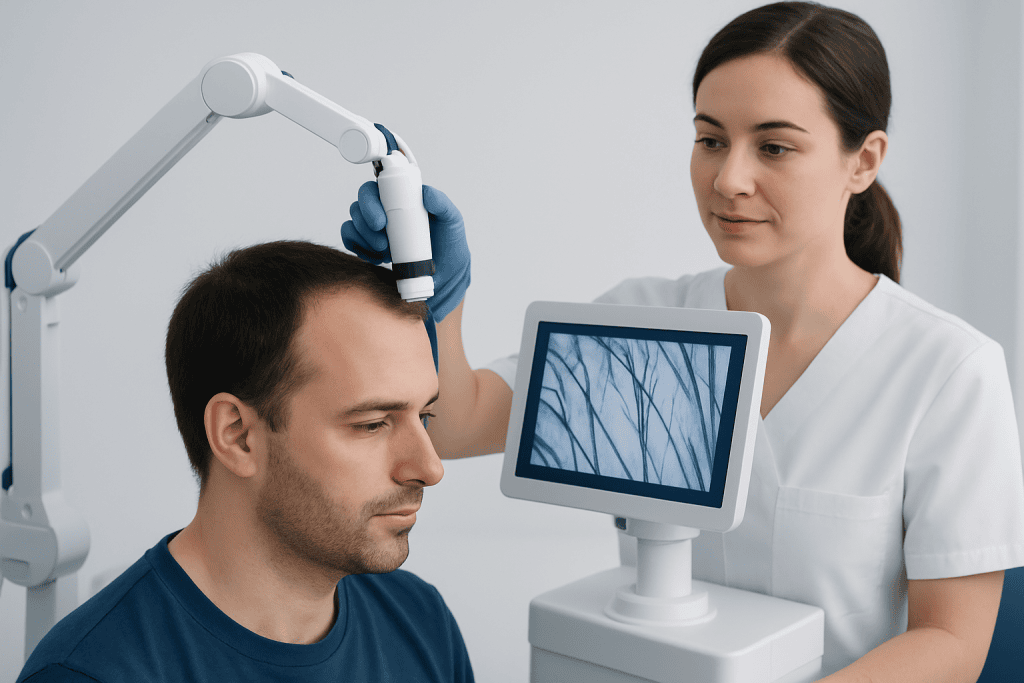
Hair density refers to how closely packed hair follicles are on the scalp. A person may have thick-looking hair because each strand is coarse, because the density is high, or both. Another person may have fine hair that appears less full even when the number of hairs is within a normal range.
Genetics is one of the biggest influences. Family patterns often shape hairline, texture, growth rate, and the likelihood of age-related thinning. Natural hair color has also been associated with different average follicle densities, although these are population-level observations and do not predict an individual person’s hair count.
Age is another key factor. Children and younger adults often have greater visible fullness because hairs are thicker and more actively growing. Over time, hair follicles can produce shorter, finer hairs. Hormonal changes, nutritional status, certain illnesses, and medications may also affect how many hairs are actively growing versus resting and shedding.
The scalp itself matters as well. Healthy follicles depend on good skin health and an adequate blood supply. Inflammatory scalp disorders, fungal infections, or scarring conditions can reduce hair density in affected areas. This is one reason why scalp symptoms should not be ignored when hair loss is present.
Normal shedding versus hair loss
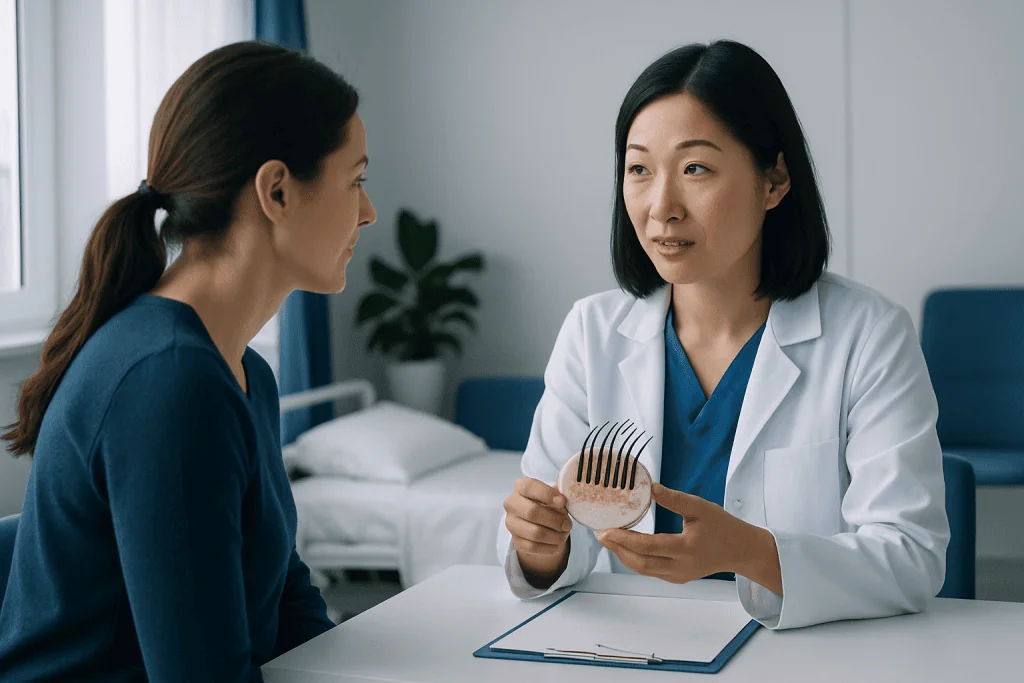
The scalp does not keep every hair forever. Each follicle cycles through growth, transition, rest, and shedding phases. Because follicles are usually in different phases at different times, a certain amount of daily shedding is expected. Many healthy adults lose around 50 to 100 hairs per day, sometimes more on shampoo days or after brushing long hair.
Normal shedding does not usually create obvious bald spots. The hairline stays similar, the part does not widen quickly, and overall fullness remains fairly stable. It is also common to notice temporary increased shedding after a stressful event, illness, major surgery, childbirth, or significant weight change. This pattern is often called telogen effluvium and may improve once the trigger resolves.
Hair loss becomes more concerning when there is a clear change in appearance or pattern. Examples include sudden handfuls of hair coming out, patchy loss, thinning at the crown, recession at the temples, or breakage due to hair shaft damage. Some causes are temporary and reversible, while others need early treatment to protect the follicles.
People sometimes confuse breakage with shedding. Shed hairs usually have a tiny bulb at one end because they came out from the root as part of the natural cycle. Broken hairs are shorter and may point to heat damage, tight hairstyles, chemical processing, or fragile hair shafts rather than true follicle loss.
Common causes of noticeable thinning or excess shedding
The most common cause of progressive thinning is inherited pattern hair loss, also called androgenetic alopecia. This can affect men and women. It often appears as a receding hairline or crown thinning in men, and as diffuse thinning over the top of the scalp or a widening part in women. Related information may also be helpful in hair loss.
Temporary shedding can follow physical or emotional stress, fever, infections, childbirth, rapid dieting, or some medications. Nutritional issues such as low iron, inadequate protein intake, or deficiencies in certain vitamins and minerals may contribute as well. Thyroid disorders and other hormonal changes can also affect the hair cycle.
Patchy hair loss may happen with autoimmune conditions such as alopecia areata, fungal infection of the scalp, traction from tight hairstyles, or less commonly scarring disorders. If the scalp is itchy, painful, flaky, red, or develops pustules, a skin or scalp disease may be playing a role. In some cases, evaluation for alopecia is appropriate.
Cosmetic habits can add to the problem. Frequent bleaching, harsh straightening treatments, excessive heat styling, and tightly pulled braids or ponytails may weaken hair shafts or damage follicles over time. These factors do not change how many follicles a person was born with, but they can reduce visible fullness and, in some cases, lead to lasting loss if not addressed.
How doctors evaluate hair concerns
If a person is worried about thinning, the first step is usually a detailed history. A doctor may ask when the shedding began, whether it was sudden or gradual, if there was a recent illness or stressor, what medications or supplements are being used, and whether there is a family history of hair loss. Questions about menstrual changes, weight loss, diet, and scalp symptoms may also help identify a cause.
The physical examination focuses on the scalp and hair pattern. The doctor may look for areas of diffuse thinning, patchy loss, inflammation, scale, scarring, or signs of breakage. A gentle hair-pull test can estimate active shedding. Some clinicians use dermoscopy, a magnified view of the scalp and follicles, to distinguish between common causes.
Blood tests are sometimes recommended, especially when the pattern is sudden, diffuse, or accompanied by symptoms suggesting a broader health issue. Tests may assess iron stores, thyroid function, nutritional status, hormone levels, or markers of inflammation depending on the clinical picture. Not everyone needs extensive testing.
When the diagnosis is uncertain, a doctor may consider fungal testing or, less commonly, a scalp biopsy. The goal is to tell the difference between temporary shedding, inherited pattern loss, inflammatory scalp disease, and scarring conditions. This matters because treatment options and urgency differ. In selected cases, medical care may include hair transplant planning after the cause has been clarified.
Treatment options and practical next steps
Treatment depends on the reason for hair loss rather than the exact number of hairs on the scalp. If the issue is temporary shedding after stress or illness, reassurance and time may be the main treatment. If an underlying problem such as thyroid disease, iron deficiency, or a scalp infection is found, treating that condition is the priority.
For inherited pattern hair loss, doctors may discuss evidence-based medical treatments that aim to slow loss and support regrowth in suitable patients. Scalp health measures, gentle hair care, and realistic expectations are important. If hair loss is advanced or stable and a person wants a procedural option, specialist assessment can help determine whether hair transplantation may be appropriate.
Some people also seek procedures to improve overall scalp or hair appearance, although these are not substitutes for diagnosing a medical cause. Depending on the situation, broader supportive care may include a dermatology review, nutritional guidance, and management of related scalp conditions. In selected settings, a cosmetic specialist may discuss options such as mesotherapy or other adjunctive approaches, but these should be considered only after proper medical evaluation.
International patients who need assessment or treatment can be evaluated by multidisciplinary specialists at Acibadem International’s JCI-accredited hospitals. The focus is on identifying the cause first, then offering an appropriate treatment plan that may range from observation and medical therapy to specialized procedures.
Self-care and healthy hair habits
Although self-care cannot change a person’s genetic number of hair follicles, it can help protect existing hair and reduce avoidable breakage. Gentle washing, avoiding very tight hairstyles, limiting heat and harsh chemical treatments, and using suitable scalp care products may all support hair appearance and comfort.
Balanced nutrition matters because hair follicles are metabolically active. Regular meals with enough protein, iron-rich foods, and overall dietary variety can support healthy hair growth. Extreme calorie restriction or rapid weight loss may trigger shedding several weeks later. Before taking supplements, it is sensible to speak with a doctor, since unnecessary supplementation is not always helpful.
Stress management can also play a role. Sleep, exercise, and recovery after illness or major life events may help the hair cycle return to baseline over time. Keeping a simple record of when shedding began, whether there were possible triggers, and how the hairline or part changes can be useful for follow-up.
People should be cautious with online claims about miracle cures. Many products promise dramatic regrowth without strong evidence. A medical assessment is more helpful than guessing, especially when shedding is persistent or unusual.
When to seek medical care
Most variation in scalp hair count is not dangerous, and mild day-to-day shedding is often normal. However, medical review is a good idea if hair loss is sudden, severe, or continues for several weeks without improvement. This is especially true when there is visible thinning, a rapidly widening part, a receding hairline, or patchy bald areas.
Prompt assessment is also important if hair changes come with scalp redness, itching, pain, crusting, scaling, pus, or tenderness. These features may suggest infection, inflammation, or a scarring process that can benefit from early treatment. Hair loss with fatigue, menstrual changes, unexpected weight change, or other systemic symptoms may point to a broader medical issue.
Children, pregnant or postpartum individuals, and people with autoimmune disease or recent major illness may need tailored guidance. If a person is distressed by changes in appearance, seeking care is still worthwhile even when the cause is not urgent. Early diagnosis can provide reassurance, identify reversible factors, and help protect long-term scalp health.
Frequently asked questions
How many hairs are in the human head on average?
Most adults have about 80,000 to 120,000 hairs on the scalp. The exact number varies naturally from person to person based on genetics, age, and hair characteristics.
Is it normal to lose hair every day?
Yes. Daily shedding is part of the normal hair cycle, and many people lose around 50 to 100 hairs a day. The amount may seem higher on wash days or after brushing long hair.
Does hair color affect how many hairs someone has?
Average hair density can differ between groups with different natural hair colors, but these are only general trends. A person's individual hair count and appearance are influenced much more by genetics, hair thickness, and scalp health.
What is the difference between shedding and thinning?
Shedding means hairs are falling out as part of the normal cycle or after a temporary trigger. Thinning means the scalp looks less full over time, often because fewer hairs are growing or hairs are becoming finer.
When should someone worry about hair loss?
It is wise to seek medical advice if hair loss is sudden, patchy, painful, or associated with scalp redness, scaling, or visible bald areas. Medical review is also helpful if shedding persists or if there are other symptoms such as fatigue, weight change, or menstrual changes.
Can the number of hairs on the head be increased?
A person cannot create new follicles through routine home care, but treatment may improve the performance of existing follicles and reduce ongoing loss. The best approach depends on the cause, so a doctor should evaluate persistent thinning or shedding.
References
- American Academy of Dermatology
- National Institute of Arthritis and Musculoskeletal and Skin Diseases
- NHS
- Mayo Clinic
- Merck Manual Consumer Version
This article is for general information only and is not a substitute for professional medical advice. Please consult a qualified doctor about your individual situation.
Hair transplant in Turkey — costs, graft counts & a free assessment
JCI-accredited · board-certified surgeons · reply within 24h
Add us as a Preferred Source to see more of our trusted health content across Google Search, AI Overviews and Discover.
Check your numbers in seconds
BMI, calories, due date, blood pressure and 30+ more clinical calculators — free, instant, doctor-reviewed ranges.

More from the Health Library



Related Specialists

Assoc. Prof. Dr. Bedriye Koyuncu Sökmen
Gastrointestinal Oncology Unit Clinical Service
Dr. Abdullah Boğa
General Surgery
Dr. Melisa Ulufi
Inpatient Clinic Physicians Clinical Service
Dr. Melike Zeynep Çapoğlu
Oral & Dental Health