How many teeth do adults have? The Numbers, Explained by Clinicians

The standard adult tooth count is 32, including 8 incisors, 4 canines, 8 premolars, and 12 molars. Adults commonly have 28 teeth if the four wisdom teeth are absent or removed.
Key Takeaways
- The standard adult tooth count is 32, including 8 incisors, 4 canines, 8 premolars, and 12 molars.
- Adults commonly have 28 teeth if the four wisdom teeth are absent or removed.
- Tooth number can vary because of genetics, impacted wisdom teeth, extra teeth, or tooth loss from decay, gum disease, or injury.
- A different tooth count is medically meaningful when it is linked to pain, swelling, crowding, bite changes, infection, or unexplained tooth loss.
- A dentist can confirm whether a tooth is missing, unerupted, impacted, or extra with an exam and dental imaging.
Most adults have 32 permanent teeth when all four wisdom teeth are present. Many adults have 28 because wisdom teeth may never erupt, may be removed, or may be missing naturally, so a lower number is often normal rather than a sign of disease.
The headline number: how many teeth do adults have?
Most adults have 32 permanent teeth. This total includes the four third molars, commonly called wisdom teeth. In everyday practice, however, many healthy adults have 28 teeth because one or more wisdom teeth never come in, remain trapped under the gums, or have been removed.
The full adult set is made up of 8 incisors at the front, 4 canines, 8 premolars, and 12 molars. The molar group includes the wisdom teeth. So, when people ask how many teeth do adults have, the clearest clinical answer is: 32 if wisdom teeth are present, 28 if they are not.
This number is an average framework, not a judgment of oral health on its own. A person can have fewer than 32 teeth and still have a healthy mouth if missing teeth have a known reason and the gums, bite, and remaining teeth are well cared for.
How the adult tooth count is organized
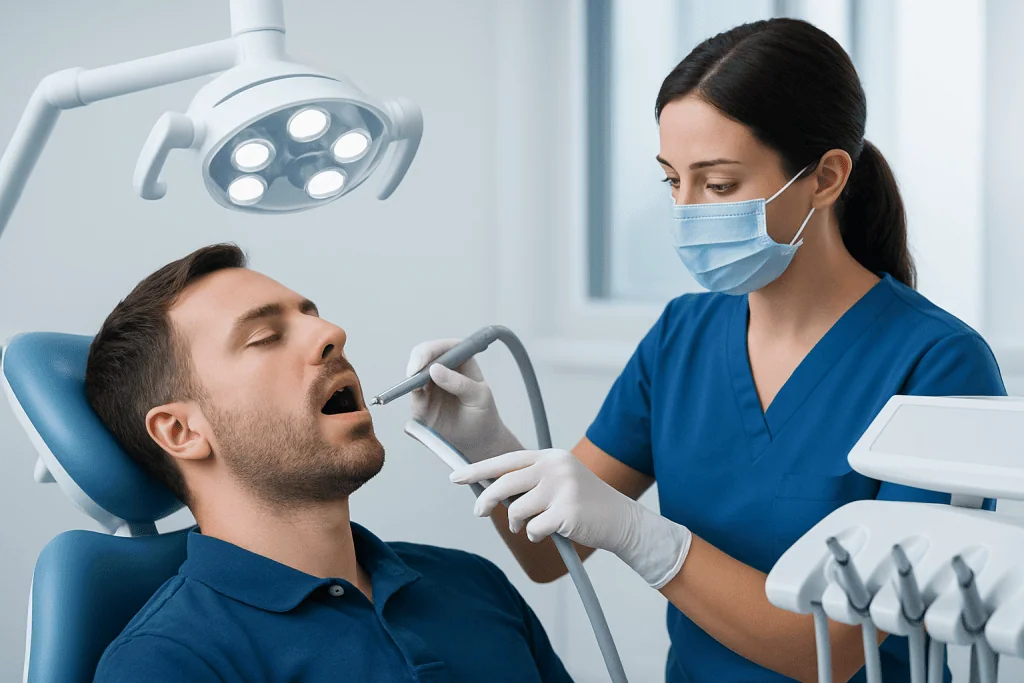
Clinicians often explain adult teeth by type because the number makes more sense when broken down. The front teeth cut food, the pointed teeth help tear, and the back teeth grind. Each group has a usual pattern in the upper and lower jaws.
- Incisors: 8 total, 4 upper and 4 lower
- Canines: 4 total, 2 upper and 2 lower
- Premolars: 8 total, 4 upper and 4 lower
- Molars: 12 total, 6 upper and 6 lower, including wisdom teeth
Adults do not keep all of their childhood teeth. Primary, or baby, teeth are gradually replaced by permanent teeth over several years. By the mid-teen years, most permanent teeth except the wisdom teeth have usually erupted. Wisdom teeth often appear later, typically in the late teens or early adulthood, although timing varies.
This is why two adults of the same age may have different counts without anything being wrong. One may have all four wisdom teeth erupted, another may have them removed, and another may have wisdom teeth that never developed at all.
Why some adults have 28 teeth instead of 32

A count of 28 is very common in adults. The main reason is the wisdom teeth. These teeth are the last to develop and often do not have enough room to erupt normally. Some remain impacted under the gums or bone, some come in only partially, and some are removed because they are causing crowding, pain, repeated gum irritation, or infection risk.
It is also possible for wisdom teeth to be congenitally absent, meaning they never formed. This is a natural variation and not unusual. In those cases, a person may have a normal bite and good oral function with 28 teeth.
Tooth count may also differ for other reasons, such as previous extractions for orthodontic treatment, trauma, severe tooth decay, or advanced gum disease. In contrast, some people develop extra teeth, called supernumerary teeth, which can raise the count above the expected number.
If a tooth seems to be “missing,” it may not always be absent. It may be unerupted or impacted and visible only on dental X-rays. This is one reason a clinician looks beyond the simple number and considers symptoms, bite, alignment, and imaging findings.
Variation by age, sex, and individual anatomy
Age affects tooth count mainly because of timing. Young children normally have 20 primary teeth, while adolescents transition toward the permanent set. By adulthood, most non-wisdom permanent teeth are already present. In older adults, the number may decrease if teeth have been lost over time, although good preventive care helps many people keep their natural teeth much longer.
Sex does not usually change the standard adult dental formula. Men and women are both expected to have the same basic number of permanent teeth. What tends to vary more is jaw size, eruption pattern, and whether wisdom teeth have enough space to come in fully.
Genetics also plays a large role. Some families are more likely to have congenitally missing teeth, delayed eruption, or extra teeth. The shape of the jaw and the size of the teeth influence spacing and crowding, which can determine whether third molars erupt normally or become impacted.
In clinical care, the context matters more than comparing one person with another. A 28-tooth adult with no pain and a stable bite may be entirely healthy, while a 32-tooth adult with impacted wisdom teeth may need monitoring or treatment. When symptoms arise, dentists also consider related conditions such as gum disease and alignment problems.
When a different tooth count may be medically meaningful
A tooth count that differs from the average becomes medically important when it affects comfort, function, or oral health. Missing teeth can change the bite, shift neighboring teeth, make chewing less efficient, and sometimes affect speech. Extra or impacted teeth can cause crowding, pressure, delayed eruption of nearby teeth, or gum inflammation.
Clinicians pay close attention when a tooth is lost unexpectedly, especially in adults. Common causes include dental decay, gum disease, trauma, and occasionally developmental conditions. Persistent bad breath, loose teeth, bleeding gums, swelling, or recurring pain can signal that the issue is more than simple variation in tooth number.
Wisdom teeth deserve special attention because they may partly erupt and create a difficult-to-clean area at the back of the mouth. This can lead to repeated inflammation around the tooth, food trapping, decay in the wisdom tooth or neighboring molar, and jaw discomfort. In some cases, a person may be assessed for wisdom tooth extraction or other dental treatment.
Tooth count is also meaningful in orthodontics and restorative dentistry. Gaps, crowding, and bite imbalance may influence whether someone benefits from orthodontic treatment or replacement of a lost tooth with options such as dental implants. The right plan depends on symptoms, oral health, and imaging findings rather than the number alone.
How dentists confirm the number and health of adult teeth
A dentist usually begins with a clinical examination, counting visible teeth and checking the gums, bite, and alignment. The clinician also looks for signs of decay, gum recession, looseness, wear, swelling, or partially erupted teeth. This helps distinguish a healthy variation from a problem that needs follow-up.
Dental X-rays are often used when teeth are missing from view, especially wisdom teeth. Imaging can show whether a tooth is impacted, unerupted, absent, damaged, or extra. It can also reveal bone loss, hidden decay between teeth, and problems around the roots.
If a person has unexplained missing teeth, multiple extractions, or abnormalities in eruption, the dentist may ask about family history, previous dental treatment, and general health conditions. In selected cases, referral to an oral surgeon, periodontist, or orthodontist may be helpful.
The goal is not simply to reach a certain tooth number. It is to understand whether the current number supports comfortable chewing, a healthy bite, stable gums, and long-term oral function.
What to do if teeth are missing, impacted, or crowded
Treatment depends on the reason for the difference in tooth count. If wisdom teeth are healthy, fully erupted, and easy to clean, they may only need routine monitoring. If they are impacted, painful, repeatedly inflamed, or threatening nearby teeth, removal may be discussed. If a permanent tooth is missing, treatment is considered based on function, appearance, and the health of nearby teeth.
For adults missing one or more teeth, options may include a bridge, implant, or other restorative treatment. When teeth are crowded or the bite is affected, orthodontic planning may help protect long-term dental health as well as appearance. If gum disease is contributing to tooth loss or looseness, treatment of the gums is a priority before replacement decisions are made.
Daily self-care remains essential regardless of tooth count. Brushing twice a day with fluoride toothpaste, cleaning between teeth, keeping regular dental visits, and limiting frequent sugary foods and drinks all support healthy teeth and gums. Tobacco avoidance is also important because smoking increases the risk of gum disease and tooth loss.
For international patients needing assessment of missing, impacted, or crowded teeth, Acibadem International’s multidisciplinary specialists in JCI-accredited hospitals diagnose and treat these concerns, including related care for tooth loss when appropriate.
When to seek medical care
A routine dental visit is appropriate if an adult is unsure how many teeth they have, whether wisdom teeth are present, or whether a tooth failed to erupt. It is especially helpful when there is crowding, a visible gap, or concern about a missing tooth that was never evaluated.
More prompt care is recommended for tooth pain, gum swelling, bleeding, pus, fever, facial swelling, difficulty opening the mouth, a loose adult tooth, or sudden changes in the bite. These symptoms can suggest infection, advanced decay, gum disease, or an impacted tooth problem that should not be ignored.
After dental injury, a broken, displaced, or knocked-out adult tooth should be assessed urgently. A clinician can explain whether the tooth count change is expected, temporary, or a sign of a condition needing treatment. Early evaluation often makes care simpler and helps protect surrounding teeth and bone.
Frequently asked questions
Do all adults have 32 teeth?
No. While 32 is the full permanent count, many adults have 28 because their wisdom teeth were removed, never developed, or never erupted. A lower number can still be completely normal.
Are wisdom teeth included in the adult tooth count?
Yes. The usual total of 32 includes four wisdom teeth, also called third molars. If those teeth are absent, the count is often 28.
Is it normal to have only 28 teeth as an adult?
Yes, very often. Many healthy adults have 28 teeth because wisdom teeth are frequently missing, impacted, or removed. What matters most is whether the mouth is healthy and functioning well.
Can an adult have more than 32 teeth?
Yes, but this is less common. Some people develop extra teeth, called supernumerary teeth, which may cause crowding or delayed eruption. A dentist can confirm this with an exam and X-rays.
At what age do adults usually get all their teeth?
Most permanent teeth, except wisdom teeth, usually erupt by the mid-teen years. Wisdom teeth often appear later, commonly in the late teens or early twenties, although timing varies and some never develop.
If a tooth is missing but there is no pain, should it still be checked?
Yes. A painless missing tooth may still affect the bite, neighboring teeth, or long-term jaw health. A dentist can determine whether the tooth is absent, unerupted, impacted, or previously lost and advise whether any treatment is needed.
References
- American Dental Association
- National Institute of Dental and Craniofacial Research
- Centers for Disease Control and Prevention
- Mayo Clinic
- Merck Manual Consumer Version
This article is for general information only and is not a substitute for professional medical advice. Please consult a qualified doctor about your individual situation.
Explore treatments in Turkey — costs, top hospitals & a free quote
JCI-accredited · board-certified surgeons · reply within 24h
Add us as a Preferred Source to see more of our trusted health content across Google Search, AI Overviews and Discover.