How to Disinfect Your Retainer Safely

Rinse a removable retainer with cool or lukewarm water every time it is removed. Brush retainers gently each day with a soft toothbrush reserved for the appliance and mild liquid soap.
Key Takeaways
- Rinse a removable retainer with cool or lukewarm water every time it is removed.
- Brush retainers gently each day with a soft toothbrush reserved for the appliance and mild liquid soap.
- Ask an orthodontist or dentist before using soaking tablets, particularly for clear plastic retainers or appliances with metal parts.
- Hot water, dishwashers, bleach, alcohol-based mouthwash, and abrasive toothpaste can damage or distort a retainer.
- Persistent odor, visible deposits, cracks, poor fit, mouth sores, or gum swelling should be assessed by a dental professional.
Most retainer odor, cloudiness, or surface buildup is harmless and improves with regular, gentle cleaning. To disinfect a retainer, rinse it after use, brush it softly with a separate toothbrush and mild liquid soap, and use a dentist-recommended cleaning product as directed; avoid heat, bleach, and abrasive toothpaste.
How to Disinfect a Retainer Safely
For most people, disinfecting a retainer does not require harsh chemicals or sterilization. The safest routine is to rinse the retainer with cool or lukewarm water after removing it, then gently brush all surfaces once daily with a soft toothbrush kept only for this purpose and a small amount of mild, fragrance-free liquid soap. Rinse thoroughly before putting it back in the mouth.
For an additional clean, a dentist or orthodontist may recommend a commercially prepared retainer-cleaning tablet or solution. These products should be used exactly as directed and only for appliances they are intended to clean. A retainer should then be rinsed well, as cleaning residue may irritate the mouth. The specific material matters: clear plastic retainers, acrylic retainers, and retainers containing wires may have different care instructions.
A retainer is exposed to saliva, food particles, and naturally occurring oral bacteria. This does not usually mean it is dangerous or causing infection. Regular removal of plaque-like buildup helps keep the appliance comfortable, reduces unpleasant odors, and supports good oral hygiene while protecting the retainer from unnecessary damage.
Why Retainers Need Regular Cleaning
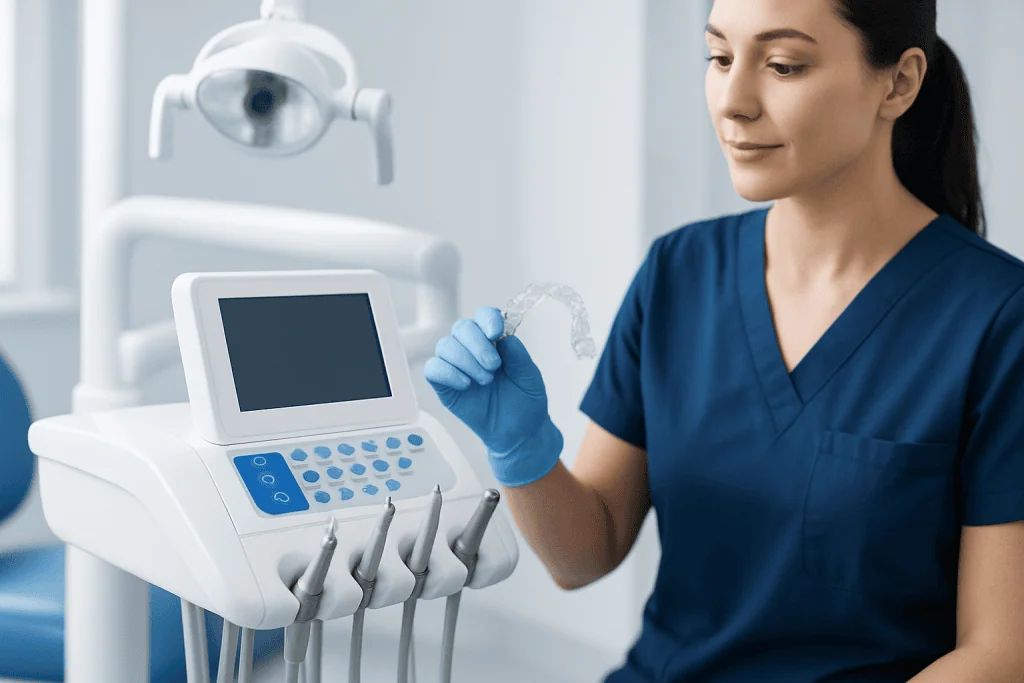
Removable retainers sit against the teeth and gums for many hours, often overnight. During this time, saliva proteins, bacteria, and mineral deposits can collect on the appliance. If it is not cleaned, the retainer may develop a cloudy appearance, a slippery film, white or yellow deposits, or an unpleasant smell.
These changes are commonly related to surface buildup rather than a serious infection. However, a dirty retainer can return bacteria and debris to the mouth after brushing and may contribute to bad breath, gum irritation, or a less fresh feeling. Keeping the retainer clean is one part of an overall oral-care routine that also includes brushing teeth twice daily, cleaning between teeth, and attending routine dental appointments.
Cleaning also protects the appliance itself. Dried saliva and hardened deposits may be difficult to remove without scratching the surface. Scratches can make some retainer materials more likely to retain buildup, so gentle, consistent cleaning is preferable to occasional vigorous scrubbing.
A Practical Daily and Weekly Retainer Routine
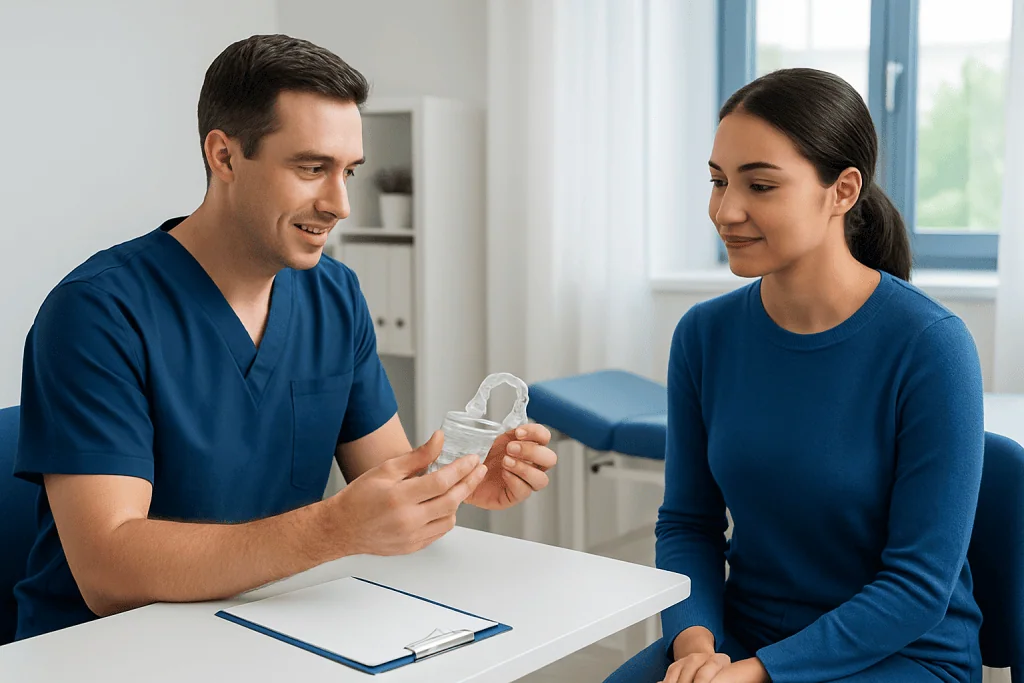
A simple routine makes retainer care easier. Each time the appliance is taken out, it should be rinsed before saliva dries on it. Before reinserting it, the person should brush their teeth or at least rinse their mouth when brushing is not immediately possible. Retainers should not be wrapped in tissue, as they can easily be discarded accidentally.
Once a day, the retainer can be cleaned with mild liquid soap and a soft brush. All surfaces should be cleaned carefully, including grooves, the inside surface that contacts the teeth, and any areas around metal wires. It should then be rinsed with cool or lukewarm water and placed in a clean, ventilated case when it is not being worn.
About once or twice a week, or as advised by the treating dental professional, a deeper clean with an appropriate retainer-cleaning product may be useful. The case should also be washed with soap and water, rinsed, and allowed to dry. A clean retainer placed into an unwashed case can quickly pick up debris again.
- Rinse after every removal.
- Brush gently with mild liquid soap every day.
- Use a compatible soaking cleaner only as instructed.
- Clean and air-dry the storage case regularly.
- Bring the retainer to dental visits so its fit and condition can be checked.
Products and Methods to Avoid
Heat is one of the most important things to avoid. Hot or boiling water, a dishwasher, and leaving a retainer in direct sunlight or a hot car can warp plastic materials. Even a small change in shape can affect how the retainer fits and may allow teeth to shift or cause discomfort when it is worn.
Bleach, household disinfectants, alcohol, and strong chemical cleaners should not be used unless a dental professional has specifically instructed otherwise. They may damage the material, leave irritating residues, or alter the appearance of the appliance. Alcohol-containing mouthwash is also generally not an appropriate soaking solution for retainers.
Toothpaste is designed for teeth, not necessarily for appliance materials. Many toothpastes contain abrasive ingredients that can scratch clear plastic and acrylic surfaces. Rough scouring powders, stiff brushes, and sharp tools should likewise be avoided. If hardened deposits do not come away with gentle cleaning, the safest next step is to ask a dentist or orthodontist for advice rather than trying to scrape them off.
Different Types of Retainers Need Different Care
Clear plastic retainers, sometimes called vacuum-formed retainers, are especially sensitive to heat and scratching. They usually benefit from cool-water rinsing, gentle brushing with mild soap, and a cleaning product confirmed to be safe for clear plastic. Their transparency can make buildup more noticeable, but cloudiness may also develop gradually as the material ages.
Acrylic retainers with metal wires can have more edges and crevices where debris collects. They should be cleaned gently around the wire and acrylic portions without bending the wire. A person should not attempt to adjust a wire at home, even if it feels slightly different, because this can affect fit and tooth position.
Fixed retainers are bonded behind the front teeth and cannot be removed for soaking. They are cleaned by brushing carefully around the wire and using floss threaders, interdental brushes, or a water flosser if recommended by a dental professional. Food trapping, gum bleeding, or difficulty cleaning around a fixed retainer can be addressed during a dental or orthodontic review.
When to Seek Medical Care
Most mild retainer odor or removable surface film is not urgent and can improve with proper cleaning. A dental professional should be contacted if the retainer has persistent odor or deposits despite cleaning, visible cracking, sharp edges, discoloration that does not lift, or a change in fit. A retainer that feels tight, loose, warped, or painful should not be forced into place.
Medical or dental assessment is also appropriate for ongoing gum swelling, bleeding, mouth sores, white patches, significant pain, fever, facial swelling, or trouble swallowing. These symptoms may have causes unrelated to the retainer and deserve timely evaluation. Urgent care is needed for facial swelling with breathing or swallowing difficulty.
During an appointment, a dentist or orthodontist may examine the teeth, gums, tongue, and soft tissues, assess the retainer’s fit and condition, and look for plaque, tartar, injury, infection, or signs of tooth movement. They may professionally clean the appliance when appropriate, recommend replacement, or advise on a suitable home-cleaning method. Acibadem International’s multidisciplinary dental specialists in JCI-accredited hospitals can assess retainer-related concerns for international patients.
Keeping a Retainer Clean While Traveling or Away From Home
When traveling, a retainer should always be stored in its protective case rather than in a napkin, pocket, or loose bag. Carrying a small soft brush and travel-sized mild liquid soap can support daily cleaning. If clean running water is temporarily unavailable, the retainer can be placed safely in its case and rinsed as soon as possible rather than cleaned with an unsuitable product.
It is sensible to avoid drinking very hot beverages while wearing a clear retainer and to remove a removable retainer before eating unless the orthodontist has given different instructions. Sugary drinks, colored beverages, and food can stain or leave residues on some materials. Water is generally the safest drink while a removable retainer is in place.
If a retainer is lost, broken, or no longer fits, the person should contact the orthodontic office promptly. Teeth can gradually move after orthodontic treatment, and replacing a damaged retainer early may help prevent more extensive treatment later. Keeping a copy of the orthodontist’s contact information while away from home can be helpful.
Frequently asked questions
Can a retainer be disinfected with mouthwash?
Mouthwash is usually not the best way to disinfect a retainer, especially if it contains alcohol or strong colorants. It may damage some materials, leave residue, or stain clear plastic. Mild soap, cool or lukewarm water, and a dentist-approved retainer cleaner are generally safer options.
How often should a retainer be cleaned?
A removable retainer should be rinsed each time it is removed and gently brushed every day. A deeper clean with a compatible soaking product may be used weekly or as advised by the orthodontist or dentist. The storage case should also be cleaned regularly.
Can toothpaste be used to clean a clear retainer?
Toothpaste is not usually recommended for clear retainers because it can be abrasive. Repeated use may create fine scratches that make the retainer look cloudy and allow deposits to cling more easily. A soft brush with mild liquid soap is generally a gentler choice.
Why does a retainer smell bad even after cleaning?
A persistent odor can occur when bacteria, dried saliva, or mineral deposits remain in small surface areas or in the storage case. It can also mean the retainer needs a professional assessment or replacement because of age, scratches, or damage. Persistent odor with gum symptoms or mouth sores should be reviewed by a dental professional.
Is it safe to soak a retainer overnight?
It depends on the retainer material and the cleaning product. Some products are intended for brief soaking only, while others may have different instructions. Following the manufacturer’s directions and the orthodontist’s advice helps prevent damage.
What should happen if a retainer no longer fits?
A retainer that no longer fits should not be forced onto the teeth. It may have warped, cracked, or become unsuitable because teeth have shifted. The person should contact their orthodontist or dentist for advice and bring the appliance to the appointment if possible.
This article is for general information only and is not a substitute for professional medical advice. Please consult a qualified doctor about your individual situation.
Explore treatments in Turkey — costs, top hospitals & a free quote
JCI-accredited · board-certified surgeons · reply within 24h
Add us as a Preferred Source to see more of our trusted health content across Google Search, AI Overviews and Discover.

More from the Health Library

What Is Masking? Here Is What the Evidence Says

How to Tighten Loose Skin? Here Is What the Evidence Says

Chicken Stock vs Broth: Key Differences and How Doctors Tell Them Apart

How to Burp? A Doctor-Reviewed Answer

How Long Does the COVID Vaccine Last? Here Is What the Evidence Says