How to Get Rid of Cavities? Causes, Explanations, and Next Steps

A true cavity does not heal on its own and usually needs professional treatment. Early tooth decay can sometimes be reversed before a hole forms in the tooth.
Key Takeaways
- A true cavity does not heal on its own and usually needs professional treatment.
- Early tooth decay can sometimes be reversed before a hole forms in the tooth.
- Pain, swelling, fever, or trouble chewing are signs that prompt dental care is important.
- Dentists diagnose cavities with an oral exam, dental tools, and often X-rays.
- Daily brushing with fluoride toothpaste, flossing, and limiting sugary snacks help prevent new cavities.
How to get rid of cavities depends on how advanced the tooth decay is. Very early enamel damage may improve with fluoride and good oral care, but a true cavity usually needs dental treatment such as a filling to stop it from getting larger.
Overview: Can Cavities Be Removed or Reversed?
For many people, a cavity starts as a common and manageable dental problem. If decay is caught very early, before a permanent hole forms in the tooth, a dentist may recommend fluoride treatment and changes in daily oral care to help the enamel recover. Once there is a true cavity, however, the damaged part of the tooth cannot simply grow back on its own.
In practical terms, how to get rid of cavities usually means removing the decayed tooth material and restoring the tooth. This is most often done with a filling, although larger cavities may need a crown, root canal treatment, or other care depending on how deep the decay goes. Prompt treatment helps relieve symptoms, protect the tooth, and lower the risk of infection.
Most cavities are not a medical emergency, but they should not be ignored. Dental pain that lasts, visible holes, food trapping, or sensitivity to sweets, cold, or heat are good reasons to arrange a dental visit. More urgent review is important if there is facial swelling, fever, severe throbbing pain, pus, or difficulty opening the mouth, as these can suggest a deeper infection.
What a Cavity Is and Why It Happens
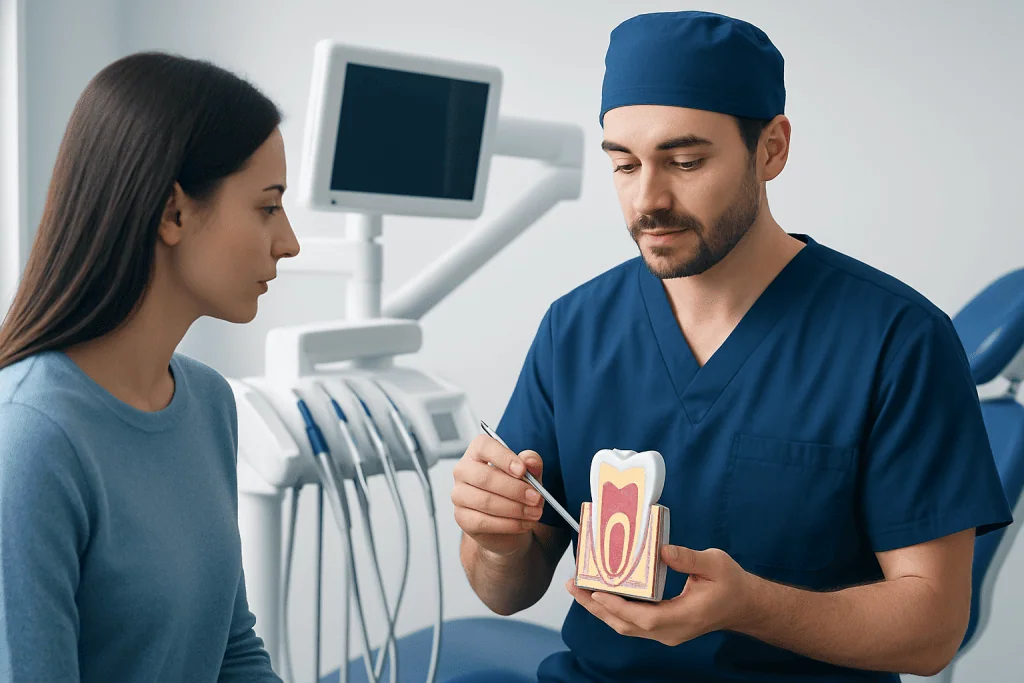
A cavity is an area of tooth damage caused by tooth decay. The process begins when bacteria in the mouth feed on sugars and starches from food and drinks. These bacteria produce acids that wear away the hard outer layer of the tooth, called enamel. Over time, repeated acid exposure can create a weak spot and eventually a hole.
Tooth decay does not always happen all at once. It often develops in stages, starting with early enamel demineralization, then progressing into deeper layers such as dentin, and in more advanced cases reaching the inner pulp of the tooth. This is why some people first notice mild sensitivity, while others only realize there is a problem when pain becomes stronger or a tooth breaks.
Cavities can form on the chewing surfaces of molars, between teeth, near the gumline, or around old fillings and crowns. Children and adults can both develop cavities, and the basic mechanisms are similar. Related dental problems such as dental abscess may develop if untreated decay allows infection to spread deeper into the tooth or surrounding tissues.
Symptoms and Early Warning Signs

Not every cavity causes symptoms right away. Small areas of early decay may be painless and found only during a routine dental exam. As the cavity gets larger, common symptoms include tooth sensitivity to cold drinks, hot foods, sweets, or air. Some people also notice discomfort when biting or chewing.
Other signs can include a visible dark, white, or brown spot on the tooth, roughness, a small hole, food frequently getting stuck in one area, or bad breath that does not improve with brushing. Pain may come and go at first, which can make the problem easy to put off. However, intermittent symptoms can still reflect active decay.
If decay reaches the deeper parts of the tooth, symptoms may become more pronounced. Ongoing toothache, throbbing pain, gum swelling near the tooth, or sensitivity that lingers after the trigger is removed can suggest more advanced damage. In these situations, a dentist may assess whether the tooth can be restored with dental fillings and restorations or whether more extensive care is needed.
Causes and Risk Factors
The main cause of cavities is the repeated interaction between mouth bacteria, dietary sugars, and time. Frequent snacking, sipping sweetened drinks, or going to bed without brushing gives acid more opportunities to damage enamel. Poor oral hygiene allows plaque, a sticky bacterial film, to stay on the teeth longer.
Some people are at higher risk even with reasonable habits. Risk factors include dry mouth, reduced saliva flow from certain medicines or medical conditions, deep grooves in the teeth, previous cavities, gum recession that exposes root surfaces, and wearing braces or other appliances that make cleaning harder. Young children, older adults, and people with limited manual dexterity may also have more difficulty keeping teeth clean.
Diet and overall health both matter. Acidic drinks, frequent sweets, and highly processed snacks can raise risk, while limited access to fluoride can reduce natural protection. Conditions that involve acid reflux or repeated vomiting can also weaken enamel over time. In some cases, dentists may recommend preventive measures if decay risk is high, especially when there are signs of early tooth decay in multiple areas.
How Dentists Diagnose Cavities
When someone comes in with a concern about a possible cavity, the dentist usually starts by asking about symptoms, when they began, and whether pain is triggered by chewing, cold, heat, or sweets. They will then examine the teeth, gums, and mouth closely under good lighting. A mirror and gentle dental instruments help identify soft spots, defects, or areas where plaque tends to collect.
X-rays are often an important part of diagnosis, especially for cavities between teeth or under existing dental work that may not be visible during a standard exam. Dental X-rays can also help show how deep the decay is and whether the pulp or bone may be affected. This helps the dentist choose the most appropriate treatment rather than waiting for the problem to worsen.
In some cases, additional tests such as checking the tooth’s response to temperature or pressure may be used if pain is significant. The aim is not only to confirm that a cavity is present, but also to determine whether the tooth is still healthy enough for a simple filling or whether more advanced treatment is required. Early diagnosis often means simpler treatment and better preservation of the natural tooth.
Treatment Options: What Actually Gets Rid of a Cavity
The best treatment depends on whether the decay is still reversible or has already created a cavity. If there is early enamel demineralization without a hole, a dentist may recommend fluoride varnish, prescription-strength fluoride products, improved brushing and flossing, and dietary changes. These measures can help strengthen enamel and slow or stop early decay.
Once a cavity has formed, professional treatment is usually needed. Small to moderate cavities are commonly treated by removing the decayed tissue and placing a filling. If a large portion of the tooth is damaged, the dentist may recommend a dental crown to cover and protect it. If the inner pulp is infected or inflamed, root canal treatment may be needed to save the tooth and relieve pain.
In very severe cases, if the tooth cannot be restored safely, extraction may be the most appropriate option. After that, the dentist may discuss ways to replace the missing tooth to support chewing and oral health. Because every cavity is different, self-treatment cannot remove established decay, and delaying care can allow a smaller problem to become more complex.
For international patients who need coordinated dental assessment, Acibadem International’s multidisciplinary specialists in JCI-accredited hospitals diagnose and treat dental conditions with individualized planning. A dentist can explain which option is most suitable based on the tooth’s condition, symptoms, and long-term oral health needs.
Prevention and Self-care After a Cavity Is Found
Even after one cavity is treated, prevention remains important because the same conditions can lead to new decay elsewhere. Brushing twice a day with fluoride toothpaste, cleaning between the teeth daily with floss or interdental cleaners, and keeping regular dental appointments are the core steps. These habits reduce plaque and give enamel repeated exposure to fluoride.
Dietary habits also make a meaningful difference. Limiting frequent sugary snacks, reducing sweet drinks, and choosing water between meals can lower acid attacks on the teeth. It is often the frequency of sugar exposure, not only the amount, that contributes to cavity risk. Chewing sugar-free gum after meals may help stimulate saliva in some people, which can support the mouth’s natural defenses.
People with dry mouth, braces, a history of repeated cavities, or gum recession may need extra preventive support. A dentist may suggest fluoride rinses, dental sealants, professional fluoride applications, or more frequent checkups. Good self-care does not replace treatment for an existing cavity, but it can help protect treated teeth and reduce the chance of future problems.
When to Seek Medical Care
A dental appointment is appropriate if there is ongoing tooth sensitivity, pain when chewing, visible holes or spots on a tooth, or bad breath that persists despite good oral hygiene. These symptoms often are not dangerous, but they deserve professional evaluation because early treatment is usually simpler and more effective than waiting.
Prompt dental care is more important if pain becomes strong, keeps a person awake, or returns repeatedly. Swelling of the gums, face, or jaw, a bad taste from possible drainage, fever, or trouble opening the mouth can suggest infection and should be assessed without delay. These signs may indicate that decay has progressed beyond the outer layers of the tooth.
If a person has severe swelling, difficulty swallowing, or trouble breathing, urgent medical attention is needed. A dentist or doctor can decide whether treatment should focus on pain relief, infection control, or restoration of the tooth. Seeking help early supports comfort and helps preserve as much healthy tooth structure as possible.
Frequently asked questions
Can cavities go away on their own?
A true cavity does not go away on its own because the tooth structure has already been damaged. However, very early enamel changes may improve with fluoride, good oral hygiene, and dietary changes if they are treated before a hole forms.
How do dentists get rid of cavities?
Dentists usually remove the decayed part of the tooth and restore it with a filling. If the cavity is deeper or larger, treatment may involve a crown, root canal treatment, or, in severe cases, extraction.
What does a cavity feel like?
A cavity may cause no symptoms at first. As it progresses, it can lead to sensitivity to cold, heat, sweets, or pressure, and some people notice a toothache, rough spot, or food getting trapped.
Is it safe to wait if a cavity does not hurt?
Pain is not a reliable measure of how serious a cavity is. Some cavities remain painless until they become larger, so a dental exam is still important even if symptoms are mild or absent.
Can home remedies remove a cavity?
Home care can support early enamel repair and help prevent new decay, but it cannot remove established decay once a cavity has formed. A dentist is needed to clean out the damaged area and restore the tooth properly.
How can someone prevent more cavities after treatment?
The most effective steps are brushing twice daily with fluoride toothpaste, cleaning between the teeth every day, limiting frequent sugary foods and drinks, and keeping regular dental visits. A dentist may also recommend fluoride treatments or sealants for added protection.
References
- American Dental Association
- National Institute of Dental and Craniofacial Research
- Centers for Disease Control and Prevention
- Mayo Clinic
- World Health Organization
This article is for general information only and is not a substitute for professional medical advice. Please consult a qualified doctor about your individual situation.
Explore treatments in Turkey — costs, top hospitals & a free quote
JCI-accredited · board-certified surgeons · reply within 24h
Add us as a Preferred Source to see more of our trusted health content across Google Search, AI Overviews and Discover.