How to Heal Broken Blood Vessel in Eye Fast? Causes, Explanations, and Next Steps

Most broken blood vessels in the eye do not need treatment and fade gradually on their own. There is no instant fix; artificial tears and avoiding eye rubbing can improve comfort while the blood clears.
Key Takeaways
- Most broken blood vessels in the eye do not need treatment and fade gradually on their own.
- There is no instant fix; artificial tears and avoiding eye rubbing can improve comfort while the blood clears.
- Pain, light sensitivity, discharge, repeated episodes, or any change in vision should be assessed by a doctor.
- Doctors may check blood pressure, medications, recent injury, and the eye surface to rule out more serious causes.
- Gentle self-care is appropriate, but contact lenses and strenuous strain may need to be paused if the eye feels irritated.
A broken blood vessel in the eye is usually a harmless subconjunctival hemorrhage that looks dramatic but often heals on its own within 1 to 2 weeks. Fast recovery mainly means protecting the eye, avoiding triggers, and knowing the warning signs that need medical review.
Overview: what helps a broken blood vessel in the eye heal
For most people asking how to heal broken blood vessel in eye fast, the short answer is reassuring: a small broken vessel on the white of the eye usually heals by itself. This common condition is called a subconjunctival hemorrhage. It often looks alarming because the red patch can be bright and sharply defined, but it is usually painless and does not harm vision.
There is no proven way to make the blood disappear overnight. The fastest safe approach is supportive care: avoid rubbing the eye, use lubricating eye drops if the surface feels scratchy, rest the eyes when possible, and give the blood time to absorb naturally. In many cases, the color changes and fades over 1 to 2 weeks, much like a bruise elsewhere on the body.
What matters most is recognizing when the red spot is probably harmless and when it may signal another problem. If there is pain, blurred vision, sensitivity to light, eye discharge, or a history of trauma, the person should seek medical advice promptly rather than relying on home care alone.
What a broken blood vessel in the eye is—and what it is not
A subconjunctival hemorrhage happens when a tiny blood vessel breaks beneath the conjunctiva, the clear membrane covering the white part of the eye. Because this membrane cannot absorb blood immediately, the blood spreads out under the surface and creates a bright red or dark red patch. It may involve a small area or cover much of the white of the eye.
This is different from redness caused by infection, inflammation, dryness, or allergy. Those conditions often produce more diffuse redness, along with itching, burning, discharge, or swelling. A subconjunctival hemorrhage is also different from bleeding inside the eye, which is more serious and often affects sight.
People sometimes confuse a red patch with conditions such as glaucoma or a severe eye infection. A simple subconjunctival hemorrhage typically does not cause pressure, major discomfort, or visual loss. Even so, a healthcare professional may need to examine the eye if symptoms do not fit the usual harmless pattern.
Symptoms and how the eye usually looks as it heals

The main sign is a bright red, dark red, or sometimes slightly orange patch on the white of the eye. Many people notice it suddenly in the mirror or when someone else points it out. Usually there is no pain, and vision remains normal.
Some people feel mild irritation, a sense of fullness, or slight surface dryness, but a subconjunctival hemorrhage should not cause severe discomfort. As the eye heals, the color may spread slightly at first and then slowly change in shade before disappearing. This can look similar to how a bruise changes over time.
Symptoms that are less typical and deserve more attention include:
- Blurred, reduced, or double vision
- Moderate to severe eye pain
- Sensitivity to light
- Thick discharge or crusting
- Noticeable swelling after injury
- Repeated red patches without a clear reason
If any of these occur, the cause may be something more than a simple surface bleed, and an eye specialist may need to rule out retinal problems or other eye disease depending on the symptoms.
Common causes and risk factors
Often, no obvious cause is found. A tiny vessel can break after a brief increase in pressure from coughing, sneezing, vomiting, constipation, lifting something heavy, or vigorous exercise. Eye rubbing is another frequent trigger because the surface vessels are delicate.
Minor irritation from dry eyes or contact lenses may also contribute. Some people notice a red spot after poor sleep, prolonged screen use, or seasonal allergies because the eyes have been rubbed or strained, even though these are not direct causes of bleeding by themselves.
Certain health and medication factors can increase the chance of a subconjunctival hemorrhage. These include high blood pressure, diabetes, blood-thinning medications, and conditions that affect normal clotting. More significant trauma can also cause a broken vessel, but if the eye was hit or scratched, a doctor may need to check for deeper injury rather than assuming the red patch is harmless.
In children, the same condition can occur from coughing, crying, or rubbing the eye, but persistent or repeated episodes should still be discussed with a clinician. Recurrent eye bleeding may prompt a review of blood pressure, medication use, and overall health.
How doctors evaluate it and when testing is needed
If a person seeks care, the doctor usually starts with a symptom history. They may ask when the red area appeared, whether there was any injury, if vision has changed, and whether there is pain, headache, discharge, or recent coughing or straining. Medication use, especially blood thinners, and a history of high blood pressure are also important.
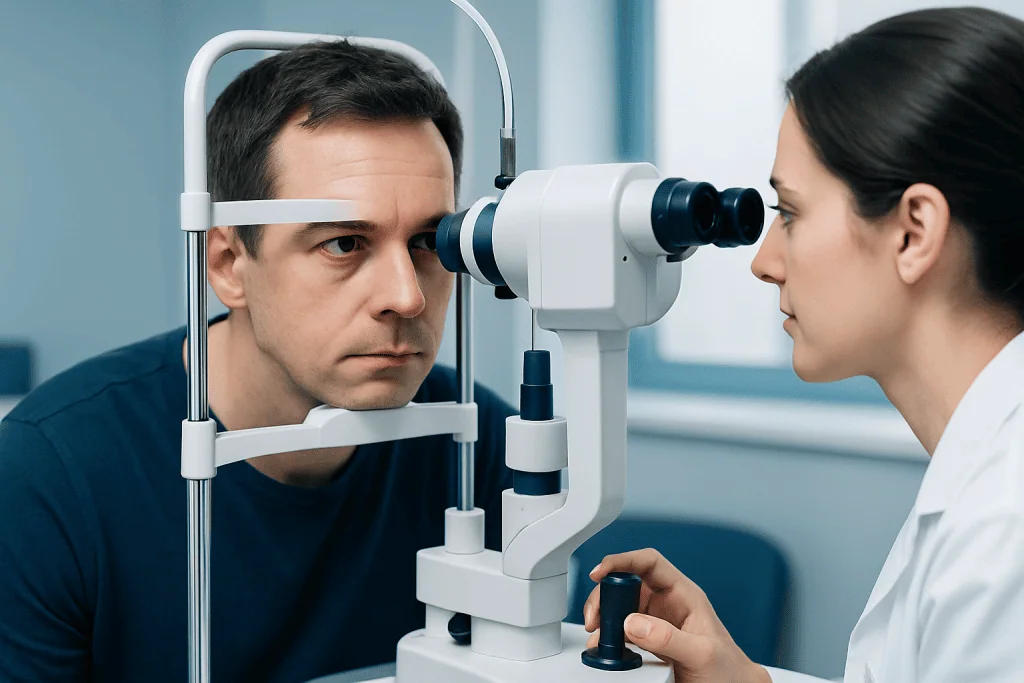
The eye exam often includes checking vision, looking at the front of the eye with a light or slit lamp, and assessing whether the red area is limited to the surface. The doctor may also look for signs of infection, corneal injury, inflammation, or a foreign body. If there has been trauma or suspicious symptoms, more detailed evaluation may be needed.
Additional tests are not always necessary for a straightforward subconjunctival hemorrhage. However, blood pressure measurement is commonly considered, especially if the episode seems spontaneous. Recurrent bleeding may lead to blood tests or further medical review to evaluate clotting, diabetes, or medication effects. If another eye problem is suspected, the person may be referred for a comprehensive eye examination.
Treatment options and the safest ways to support healing
For a simple broken blood vessel in the eye, treatment is usually conservative. The blood under the conjunctiva needs time to be reabsorbed by the body. Because of this, there is no special drop or medication that makes it clear instantly.
If the eye feels dry or mildly irritated, preservative-free artificial tears can improve comfort. Cool compresses may feel soothing in the first day or two, although they do not remove the blood itself. Avoid rubbing the eye, and if contact lenses feel uncomfortable, it is sensible to stop wearing them until the irritation settles.
Any treatment beyond supportive care depends on the cause. If trauma, a corneal scratch, or a deeper problem is found, management is tailored to that diagnosis. In some cases, doctors may recommend follow-up with ophthalmology care or treatment for an underlying condition such as uncontrolled blood pressure. Surgery is not a standard treatment for a routine subconjunctival hemorrhage.
People who also have symptoms of significant dryness or irritation may benefit from assessment for eye treatment directed at the underlying issue. The red patch itself, however, still generally resolves on its own over time.
Self-care, prevention, and practical next steps
The best self-care focuses on comfort and prevention. Gentle habits can reduce irritation and lower the chance of another episode. Most people can continue usual daily activities, though very strenuous exertion may be worth postponing briefly if it seems to worsen pressure or if the eye feels irritated.
Helpful steps include:
- Do not rub or press on the eye
- Use lubricating eye drops if the eye feels dry or scratchy
- Take screen breaks and blink regularly
- Manage constipation, heavy straining, or severe coughing when possible
- Wear protective eyewear during sports, DIY tasks, or work with flying particles
- Monitor blood pressure if hypertension is a concern
If a person takes prescription blood thinners, they should not stop them without medical advice. Instead, they should mention the eye bleeding to the prescribing doctor, especially if it happens repeatedly. Anyone with frequent episodes may need a broader health review rather than repeated home treatment.
Near the end of the care pathway, some patients benefit from coordinated specialist assessment. Acibadem International’s multidisciplinary specialists and JCI-accredited hospitals diagnose and treat eye conditions for international patients when further evaluation is needed.
When to seek medical care
A broken blood vessel in the eye is often harmless, but certain features should prompt prompt medical review. These include any change in vision, eye pain, marked sensitivity to light, severe headache, nausea with eye symptoms, thick discharge, or a recent blow to the eye. The same applies if blood appears in the colored part of the eye or if the person suspects a chemical exposure.
Medical advice is also important when red patches happen often, occur in both eyes, or are accompanied by easy bruising or bleeding elsewhere. These patterns can point to an underlying blood pressure issue, medication effect, or a clotting problem that should not be ignored.
If the redness does not begin to improve over about 2 weeks, or if it worsens instead of fading, an eye professional should examine it. Fast care is especially important for contact lens wearers with pain or vision change, because infection and corneal injury need timely treatment.
Frequently asked questions
How long does a broken blood vessel in the eye take to heal?
Most subconjunctival hemorrhages improve on their own within 1 to 2 weeks. Larger areas can sometimes take a little longer to fully clear. The color may change as the blood is gradually reabsorbed.
Can someone make a broken blood vessel in the eye heal faster?
There is no instant treatment that removes the blood right away. The safest approach is to avoid rubbing the eye, use artificial tears for comfort if needed, and let the body absorb the blood naturally. If symptoms are not typical, a doctor should check for another cause.
Is a broken blood vessel in the eye dangerous?
Usually, no. When it appears as a painless red patch on the white of the eye without vision changes, it is often harmless. It becomes more concerning if there is pain, blurred vision, light sensitivity, discharge, or recent trauma.
Should contact lenses be worn with a broken blood vessel in the eye?
If the eye feels irritated, it is generally better to pause contact lens use until it feels comfortable again. Contact lenses should not be worn if there is pain, discharge, or any suspicion of infection. An eye doctor can advise when it is safe to restart.
Can high blood pressure cause a broken blood vessel in the eye?
High blood pressure can be a contributing factor, especially when eye bleeding happens more than once. That does not mean every case is caused by hypertension, but checking blood pressure may be appropriate. A doctor can decide whether further evaluation is needed.
What should be avoided after a broken blood vessel appears?
It is best to avoid rubbing the eye or pressing on it. Straining, heavy lifting, or activities that sharply raise pressure may also be worth limiting briefly if they seem to trigger symptoms. People should never stop prescribed blood thinners without medical advice.
References
- American Academy of Ophthalmology
- National Eye Institute
- Mayo Clinic
- Merck Manual Consumer Version
This article is for general information only and is not a substitute for professional medical advice. Please consult a qualified doctor about your individual situation.
Explore treatments in Turkey — costs, top hospitals & a free quote
JCI-accredited · board-certified surgeons · reply within 24h
Add us as a Preferred Source to see more of our trusted health content across Google Search, AI Overviews and Discover.
Check your numbers in seconds
BMI, calories, due date, blood pressure and 30+ more clinical calculators — free, instant, doctor-reviewed ranges.