How to Make Yourself Pee? Here Is What the Evidence Says

Simple strategies such as relaxing the pelvic muscles, sitting comfortably, and hearing running water may help when urination is delayed. Drinking large amounts quickly is not a safe fix and can make discomfort worse if the bladder is very full.
Key Takeaways
- Simple strategies such as relaxing the pelvic muscles, sitting comfortably, and hearing running water may help when urination is delayed.
- Drinking large amounts quickly is not a safe fix and can make discomfort worse if the bladder is very full.
- Inability to pass urine, worsening lower abdominal pain, fever, or blood in the urine needs prompt medical care.
- Recurring difficulty urinating can be linked to infection, medicines, constipation, prostate enlargement, nerve problems, or pelvic floor dysfunction.
- Doctors diagnose the cause by asking about symptoms, reviewing medicines, examining the abdomen, and checking how much urine remains in the bladder after voiding.
Most short-lived trouble starting a urine stream is harmless and improves with simple measures such as privacy, relaxation, and not rushing. But if a person cannot pass urine at all, has severe pain, fever, blood in the urine, or symptoms that keep coming back, medical assessment is important.
Overview: what helps when someone needs to pee but cannot start
When people search for how to make yourself pee, the safest evidence-based advice is usually simple: pause, give the body privacy and time, relax the pelvic muscles, sit or stand in a comfortable position, and try sensory cues such as hearing running water. For many people, especially when the bladder is not extremely full, a delayed urine stream is temporary and settles once the body relaxes.
It helps to know the difference between a brief hesitation and a true problem. A short delay can happen from stress, embarrassment, being in a public restroom, mild dehydration, or trying to urinate too soon. By contrast, urinary retention means the bladder does not empty properly, either suddenly or over time, and that deserves medical attention if it is severe or recurring.
A practical first step is not to strain hard. Forceful pushing can tighten the pelvic floor instead of relaxing it and may make urination more difficult. Instead, slow breathing, a calm setting, and patience for a few minutes are more likely to help.
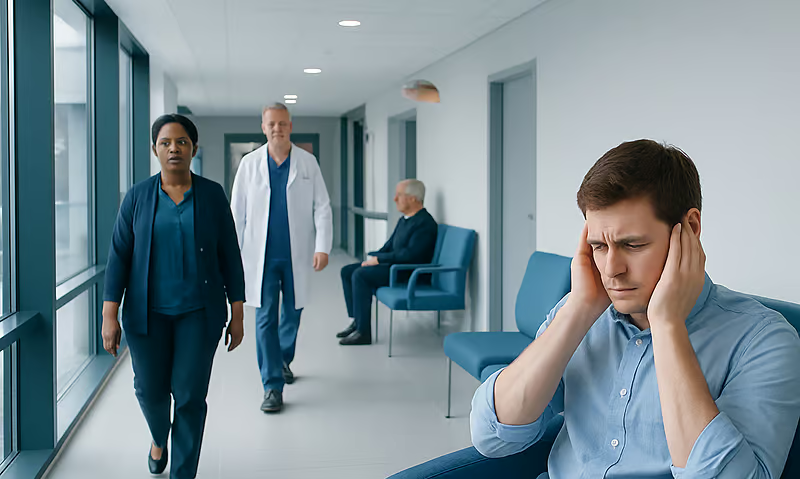
If a person has a painfully full bladder and cannot pass urine at all, this is not something to manage at home for long. Prompt medical care is the safest next step because complete retention can become urgent.
Safe ways to encourage urination
Several low-risk strategies may help the bladder empty naturally. The main goal is to reduce tension in the body and allow the urinary sphincter and pelvic floor muscles to relax. These measures are often enough when the problem is brief and not caused by a blockage.
- Go to a private, quiet bathroom and allow enough time.
- Take slow breaths and relax the shoulders, abdomen, and pelvic area.
- Try sitting down, even if the person usually stands to urinate.
- Turn on running water or place a hand in warm water as a sensory cue.
- Lean slightly forward while seated, with feet supported.
- Apply gentle warmth to the lower abdomen, such as a warm compress.
Some people find that double voiding helps. This means urinating as much as possible, waiting a short time while staying relaxed, and trying again. It should be gentle, without bearing down or forcing the stream.
Hydration can help if the urine is very concentrated or the person has not had enough fluids, but it should be sensible. Drinking a moderate amount of water is reasonable; rapidly drinking large volumes to “force” urination is not. If the bladder is already very full, excess fluid can increase pain and pressure without solving the underlying problem.
If difficulty urinating happens after surgery, childbirth, constipation, or the start of a new medicine, the person should mention that context to a clinician. Those details can strongly affect what works and whether testing is needed.
What not to do

Trying too hard can backfire. Straining with the abdominal muscles, holding the breath, or repeatedly pushing may tighten the urinary outlet rather than open it. It can also increase discomfort and may not address a blockage or nerve-related problem.
It is also best not to rely on unproven home hacks, supplements, or internet advice that promises a quick fix. Caffeine sometimes increases the urge to urinate, but it can irritate the bladder in some people and is not a reliable treatment for retention. Alcohol is also not a safe solution, because it can worsen dehydration and mask symptoms.
Medications should not be started, stopped, or borrowed without medical advice. Some over-the-counter cold medicines, allergy medicines, sleep aids, and certain prescription drugs can make urination harder. A doctor or pharmacist can help review whether a medicine could be contributing.
If the bladder feels very full and painful, waiting too long at home is not advisable. A person who truly cannot urinate may need urgent assessment and temporary bladder drainage to relieve pressure safely.
Why someone may have trouble peeing
Difficulty urinating can happen for several reasons, and the cause often becomes clearer when symptoms are looked at together. A short-lived problem may be related to anxiety, an unfamiliar setting, mild dehydration, or temporary pelvic floor tension. But repeated symptoms can point to an underlying urinary or neurological issue.
Common causes include urinary tract infection, constipation, side effects of medicines, pelvic floor dysfunction, and blockage of urine flow. In men, an enlarged prostate is a frequent reason for weak stream, hesitancy, or incomplete emptying, and may be part of benign prostate enlargement. In both men and women, urinary tract infection can lead to urgency, burning, and difficulty starting to pee.
Nerve-related conditions can also affect bladder signaling. Diabetes, spinal conditions, recent surgery, childbirth, or neurological disease may interfere with the normal coordination between the bladder muscle and the urinary sphincter. In some cases, bladder stones, narrowing of the urethra, or severe constipation can physically obstruct urine flow.
Age can play a role, but trouble peeing is not something a person should simply accept as normal. Ongoing hesitancy, dribbling, nighttime urination, or a feeling of incomplete emptying are worth discussing with a doctor, particularly if they are getting worse.
Red flags and when to seek medical care
Many brief episodes improve on their own, but some situations need prompt attention. A person should seek urgent medical care if they cannot urinate at all for several hours despite a strong urge, especially if there is increasing lower abdominal pain or visible swelling. This may suggest acute urinary retention.
Other warning signs include fever, chills, back or side pain, nausea, vomiting, blood in the urine, new weakness or numbness in the legs, or loss of bowel control. These symptoms can signal infection, a stone, spinal nerve involvement, or another condition that should not be managed at home.
Medical review is also sensible if trouble peeing keeps returning, starts after a new medication, follows surgery or childbirth, or is accompanied by a weak stream, dribbling, or the feeling that the bladder never empties fully. Children, older adults, and pregnant people should be assessed sooner if symptoms are persistent.
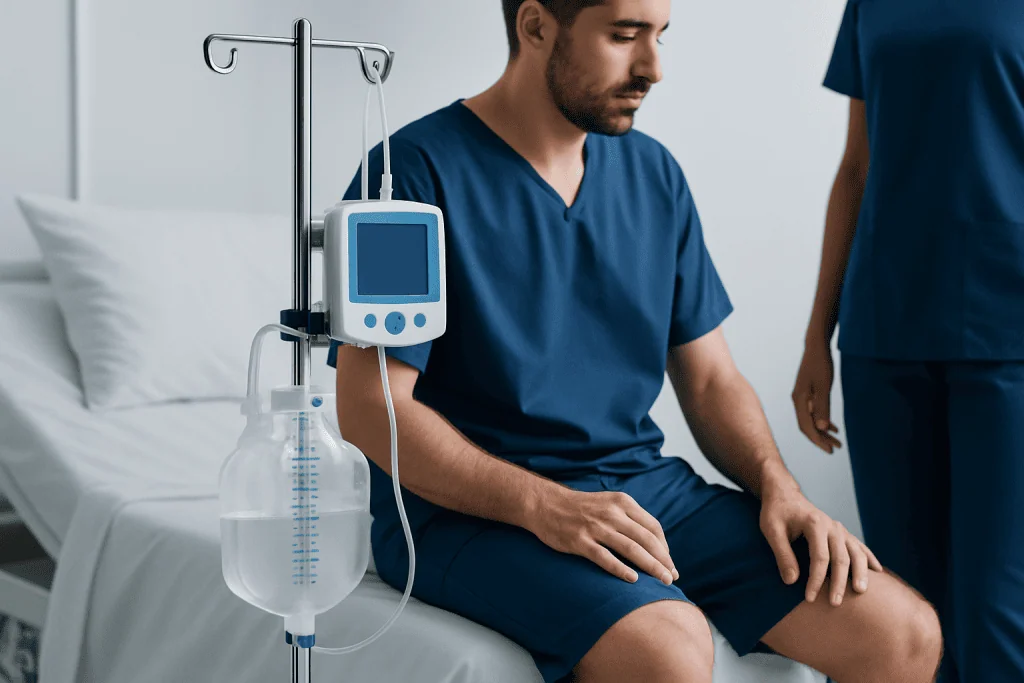
In an emergency setting, the immediate priority is comfort and safety. If the bladder is very full and urine cannot pass, clinicians may need to drain it using urinary catheterization while they investigate the cause.
How doctors diagnose the cause
Diagnosis usually starts with a careful history. The doctor may ask when the problem began, whether there is pain or burning, how often the person urinates, what medicines they take, and whether there has been constipation, surgery, childbirth, prostate symptoms, or neurological disease. These details help separate temporary hesitancy from true retention.
A physical examination often includes checking the lower abdomen for bladder fullness and tenderness. Depending on the situation, the clinician may also assess the pelvic floor, prostate, or neurological function. A urine test can help look for infection, blood, or other abnormalities.
One of the most useful checks is measuring how much urine remains in the bladder after urination, called a post-void residual. This may be done with bladder ultrasound or, less commonly, catheterization. Blood tests may be used if kidney function, infection, or metabolic problems are a concern.
If symptoms are ongoing, further evaluation may include uroflowmetry to assess urine flow, imaging for stones or obstruction, or specialist urology review. The goal is to identify the reason for poor emptying and choose the safest treatment, rather than only treating the symptom.
Treatment and longer-term self-care
Treatment depends on the cause. A urinary infection may need antibiotics, constipation may need targeted management, and medication side effects may improve after a doctor adjusts the drug plan. For men with prostate enlargement, treatment may include lifestyle changes, medicines, or in some cases procedures recommended by a urologist.
If pelvic floor tension is part of the problem, bladder training and pelvic floor physical therapy can help some people relearn how to relax the muscles needed for urination. When the issue is linked to nerve problems, treatment may focus on the underlying neurological condition as well as safe bladder emptying.
At home, useful habits include not delaying urination too long, staying reasonably hydrated, managing constipation, and reviewing medicines with a clinician if symptoms started after a new prescription or over-the-counter product. It can also help to limit bladder irritants if they worsen symptoms, such as excess caffeine or alcohol.
If symptoms are severe or recurring, specialist care is appropriate. Near the end of the care pathway, some patients may benefit from a multidisciplinary review. Acibadem International’s multidisciplinary specialists and JCI-accredited hospitals diagnose and treat urinary problems for international patients when further evaluation is needed.
Frequently asked questions
How can someone make themselves pee right away?
The safest first steps are to relax, use a private bathroom, sit comfortably if possible, and try sensory cues such as running water. Gentle warmth over the lower abdomen and slow breathing may also help. If there is a painful, very full bladder and no urine comes out, urgent medical care is the safer option.
Is it safe to drink lots of water quickly to force urination?
Not usually. Moderate hydration can help if a person is somewhat dehydrated, but drinking a lot very quickly may increase pressure and discomfort if the bladder is already full. It does not fix a blockage or retention problem.
Why does anxiety make it hard to pee?
Stress can make muscles tense, including the pelvic floor and urinary sphincter. That tension can delay the start of urination, especially in public restrooms or unfamiliar settings. Once the body relaxes, the stream often starts more easily.
What is the difference between hesitancy and urinary retention?
Hesitancy means there is a delay before the urine stream starts, but the person may still be able to pass some urine. Urinary retention means the bladder is not emptying properly, and in some cases no urine comes out at all. Retention is more concerning, particularly if it causes pain or keeps happening.
Can constipation cause trouble peeing?
Yes. A full rectum can press on nearby urinary structures and affect normal bladder emptying. Treating constipation can sometimes improve urinary symptoms, though persistent problems still need medical review.
When should someone see a doctor for difficulty urinating?
A doctor should be consulted if symptoms recur, worsen, or come with burning, fever, blood in the urine, weak stream, dribbling, or a feeling of incomplete emptying. Immediate care is needed if the person cannot urinate at all, has severe lower abdominal pain, or develops back pain, leg weakness, or loss of bowel control.
References
- National Institute of Diabetes and Digestive and Kidney Diseases
- American Urological Association
- Mayo Clinic
- National Health Service
- European Association of Urology
This article is for general information only and is not a substitute for professional medical advice. Please consult a qualified doctor about your individual situation.
Explore treatments in Turkey — costs, top hospitals & a free quote
JCI-accredited · board-certified surgeons · reply within 24h
Add us as a Preferred Source to see more of our trusted health content across Google Search, AI Overviews and Discover.