How to Perform Heel Slides Exercise Safely

Heel slides gently train knee bending and straightening without placing full body weight through the joint. They are often used in rehabilitation after knee surgery, injury, stiffness, or prolonged immobility.
Key Takeaways
- Heel slides gently train knee bending and straightening without placing full body weight through the joint.
- They are often used in rehabilitation after knee surgery, injury, stiffness, or prolonged immobility.
- Movement should be slow, controlled, and limited to a comfortable range rather than pushed through sharp pain.
- A physiotherapist or doctor can advise when to begin, how far to bend the knee, and how often to perform the exercise.
- Increasing swelling, warmth, redness, severe pain, or calf symptoms require medical assessment rather than continued exercise.
A heel slides exercise is a simple, low-impact movement that bends and straightens the knee while a person lies down or sits with the leg supported. It is commonly used to maintain or gradually restore knee motion after injury, surgery, or a period of reduced activity, but the right timing and range should be guided by a clinician when recovery is involved.
Overview: What Is a Heel Slides Exercise?
A heel slides exercise is a range-of-motion activity for the knee. The person starts with the leg straight and slowly slides the heel toward the body, allowing the knee to bend. The heel is then moved back out until the leg is straight or nearly straight again. Because the foot stays supported on the bed, floor, or another smooth surface, the exercise usually places less load on the knee than standing movements.
Clinicians commonly include heel slides in early rehabilitation plans because they help a person practise a basic movement needed for walking, sitting, climbing stairs, and getting in and out of a car. The exercise may be recommended after certain knee operations, including joint replacement or ligament procedures, and after an injury that has caused pain, swelling, or stiffness. It can also be used after bed rest when the knee has become less mobile.
However, heel slides are not the same exercise for every patient. The appropriate starting position, amount of bend, use of assistance, and number of repetitions depend on the diagnosis, healing stage, surgical instructions, pain level, and other health factors. A rehabilitation plan should always take precedence over general exercise information.
How Heel Slides May Support Recovery
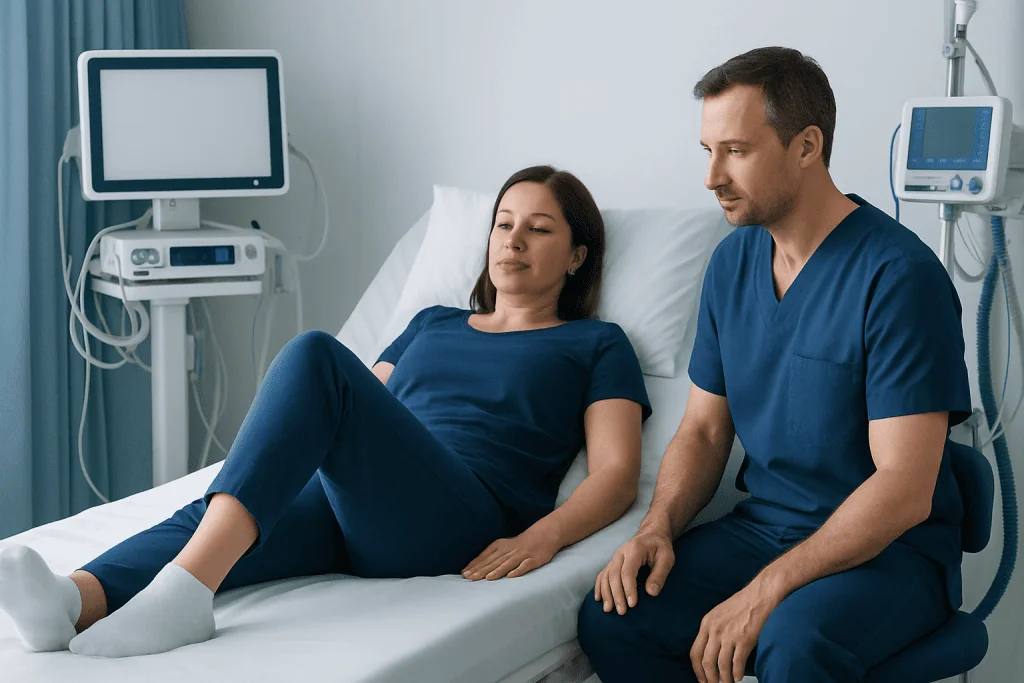
After an injury or procedure, swelling, discomfort, protective muscle tightening, and reduced movement can make the knee feel difficult to bend. Avoiding all movement for too long may contribute to stiffness. When introduced at the right time, gentle motion can help maintain flexibility in the tissues around the knee and help the nervous system become more comfortable with bending the joint again.
Heel slides mainly target knee flexion, meaning the ability to bend the knee. The return phase also encourages knee extension, or straightening. Restoring both directions of movement is important for daily function. For example, a person needs enough bending to sit comfortably and enough straightening to walk with a more even stride.
The exercise may also help a person notice how the knee responds to activity. Mild stretching or muscular effort can be expected, particularly early in recovery. In contrast, sharp pain, a sudden catching sensation, substantial swelling later that day, or pain that continues to worsen may suggest that the activity needs to be modified or reviewed by a healthcare professional.
How to Perform Heel Slides Safely

Heel slides are often performed lying on the back on a firm bed or exercise mat. The affected leg begins straight and relaxed, with the heel resting on a surface that allows it to glide. A towel, plastic bag over a sock, or a sliding board may reduce friction if advised by a physiotherapist. The other leg may be bent for comfort or kept straight, depending on the person’s needs.
To perform the movement, the person slowly slides the heel toward the buttocks, bending the knee only as far as is comfortable and permitted by the care plan. The foot should generally remain in contact with the surface. After a brief pause, the heel is slowly slid away to straighten the leg. Breathing steadily and relaxing the hip and thigh can help prevent unnecessary guarding.
Some people need assistance at first. A strap, towel, or the unaffected leg may gently help draw the heel closer, but this should not force the knee beyond a clinician-recommended limit. Others may perform seated heel slides by placing the foot on the floor and sliding it backward under the chair. The safest version is the one that matches the individual’s mobility, balance, and medical instructions.
- Move slowly; quick or jerking motions can increase discomfort.
- Keep the knee aligned with the toes rather than letting it roll inward or outward.
- Use a comfortable range instead of trying to achieve a particular angle immediately.
- Stop if there is sharp pain, a pop, giving way, or significant new swelling.
Who May Be Advised to Do Heel Slides?
Heel slides may be included in a programme for people recovering from knee conditions or procedures. Examples include rehabilitation after knee replacement, arthroscopy, ligament repair, meniscus treatment, fracture management, or a soft-tissue injury. They can also be useful when knee stiffness develops after reduced activity, provided a clinician has ruled out problems that require a different approach.
For people living with <a href="https://acibademinternational.com/diseases/knee-osteoarthritis/”>knee osteoarthritis, gentle range-of-motion work may be one part of a broader plan that includes strengthening, activity modification, weight management when appropriate, pain management, and education. It is important to distinguish an exercise intended to support mobility from a treatment that can reverse joint damage. A clinician can help develop an individual plan for knee osteoarthritis when symptoms affect everyday life.
Not everyone should begin heel slides independently. Following surgery, the surgeon or physiotherapist may set restrictions on knee bending, weight-bearing, bracing, or movement direction. People with an unstable fracture, an untreated tendon injury, a newly dislocated joint, active infection, or severe unexplained knee pain should seek professional advice before attempting rehabilitation exercises.
Making the Exercise Part of a Rehabilitation Plan
Consistency generally matters more than pushing for a large gain in a single session. A healthcare professional may recommend practising heel slides in short, regular sessions, with the number of repetitions adjusted according to healing and symptoms. Rather than following a universal target, patients should use the schedule given by their surgeon, physician, or physiotherapist.
It can be helpful to note changes in knee comfort, stiffness, swelling, and function after exercise. If the knee is more swollen or painful for an extended period after activity, the person may need a smaller range, fewer repetitions, more rest, or clinical review. Cold therapy, elevation, or other symptom-management measures may be appropriate for some patients, but should be used according to their care team’s advice.
Heel slides are usually only one component of recovery. Depending on the condition, rehabilitation may later include quadriceps activation, hip and ankle exercises, balance practice, walking retraining, and progressive strengthening. A structured physical therapy programme can help ensure that mobility work progresses at an appropriate pace and supports the person’s functional goals.
Common Technique Errors and How to Avoid Them
A frequent mistake is forcing the heel too close to the body despite sharp or escalating pain. Rehabilitation can involve temporary discomfort, but pain is not a reliable measure of progress. Forcing movement may increase muscle guarding and irritation, particularly when the knee is swollen. The aim is controlled motion within the range recommended by the care team.
Another common issue is lifting the heel off the surface or twisting the leg while bending the knee. These substitutions can reduce the intended knee movement and may strain other areas. Placing the heel on a low-friction surface and keeping the kneecap generally facing upward can make the movement smoother. A therapist can check technique if the person is uncertain.
Some people hold their breath, tense the shoulders, or tighten the buttock and thigh muscles excessively. Slower breathing and a short rest between repetitions may help. If the knee does not gradually become easier to move, or if it becomes increasingly difficult to straighten, a clinician should assess whether swelling, scar tissue, pain control, muscle weakness, or another issue is affecting recovery.
When to Seek Medical Care
Patients should contact their doctor, surgeon, or physiotherapist if heel slides cause worsening pain, marked swelling, repeated locking, a sensation that the knee is giving way, or a clear loss of movement. These symptoms do not always indicate a serious problem, but they should be assessed before the exercise programme is continued or intensified.
Urgent medical assessment is important for a hot, red, very swollen knee accompanied by fever or feeling unwell, especially after surgery. New calf pain or swelling, sudden shortness of breath, chest pain, fainting, or coughing blood also requires urgent care, as these symptoms can have causes unrelated to routine exercise soreness that need prompt evaluation.
Acibadem International’s multidisciplinary specialists and JCI-accredited hospitals support international patients who need assessment and rehabilitation planning for knee symptoms or recovery after treatment. A qualified clinician can determine whether heel slides are suitable and tailor movement goals to the patient’s condition and stage of healing.
Frequently asked questions
What muscles do heel slides exercise?
Heel slides primarily practise knee movement rather than intensely strengthening one muscle group. The quadriceps, hamstrings, calf muscles, and muscles around the hip may work gently to control the leg. Their main purpose is usually to improve or preserve knee range of motion.
Should heel slides hurt?
A mild pulling sensation, stiffness, or manageable discomfort can occur, particularly during early recovery. Sharp pain, sudden pain, catching, or pain that continues to increase should not be pushed through. The person should stop and ask their clinician or physiotherapist for guidance.
How often should heel slides be performed?
The correct frequency depends on the reason for the exercise, recent surgery or injury, swelling, and the individual rehabilitation plan. Many programmes use regular short practice sessions, but patients should follow the instructions given by their own care team. Doing more than advised does not necessarily speed recovery.
Can heel slides be done after knee replacement?
Heel slides are commonly used after knee replacement because restoring knee bending is an important rehabilitation goal. However, the timing, range, and technique should follow the surgeon’s and physiotherapist’s instructions. Patients should also observe any guidance about wound care, swelling management, and safe mobility.
Can a person do heel slides while sitting?
Yes, a seated version may be appropriate for some people. While sitting in a stable chair, the foot can slide backward along the floor to bend the knee and forward to straighten it. This option should be used only if it is safe for the person’s balance and matches their rehabilitation instructions.
Are heel slides enough to strengthen the knee?
Heel slides alone are usually not enough to fully rebuild knee strength, stability, or walking function. They are commonly an early mobility exercise within a wider rehabilitation programme. As healing allows, a clinician may add targeted strengthening, balance, and functional movement exercises.
This article is for general information only and is not a substitute for professional medical advice. Please consult a qualified doctor about your individual situation.
Joint and spine care in Turkey — expert assessment & treatment
JCI-accredited · board-certified surgeons · reply within 24h
Add us as a Preferred Source to see more of our trusted health content across Google Search, AI Overviews and Discover.

More from the Health Library

Progesterone: What Patients Need to Know

Salmonella: A Complete Medical Overview

Moleskin: An Evidence-Based Guide for Patients

Shaq Boston — Explained by Medical Evidence, Not Myths

Burnout: A Complete Medical Overview