How to Reduce Blood Sugar Level Immediately? A Doctor-Reviewed Answer

For many people, a mild temporary rise in blood sugar is not an emergency and can improve with hydration, rest, and careful monitoring. The fastest safe actions are to stop eating sugar-heavy foods, drink water, check glucose again, and follow the diabetes treatment plan already prescribed by a doctor.
Key Takeaways
- For many people, a mild temporary rise in blood sugar is not an emergency and can improve with hydration, rest, and careful monitoring.
- The fastest safe actions are to stop eating sugar-heavy foods, drink water, check glucose again, and follow the diabetes treatment plan already prescribed by a doctor.
- Do not take extra insulin or diabetes medicine unless a clinician has explained exactly when and how to do so.
- Vomiting, confusion, trouble breathing, severe weakness, dehydration, or very high readings need urgent medical assessment.
- Doctors evaluate recurrent high blood sugar with history, physical examination, blood and urine tests, and sometimes longer-term glucose markers such as HbA1c.
High blood sugar is often manageable in the moment, especially when it rises mildly after a meal, stress, or missed activity. The safest immediate steps are to stop sugary intake, drink water, check blood glucose again, use only prescribed medication as directed, and seek urgent care if red-flag symptoms suggest severe hyperglycemia or diabetic ketoacidosis.
Overview: what to do right away
If someone is wondering how to reduce blood sugar level immediately, the answer is usually straightforward: stop eating or drinking sugary carbohydrates, drink water, check the blood sugar again, and follow the treatment plan already given by a doctor. If insulin or another diabetes medicine has been prescribed for high readings, it should be used only exactly as instructed. In many cases, especially when the rise is mild and the person feels otherwise well, blood sugar comes down without an emergency.
The next step is to watch for warning signs. Urgent medical care is important if high blood sugar comes with vomiting, abdominal pain, deep or fast breathing, fruity-smelling breath, confusion, severe drowsiness, chest pain, signs of dehydration, or a reading that stays very high despite treatment. These can point to dangerous complications such as severe hyperglycemia or diabetic ketoacidosis.
If high readings happen more than once, a doctor will usually look for the cause rather than focusing only on the number. That assessment may include a review of meals, exercise, missed medication, illness, stress, and sleep, along with blood or urine tests. Recurrent hyperglycemia can be a sign of diabetes or of a diabetes treatment plan that needs adjustment.
Immediate steps that can help lower blood sugar safely
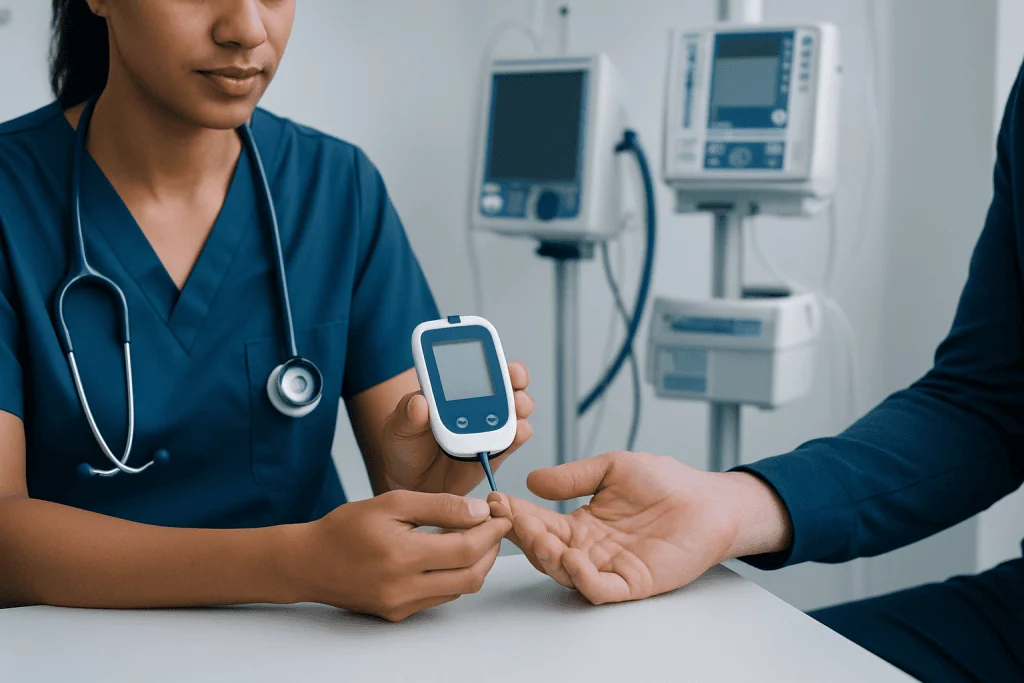
The safest first action is to pause any intake that could push blood sugar higher. That means avoiding sugary drinks, sweets, desserts, and large portions of refined carbohydrates until the level is rechecked. If a meal was just eaten, it can help to stop snacking and give the body time to process the glucose already absorbed.
Drinking water is often helpful because it supports hydration and can assist the body in clearing excess glucose through urine. Gentle movement may help some people, but it is not always the right choice. If blood sugar is very high, if ketones may be present, or if the person feels unwell, exercise can make the situation worse and should be avoided until a doctor advises otherwise.
People who have been prescribed insulin or other glucose-lowering medicine should follow the plan given by their clinician. This may include a correction dose or specific instructions for sick days. However, taking extra medication without guidance can lead to blood sugar dropping too low, which can also be dangerous. For some patients, specialist care such as diabetes treatment helps create a safer plan for handling high readings at home.
- Recheck blood glucose after the interval recommended by the treating clinician.
- Drink water unless a doctor has advised fluid restriction.
- Rest and monitor symptoms.
- Do not drive if feeling faint, confused, or unwell.
- Seek emergency care if symptoms are severe or worsening.
Symptoms that suggest blood sugar is high

High blood sugar, also called hyperglycemia, may cause increased thirst, dry mouth, frequent urination, tiredness, blurred vision, headache, or trouble concentrating. Some people also notice nausea or a general feeling of being unwell. Mild symptoms can develop gradually, especially when blood sugar is only moderately elevated.
Sometimes there are no obvious symptoms at all, which is why home glucose monitoring or laboratory testing can be important. A person may feel normal even when their reading is higher than it should be. That is one reason repeated patterns matter more than a single isolated number.
When blood sugar rises to a dangerous level, symptoms are usually more intense. Severe thirst, vomiting, stomach pain, deep breathing, fruity breath odor, weakness, confusion, or drowsiness should not be ignored. In people with known or suspected diabetes, these symptoms need prompt medical attention because they can signal serious complications that go beyond an ordinary high reading.
Common causes and risk factors
High blood sugar can happen for many reasons, and not all of them mean an emergency. A carbohydrate-heavy meal, emotional stress, poor sleep, an infection, dehydration, or a missed dose of medication can all raise glucose levels. In people without diagnosed diabetes, repeated high readings may be the first clue that the body is not handling insulin effectively.
Certain medicines can also increase blood sugar, including some steroids and other treatments that affect hormones or metabolism. Illness is another common trigger because the body releases stress hormones that can increase glucose production. Even people who are usually well controlled may notice temporary rises when they have a fever, infection, or significant pain.
Risk is higher in people with diabetes, prediabetes, a family history of diabetes, excess body weight, limited physical activity, or a history of gestational diabetes. Hormonal conditions may also play a role, and some patients benefit from broader endocrine assessment through services such as endocrinology when blood sugar patterns are difficult to explain.
How doctors diagnose the cause of repeated high blood sugar
If high readings occur more than once, a doctor usually starts with a careful history. They may ask when the high blood sugar happens, what the person ate beforehand, whether any medication doses were missed, and whether there has been illness, weight change, stress, or symptoms such as thirst, urination, blurred vision, or fatigue. This step often shows whether the problem is temporary or part of a longer-term pattern.
Physical examination may look for dehydration, signs of infection, unintentional weight loss, or other clues. Blood tests often include a fasting glucose level and HbA1c, which reflects average blood sugar over the previous few months. Urine or blood ketone testing may be needed if readings are very high or if there is nausea, vomiting, abdominal pain, or labored breathing.
Depending on the situation, the doctor may also look for related conditions or complications. Some people need additional evaluation to confirm diabetes type, review insulin production, or check kidney function and electrolytes. If complications are suspected, hospital-based monitoring, intravenous fluids, or more advanced care may be recommended.
Treatment options beyond the immediate moment
Short-term treatment aims to bring glucose down safely, but long-term treatment is what prevents the same issue from returning. A doctor may adjust meal planning, physical activity, and medication timing. For people with diabetes, treatment may involve oral medicines, non-insulin injectables, or insulin tailored to daily routines and blood sugar patterns.
Education is an important part of treatment. Many patients need a practical plan for what to do when they are sick, when a reading is unexpectedly high, or when they cannot eat normally. Learning how to monitor blood sugar correctly, recognize patterns, and avoid both high and low levels can make management much safer and less stressful.
If diabetes is newly diagnosed or difficult to control, specialist-led care can help refine treatment. This may include nutrition counseling, continuous glucose monitoring, and structured follow-up. In complex cases, doctors may coordinate care across disciplines, and Acibadem International’s multidisciplinary specialists in JCI-accredited hospitals diagnose and treat metabolic conditions for international patients.
Prevention and self-care
The best way to reduce the need for urgent blood sugar corrections is to prevent major rises in the first place. Regular meals with balanced portions of carbohydrates, protein, and fiber can help. Taking medicine consistently, staying hydrated, sleeping adequately, and keeping physically active are also part of day-to-day control.
Home monitoring can be useful when done with a clear purpose. Some people check fasting levels, others check after meals, and some use continuous glucose monitoring if recommended by a doctor. The goal is not to chase every number but to identify patterns that can guide safer treatment changes.
It also helps to have a written action plan. This may include when to recheck a high reading, when to test for ketones, what fluids to drink, when to pause exercise, and when to call a doctor. People with recurring symptoms related to meals or weight change may also benefit from metabolic and dietary evaluation, and in selected cases broader programs such as obesity treatment may support overall glucose control.
When to seek medical care
Medical review is important if high blood sugar keeps happening, if home readings are consistently above the target range given by a doctor, or if symptoms such as thirst, frequent urination, fatigue, or blurred vision are becoming more common. Even without an emergency, recurring hyperglycemia deserves attention because treatment may need to change.
Urgent care is needed sooner if the person cannot keep fluids down, becomes confused, feels very weak, has trouble breathing, develops chest pain, or shows signs of severe dehydration. Patients with diabetes should also seek prompt advice if ketones are present, especially when blood sugar is high and they feel unwell. Children, older adults, pregnant people, and anyone with other serious illnesses may need earlier assessment.
Anyone who has never been diagnosed with diabetes but repeatedly records high blood sugar should arrange a medical evaluation. Early diagnosis can help prevent complications and clarify whether the cause is diabetes, prediabetes, medication effects, or another health issue.
Frequently asked questions
What lowers blood sugar quickly at home?
The safest steps are to stop sugary foods and drinks, drink water, recheck blood glucose, and use only the medicine already prescribed for high readings. Mild elevations often improve with hydration, rest, and time. If symptoms are severe or the reading remains very high, medical care is important.
Can drinking water lower blood sugar immediately?
Water can help support hydration and may help the body clear some excess glucose through urine. It is a supportive step, not a cure on its own. If blood sugar is significantly elevated, water should be combined with monitoring and the treatment plan given by a doctor.
Should someone exercise to bring blood sugar down fast?
Gentle activity may help in some situations, but it is not always safe. If blood sugar is very high, ketones may be present, or the person feels sick, exercise can worsen the problem. It is better to follow a clinician’s advice about when movement is appropriate.
When is high blood sugar an emergency?
It becomes urgent when it is accompanied by vomiting, confusion, trouble breathing, severe weakness, dehydration, abdominal pain, or fruity-smelling breath. These symptoms may suggest diabetic ketoacidosis or another serious complication. Emergency assessment is especially important if the person has diabetes and cannot keep fluids down.
Is one high blood sugar reading always a sign of diabetes?
No. A single high reading can happen after a large meal, stress, illness, certain medications, or inaccurate testing. However, repeated high readings should be checked by a doctor because they may point to prediabetes or diabetes.
Can someone take extra insulin to lower blood sugar immediately?
Only if their doctor has given a clear correction plan. Taking extra insulin without guidance can cause blood sugar to fall too low, which can be dangerous. When in doubt, it is safer to contact a healthcare professional for advice.
References
- American Diabetes Association
- National Institute of Diabetes and Digestive and Kidney Diseases
- Centers for Disease Control and Prevention
- Mayo Clinic
- World Health Organization
This article is for general information only and is not a substitute for professional medical advice. Please consult a qualified doctor about your individual situation.
Explore treatments in Turkey — costs, top hospitals & a free quote
JCI-accredited · board-certified surgeons · reply within 24h
Add us as a Preferred Source to see more of our trusted health content across Google Search, AI Overviews and Discover.