How to Remove Gas From Stomach Instantly? A Doctor-Reviewed Answer

Most stomach gas improves with simple steps such as walking, sitting upright, and sipping warm fluids. Eating quickly, carbonated drinks, constipation, and certain foods commonly trigger trapped gas.
Key Takeaways
- Most stomach gas improves with simple steps such as walking, sitting upright, and sipping warm fluids.
- Eating quickly, carbonated drinks, constipation, and certain foods commonly trigger trapped gas.
- Gas with severe pain, vomiting, fever, blood in stool, weight loss, or a swollen hard abdomen needs medical review.
- Doctors diagnose troublesome gas by reviewing symptoms, diet, bowel habits, medicines, and sometimes ordering tests.
- Treatment depends on the cause and may include dietary changes, treating constipation, or evaluating digestive conditions.
Gas in the stomach is very common and is often harmless, even when it feels uncomfortable or sudden. Quick relief usually comes from gentle movement, changing position, passing gas, and avoiding the food or habits that triggered the problem, but severe or persistent symptoms should be assessed by a doctor.
Fast answer: what helps stomach gas right away?
If someone wants to know how to remove gas from stomach instantly, the most helpful first steps are usually simple: stand up and walk for a few minutes, sit upright instead of lying flat, loosen tight clothing, and try to pass gas without straining. Many people also feel better after sipping warm water or a non-caffeinated warm drink, especially if the discomfort followed a large meal or carbonated beverages.
In most cases, stomach gas is harmless and settles on its own. The key is to look for warning signs that suggest something more than ordinary gas, such as severe or constant abdominal pain, repeated vomiting, fever, blood in the stool, black stools, trouble swallowing, a hard swollen abdomen, or unexplained weight loss. If any of these are present, medical care is more important than trying home measures.
When symptoms keep returning, a doctor will usually focus on the pattern rather than the gas alone. They may ask when the bloating starts, whether it is linked to meals, constipation, diarrhea, heartburn, or specific foods, and whether there are features of conditions such as acid reflux or irritable bowel syndrome.
What stomach gas feels like
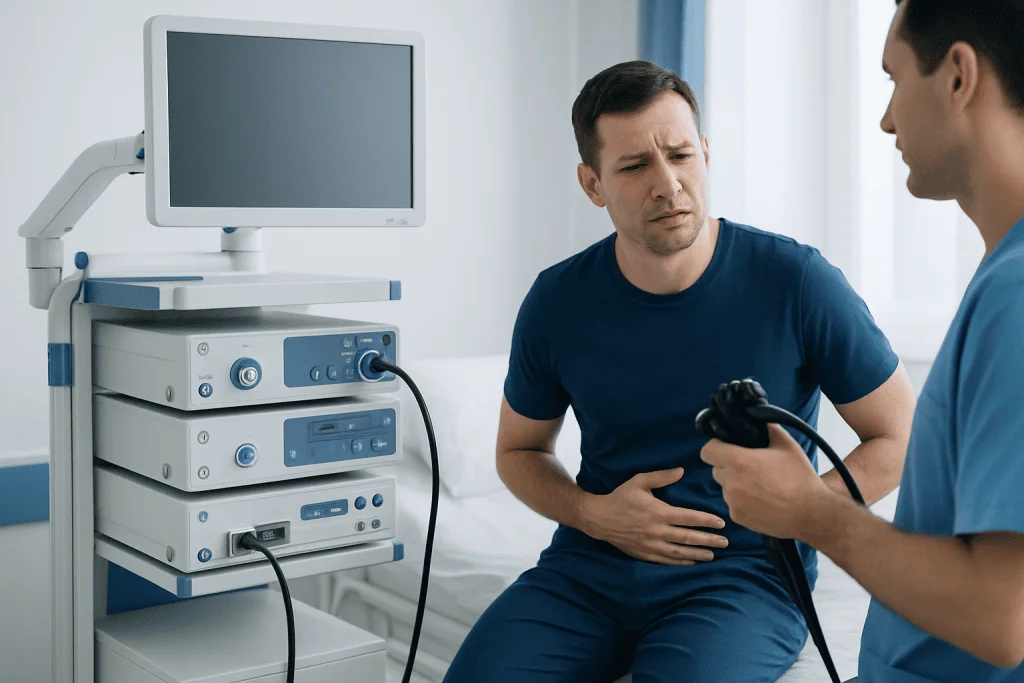
Gas can cause pressure, fullness, belching, a tight upper abdomen, rumbling, or cramping that improves after burping or passing gas. Some people describe it as a balloon-like feeling under the ribs or in the upper stomach, while others notice lower abdominal bloating as gas moves through the intestines.
The discomfort can vary from mild to quite noticeable, but the intensity does not always mean the cause is serious. Gas may build up after swallowing extra air, eating a heavy meal, drinking fizzy drinks, chewing gum, smoking, or eating foods that are more likely to ferment in the gut.
It is also important to separate gas from other causes of abdominal discomfort. Burning behind the chest may point more toward reflux, while pain focused in one area, persistent nausea, or pain that wakes a person from sleep may need a broader medical evaluation.
Common causes and triggers

Stomach gas often comes from two main sources: swallowed air and digestion. Swallowed air is more likely when someone eats quickly, talks while eating, uses a straw, chews gum, or drinks carbonated beverages. Digestive gas forms when gut bacteria break down certain carbohydrates that are not fully absorbed.
Typical food triggers include beans, lentils, onions, broccoli, cabbage, cauliflower, high-fiber cereals, some fruits, sugar alcohols, and fizzy drinks. Dairy may cause gas in people with lactose intolerance, and wheat-based foods may worsen symptoms in some people, though that does not always mean celiac disease is present.
Constipation is another major cause because stool moving slowly through the bowel allows gas to build up. Gas may also appear with indigestion, reflux, food intolerances, gut infections, or functional digestive disorders. In some situations, doctors may assess for underlying conditions using tests such as endoscopy or colonoscopy if symptoms suggest a problem beyond simple gas.
Practical ways to get relief quickly
Quick relief usually focuses on helping gas move. Gentle walking is one of the most effective options because movement stimulates the digestive tract. Sitting upright, bringing the knees slightly toward the chest when resting, or changing position can also help trapped gas shift. Some people find that a bowel movement relieves pressure, especially if constipation is contributing.
Warm fluids may relax the digestive tract and encourage belching or bowel movement. It is best to avoid carbonated drinks, very large meals, and lying down immediately after eating. Eating slowly at the next meal can prevent the same cycle from happening again.
If symptoms are mild and occasional, some people discuss over-the-counter remedies with a pharmacist or doctor, such as products used for indigestion or gas discomfort. These are not right for everyone, especially if symptoms are frequent, unexplained, or accompanied by red flags. Persistent bloating should not be self-treated indefinitely without medical advice.
- Walk for 10 to 15 minutes.
- Sit upright rather than slouching or lying flat.
- Loosen tight waistbands.
- Sip warm water slowly.
- Avoid fizzy drinks and chewing gum for the rest of the day.
- Do not force straining if trying to pass gas.
When gas may signal a digestive problem
Occasional gas is common, but frequent symptoms can sometimes reflect an underlying digestive condition. Examples include reflux, constipation, lactose intolerance, irritable bowel syndrome, small intestinal bacterial overgrowth, celiac disease, gallbladder problems, or inflammation in the digestive tract. The pattern matters: symptoms after dairy suggest one possibility, while gas with alternating diarrhea and constipation suggests another.
Doctors also pay attention to symptoms that are new, worsening, or beginning later in life without a clear reason. Ongoing bloating after small meals, repeated vomiting, poor appetite, or pain that steadily intensifies deserves medical assessment. Although these symptoms do not always mean a serious disease, they should not be dismissed.
In a specialist setting, evaluation may involve a careful diet history, blood tests, stool tests, breath testing, or imaging when needed. Depending on the symptoms, a gastroenterologist may consider further assessment through gastroenterology evaluation or targeted testing to rule out structural or inflammatory causes.
How doctors diagnose ongoing or severe gas
When gas is troublesome, doctors begin by asking detailed questions: where the discomfort is felt, whether it improves after burping or passing gas, what foods seem to trigger it, how often bowel movements occur, and whether there are symptoms such as heartburn, diarrhea, constipation, nausea, or weight change. A medication review is also important because some medicines can slow digestion or irritate the stomach.
A physical examination may help identify bloating, abdominal tenderness, bowel sounds, or signs of constipation. In many cases, no invasive testing is needed at the first visit if the symptoms are mild, predictable, and not associated with red flags.
Testing becomes more likely when symptoms are persistent, severe, or unexplained. Depending on the clinical picture, doctors may recommend blood work, stool studies, breath tests for intolerances, ultrasound, or endoscopic tests. The goal is not just to confirm gas, but to identify and treat the cause behind repeated symptoms.
Prevention and day-to-day self-care
Preventing gas usually means noticing personal triggers and making gradual changes rather than following a highly restrictive diet without guidance. Eating smaller meals, chewing thoroughly, reducing fizzy drinks, and avoiding rushed eating often make a real difference. A simple food and symptom diary can help reveal patterns that are otherwise easy to miss.
Regular bowel habits matter as much as food choices. Adequate fluid intake, physical activity, and enough fiber can help prevent constipation, but fiber should be increased gradually because sudden increases may temporarily worsen gas. If dairy seems to trigger symptoms, a doctor or dietitian can advise how to test this safely while maintaining balanced nutrition.
Stress can also affect digestion and bloating in some people. Slow eating, regular mealtimes, and gentle movement after meals may reduce symptoms. For people with ongoing digestive complaints, individualized advice is often more useful than generic elimination diets.
Near the end of the care pathway, if a person needs specialist support, Acibadem International’s multidisciplinary specialists and JCI-accredited hospitals diagnose and treat digestive symptoms for international patients.
When to seek medical care
Medical advice is recommended if gas is frequent, keeps coming back, disrupts sleep, or interferes with eating, work, or daily activities. A routine appointment is also sensible when gas is linked to chronic constipation, recurring diarrhea, reflux symptoms, or a clear food intolerance pattern that needs confirmation.
Urgent medical review is needed for severe abdominal pain, repeated vomiting, chest pain, fever, fainting, dehydration, inability to pass stool or gas, a visibly swollen or hard abdomen, blood in the stool, or black stools. These signs do not necessarily indicate a serious condition, but they do need prompt assessment.
If symptoms are new, persistent, or concerning, the safest next step is to consult a qualified doctor rather than repeatedly relying on home remedies. A professional evaluation can clarify whether the problem is simple gas, a manageable digestive disorder, or something that needs further treatment.
Frequently asked questions
What is the fastest way to get rid of gas in the stomach?
The quickest measures are usually walking, sitting upright, loosening tight clothing, and sipping warm water. These steps can help gas move through the digestive tract or be released by burping or passing gas. If severe pain or vomiting is present, medical advice is more important than home treatment.
Does lying down help trapped gas?
Lying flat often does not help and may make upper abdominal pressure or reflux feel worse. Many people do better sitting upright or taking a short walk. Gentle position changes can be useful, but movement is usually more effective than resting flat.
Why do I have gas even when I have not eaten much?
Gas is not only about meal size. It can be related to swallowed air, constipation, food intolerances, changes in gut bacteria, reflux, or functional bowel disorders. If this keeps happening, a doctor can help identify the underlying reason.
When is gas not normal?
Gas becomes more concerning when it is severe, persistent, clearly worsening, or linked to red flags such as weight loss, vomiting, fever, blood in the stool, or trouble swallowing. It also deserves medical review if it regularly disrupts daily life. Most cases are not dangerous, but repeated symptoms should be explained.
Can constipation cause stomach gas and bloating?
Yes. When stool moves slowly through the intestines, gas can build up and create pressure, cramping, and bloating. Treating constipation often reduces gas as well, but ongoing constipation should be discussed with a healthcare professional.
Should I stop eating fiber if I have gas?
Not necessarily. Fiber is important for bowel health, but increasing it too quickly can temporarily worsen gas. A gradual increase, good hydration, and choosing the right fiber sources can help, and personalized advice is useful if symptoms continue.
References
- National Institute of Diabetes and Digestive and Kidney Diseases
- American College of Gastroenterology
- National Health Service
- Mayo Clinic
- World Gastroenterology Organisation
This article is for general information only and is not a substitute for professional medical advice. Please consult a qualified doctor about your individual situation.
Persistent digestive symptoms? Get evaluated in Turkey
JCI-accredited · board-certified surgeons · reply within 24h
Add us as a Preferred Source to see more of our trusted health content across Google Search, AI Overviews and Discover.