

How to Speed Up Muscle Strain Recovery Safely

Most mild muscle strains improve with relative rest, ice, compression, elevation, and time. Returning to activity too soon can delay muscle strain recovery and raise the risk of re-injury.
Key Takeaways
- Most mild muscle strains improve with relative rest, ice, compression, elevation, and time.
- Returning to activity too soon can delay muscle strain recovery and raise the risk of re-injury.
- Gentle stretching and strengthening should begin gradually, ideally after pain starts to settle.
- Severe pain, major swelling, weakness, or inability to bear weight should be assessed by a doctor.
- Warm-up, conditioning, hydration, and proper technique can help reduce future muscle strains.
Muscle strain recovery usually improves with early protection, symptom control, and a gradual return to activity. Healing can often be supported safely by balancing rest with gentle movement and knowing when medical evaluation is needed.
Overview
A muscle strain, sometimes called a pulled muscle, happens when muscle fibers are stretched too far or torn. This can affect small areas of the muscle or, in more serious cases, a larger portion of the muscle-tendon unit. Strains are common in the back, neck, shoulders, hamstrings, calves, and groin, especially during sports, heavy lifting, sudden movement, or overuse.
Muscle strain recovery depends on the severity of the injury, the muscle involved, and how the early recovery period is managed. Mild strains may settle within days to a few weeks, while moderate or severe injuries can take longer. Safe recovery is not about rushing healing, but about supporting the body’s repair process and avoiding actions that make the injury worse.
In the first phase, the main goals are to reduce pain, limit swelling, and protect the injured area. After that, recovery usually shifts toward restoring range of motion, strength, and function. A gradual plan is important because muscles heal best when they are protected from overload but not kept completely inactive for too long.
Symptoms of a Muscle Strain
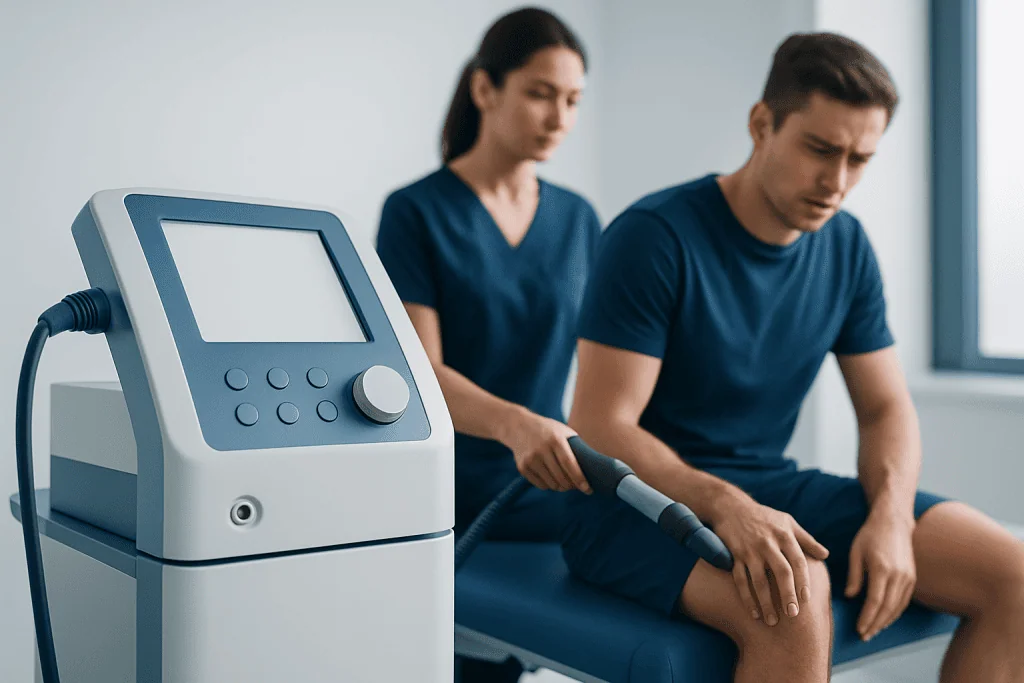
Symptoms can begin suddenly during an activity or develop after repeated use. Many people feel a sharp pull, twinge, or cramping sensation at the time of injury. Others notice pain and stiffness later, especially after exercise or physically demanding work.
Common symptoms include:
- Pain in a specific muscle or near its tendon
- Tenderness to touch
- Swelling or mild bruising
- Stiffness and reduced flexibility
- Weakness when using the muscle
- Muscle spasm or tightness
- Difficulty walking, lifting, reaching, or performing normal movement
The severity of symptoms often reflects the grade of the strain. A mild strain may cause discomfort but still allow movement. A more significant tear may cause marked pain, visible bruising, weakness, or trouble bearing weight. If the muscle seems to give way, there is a popping sensation, or function is clearly reduced, medical assessment is important.
What Causes Muscle Strain and What Raises the Risk?

Muscle strains usually happen when a muscle is overloaded. This can occur during sprinting, jumping, lifting, twisting, sudden changes in direction, or trying to catch a heavy object. Overstretching a cold or fatigued muscle also increases the chance of injury.
Risk factors include poor conditioning, inadequate warm-up, reduced flexibility, muscle imbalance, repetitive movement, and returning to exercise too quickly after a previous injury. Dehydration, poor technique, and ill-fitting footwear may also contribute in some situations. Age can play a role as well, because muscle elasticity and recovery may gradually change over time.
Some strains happen around joints that are under frequent stress, such as the knee, hip, or shoulder. In some cases, symptoms that seem like a strain may overlap with other problems such as tendon injury, ligament injury, or a herniated disc causing referred pain. When symptoms are unusual or persistent, a clinician can help clarify the cause.
How to Speed Up Muscle Strain Recovery Safely
The safest way to support healing is to combine early protection with a gradual return to movement. During the first 24 to 72 hours, many doctors recommend relative rest rather than complete immobilization. This means avoiding painful activity while still doing gentle, comfortable movement when possible. Ice may help reduce pain and swelling, and compression and elevation can be useful, especially for leg injuries.
Over-the-counter pain relief may be appropriate for some people, but it should be used only as directed and with medical advice when needed, especially for those with stomach, kidney, bleeding, or heart concerns. Massage, heat, or intense stretching right away may irritate a fresh injury in some cases, so these are usually introduced later rather than immediately.
As pain settles, gentle range-of-motion exercises can help prevent stiffness. Progress usually moves from light stretching to controlled strengthening and then to sport- or task-specific activity. If walking or daily movement is painful, temporary support such as physical therapy and rehabilitation can be very helpful for restoring safe movement patterns and reducing the chance of re-injury.
Healing tends to go better when sleep, nutrition, and hydration are also supported. Protein intake, balanced meals, and adequate fluid intake help the body repair tissue. The key is not to push through pain: discomfort that steadily improves can be expected, but sharp pain, increasing swelling, or worsening weakness usually means activity is too advanced for the current stage of recovery.
Diagnosis and Recovery Timeline
Doctors usually diagnose a muscle strain by asking how the injury happened and examining the painful area. They may check tenderness, swelling, bruising, range of motion, strength, and the ability to walk or use the affected limb. In many cases, this clinical evaluation is enough to guide treatment.
Imaging is not always necessary for a simple strain, but it may be recommended when symptoms are severe, the diagnosis is uncertain, or another injury is suspected. Ultrasound or MRI may help show the location and extent of a tear. Imaging can also be useful if pain persists longer than expected or if the clinician wants to rule out tendon rupture or other structural problems.
Recovery time varies. Mild strains may improve within 1 to 3 weeks, while moderate injuries often need several weeks. Severe strains can take much longer and may require a more structured rehabilitation plan. The safest marker for progress is function: the muscle should move comfortably, regain strength, and tolerate daily tasks before a full return to sport or strenuous work.
Treatment Options and Rehabilitation
Most muscle strains heal without surgery. Treatment usually focuses on pain control, reducing inflammation, protecting the tissue, and then rebuilding flexibility and strength. A stepwise plan matters because both too much rest and too much activity can slow recovery.
Rehabilitation often includes posture correction, flexibility work, gradual loading, and exercises tailored to the injured muscle. For example, calf and hamstring strains may need specific strengthening patterns before running is resumed, while shoulder strains may need guided mobility and stability work. Some patients benefit from supervised sports injuries rehabilitation when returning to exercise or competition.
Surgery is uncommon, but it may be considered for major tears, complete rupture, or injuries that do not recover as expected. If symptoms are complex or overlap with joint or soft-tissue problems, doctors may also investigate related issues such as meniscus tear in the knee or tendon injury around the affected area. Near the end of recovery, specialists may advise a return-to-activity plan based on strength, balance, and pain-free function rather than on a fixed number of days.
Prevention, Self-care, and When to See a Doctor
Prevention begins with regular conditioning. Warming up before exercise, increasing intensity gradually, and strengthening the muscles used in work or sport can all lower strain risk. Good technique, supportive footwear, and rest days between intense sessions are also important. After an injury, continuing prescribed exercises even after pain improves can help prevent recurrence.
At home, self-care should focus on steady progress. Gentle movement, good posture, enough sleep, and avoiding sudden overload all support recovery. If stretching is used, it should be mild and never forced. A person should stop any activity that causes sharp pain, limping, or increasing weakness.
Medical care is recommended if pain is severe, there is significant swelling or bruising, the person cannot use the limb normally, or symptoms do not begin improving after several days of appropriate self-care. Evaluation is also important for repeated strains in the same area, numbness, fever, or concern about a more serious injury. For international patients who need further assessment, Acibadem International’s multidisciplinary specialists in JCI-accredited hospitals diagnose and treat muscle and soft-tissue injuries with individualized rehabilitation plans.
Frequently asked questions
How long does muscle strain recovery usually take?
Recovery time depends on how severe the strain is and which muscle is involved. Mild strains may improve within days to a few weeks, while moderate or severe tears can take several weeks or longer. A safer guide than the calendar is whether strength and movement are returning without pain.
Should a muscle strain be rested completely?
Complete rest is not always best for recovery. In the early stage, relative rest is usually recommended, meaning painful activities are avoided while gentle movement is kept as tolerated. Too much inactivity can increase stiffness and delay return to normal function.
Is heat or ice better for a pulled muscle?
Ice is often preferred in the first 24 to 72 hours because it may help reduce pain and swelling. Heat may feel soothing later, once the acute phase settles and stiffness becomes a bigger issue. If either one makes symptoms worse, it is best to stop and ask a healthcare professional.
When can someone exercise again after a muscle strain?
Exercise can usually restart gradually when pain is clearly improving and basic movements are comfortable. It is best to begin with gentle range-of-motion work and light strengthening before returning to running, lifting, or sports. Returning too quickly can increase the risk of another strain.
Can massage help muscle strain recovery?
Massage may help some people later in recovery, especially when stiffness and tension are present. However, deep massage too soon after the injury may irritate damaged tissue. Timing matters, so persistent or significant injuries should be discussed with a clinician or physiotherapist.
What are signs that a muscle strain may be serious?
Severe pain, major swelling, extensive bruising, clear weakness, or inability to walk or use the limb normally can suggest a more significant injury. A popping sensation at the time of injury or a visible deformity also deserves prompt medical review. If symptoms are worsening instead of improving, assessment is important.
References
- American Academy of Orthopaedic Surgeons
- National Health Service
- Mayo Clinic
- MedlinePlus
- American College of Sports Medicine
This article is for general information only and is not a substitute for professional medical advice. Please consult a qualified doctor about your individual situation.
Joint and spine care in Turkey — expert assessment & treatment
JCI-accredited · board-certified surgeons · reply within 24h
Add us as a Preferred Source to see more of our trusted health content across Google Search, AI Overviews and Discover.

More from the Health Library



Related Specialists

Dr. Büşra Nükhet Pehlivanoğlu
Pediatrics
Dr. Behıye Ören
Intensive Care
Prof. Dr. Beril Akman
Internal Medicine
Dr. Aylin Tatlıadım
Gynecology & Obstetrics