How to Tan Skin Fast? Here Is What the Evidence Says

There is no safe or healthy way to tan quickly with UV exposure. Any tan from the sun or tanning beds is a sign of skin injury.
Key Takeaways
- There is no safe or healthy way to tan quickly with UV exposure.
- Any tan from the sun or tanning beds is a sign of skin injury.
- Sunless tanning products can darken the skin’s surface without UV damage.
- Sunscreen helps prevent burns and long-term skin damage but does not make UV tanning safe.
- New, changing, painful, or bleeding spots on the skin should be checked by a doctor.
Many people ask how to tan skin fast, but evidence shows there is no truly safe way to speed up a tan with sunlight or tanning beds. A tan is the skin’s response to ultraviolet damage, so the safest approach for a bronzed look is sunless tanning, along with careful sun protection and prompt medical review of any concerning skin changes.
Overview: the direct answer to how to tan skin fast
For most healthy people, wanting darker skin for cosmetic reasons is common and usually not a sign of illness. However, the evidence-based answer to how to tan skin fast is simple: there is no safe way to tan quickly with the sun or tanning beds, because a tan itself reflects skin damage caused by ultraviolet (UV) radiation.
When UV rays reach the skin, they stimulate pigment-producing cells called melanocytes to make more melanin. This extra pigment can darken the skin over hours to days, but it develops because the skin is trying to protect itself after injury. Faster tanning usually means more intense UV exposure, which also means higher risk of sunburn, premature aging, and skin cancer over time.
For someone who wants a bronzed appearance, the safest option is usually a sunless tanning product, such as a lotion, mousse, or spray. These products color the outermost layer of skin without creating a UV tan. They do not protect against the sun, so sunscreen is still needed.
What happens when skin tans
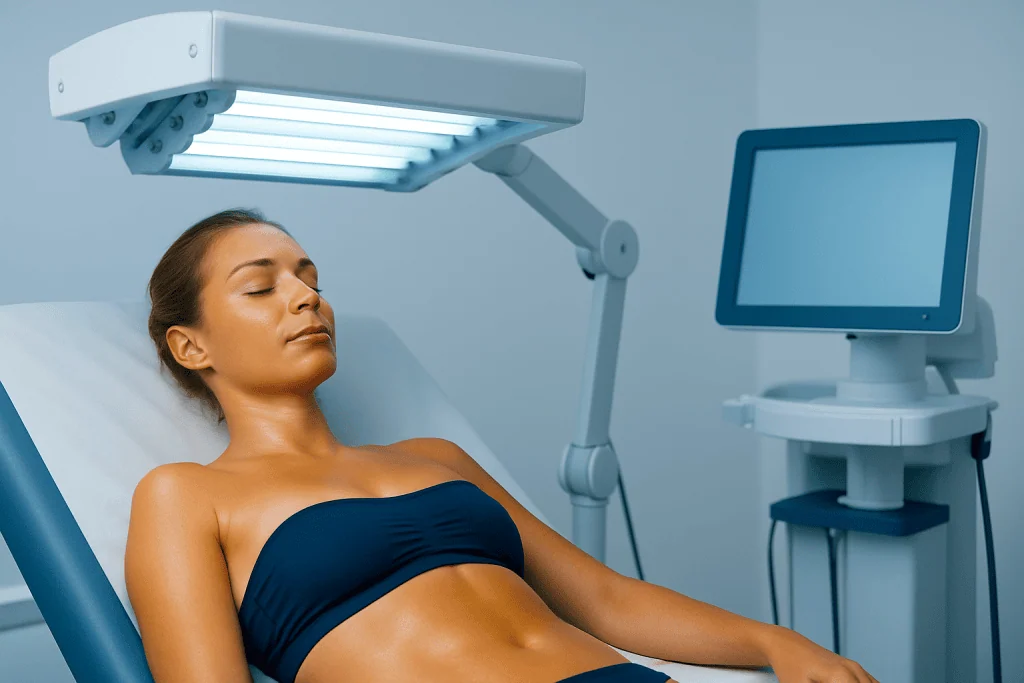
Tanning is a biological response, not a sign that the skin has become healthier. UV radiation, especially UVA and UVB, can damage DNA in skin cells. In response, the skin increases melanin production, which may make the skin look darker for a time.
There are important differences between tanning and burning, but both involve UV injury. A burn is more obvious and painful, while tanning may seem mild or desirable. Even without a visible burn, repeated UV exposure can still contribute to wrinkles, uneven pigmentation, and a higher long-term risk of skin cancers, including skin cancer.
Some people tan more easily than others because of natural skin tone, genetics, and how their skin responds to UV light. Still, no skin type is completely protected from UV damage. Darker skin has more natural melanin, but it can still be harmed by excessive sun exposure and still benefits from routine protection and skin checks.
Can anything make tanning happen faster?

Methods promoted online to speed tanning often rely on one thing: increasing UV exposure. This may include longer time in the sun, tanning during peak midday hours, using tanning beds, or skipping sunscreen. These strategies can make skin darken more quickly, but they do so by increasing injury to the skin, not by making tanning safer.
There is no reliable evidence that oils, special positions in the sun, or repeated short sessions make UV tanning safe. In fact, applying oils without sun protection can increase the chance of burning. Tanning beds are also not a safer substitute for natural sunlight; they expose the skin to concentrated UV radiation and are linked to increased skin cancer risk.
Some products marketed as “tanning accelerators” may moisturize the skin or enhance the appearance of color, but they do not remove the risks of UV exposure. For people seeking color quickly for an event or holiday, sunless tanners are usually the best evidence-based option. If there are questions about skin type, pigmentation issues, or sensitivity to sunlight, an evaluation by a specialist in dermatology care can be helpful.
Safer ways to get a bronzed look
If the goal is cosmetic color rather than UV exposure, sunless tanning is the preferred approach. Most self-tanners use dihydroxyacetone (DHA), which reacts with proteins in the outer skin layer to create temporary darkening. This color usually appears within several hours and fades gradually as the skin naturally sheds.
Sunless tanning products come in lotions, creams, wipes, mousses, and professional sprays. They work best on clean, dry, gently exfoliated skin. Uneven color can often be reduced by moisturizing dry areas such as elbows, knees, ankles, and hands before application, and by following the product instructions carefully.
It is important to remember that a sunless tan does not provide meaningful sun protection unless the product specifically contains sunscreen. Daily use of broad-spectrum sunscreen, protective clothing, shade, and sunglasses remains important. People with sensitive skin, eczema, or recurring irritation may want to patch test a product first or discuss options during a skin care and dermatologic treatment visit.
- Choose a reputable sunless tanning product.
- Apply evenly to exfoliated skin.
- Wash hands after use unless treating them intentionally.
- Continue using sunscreen every day.
Risks of trying to tan fast with sun or tanning beds
The main short-term risk of fast tanning is sunburn. Sunburn can cause redness, pain, swelling, blistering, and peeling. Severe burns may also lead to dehydration, headache, fever, or chills and can require medical attention.
Long-term risks are equally important. Repeated UV exposure contributes to early skin aging, including wrinkles, loss of elasticity, rough texture, and dark spots. It can also worsen some pigment problems and make the skin tone appear less even over time rather than more attractive or healthy.
Most importantly, cumulative UV damage raises the risk of skin cancers such as basal cell carcinoma, squamous cell carcinoma, and melanoma. Tanning beds are especially concerning because they can deliver intense UVA exposure. People with many moles, a personal or family history of skin cancer, very fair skin, or a history of severe sunburns should be particularly careful and may benefit from regular skin cancer evaluation and treatment if any suspicious lesion appears.
When to seek medical care
Trying to tan is often harmless in the sense that the desire for a tan itself is common, but certain skin changes should not be ignored. A doctor should review any severe sunburn, especially if there is extensive blistering, significant pain, fever, dizziness, confusion, or signs of dehydration. Medical advice is also sensible if a rash appears after sun exposure, as this can reflect sun sensitivity or another skin condition.
Skin lesions deserve attention when they are new, changing, painful, itchy, crusting, or bleeding. The same is true for a mole that looks different from others or changes in size, shape, color, or border. Dark streaks under a nail or spots that do not heal are also reasons for an examination.
During a medical review, a clinician usually asks about sun habits, tanning bed use, medicines that increase sun sensitivity, family history, and any timeline of skin changes. The skin is then examined closely, sometimes with a dermatoscope. If a lesion is suspicious, the next step may be a biopsy to confirm whether it is benign or related to a condition such as melanoma.
How doctors assess sun damage and suspicious skin changes
Most concerns can be assessed with a careful history and skin examination. A dermatologist may look at the pattern of pigmentation, the presence of freckles or sunspots, signs of chronic sun damage, and any individual lesion that stands out. Photos may sometimes be used to track changes in moles or patches over time.
If there is concern about a suspicious spot, the doctor may recommend a skin biopsy. This is a common procedure in which a small sample, or sometimes the whole lesion, is removed and examined under a microscope. Biopsy helps distinguish harmless changes from skin cancer or other skin diseases.
Assessment can also include reviewing a person’s overall risk profile. This may include skin type, immune status, previous severe sunburns, outdoor work, and use of medications that make the skin more sensitive to sunlight. In specialized centers, multidisciplinary teams can guide diagnosis and treatment; Acibadem International’s multidisciplinary specialists and JCI-accredited hospitals care for international patients who need evaluation of suspicious skin findings.
Prevention and self-care for healthy skin
The best way to protect the skin while maintaining appearance is to separate cosmetic goals from UV exposure. A temporary bronzed look can come from sunless tanning, while long-term skin health depends on minimizing unnecessary UV damage. Broad-spectrum sunscreen with regular reapplication, sun-protective clothing, hats, and shade are the mainstays of prevention.
People who spend time outdoors should try to avoid prolonged direct sun during peak intensity hours and should be especially careful near water, sand, or snow, which can reflect UV rays. Children and teenagers benefit from strong sun-protection habits early in life, as cumulative exposure matters over the years.
Regular self-checks are also useful. Looking over the skin every month can help a person notice new or changing spots. If there is any uncertainty, it is safer to ask a qualified doctor than to wait. Protecting the skin consistently is more helpful than trying to tan quickly, and it supports both appearance and long-term health.
Frequently asked questions
Is there any safe way to tan skin fast in the sun?
No. A fast tan from the sun still means the skin has been exposed to ultraviolet radiation, and that exposure causes damage even if a burn does not occur. The safest way to get a tanned appearance quickly is to use a sunless tanning product.
Does sunscreen help someone tan more safely?
Sunscreen reduces UV damage and lowers the risk of sunburn, but it does not make intentional tanning safe. Some tanning may still occur while wearing sunscreen because no sunscreen blocks all UV rays. Its purpose is protection, not safer tanning.
Are tanning beds safer than lying in the sun?
No. Tanning beds expose the skin to ultraviolet radiation and are linked to premature skin aging and higher skin cancer risk. They are not considered a safe alternative to natural sunlight.
Do tanning oils or tanning accelerators work?
Some products may make the skin look shinier or help sunless color appear more even, but they do not make UV tanning safe. Oils used in the sun can even increase the chance of burning. It is important to distinguish cosmetic appearance from skin protection.
What is the safest way to look tan for an event or vacation?
Sunless tanning products are usually the safest option. They can provide temporary color without requiring UV exposure, especially when applied carefully and evenly. Sunscreen is still needed because the color does not reliably protect the skin from the sun.
When should a person worry about a mole or dark spot after sun exposure?
A spot should be checked if it changes in size, shape, color, or border, or if it bleeds, crusts, itches, or does not heal. A lesion that looks noticeably different from a person’s other moles also deserves attention. Early assessment can help rule out serious causes and guide treatment if needed.
References
- American Academy of Dermatology
- World Health Organization
- Centers for Disease Control and Prevention
- U.S. Food and Drug Administration
- National Cancer Institute
This article is for general information only and is not a substitute for professional medical advice. Please consult a qualified doctor about your individual situation.
Explore treatments in Turkey — costs, top hospitals & a free quote
JCI-accredited · board-certified surgeons · reply within 24h
Add us as a Preferred Source to see more of our trusted health content across Google Search, AI Overviews and Discover.