Hyoid Bone: What Patients Need to Know

The hyoid bone is unique because it does not directly join other bones. It plays an important role in swallowing, tongue movement, breathing support, and speech.
Key Takeaways
- The hyoid bone is unique because it does not directly join other bones.
- It plays an important role in swallowing, tongue movement, breathing support, and speech.
- Hyoid bone discomfort may come from strain, inflammation, trauma, or conditions affecting nearby throat tissues.
- Diagnosis often includes a physical examination and sometimes imaging or endoscopic assessment.
- Treatment depends on the cause and may range from rest and medicines to specialist care or surgery in rare cases.
The hyoid bone is a small U-shaped bone in the front of the neck that helps support the tongue, swallowing, and speech. Most people do not notice it unless pain, injury, or related throat symptoms develop, and evaluation can help identify whether the problem involves the bone itself or nearby structures.
Overview: what the hyoid bone does
The hyoid bone is a small, horseshoe- or U-shaped bone located in the front of the neck, just above the voice box and below the jaw. It helps anchor the tongue and supports several muscles involved in swallowing, speaking, and keeping the upper airway stable. Unlike most bones in the body, it does not directly connect to another bone by a joint.
Instead, the hyoid bone is suspended by muscles and ligaments. This makes it an important meeting point between the tongue, throat, and larynx. Because of this central role, a problem affecting the hyoid bone may feel like throat pain, discomfort with swallowing, tenderness in the neck, or a sensation that something is catching during movement.
Many patients search for information about the hyoid bone when they notice pain in the upper neck or are told about an abnormality on imaging. In many cases, symptoms are not caused by the bone alone but by nearby muscles, tendons, or throat tissues. A careful medical assessment helps clarify the cause and guide the next steps.
Anatomy and why this small bone matters
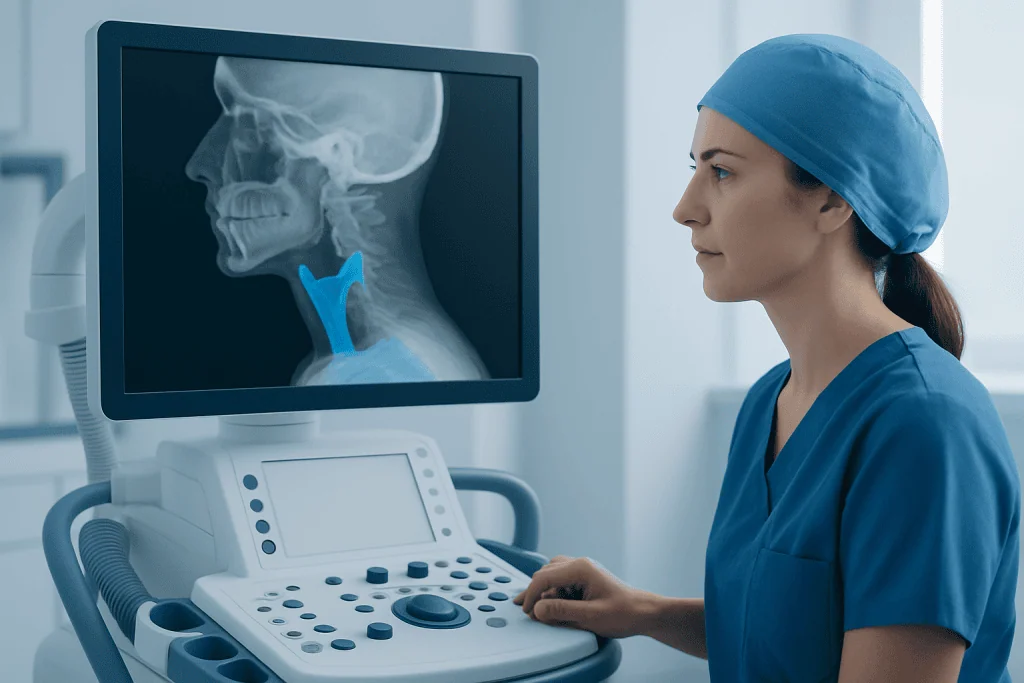
The hyoid bone sits roughly at the level of the third cervical vertebra, although its exact position varies slightly from person to person. It has a central part called the body, along with two larger side projections called the greater horns and two smaller projections called the lesser horns. These structures create attachment points for multiple muscles.
Muscles above the hyoid help move the tongue, floor of the mouth, and lower jaw. Muscles below it help lower the hyoid and larynx after swallowing and speaking. Together, these coordinated movements allow food and liquid to pass safely from the mouth into the esophagus while also supporting clear speech.
Because it is closely related to the throat and voice box, symptoms in this region may overlap with common ENT conditions. For example, throat discomfort may sometimes be evaluated alongside tonsillitis or other causes of neck and throat pain. In some cases, imaging such as MRI or CT scan can help doctors understand whether the issue involves the hyoid bone, nearby soft tissues, or another structure.
Symptoms linked to the hyoid bone

Symptoms related to the hyoid bone can vary depending on the cause. Some people notice a dull ache or tenderness in the front of the neck, especially when swallowing, yawning, chewing, or turning the head. Others describe a clicking sensation, a feeling of pressure in the throat, or discomfort that seems to radiate toward the jaw or ear.
When the surrounding muscles are irritated, symptoms may be intermittent and position-related. Pain may increase after prolonged talking, singing, heavy coughing, recent neck strain, or upper respiratory irritation. In some cases, the area may feel sore to touch from the outside of the neck.
Possible symptoms include:
- Localized pain in the upper front neck
- Pain or difficulty with swallowing
- Feeling of a lump in the throat
- Clicking or catching with neck or tongue movement
- Tenderness under the jaw
- Voice discomfort or strain in some cases
These symptoms are not specific to the hyoid bone alone. Similar complaints may occur with muscle tension, throat inflammation, salivary gland disorders, thyroid conditions, or problems affecting the larynx. That is why persistent or unexplained symptoms should be assessed by a qualified doctor rather than self-diagnosed.
Common causes of hyoid bone pain or injury
Hyoid bone symptoms may arise from direct trauma, overuse, inflammation, or structural variation. A blow to the neck, sports injury, or other forceful impact can bruise the area and, in rare cases, cause a fracture. Hyoid fractures are uncommon but can occur in serious neck trauma and need urgent medical evaluation, especially if breathing or swallowing is affected.
Not all hyoid-related pain is due to injury. Muscle strain involving the tongue base, jaw, or front-of-neck muscles can pull on the hyoid and cause tenderness. Inflammation at tendon or ligament attachment points may also create pain with swallowing or head movement. Some patients have anatomical variations, elongation of nearby structures, or movement patterns that make symptoms more likely.
Doctors also consider causes outside the bone itself. Throat infection, chronic coughing, reflux irritation, lymph node enlargement, and disorders involving the larynx or nearby soft tissues can all mimic hyoid pain. When symptoms overlap with voice changes or swallowing problems, specialists may evaluate the throat more closely, sometimes with endoscopy if it is appropriate for the wider clinical picture.
Risk factors depend on the underlying cause but may include:
- Recent neck trauma or accident
- Contact sports or strangulation-related injury
- Repetitive voice use or muscle tension
- Frequent coughing or throat clearing
- Inflammatory or infectious conditions in the throat
- Anatomical differences in the neck or jaw region
How doctors diagnose hyoid bone problems
Diagnosis begins with a detailed history and physical examination. A doctor will ask when the symptoms started, whether there was trauma, what movements make the pain worse, and whether swallowing, breathing, or speaking has changed. External palpation of the neck may help locate tenderness around the hyoid region.
Because many conditions can resemble hyoid bone pain, the examination often includes the mouth, throat, jaw, salivary glands, thyroid region, and lymph nodes. An ear, nose, and throat specialist may examine the larynx and surrounding structures if symptoms suggest a throat-based cause rather than a bone or muscle problem alone.
Imaging is not always necessary, but it can be useful when trauma is suspected, symptoms persist, or the diagnosis remains unclear. X-rays may sometimes help, but CT is often more informative for bony detail, while MRI can better assess surrounding soft tissues. In selected cases, ultrasound or flexible throat examination may also be used to look for other explanations.
The goal of diagnosis is not just to confirm whether the hyoid bone is involved, but to rule out more common causes of throat and neck pain. This step is especially important when symptoms are severe, persistent, or associated with swallowing difficulty, weight loss, fever, or a neck mass.
Treatment options and recovery
Treatment depends on the cause of the symptoms. If the problem is related to mild strain, inflammation, or overuse, doctors may recommend rest, avoiding activities that worsen symptoms, short-term pain relief, and measures to reduce throat irritation. Soft foods for a short period may help if swallowing is uncomfortable.
When muscle tension contributes to pain, treatment may include posture advice, voice rest, or referral for targeted therapy. In some cases, management by ENT, physical medicine, speech and language therapy, or pain specialists can be helpful. If an infection, reflux-related irritation, or another underlying disorder is found, treatment focuses on that cause rather than on the hyoid bone itself.
Traumatic injuries need closer monitoring. Suspected hyoid fracture or significant neck injury may require urgent evaluation to ensure the airway is safe and to check for associated damage to nearby structures. Surgery is uncommon but may be considered in carefully selected cases, such as persistent mechanical symptoms, displaced injury, or other structural problems identified by specialists.
For patients needing multidisciplinary assessment, Acibadem International’s specialists in JCI-accredited hospitals evaluate throat, neck, and swallowing conditions for international patients. Recovery time varies widely: mild soft-tissue irritation may improve over days to weeks, while more complex injuries or chronic symptoms may need longer follow-up and rehabilitation.
Self-care and prevention
Not every hyoid-related symptom can be prevented, but gentle self-care may reduce irritation and support recovery when symptoms are mild. Resting the voice, staying well hydrated, and avoiding repeated throat clearing can be useful, especially if discomfort is linked to recent coughing, speaking strain, or throat dryness. Good posture may also reduce tension in the neck and jaw muscles.
After minor strain, patients are often advised to avoid forceful neck movements, heavy contact activity, and any action that clearly triggers pain until they have been medically assessed. It is generally best not to press or repeatedly manipulate the painful area, as this may worsen inflammation.
General prevention tips include:
- Use protective equipment for contact sports when appropriate
- Address persistent cough or reflux symptoms early
- Warm up the voice before prolonged speaking or singing
- Maintain healthy neck and jaw posture during desk work
- Seek medical advice after any significant neck trauma
Self-care is not a substitute for diagnosis if symptoms are ongoing. If pain keeps returning, swallowing changes, or a lump-like feeling persists, a doctor can check whether the issue involves the hyoid bone or another part of the throat and neck.
When to seek medical care
Medical care is recommended if hyoid bone symptoms last more than a short time, keep coming back, or interfere with normal swallowing, speaking, or daily comfort. Even when the cause turns out to be minor, persistent neck and throat pain deserves proper evaluation because several different conditions can produce similar symptoms.
Urgent assessment is important after any significant neck trauma, especially if there is trouble breathing, severe pain with swallowing, hoarseness, coughing up blood, rapidly increasing swelling, or a feeling that the airway is narrowing. These symptoms do not always mean a serious hyoid bone injury, but they should not be ignored.
Patients should also arrange medical review if they notice unexplained weight loss, fever, a new neck lump, ongoing ear pain without an ear cause, or symptoms that do not improve with simple supportive measures. A timely assessment can rule out other disorders and help guide appropriate treatment.
Frequently asked questions
Can a person feel their hyoid bone?
Yes. In many people, the hyoid area can be gently felt in the upper front part of the neck beneath the jaw. However, it is a small structure surrounded by muscles and soft tissues, so what is felt may vary from person to person.
Is hyoid bone pain always serious?
No. Hyoid bone pain is often related to muscle strain, inflammation, or irritation in nearby tissues rather than a dangerous problem. Still, persistent pain, pain after trauma, or symptoms affecting swallowing or breathing should be assessed by a doctor.
Can the hyoid bone break?
Yes, but hyoid bone fractures are uncommon. They are usually associated with significant neck trauma and may occur together with injury to nearby structures, which is why urgent medical evaluation is important.
What doctor treats hyoid bone problems?
Evaluation often starts with a primary care doctor, emergency physician, or ear, nose, and throat specialist. Depending on the cause, care may also involve radiology, speech and swallowing specialists, pain experts, or rehabilitation professionals.
Can hyoid bone problems cause trouble swallowing?
Yes. Because the hyoid bone helps coordinate swallowing, inflammation, strain, or injury in this area can make swallowing painful or uncomfortable. Difficulty swallowing can also come from many other throat and esophageal conditions, so it should not be assumed to be the hyoid bone without assessment.
Do hyoid bone symptoms go away on their own?
Mild symptoms caused by strain or temporary irritation may improve with rest and conservative care. If symptoms continue, recur, or worsen, a medical evaluation is the safest way to identify the cause and decide whether treatment is needed.
References
- American Academy of Otolaryngology–Head and Neck Surgery
- National Institute of Arthritis and Musculoskeletal and Skin Diseases
- MedlinePlus
- Merck Manual Consumer Version
This article is for general information only and is not a substitute for professional medical advice. Please consult a qualified doctor about your individual situation.
Joint and spine care in Turkey — expert assessment & treatment
JCI-accredited · board-certified surgeons · reply within 24h
Add us as a Preferred Source to see more of our trusted health content across Google Search, AI Overviews and Discover.