Hyperlordosis: Early Signs, Risk Factors, and How It Is Treated

Hyperlordosis means the lumbar spine curves inward more than usual. Some people have no symptoms, while others develop back pain, tight muscles, or reduced mobility.
Key Takeaways
- Hyperlordosis means the lumbar spine curves inward more than usual.
- Some people have no symptoms, while others develop back pain, tight muscles, or reduced mobility.
- Common contributors include poor posture, obesity, weak core muscles, pregnancy, and certain neuromuscular or spine conditions.
- Diagnosis is based on physical examination and sometimes imaging to measure spinal alignment and rule out other problems.
- Treatment often includes exercise-based rehabilitation, posture correction, weight management, and treatment of any underlying condition.
- Medical evaluation is important if there is severe pain, leg weakness, numbness, or bowel or bladder changes.
Hyperlordosis is an exaggerated inward curve of the lower back. It may cause posture changes, stiffness, or pain, and treatment usually focuses on the underlying cause, movement habits, and muscle balance.
Overview: what hyperlordosis means
Hyperlordosis is an increased inward curve of the lumbar spine, the lower part of the back. A normal lower-back curve helps the body stay balanced and absorb force during standing, walking, and lifting. In hyperlordosis, that curve becomes more pronounced than expected, which can shift posture and place extra strain on joints, muscles, and ligaments.
People sometimes describe hyperlordosis as a “swayback” appearance. The abdomen may seem to tilt forward, while the buttocks appear more prominent. This posture can occur on its own or alongside other alignment problems involving the hips, pelvis, or upper spine. Hyperlordosis is not always painful, but when symptoms do occur they often relate to muscle imbalance or mechanical stress.
It is helpful to remember that spinal curves vary from person to person. A visible curve does not automatically mean disease, and a diagnosis depends on the whole clinical picture rather than appearance alone. When symptoms interfere with daily life, a clinician may assess whether hyperlordosis is part of a broader spinal problem such as scoliosis or another structural condition.
Early signs and symptoms
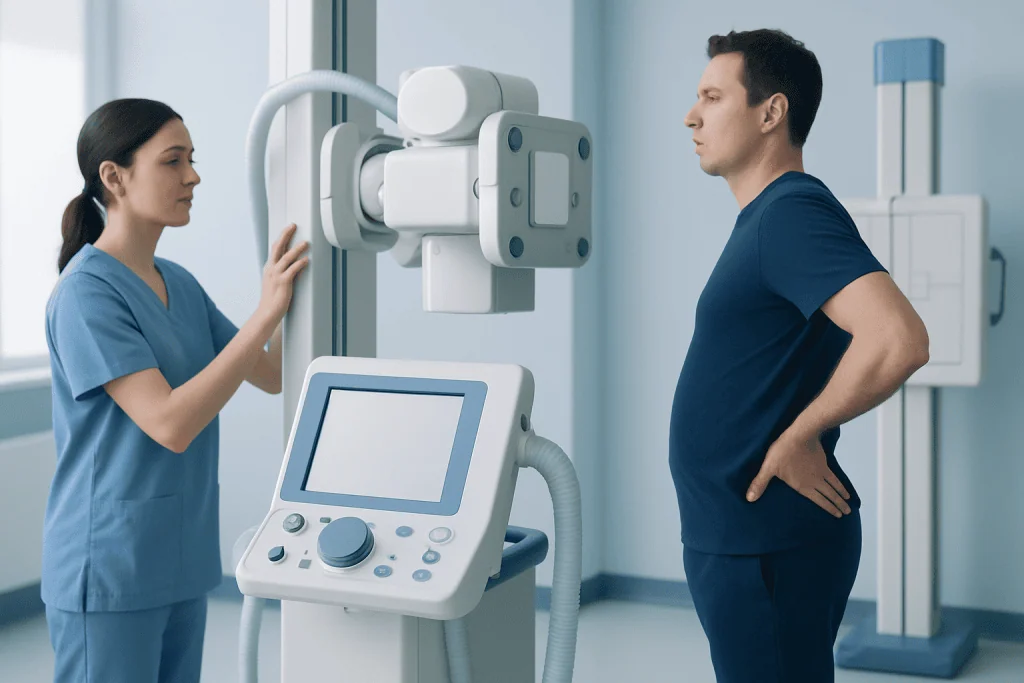
Early signs of hyperlordosis are often subtle. A person may notice a change in posture, difficulty standing comfortably for long periods, or a feeling that the lower back is unusually tight. Clothing may fit differently because of the way the pelvis and lower spine are positioned.
Symptoms can range from mild to more disruptive. Some people experience aching in the lower back, fatigue after walking or standing, or reduced flexibility when bending. Others notice muscle tightness in the lower back and hip flexors, with weakness in the abdominal and gluteal muscles. These changes can alter movement patterns over time.
Common signs and symptoms may include:
- A more pronounced arch in the lower back
- Lower back pain or stiffness
- Muscle tightness, especially in the hips or lower back
- Core weakness or poor trunk control
- Discomfort after standing, walking, or certain exercises
- Reduced range of motion
In children and adolescents, postural changes may be noticed by parents before pain develops. In adults, symptoms are often linked to work habits, reduced physical activity, weight gain, or compensating for another spine or hip issue.
Causes and risk factors

Hyperlordosis can develop for several reasons. In many cases, it is related to posture and muscle balance rather than a single disease. Tight hip flexors and lower-back muscles, combined with weak abdominal and gluteal muscles, can tilt the pelvis forward and increase the lumbar curve. Long periods of sitting, deconditioning, and repetitive movement patterns may contribute.
Body weight can also play a role. Carrying excess weight around the abdomen may shift the body’s center of gravity forward, increasing stress on the lower back. Pregnancy can create a temporary change in posture for similar mechanical reasons. In some people, hyperlordosis improves after the contributing factor changes, while in others it persists and needs structured rehabilitation.
Less commonly, hyperlordosis is associated with structural or neuromuscular conditions. These may include congenital spine differences, muscle disorders, hip contractures, vertebral problems such as spondylolisthesis, or spinal curvature disorders. Evaluation may also consider whether symptoms overlap with kyphosis or other alignment changes affecting the spine as a whole.
Risk factors include:
- Poor posture habits
- Weak core and gluteal muscles
- Tight hip flexors or hamstrings
- Obesity or central weight gain
- Pregnancy
- Growth-related postural changes in children and teens
- Certain neuromuscular or orthopedic conditions
- Previous spine or hip injury
How hyperlordosis is diagnosed
Diagnosis begins with a medical history and physical examination. The clinician asks about pain, stiffness, activity level, injuries, and whether symptoms are getting worse. Posture is assessed from the side and back, and the doctor may look at how the pelvis, hips, and shoulders align while standing and walking.
The physical exam often includes checking spinal flexibility, muscle strength, balance, and range of motion. Tenderness, muscle tightness, and nerve-related symptoms may also be assessed. In many people, this examination gives enough information to guide initial treatment, especially if the hyperlordosis appears to be mainly postural.
Imaging is sometimes used when symptoms are significant, the curve seems structural, or another condition needs to be ruled out. X-rays can help measure spinal alignment. MRI may be considered if there are nerve symptoms, concern about discs or soft tissues, or questions about spinal cord involvement. A clinician may recommend MRI or X-ray imaging when the diagnosis is unclear or more detailed assessment is needed.
The main goal of diagnosis is not only to confirm the curve but also to identify why it is present. This helps distinguish flexible, posture-related hyperlordosis from a more complex spinal problem that may require specialist care.
Treatment options and rehabilitation
Treatment for hyperlordosis depends on symptoms, age, the degree of spinal curvature, and the underlying cause. Many people improve with conservative care. This usually includes a structured exercise program focused on core strength, hip mobility, gluteal activation, and postural control. The aim is to reduce strain on the lower back and improve how the body moves in daily life.
Physical therapy is often central to treatment. A therapist may guide stretching for tight muscles, strengthening for weak muscle groups, and retraining for sitting, standing, and lifting mechanics. In some cases, referral for physical therapy and rehabilitation can help address both pain and function in a gradual, personalized way.
Other supportive measures may include weight management, temporary activity modification, and pain-relief strategies recommended by a doctor. For children or teens who are still growing, follow-up may be advised to monitor spinal alignment over time. If hyperlordosis is linked to another condition, treatment should also target that problem rather than the curve alone.
Surgery is not needed for most people with hyperlordosis. It is usually considered only when there is severe structural deformity, significant functional limitation, or complications such as nerve compression that do not respond to conservative treatment. In carefully selected cases, specialist spine surgery may be discussed, but this is generally not the first step.
Daily habits, prevention, and self-care
Although not every case can be prevented, healthy movement habits may reduce the risk of posture-related hyperlordosis or help keep symptoms from worsening. Regular exercise that strengthens the core, hips, and back can support better spinal alignment. Stretching tight muscles, especially after long periods of sitting, may also be useful.
Workstation setup matters for many adults. Sitting with lower-back support, keeping the feet flat, and taking regular movement breaks can limit strain. For children and teenagers, carrying heavy bags unevenly and spending long periods in one position may affect posture, so balanced activity and ergonomic awareness are helpful.
Self-care strategies may include:
- Staying physically active with low-impact exercise
- Following a clinician-approved stretching and strengthening plan
- Maintaining a healthy weight
- Using proper lifting mechanics
- Breaking up long periods of sitting or standing
- Choosing supportive footwear when appropriate
If back pain is persistent, self-care should not replace professional assessment. A targeted plan is usually more effective than generic exercises because the best approach depends on the person’s posture, flexibility, strength, and any associated spine or hip condition.
When to seek medical care
Medical advice is recommended when a spinal curve seems to be increasing, posture changes are new, or back pain lasts more than a few weeks. Evaluation is also important if symptoms begin to limit work, school, exercise, sleep, or everyday activities. Early assessment can help identify whether the issue is mainly postural or related to a structural condition.
Urgent medical attention is needed if lower back symptoms are accompanied by numbness, tingling, leg weakness, trouble walking, fever, recent significant injury, or changes in bowel or bladder control. These features can point to a more serious problem that needs prompt assessment.
For people with persistent symptoms, care may involve a team that includes orthopedists, physiatrists, neurologists, radiologists, and rehabilitation specialists. Acibadem International’s multidisciplinary specialists and JCI-accredited hospitals diagnose and treat spine conditions for international patients when more detailed assessment or coordinated care is needed.
Frequently asked questions
Is hyperlordosis the same as lordosis?
No. Lordosis refers to the normal inward curve of the lower spine, while hyperlordosis means that this curve is more pronounced than usual. A doctor decides whether the curve is excessive based on symptoms, posture, and sometimes imaging.
Can hyperlordosis go away on its own?
It depends on the cause. Mild, posture-related hyperlordosis may improve with exercise, stretching, and better movement habits. If it is caused by a structural spine problem or another medical condition, it usually needs professional evaluation and a more specific treatment plan.
Does hyperlordosis always cause pain?
No. Some people have a noticeable lower-back curve but little or no discomfort. Pain is more likely when the curve creates muscle imbalance, joint stress, or irritation of nearby tissues.
What exercises help hyperlordosis?
Exercises often focus on strengthening the abdominal and gluteal muscles while stretching tight hip flexors and lower-back muscles. However, the best program varies by person. A physical therapist or doctor can recommend exercises that match the cause of the curve and avoid movements that worsen symptoms.
Can children and teenagers develop hyperlordosis?
Yes. Hyperlordosis can appear during growth, sometimes because of posture, muscle imbalance, or an underlying orthopedic or neuromuscular condition. If a parent notices a marked posture change or a child reports back pain, medical assessment is a sensible next step.
When is surgery considered for hyperlordosis?
Surgery is uncommon and usually reserved for severe cases. It may be considered when there is a significant structural deformity, progressive symptoms, nerve problems, or failure of appropriate conservative treatment. A spine specialist can explain whether surgery is relevant in a particular case.
References
- National Institute of Arthritis and Musculoskeletal and Skin Diseases
- American Academy of Orthopaedic Surgeons
- National Health Service
- MedlinePlus
- Scoliosis Research Society
This article is for general information only and is not a substitute for professional medical advice. Please consult a qualified doctor about your individual situation.
Joint and spine care in Turkey — expert assessment & treatment
JCI-accredited · board-certified surgeons · reply within 24h
Add us as a Preferred Source to see more of our trusted health content across Google Search, AI Overviews and Discover.