Hyperplastic Polyp: What Patients Need to Know
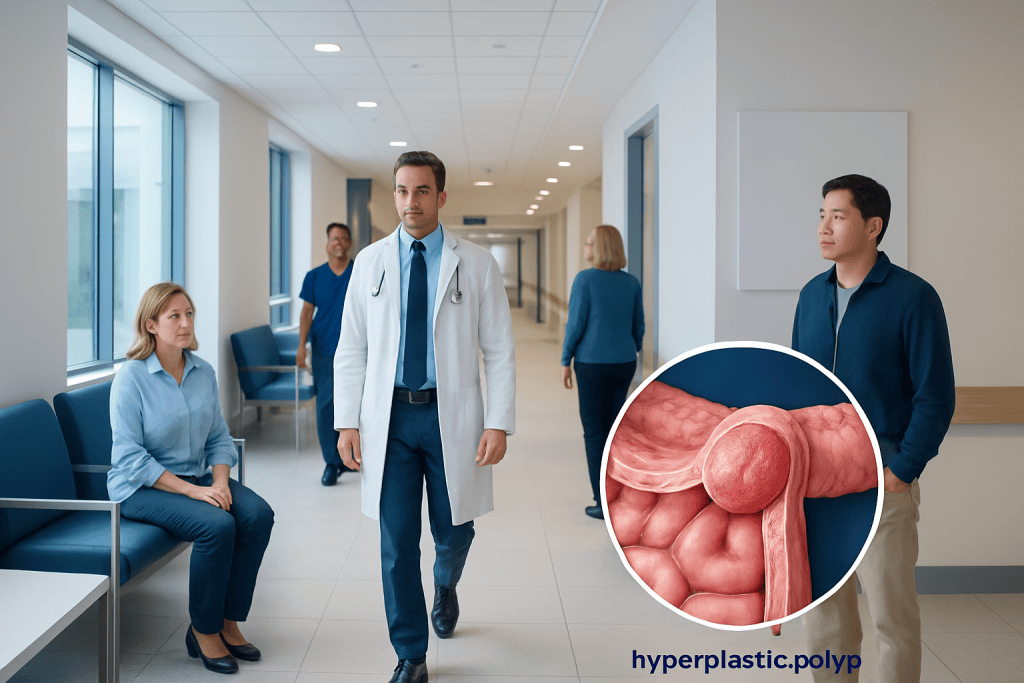
A hyperplastic polyp is often noncancerous, but it still needs proper medical assessment. Many hyperplastic polyps cause no symptoms and are found during screening tests such as colonoscopy or endoscopy.
Key Takeaways
- A hyperplastic polyp is often noncancerous, but it still needs proper medical assessment.
- Many hyperplastic polyps cause no symptoms and are found during screening tests such as colonoscopy or endoscopy.
- The meaning of a hyperplastic polyp depends on where it is found, how large it is, and what the pathology report shows.
- Removal during endoscopy is common and helps confirm the diagnosis.
- Follow-up plans vary, so patients should review pathology results and screening timing with their doctor.
A hyperplastic polyp is a common type of polyp that is usually benign, especially when it is small and found in the lower colon or rectum. Even so, doctors evaluate it carefully because the exact location, size, number, and microscopic features help determine whether any treatment or follow-up is needed.
Overview: what a hyperplastic polyp means
A hyperplastic polyp is a small overgrowth of cells that most often develops in the lining of the colon or rectum, and less commonly in the stomach. In many cases, it is considered a benign lesion, meaning it is not cancer. For many patients, the most important point is that the term describes a specific pattern seen by a pathologist under the microscope, not just a general bump or growth.
These polyps are often discovered incidentally during screening procedures. A person may feel completely well and only learn about the finding after a routine colonoscopy or upper endoscopy. This is one reason screening matters: many digestive tract polyps do not cause symptoms early on.
Although hyperplastic polyps are usually low risk, they are not all interpreted in exactly the same way. A tiny hyperplastic polyp in the rectum may carry very little concern, while larger or more numerous serrated-type lesions in the colon may need closer review. Because some growths can resemble one another, doctors rely on both endoscopic appearance and pathology results to make sure the diagnosis is accurate.
Where hyperplastic polyps occur and why location matters
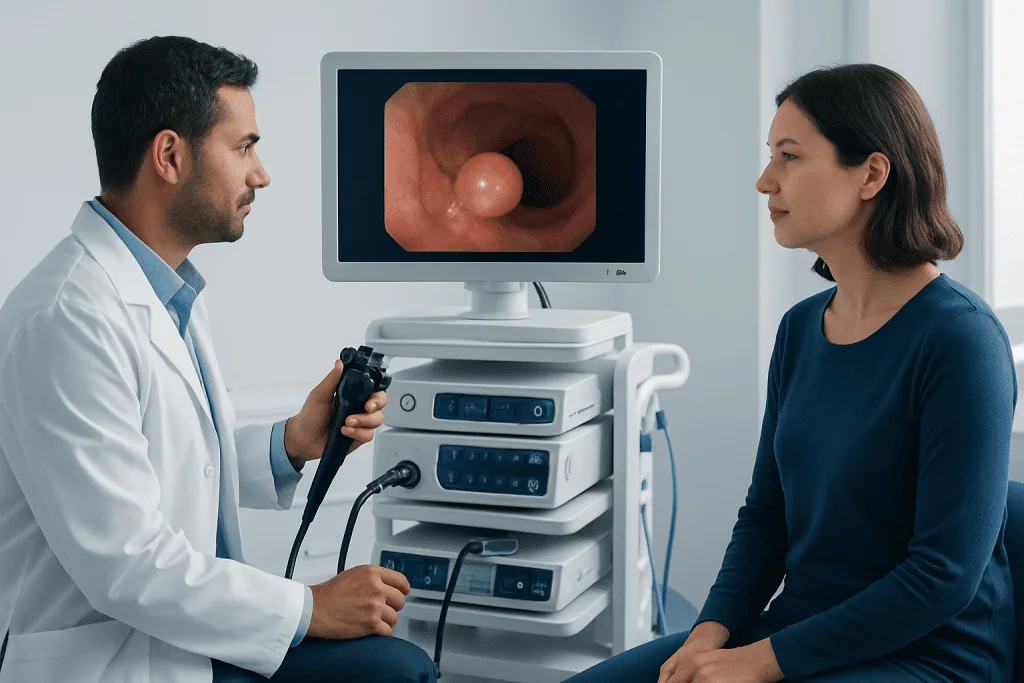
Most people hear about hyperplastic polyps in relation to the colon. In the lower colon and rectum, they are often small, common, and low risk. However, polyps that arise in the upper colon may require more careful interpretation because some serrated lesions can look similar during examination and may have different follow-up recommendations.
Hyperplastic polyps can also occur in the stomach, where they are often called gastric hyperplastic polyps. These may be linked with chronic inflammation of the stomach lining, including gastritis or irritation associated with certain underlying conditions. Some stomach polyps remain harmless, but larger ones or those that bleed may need removal and closer evaluation.
Location matters because the digestive tract is not one uniform organ. The same word, “polyp,” can describe different tissue behaviors depending on where the polyp develops. That is why doctors may recommend colonoscopy for lower digestive tract polyps or upper endoscopy for stomach-related findings, along with pathology review to distinguish a hyperplastic polyp from other conditions such as colon polyps.
Symptoms and possible signs

Many hyperplastic polyps do not cause any symptoms at all. They are commonly found during routine screening, surveillance after previous polyps, or tests done for unrelated digestive complaints. This can be reassuring for patients who are surprised by the diagnosis after feeling otherwise healthy.
When symptoms do occur, they usually depend on the location and size of the polyp rather than the name alone. In the colon, possible signs can include rectal bleeding, changes in bowel habits, mucus in the stool, or rarely anemia if bleeding is slow and ongoing. Small distal hyperplastic polyps are less likely to cause noticeable problems.
In the stomach, a gastric hyperplastic polyp may cause no symptoms, but some people experience nausea, upper abdominal discomfort, or signs of bleeding such as dark stools if the polyp becomes irritated. Larger polyps are more likely to be symptomatic. Still, these symptoms are not specific, so proper medical evaluation is important rather than assuming a polyp is the cause.
- Often no symptoms
- Rectal bleeding or blood in stool
- Change in bowel habits
- Abdominal discomfort
- Iron-deficiency anemia or fatigue in some cases
- Upper digestive symptoms if the polyp is in the stomach
Causes and risk factors
A hyperplastic polyp forms when cells in the lining of the digestive tract grow in a way that creates a raised lesion. The exact reason this happens is not always clear. In the colon, age is one of the main factors, and these polyps are more commonly identified in adults undergoing screening. Family history, smoking, obesity, diet, and certain lifestyle factors may increase the overall chance of developing colorectal polyps, although not every risk factor applies equally to every polyp type.
In the stomach, chronic inflammation may play a larger role. Gastric hyperplastic polyps can be associated with long-standing gastritis, autoimmune conditions affecting the stomach, or infection with Helicobacter pylori. If a stomach polyp is found, doctors may look for these underlying issues because treatment may involve more than simply removing the visible growth.
Another reason risk assessment matters is that not all polyps are the same. Some lesions that appear hyperplastic at first glance may actually belong to the serrated polyp group, which includes changes with different cancer-prevention implications. For this reason, a patient’s age, personal history of polyps, family history of colorectal cancer, and the number and size of lesions all help guide next steps.
How doctors diagnose a hyperplastic polyp
Diagnosis usually begins with a procedure that lets the doctor see the lining of the digestive tract. In the colon, this is most often a colonoscopy. In the stomach, an upper endoscopy may be used. During these tests, the doctor can examine the size, shape, color, and location of the polyp and often remove it or take a sample at the same time.
The final diagnosis comes from pathology. A specialist called a pathologist examines the tissue under a microscope to decide whether the lesion is truly a hyperplastic polyp or another type of polyp. This distinction is important because follow-up intervals are based on the exact pathology result, not only the appearance during endoscopy.
Additional evaluation may be needed in selected cases. For example, if many serrated or hyperplastic-appearing polyps are found, or if there is a strong family history of colorectal cancer, the doctor may consider a broader assessment. If a stomach polyp is present, testing for inflammation or infection may be recommended. Imaging tests are usually not the main way to diagnose these lesions, although they may be part of care in other digestive conditions such as stomach cancer when symptoms or findings suggest a different concern.
Treatment options and follow-up
Treatment depends on where the hyperplastic polyp is located, how large it is, and what the pathology report shows. In the colon, many polyps are removed completely during colonoscopy. This approach is both diagnostic and preventive, since removal confirms the tissue type and eliminates the visible lesion.
For stomach polyps, treatment may include endoscopic removal if the polyp is large, bleeding, symptomatic, or uncertain in type. Doctors also address any underlying cause, such as chronic gastritis or Helicobacter pylori infection, when present. If bleeding or anemia is involved, management may include treatment of those issues as well.
Follow-up is individualized. A small, isolated hyperplastic polyp in the rectum may not change screening very much, while multiple, larger, or more proximally located serrated-type lesions can lead to a shorter surveillance interval. Patients should ask for a clear explanation of the pathology result, whether the polyp was completely removed, and when the next examination is recommended. If a lesion cannot be fully removed endoscopically, more advanced procedures may sometimes be considered, including polyp removal techniques or other specialist-led interventions.
Prevention and self-care after a polyp finding
There is no guaranteed way to prevent every hyperplastic polyp, but general digestive health measures may reduce the overall risk of colorectal polyps and support long-term screening goals. These steps include eating a balanced diet rich in fiber, limiting smoking, moderating alcohol, maintaining a healthy weight, and staying physically active. These habits also support heart and metabolic health.
For patients who have already had a polyp removed, self-care mainly involves keeping follow-up appointments and understanding the pathology report. It can be helpful to keep a record of the procedure date, the number of polyps found, their size and location, and the recommended timing for the next test. This information becomes especially useful if care is later shared between different clinics or countries.
If the polyp was in the stomach, following the doctor’s plan for gastritis, acid-related symptoms, or Helicobacter pylori treatment may matter as much as the removal itself. Near the end of care planning, some patients may choose a center with coordinated gastroenterology, pathology, and endoscopy services. Acibadem International’s multidisciplinary specialists and JCI-accredited hospitals diagnose and treat this condition for international patients when advanced evaluation or follow-up is needed.
When to seek medical care
Patients should seek medical care if they notice blood in the stool, persistent changes in bowel habits, unexplained weight loss, ongoing abdominal pain, vomiting blood, black stools, or symptoms of anemia such as unusual fatigue or shortness of breath. These signs do not necessarily mean a hyperplastic polyp is dangerous, but they do deserve proper evaluation.
Medical review is also important after any polyp diagnosis if the pathology result is unclear, if there are multiple polyps, or if there is a family history of colorectal cancer or inherited digestive conditions. A doctor can explain whether the finding is truly a low-risk hyperplastic polyp or whether it belongs to a different group that needs closer surveillance.
Routine screening should not be delayed simply because there are no symptoms. Many colon polyps are silent, and timely colonoscopy remains one of the best ways to detect and remove them early. Anyone with questions about symptoms, screening age, or follow-up timing should consult a qualified doctor for personalized advice.
Frequently asked questions
Is a hyperplastic polyp cancer?
A hyperplastic polyp is usually benign, which means it is not cancer. However, doctors still evaluate it carefully because some polyps can resemble other serrated lesions that may need different follow-up.
Do hyperplastic polyps need to be removed?
Many are removed during colonoscopy or endoscopy so the tissue can be examined under a microscope. Removal helps confirm the diagnosis and can also prevent confusion with other types of polyps later on.
Can a hyperplastic polyp turn into cancer?
Small hyperplastic polyps in the rectum or lower colon are generally considered very low risk. The cancer risk question becomes more complex when polyps are larger, numerous, or located in the upper colon, which is why pathology and follow-up matter.
What is the difference between a hyperplastic polyp and an adenomatous polyp?
They are different tissue types seen on pathology. Adenomatous polyps are generally more important from a cancer-prevention standpoint, while hyperplastic polyps are often lower risk, especially when small and located in the rectum.
Can hyperplastic polyps cause symptoms?
Yes, but many do not. When symptoms happen, they may include bleeding, changes in bowel habits, abdominal discomfort, or anemia, depending on the polyp’s size and location.
How often should screening be repeated after a hyperplastic polyp?
There is no single answer for everyone. The next screening date depends on the number of polyps, their size, where they were found, whether they were completely removed, and the final pathology report.
References
- National Cancer Institute
- American Cancer Society
- National Institute of Diabetes and Digestive and Kidney Diseases
- American College of Gastroenterology
- World Gastroenterology Organisation
This article is for general information only and is not a substitute for professional medical advice. Please consult a qualified doctor about your individual situation.
Persistent digestive symptoms? Get evaluated in Turkey
JCI-accredited · board-certified surgeons · reply within 24h
Add us as a Preferred Source to see more of our trusted health content across Google Search, AI Overviews and Discover.

More from the Health Library

Acne Scars Topical: What Patients Need to Know

Mais Syrup: An Evidence-Based Guide for Patients

Castor Oil — Explained by Medical Evidence, Not Myths

Reverse Crunches: What Patients Need to Know

Stress and Anxiety: An Evidence-Based Guide for Patients