IBS and the Brain-Gut Connection: When Motility Testing May Help

IBS is a disorder of gut-brain interaction, meaning the digestive tract and nervous system communicate in ways that can affect pain, bloating, diarrhea, and constipation. Most people with typical IBS do not need advanced motility testing; diagnosis is usually based on symptoms, medical history, examination, and limited targeted tests.
Key Takeaways
- IBS is a disorder of gut-brain interaction, meaning the digestive tract and nervous system communicate in ways that can affect pain, bloating, diarrhea, and constipation.
- Most people with typical IBS do not need advanced motility testing; diagnosis is usually based on symptoms, medical history, examination, and limited targeted tests.
- Motility testing may be useful when symptoms are severe, unusual, resistant to treatment, or suggest delayed stomach emptying, pelvic floor dysfunction, or other motility disorders.
- Treatment often combines diet, bowel habit support, medications when needed, and therapies that calm the brain-gut signaling pathway.
- Red-flag symptoms such as blood in the stool, unexplained weight loss, anemia, fever, or new symptoms at an older age should be assessed promptly by a doctor.
Irritable bowel syndrome is closely linked to the brain-gut connection, which helps explain why stress, sensitivity, and bowel motility can influence symptoms. Motility testing is not needed for everyone with IBS, but it may help selected patients whose symptoms are persistent, complex, or suggest another digestive movement disorder.
Overview: IBS as a Brain-Gut Disorder
Irritable bowel syndrome, commonly called IBS, is a long-term digestive condition that can cause abdominal pain, bloating, changes in bowel habits, diarrhea, constipation, or a mixture of both. It is considered a disorder of gut-brain interaction, which means the digestive system and the nervous system are communicating in a way that makes the bowel more sensitive or changes how it moves. IBS is real, common, and manageable, even though routine blood tests, scans, or colonoscopy may appear normal.
The brain-gut connection helps explain why IBS symptoms may worsen during stress, poor sleep, travel, infections, hormonal changes, or dietary shifts. The intestines have their own network of nerves, sometimes called the enteric nervous system, and it constantly exchanges signals with the brain through nerves, hormones, immune pathways, and the gut microbiome. In IBS, these signals may amplify pain, urgency, fullness, or bloating even when there is no visible inflammation or structural damage.
Motility refers to the coordinated movement of food, fluid, and gas through the digestive tract. In some people with IBS, bowel contractions may be faster, slower, irregular, or more noticeable than usual. However, IBS is not diagnosed by motility testing alone. For most patients, the diagnosis begins with careful symptom assessment and exclusion of specific conditions when indicated.
How the Brain-Gut Connection Affects Motility
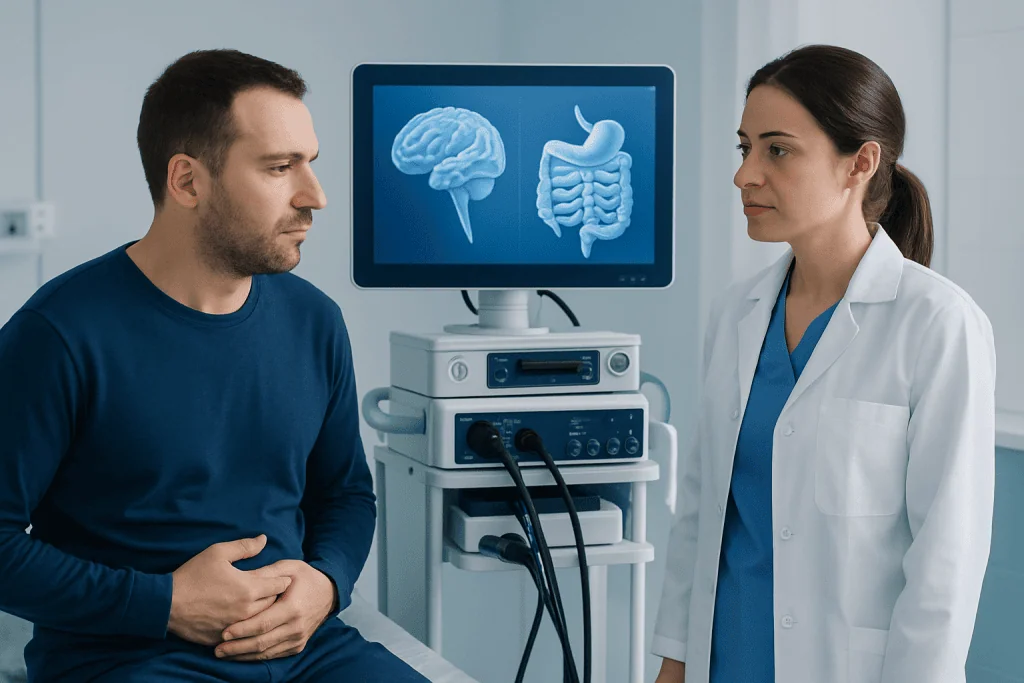
The digestive tract is not a passive tube. It senses stretching, chemical changes, inflammation, bacteria, and emotional signals, then adjusts movement and secretion in response. When the brain-gut axis is more reactive, normal amounts of gas or stool may feel uncomfortable, and normal contractions may be perceived as cramping. This increased sensitivity is called visceral hypersensitivity and is one of the main mechanisms behind IBS pain.
Motility changes can vary by IBS subtype. People with IBS with diarrhea may have faster intestinal transit or stronger urgency signals. People with IBS with constipation may have slower transit, harder stools, or difficulty coordinating the muscles needed for bowel movements. Many people shift between patterns over time, which is why IBS care should be individualized rather than based on one symptom alone.
Stress does not mean symptoms are imagined. Stress can alter gut nerve signaling, immune activity, intestinal permeability, microbiome balance, and muscle contractions. Similarly, ongoing digestive discomfort can increase anxiety and body vigilance, creating a cycle in which the gut and brain reinforce each other. Understanding this cycle is often reassuring because it opens several treatment paths, including diet, medications, pelvic floor therapy, and brain-gut behavioral approaches.
Symptoms That Fit IBS and Symptoms That Need Extra Attention

IBS symptoms typically include recurrent abdominal pain related to bowel movements, along with changes in stool frequency or stool form. Some people feel better after passing stool; others have persistent bloating, a sense of incomplete evacuation, mucus in the stool, or urgency. Symptoms often come and go, and many patients notice that certain foods, stress, menstrual cycles, or disrupted routines influence their pattern.
Doctors often classify IBS into IBS with constipation, IBS with diarrhea, mixed IBS, or unclassified IBS. This classification helps guide treatment, but it may change over time. A person may also have overlapping conditions such as reflux, functional dyspepsia, migraine, fibromyalgia, bladder symptoms, or anxiety, reflecting the wider role of nervous system sensitivity in some patients.
Certain features are not typical of IBS and should prompt medical evaluation. These include blood in the stool, black stools, unexplained weight loss, persistent fever, anemia, nighttime diarrhea that repeatedly wakes the person, a family history of colorectal cancer or inflammatory bowel disease, or a new major change in bowel habits later in life. These symptoms do not automatically mean a serious disease is present, but they help doctors decide whether colonoscopy, imaging, stool tests, or blood tests are needed.
Causes and Risk Factors
IBS usually develops from several interacting factors rather than a single cause. Some people develop IBS after a gastrointestinal infection, known as post-infectious IBS. Others have symptoms linked to altered bowel bacteria, food intolerances, bile acid handling, immune activation, gut sensitivity, or changes in serotonin signaling in the digestive tract. Genetics and early-life experiences may also influence how sensitive the gut-brain system becomes.
Dietary triggers are common but vary widely. Fermentable carbohydrates, high-fat meals, caffeine, alcohol, spicy foods, and large meals can worsen symptoms in some people. Lactose, fructose, wheat components, and sugar alcohols may also contribute, but the pattern is personal. This is why broad, long-term restriction without professional guidance is not recommended, especially when nutrition or quality of life is affected.
Several conditions can resemble IBS and may need to be ruled out depending on symptoms and risk factors. These include celiac disease, lactose intolerance, inflammatory bowel disease, thyroid disorders, microscopic colitis, bile acid diarrhea, and some infections. The goal of evaluation is not to test for everything in every person, but to choose the right tests for the individual’s age, symptoms, medical history, and examination findings.
Diagnosis: When Motility Testing May Help
IBS is usually diagnosed clinically using symptom-based criteria, a physical examination, and selected tests to check for other causes when appropriate. A doctor may request blood tests, stool tests, celiac screening, inflammation markers, or colonoscopy depending on the person’s age and symptoms. If the symptom pattern is typical and there are no red flags, extensive testing often does not improve care and may delay practical treatment.
Motility testing becomes more helpful when symptoms suggest a problem with how the digestive tract moves or coordinates. For example, severe constipation that does not improve with standard treatment may lead to colonic transit studies or anorectal manometry. Anorectal manometry evaluates pressure and muscle coordination in the rectum and anal sphincter, which can identify pelvic floor dyssynergia, a treatable condition where the muscles do not relax properly during bowel movements.
Other tests may be used in selected cases. Gastric emptying studies can assess suspected gastroparesis when nausea, early fullness, and vomiting are prominent. Esophageal manometry is used for swallowing symptoms rather than typical IBS, but it is part of the wider field of digestive motility care. Breath tests may be considered for carbohydrate malabsorption or small intestinal bacterial overgrowth in some patients, although results must be interpreted carefully because false positives and symptom overlap can occur.
A specialist in neurogastroenterology and motility disorders can help determine whether testing is likely to change treatment. This is important because motility tests are most useful when the question is specific: Is transit delayed? Is pelvic floor coordination impaired? Is stomach emptying abnormal? Clear questions help avoid unnecessary investigations and support a more focused care plan.
Treatment Options for IBS and Motility-Related Symptoms
Treatment for irritable bowel syndrome is tailored to the dominant symptoms, the patient’s goals, and any test findings. For constipation-predominant IBS, doctors may recommend fiber adjustments, osmotic laxatives, prescription medicines that increase intestinal fluid or movement, or pelvic floor therapy if coordination problems are found. For diarrhea-predominant IBS, options may include antidiarrheal medicines, bile acid approaches in selected patients, gut-directed antibiotics in specific cases, or medications that reduce bowel sensitivity and urgency.
Dietary care can be very effective when done thoughtfully. Some patients benefit from a structured low-FODMAP diet trial under the guidance of a dietitian, followed by gradual reintroduction to identify individual triggers. Others improve with regular meal timing, smaller portions, adequate hydration, and reducing excess caffeine, alcohol, or high-fat foods. The best diet is one that improves symptoms while remaining nutritionally complete and sustainable.
Because IBS involves the brain-gut axis, treatments that calm nerve signaling can be valuable. Gut-directed cognitive behavioral therapy, hypnotherapy, mindfulness-based strategies, and stress regulation techniques have evidence for selected patients. Some medicines used at low doses can reduce gut pain signaling, even when the patient is not being treated for depression. This approach is best explained as nerve modulation rather than a statement that symptoms are psychological.
If motility testing shows pelvic floor dyssynergia, biofeedback therapy is often more targeted than simply taking more laxatives. If delayed transit is present, treatment can be adjusted accordingly. The main principle is to match therapy to the mechanism whenever possible while also supporting sleep, movement, nutrition, and emotional wellbeing.
Prevention, Self-Care, and When to See a Doctor
IBS cannot always be prevented, but many people can reduce flare-ups by identifying patterns and keeping routines steady. A symptom diary may help track meals, stress, sleep, menstrual cycle, travel, medication changes, and bowel habits. Regular physical activity, enough fluids, consistent meal timing, and avoiding repeated cycles of strict restriction and overeating can support healthier motility.
Self-care should be gentle and practical. People with constipation may benefit from allowing unhurried bathroom time, responding to natural urges, and discussing fiber type with a clinician because some fibers help while others worsen gas. People with diarrhea may benefit from planning meals before travel, limiting personal triggers, and asking a doctor whether targeted medication is appropriate. Probiotics may help some people, but effects vary by strain and individual, so they should be assessed by response rather than assumed to be universally effective.
A doctor should be consulted if symptoms are new, worsening, disruptive, or not responding to reasonable first steps. Prompt evaluation is especially important when red-flag symptoms are present, such as bleeding, anemia, unexplained weight loss, persistent fever, repeated nighttime symptoms, or a strong family history of bowel disease. Patients should also seek guidance before starting restrictive diets, frequent laxative use, or long-term antidiarrheal medication.
For international patients who need coordinated assessment, Acibadem International’s multidisciplinary specialists and JCI-accredited hospitals can evaluate IBS-like symptoms, motility concerns, and related digestive conditions. Care decisions should always be individualized after consultation with a qualified gastroenterologist.
Frequently asked questions
Is IBS caused by stress?
Stress alone does not cause IBS, and IBS symptoms are not imaginary. Stress can influence the brain-gut connection, making the bowel more sensitive or changing motility. Many people improve when digestive treatment is combined with sleep support, stress management, and regular routines.
Does everyone with IBS need motility testing?
No. Most people with typical IBS symptoms and no red flags do not need advanced motility testing. Testing is usually considered when symptoms are severe, unusual, resistant to treatment, or suggest a specific motility disorder such as pelvic floor dysfunction or delayed transit.
What is anorectal manometry used for?
Anorectal manometry measures pressure and coordination in the rectum and anal sphincter. It is often used when constipation is difficult to treat or when a person feels unable to empty the bowel properly. The results can guide treatment such as pelvic floor biofeedback therapy.
Can IBS turn into inflammatory bowel disease or cancer?
IBS does not turn into inflammatory bowel disease or cancer. However, some conditions can mimic IBS symptoms, which is why doctors check for warning signs and may order tests when appropriate. Blood in the stool, unexplained weight loss, anemia, or persistent fever should be medically evaluated.
Can diet cure IBS?
Diet can significantly reduce symptoms for many people, but it is not a guaranteed cure. The most helpful approach is individualized, often using a symptom diary or dietitian-guided trial rather than permanent broad restriction. Nutritional balance is important, especially if symptoms have led to food avoidance.
How does the brain-gut connection affect pain in IBS?
In IBS, nerves in the gut may send stronger signals to the brain, and the brain may interpret normal digestion as pain, pressure, or urgency. This is called visceral hypersensitivity. Treatments that reduce gut sensitivity, improve motility, or calm stress-related signaling can help break the cycle.
References
- American College of Gastroenterology
- Rome Foundation
- National Institute of Diabetes and Digestive and Kidney Diseases
- National Institute for Health and Care Excellence
- World Gastroenterology Organisation
This article is for general information only and is not a substitute for professional medical advice. Please consult a qualified doctor about your individual situation.
Persistent digestive symptoms? Get evaluated in Turkey
JCI-accredited · board-certified surgeons · reply within 24h