ICD Implant: An Evidence-Based Patient Guide

An ICD monitors the heart rhythm and can deliver pacing or an electrical shock for dangerous ventricular arrhythmias. ICDs are not suitable for every heart condition; candidacy depends on the person’s rhythm history, heart function, overall health and expected benefit.
Key Takeaways
- An ICD monitors the heart rhythm and can deliver pacing or an electrical shock for dangerous ventricular arrhythmias.
- ICDs are not suitable for every heart condition; candidacy depends on the person’s rhythm history, heart function, overall health and expected benefit.
- Most people return to many usual activities within several weeks, with temporary limits on lifting, arm movement and driving.
- Regular device checks are essential because the battery, leads and stored rhythm information need long-term monitoring.
- Urgent medical assessment is needed after repeated shocks, a shock with ongoing symptoms, fainting, chest pain or signs of infection.
An ICD implant places an implantable cardioverter-defibrillator under the skin, usually near the collarbone, to continuously monitor the heart and treat certain life-threatening abnormal rhythms. It is recommended for selected people at increased risk of sudden cardiac arrest and requires ongoing follow-up after implantation.
Overview: What Is an ICD Implant?
An ICD implant is a procedure to place an implantable cardioverter-defibrillator (ICD), a small electronic device that helps protect against dangerous fast heart rhythms arising from the lower chambers of the heart. These rhythms, called ventricular tachycardia and ventricular fibrillation, can prevent the heart from pumping blood effectively and may lead to sudden cardiac arrest if they are not treated promptly.
The ICD is usually positioned beneath the skin below the collarbone. One or more insulated wires, called leads, are guided through a vein into the heart in many standard systems. Some people may be candidates for a subcutaneous ICD, which has a lead placed under the skin rather than inside the heart. The device continuously checks the rhythm and responds only when it detects a programmed abnormal rhythm.
An ICD can provide several types of treatment. It may use very fast, low-energy pacing to stop some rhythms, provide backup pacing for a slow rhythm in certain devices, or deliver a stronger electrical shock to restore a safer rhythm. It does not prevent every abnormal rhythm from starting, but it can rapidly treat many potentially life-threatening episodes.
How an ICD Works and Who May Need One
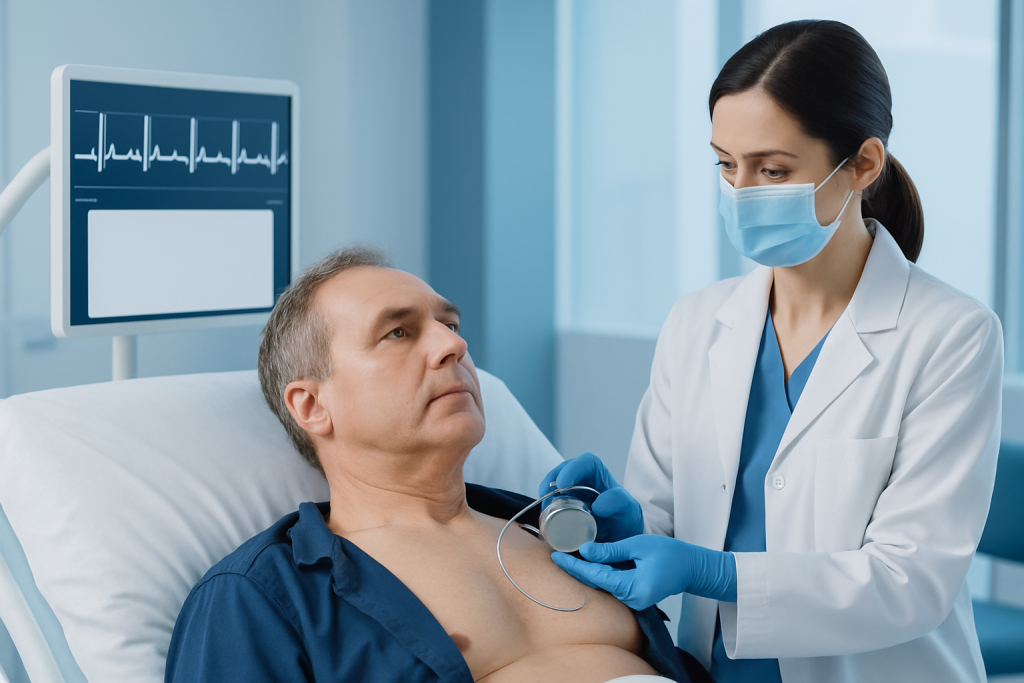
An ICD contains a battery, computer and rhythm-sensing system. It records information about the heart rhythm and compares it with settings selected by an electrophysiologist, a cardiologist specializing in heart rhythm conditions. If a dangerous rhythm occurs, the device may first attempt painless anti-tachycardia pacing. If that does not work, or if the rhythm is immediately dangerous, it can deliver a shock.
ICD implant guidelines support use in carefully selected people who have survived cardiac arrest or sustained ventricular arrhythmia without a reversible cause. An ICD may also be considered to prevent a first event in people with substantially reduced heart pumping function, certain inherited rhythm disorders, particular cardiomyopathies, or other high-risk clinical findings. Decisions are individualized; a low ejection fraction alone does not automatically mean an ICD is appropriate.
The clinician reviews symptoms, heart imaging, ECG findings, medication treatment, expected survival and functional health, as well as personal priorities. Contemporary ICD implant guidelines, including updates reflected in 2024 professional guidance, emphasize shared decision-making. The aim is to weigh likely protection from sudden cardiac death against the procedure, follow-up needs and possible effect on quality of life.
ICD terminology should not be confused with billing terminology. Phrases such as “ICD implant ICD code,” “ICD 10 implant insertion,” or “ICD implant ICD 10 code” may refer to administrative diagnosis or procedure coding, which varies by healthcare system and clinical documentation. These codes do not determine whether a person medically needs an ICD.
Assessment and Preparation Before the Procedure

Before an ICD implant, the care team usually confirms the diagnosis and assesses the cause of the heart rhythm risk. Evaluation may include an electrocardiogram, echocardiogram, blood tests, review of medications and, when appropriate, cardiac MRI, coronary assessment, ambulatory rhythm monitoring or genetic evaluation. The team also checks for infection and discusses allergies, kidney disease, bleeding risk and use of blood-thinning medicines.
Some people need treatment for an underlying cause before an ICD is considered. For example, a reversible electrolyte imbalance, a recent heart attack, medication effect or untreated coronary disease may change the immediate plan. In people with heart failure, clinicians generally optimize guideline-directed medicines first when appropriate, then reassess heart function and risk.
Patients receive instructions about eating and drinking before the procedure, medicines to take or pause, and arranging transport home. It is helpful to bring an updated medicine list and discuss work, caregiving, travel and driving requirements in advance. Questions about device type, expected benefits, possible shocks and follow-up can be addressed before consent is given.
ICD Implant Procedure: Step by Step
ICD implantation is commonly performed in a cardiac catheterization or electrophysiology laboratory. The procedure often uses local anesthetic at the implant site together with sedation, although the anesthetic plan varies according to the individual and the type of device. The heart rhythm, blood pressure and oxygen level are monitored throughout.
For a conventional transvenous ICD, the clinician makes a small incision below the collarbone and accesses a nearby vein. Leads are advanced under X-ray guidance to the appropriate area of the heart and tested to confirm stable sensing and pacing measurements. The generator is connected to the leads, placed in a pocket beneath the skin, and the incision is closed.
A subcutaneous ICD is implanted through incisions along the side of the chest and breastbone area, with the electrode positioned under the skin. This approach may be useful for selected people who do not need regular pacing and for whom avoiding leads inside blood vessels is desirable. In some cases, a person who needs both defibrillator protection and coordinated pacing for heart failure may receive a cardiac resynchronization therapy defibrillator (CRT-D).
After the procedure, the device is programmed for the person’s rhythm needs. A chest X-ray, wound check and device interrogation may be completed before discharge. The exact length of stay varies, but many uncomplicated implants involve an overnight stay or discharge the same day, depending on local practice and individual health needs.
Benefits, Risks and Long-Term Follow-Up
The main benefit of an ICD is rapid treatment of certain life-threatening ventricular arrhythmias. For people whose clinical profile meets guideline-based indications, an ICD can reduce the risk of death from sudden cardiac arrest. It may also provide useful rhythm information that helps the cardiology team adjust medicines or plan further treatment.
Like any invasive procedure, ICD implantation has risks. These can include bruising or bleeding at the pocket, infection, blood vessel injury, a collapsed lung, lead movement, blood clotting complications and reactions to sedation. Over time, leads can malfunction, batteries eventually require replacement, and some people receive inappropriate shocks because of a non-dangerous fast rhythm or sensing issue.
An ICD shock can be physically and emotionally distressing even when it is appropriate. Device programming, medicines and treatment of contributing heart conditions can reduce unnecessary therapies in many cases. Anxiety after implantation or after a shock is common and deserves attention; discussing concerns with the care team, cardiac rehabilitation staff or a mental health professional can be helpful.
Follow-up includes in-clinic and often remote device monitoring. These checks assess battery status, lead performance and stored rhythm episodes. People should carry their ICD identification card and tell healthcare professionals, dentists and imaging staff about the device before procedures. MRI may be possible with many modern systems, but the device team must confirm compatibility and arrange the correct safety protocol.
What Should I Avoid Doing With an ICD Implant?
During early healing, patients are usually advised to avoid heavy lifting, strenuous upper-body exercise and repeated overhead movement of the arm on the implant side. These precautions help protect the incision and reduce the chance of lead displacement while tissues heal. The exact restrictions and their duration depend on the device type and the treating clinician’s instructions.
After recovery, most household appliances, mobile phones and common electronics can be used safely. It is sensible to keep a mobile phone several centimeters away from the ICD rather than storing it in a chest pocket over the device. People should avoid prolonged close contact with strong magnetic fields and should ask their device clinic before using industrial equipment, high-powered magnets, some welding equipment or electrical stimulation devices.
Airport and security screening is generally manageable with an ICD card, but people should inform security staff and follow local instructions. Medical procedures such as electrocautery during surgery, radiation treatment and certain forms of physical therapy may need precautions. The device team should be contacted before any planned procedure so clinicians can coordinate safe care.
What Is Life Like After Getting an ICD Implant?
Life after an ICD implant often includes a return to work, social activities, exercise and travel once recovery is complete and the cardiology team agrees it is safe. The device is designed to work in the background, and many people do not feel it during ordinary daily life. Regular medication, heart-healthy habits and scheduled monitoring remain important because the ICD treats dangerous rhythms but does not cure the underlying heart condition.
Physical activity is commonly encouraged after healing, with an individualized plan based on the person’s heart condition and prior symptoms. Contact sports or activities that could cause a direct blow to the device should be discussed with the cardiologist. A cardiac rehabilitation program may help some people rebuild confidence, improve fitness and understand safe activity limits.
Travel is possible for many patients. Carrying the device identification card, a current medicine list and contact details for the device clinic is useful, particularly for longer trips. Remote monitoring may offer reassurance, but it does not replace seeking urgent local care for serious symptoms or ICD shocks.
Acibadem International’s multidisciplinary cardiology and electrophysiology specialists at JCI-accredited hospitals can assess rhythm disorders, provide ICD implantation where appropriate and coordinate follow-up for international patients.
How Soon Can You Drive After an ICD Implant?
Driving restrictions after an ICD implant vary according to why the device was implanted, whether the person has had fainting or ventricular arrhythmias, local laws and whether driving is private or professional. A person who received an ICD after a cardiac arrest or symptomatic dangerous rhythm often needs a longer driving restriction than someone who received it for prevention without prior symptoms.
Immediately after the procedure, driving should be avoided until the person has recovered from sedation, can comfortably move and can safely perform an emergency stop. The cardiologist or electrophysiology team should give individualized advice before driving resumes. Professional or commercial driving rules are usually more restrictive because of public safety considerations.
If an ICD delivers a shock, the person should stop driving and contact the device clinic promptly, even if they feel well afterward. A new driving restriction may be needed depending on the reason for the shock and whether symptoms occurred. Following the local legal requirements and the care team’s advice is essential.
How Long Does It Take to Recover From an ICD Defibrillator Procedure?
Initial recovery from an ICD defibrillator procedure commonly takes several days to two weeks, as soreness and bruising around the incision improve. The skin incision often heals over roughly two to four weeks, while restrictions on lifting and arm movement may continue for several weeks to allow the pocket and leads to settle securely.
The time needed to return to work depends on the job, underlying heart condition and recovery progress. Sedentary work may be possible sooner than physically demanding work. Follow-up is usually arranged within the first weeks after implantation to examine the wound, remove closure material if needed and check device settings.
Patients should contact the care team if the wound becomes increasingly red, warm, swollen or painful, or if there is drainage, fever, severe bruising, shortness of breath or persistent dizziness. New palpitations, fainting or a shock from the ICD should also be reported promptly. Recovery plans should always follow the implanting team’s specific advice.
When to Seek Medical Care
Emergency medical care is needed if an ICD shock is followed by chest pain, shortness of breath, fainting, severe weakness, persistent palpitations or ongoing illness. Emergency assessment is also appropriate after two or more shocks in a short period, even when symptoms seem to settle, because recurrent arrhythmias can require urgent treatment.
A single shock without ongoing symptoms should still be reported to the device clinic as soon as possible, ideally the same day. The team can review remote monitoring data or arrange an urgent device check. A person should not drive themselves to medical care after a shock.
Prompt non-emergency medical advice is important for possible wound infection, including increasing redness, swelling, warmth, discharge or fever. Any concern about a change in device position, new twitching near the implant, repeated alarms or uncertainty about an exposure to magnets or a medical procedure should also be discussed with the ICD care team.
Frequently asked questions
Is an ICD implant the same as a pacemaker?
An ICD and a pacemaker are different devices, although some ICDs include pacing functions. A pacemaker mainly treats slow heart rhythms, while an ICD is designed to detect and treat dangerous fast ventricular rhythms. Some devices combine defibrillation, pacing and cardiac resynchronization functions.
Will an ICD shock hurt?
A defibrillation shock is often described as sudden and forceful, and it can be painful. Some abnormal rhythms may be treated first with painless rapid pacing, which a person may not notice. Any ICD shock should be reported to the device clinic promptly, especially if symptoms continue or shocks repeat.
Can I use a mobile phone with an ICD?
Most people can safely use a mobile phone with an ICD. It is generally best to hold the phone to the ear opposite the device and avoid carrying it in a shirt or jacket pocket directly over the implant. The device clinic can provide advice for a specific ICD model.
How long does an ICD battery last?
Battery life varies according to the device type, programmed settings and how often pacing or therapies are needed. It commonly lasts for years, and device checks estimate remaining battery life. When replacement is needed, the generator is usually changed through the existing pocket while the leads may remain in place if they are functioning well.
Can an ICD be removed?
An ICD can sometimes be removed if it is no longer needed, becomes infected or causes a complication, but this decision requires specialist assessment. Removing leads that have been in place for a long time can be more complex than replacing the generator. The benefits and risks are reviewed carefully by an electrophysiology team.
Can I exercise after receiving an ICD implant?
Exercise is often beneficial after healing, but the timing and type should be individualized according to the underlying heart condition and device settings. Heavy lifting and strenuous upper-body activity are commonly limited during the first weeks after implantation. The cardiologist may recommend cardiac rehabilitation or a gradual return-to-exercise plan.
References
- American Heart Association
- Heart Rhythm Society
- European Society of Cardiology
- National Heart, Lung, and Blood Institute
- Mayo Clinic
This article is for general information only and is not a substitute for professional medical advice. Please consult a qualified doctor about your individual situation.
Heart care in Turkey — expert evaluation and treatment
JCI-accredited · board-certified surgeons · reply within 24h
Add us as a Preferred Source to see more of our trusted health content across Google Search, AI Overviews and Discover.
Check your numbers in seconds
BMI, calories, due date, blood pressure and 30+ more clinical calculators — free, instant, doctor-reviewed ranges.