Idiopathic Pulmonary Fibrosis vs COPD: How Symptoms and Tests Differ

Idiopathic pulmonary fibrosis (IPF) causes scarring in the lungs, while COPD mainly causes airflow blockage from chronic bronchitis, emphysema, or both. Both conditions can cause breathlessness and cough, but IPF often causes dry cough and fast-worsening exertional breathlessness, while COPD commonly includes wheezing and mucus production.
Key Takeaways
- Idiopathic pulmonary fibrosis (IPF) causes scarring in the lungs, while COPD mainly causes airflow blockage from chronic bronchitis, emphysema, or both.
- Both conditions can cause breathlessness and cough, but IPF often causes dry cough and fast-worsening exertional breathlessness, while COPD commonly includes wheezing and mucus production.
- Diagnosis usually combines medical history, physical exam, breathing tests, imaging, and sometimes specialist review.
- Pulmonary function tests often show a restrictive pattern in IPF and an obstructive pattern in COPD.
- Treatment goals differ: IPF care focuses on slowing fibrosis and supporting breathing, while COPD treatment often centers on inhaled medicines, pulmonary rehabilitation, and smoking cessation.
- Anyone with persistent shortness of breath, chronic cough, or reduced exercise tolerance should be evaluated by a qualified doctor.
Idiopathic pulmonary fibrosis and COPD can both cause ongoing shortness of breath and cough, but they are different lung diseases with different patterns on symptoms, scans, and breathing tests. Understanding how they differ can help people seek the right evaluation and treatment earlier.
Overview: how IPF and COPD differ
Idiopathic pulmonary fibrosis, often called IPF, is a chronic lung disease that causes progressive scarring of the lung tissue. The word idiopathic means the exact cause is unknown. As scar tissue builds up, the lungs become stiffer and less able to transfer oxygen into the bloodstream. This can make breathing feel harder, especially during activity.
Chronic obstructive pulmonary disease, or COPD, is a different long-term lung condition. It usually develops after years of exposure to cigarette smoke or other lung irritants. COPD includes chronic bronchitis, emphysema, or a combination of both. In COPD, the main problem is airflow limitation: the airways may be inflamed and narrowed, and the air sacs may lose their elasticity.
Because both diseases can cause breathlessness and cough, people sometimes confuse them. However, the underlying damage is not the same. IPF is mainly a scarring disease of the lung tissue itself, while COPD is primarily a disease of the airways and air sacs that makes it difficult to move air out of the lungs.
These differences matter because the tests, treatment plan, and expected course can vary. A careful evaluation by a respiratory specialist is often needed to tell them apart and to look for related conditions such as COPD or other forms of pulmonary fibrosis.
Symptoms: what patients may notice
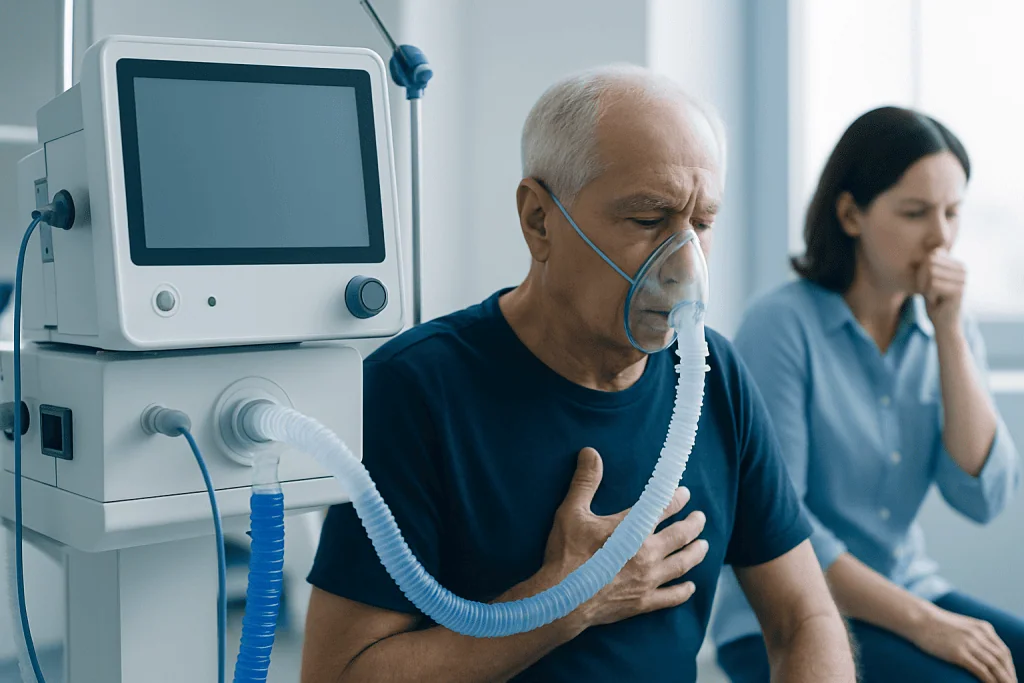
Both IPF and COPD can cause gradual shortness of breath, especially with walking, climbing stairs, or other physical activity. Fatigue and reduced exercise tolerance are also common in both conditions. This overlap is one reason diagnosis is not always obvious at first.
There are also important differences. IPF often causes a persistent dry cough and steadily increasing breathlessness. Many people with IPF do not produce much mucus. Some may notice that they become winded more quickly than before, even if they have never smoked. In some cases, doctors may find finger clubbing, which is a change in the shape of the fingertips seen in some chronic lung diseases.
COPD symptoms more often include wheezing, chest tightness, and a chronic cough that may bring up phlegm or sputum. Symptoms may fluctuate from day to day and can worsen during infections or flare-ups, called exacerbations. Many people describe difficulty breathing out fully or feeling that air is trapped in the chest.
On physical examination, clinicians may hear different clues. IPF can produce fine crackling sounds, especially at the lung bases, while COPD may cause wheezing or reduced breath sounds. These findings are helpful, but they are not enough on their own to make the diagnosis.
Causes and risk factors

IPF is called idiopathic because there is no single known cause. Even so, several factors are linked with a higher risk. These include older age, male sex, a history of smoking, certain environmental exposures, gastroesophageal reflux, and family history in some cases. Researchers also believe abnormal wound-healing responses in the lungs play a role.
COPD has a clearer risk profile. Smoking is the leading cause in many countries, but long-term exposure to air pollution, biomass fuel smoke, workplace dust, chemicals, and secondhand smoke can also contribute. A small number of people develop COPD because of a genetic condition called alpha-1 antitrypsin deficiency.
Another key difference is when symptoms begin and how the disease behaves. COPD usually develops slowly over many years and is strongly associated with cumulative exposure to irritants. IPF also tends to occur later in adulthood, but symptoms can sometimes seem to progress more quickly once they become noticeable.
It is also possible for a person to have features of both diseases. For example, someone with a long smoking history may have emphysema as well as fibrosis. In these situations, interpretation of tests can be more complex, and specialist review is especially important.
How doctors diagnose IPF and COPD
Diagnosis starts with a detailed medical history and physical examination. Doctors ask about smoking history, occupational and environmental exposures, symptom pattern, family history, and any past lung or autoimmune disease. They also assess oxygen levels and listen to the lungs and heart.
Breathing tests and imaging are central to distinguishing the two conditions. A chest X-ray may provide initial clues, but high-resolution computed tomography, or HRCT, is especially important when IPF is suspected. HRCT can show patterns of scarring that may strongly suggest IPF and can also help identify emphysema or other lung problems.
Blood tests may be used to look for autoimmune diseases or other conditions that can cause lung scarring. In selected cases, additional tests such as an exercise oxygen assessment, echocardiogram, bronchoscopy, or even lung biopsy may be considered if the diagnosis remains uncertain.
Because interstitial lung disease can be complex, diagnosis of IPF often benefits from a multidisciplinary discussion among pulmonologists, radiologists, and pathologists. This team approach helps reduce uncertainty and guides decisions about monitoring and treatment.
Breathing tests and scans: the key differences
Pulmonary function tests often show one of the clearest distinctions between IPF and COPD. In IPF, the lungs become stiff and smaller in usable volume, so tests usually show a restrictive pattern. This commonly means a reduced forced vital capacity, or FVC, while the ratio of FEV1 to FVC is often normal or even relatively high. Another common finding is a reduced diffusion capacity, which reflects difficulty moving oxygen across the scarred lung tissue.
In COPD, the typical pattern is obstructive. The hallmark is difficulty pushing air out of the lungs, so spirometry usually shows a reduced FEV1/FVC ratio. Depending on the severity and the type of COPD, there may also be air trapping and increased total lung volumes. Diffusion capacity may be reduced, especially when emphysema is present.
Imaging also helps tell the two apart. In IPF, HRCT may show reticular markings, honeycombing, and traction bronchiectasis, often with a lower-lung and outer-lung distribution. In COPD, CT may show emphysema, hyperinflation, or thickened airway walls. These are very different structural patterns even though the symptoms can overlap.
Doctors may also measure oxygen levels at rest and during walking. People with IPF may desaturate noticeably during exertion because scarring interferes with gas exchange. Oxygen levels can also fall in COPD, particularly in advanced disease, but the reasons and pattern may differ.
Treatment options and long-term management
Treatment is individualized because IPF and COPD affect the lungs in different ways. In IPF, care focuses on slowing disease progression, preserving function, relieving symptoms, and supporting oxygen needs if they develop. Depending on the patient, doctors may recommend antifibrotic medication, vaccination, pulmonary rehabilitation, oxygen therapy, and close follow-up with a lung specialist. Some patients may be evaluated for lung transplant when disease is advanced and they are suitable candidates.
In COPD, treatment commonly includes smoking cessation, inhaled bronchodilator medicines, inhaled anti-inflammatory therapy in selected patients, pulmonary rehabilitation, vaccination, and treatment of exacerbations. Oxygen therapy may be needed in some cases. If emphysema is severe, selected patients may benefit from advanced interventions after specialist assessment.
Supportive care is important for both conditions. Pulmonary rehabilitation can improve exercise tolerance, energy conservation, and quality of life. Breathing techniques, nutrition support, management of anxiety or sleep problems, and prompt treatment of respiratory infections can also help daily functioning.
When diagnosis is uncertain or the disease is progressing, specialist evaluation is essential. In experienced centers, assessment may involve advanced pulmonary function test services and thoracic surgery consultation if tissue diagnosis is needed. Near the end of the care journey, some international patients seek assessment at Acibadem International, where multidisciplinary specialists in JCI-accredited hospitals diagnose and treat complex lung diseases.
Prevention and self-care
There is no guaranteed way to prevent IPF, but general lung-protective habits are still valuable. Avoiding smoking and limiting exposure to dust, chemical fumes, and polluted air may reduce overall lung stress. Keeping vaccinations up to date and seeking treatment for respiratory infections can also help support lung health.
For COPD, prevention is more direct. Not smoking is the most important step, and quitting smoking can slow further lung damage even after COPD has already developed. People who work around dusts, fumes, or other inhaled irritants should use appropriate protective measures and follow workplace safety guidance.
Self-care for either condition includes staying as active as possible within safe limits, attending follow-up appointments, taking medicines exactly as prescribed, and monitoring symptoms for changes. Some people benefit from learning how to pace activities, use breathing strategies, and recognize signs that they need medical advice.
A healthy lifestyle supports treatment. This includes balanced nutrition, adequate sleep, hydration, and management of other medical conditions such as heart disease, reflux, sleep apnea, or anxiety. Patients should speak with a doctor before starting new supplements or exercise plans, especially if oxygen levels are low.
When to see a doctor
Anyone with persistent shortness of breath, a cough lasting several weeks, wheezing, reduced exercise tolerance, or unexplained fatigue should arrange a medical evaluation. These symptoms do not always mean IPF or COPD, but they should not be ignored. Earlier assessment can help identify the cause and start the right treatment sooner.
Urgent medical care is important if breathing suddenly worsens, lips or fingertips look bluish, confusion develops, chest pain occurs, or oxygen levels drop unexpectedly in someone who monitors them at home. These symptoms may signal a flare, infection, heart problem, or another serious complication.
People already diagnosed with IPF or COPD should contact their doctor if they notice a clear change from their usual baseline, such as more severe breathlessness, fever, a new cough, more sputum, or difficulty completing normal activities. A change in symptoms may require prompt testing or treatment adjustments.
Because these diseases can overlap with other heart and lung conditions, self-diagnosis is not reliable. A qualified clinician can interpret symptoms, scan findings, and breathing tests together to give the most accurate answer and the safest care plan.
Frequently asked questions
Is idiopathic pulmonary fibrosis the same as COPD?
No. Idiopathic pulmonary fibrosis is a scarring disease of the lung tissue, while COPD is mainly an airflow obstruction disorder involving the airways and air sacs. They can cause similar symptoms, but they are different conditions with different test results and treatments.
Can IPF be mistaken for COPD?
Yes, especially early on, because both can cause chronic cough and shortness of breath. Doctors usually distinguish them by combining symptom history, lung function tests, oxygen assessment, and chest imaging such as high-resolution CT.
What type of cough is more common in IPF vs COPD?
IPF more often causes a dry, persistent cough. COPD commonly causes a chronic cough with mucus or phlegm, although some people with COPD may also have a relatively dry cough at times.
Which breathing test findings suggest IPF rather than COPD?
IPF usually shows a restrictive pattern, meaning reduced lung volumes with a preserved or relatively high FEV1/FVC ratio. COPD more often shows an obstructive pattern, especially a reduced FEV1/FVC ratio that reflects difficulty moving air out of the lungs.
Can someone have both pulmonary fibrosis and COPD?
Yes. Some people, especially those with a smoking history, can have both emphysema and pulmonary fibrosis. When this happens, symptoms and test results can be harder to interpret, so specialist evaluation becomes even more important.
Does smoking cause both diseases?
Smoking is a major risk factor for COPD and is also associated with a higher risk of IPF, but it is not the only factor in either condition. IPF has no single known cause, while COPD is more directly linked to long-term exposure to inhaled irritants.
References
- World Health Organization
- National Heart, Lung, and Blood Institute
- American Lung Association
- Global Initiative for Chronic Obstructive Lung Disease
- American Thoracic Society
This article is for general information only and is not a substitute for professional medical advice. Please consult a qualified doctor about your individual situation.
Explore treatments in Turkey — costs, top hospitals & a free quote
JCI-accredited · board-certified surgeons · reply within 24h
Add us as a Preferred Source to see more of our trusted health content across Google Search, AI Overviews and Discover.