Iliotibial Band Syndrome Stretching: Symptoms, Causes, and Treatment Options

Iliotibial band syndrome often causes pain on the outer side of the knee, especially during running, cycling, or downhill walking. Stretching can be helpful, but long-term improvement usually depends on strengthening the hip and thigh muscles and adjusting training load.
Key Takeaways
- Iliotibial band syndrome often causes pain on the outer side of the knee, especially during running, cycling, or downhill walking.
- Stretching can be helpful, but long-term improvement usually depends on strengthening the hip and thigh muscles and adjusting training load.
- Diagnosis is mainly clinical, based on symptoms, activity history, and a physical examination.
- Most cases improve with conservative care such as rest, ice, physical therapy, and gradual return to activity.
- Medical review is important if pain persists, swelling develops, or walking becomes difficult.
Iliotibial band syndrome stretching may ease tightness and support recovery, but stretching alone is usually not enough. Most people improve when stretching is combined with activity modification, hip and glute strengthening, and a careful return to running or other exercise.
Overview: what iliotibial band syndrome stretching can and cannot do
Iliotibial band syndrome stretching is often recommended for pain along the outer side of the knee or thigh, especially in runners and cyclists. It can help reduce a feeling of tightness and may improve comfort during recovery. However, stretching by itself usually does not address the full problem.
Iliotibial band syndrome, often called IT band syndrome, is an overuse condition. The iliotibial band is a strong band of connective tissue that runs along the outside of the thigh from the hip area toward the knee. When training load, movement patterns, or muscle imbalance increase stress around this region, pain can develop near the outside of the knee.
A more complete approach usually works best. This often includes temporary reduction of aggravating activity, correction of training errors, exercises that strengthen the hip and gluteal muscles, and a gradual return to movement. In some people, IT band symptoms overlap with other causes of knee pain, so a careful assessment matters.
Symptoms and how the condition usually feels
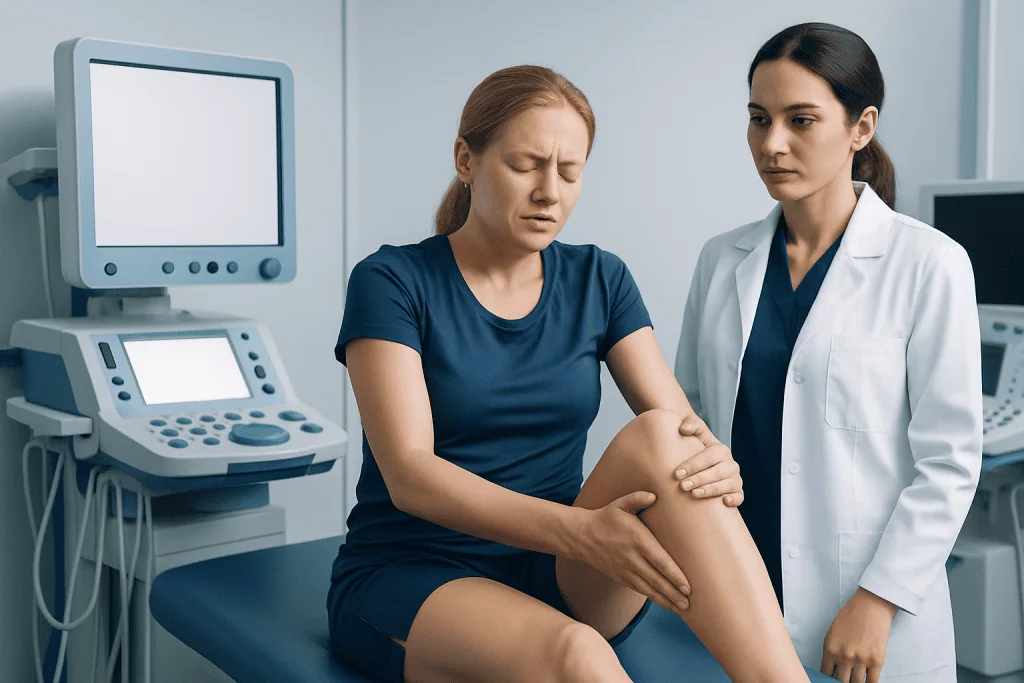
The most common symptom is pain on the outer side of the knee. At first, discomfort may appear only after exercise, but it can later begin during activity and become more persistent. Many people notice it while running, especially on longer distances, downhill sections, or uneven surfaces.
Some also feel tightness along the outer thigh or tenderness when pressing the area near the outside of the knee. A clicking, snapping, or rubbing sensation may be described, although not everyone experiences this. The pain is usually linked to repeated bending and straightening of the knee, such as during running or cycling.
Symptoms can vary in intensity. Common complaints include:
- Sharp or burning pain on the outside of the knee
- Pain that worsens with repetitive exercise
- Outer thigh tightness
- Tenderness over the lateral knee area
- Discomfort when going downstairs or downhill
If pain begins to affect walking, sleep, or normal daily activities, medical evaluation is sensible. Similar symptoms can also occur with tendon problems, bursitis, meniscus injury, or other orthopedic conditions.
Why it happens: causes and risk factors
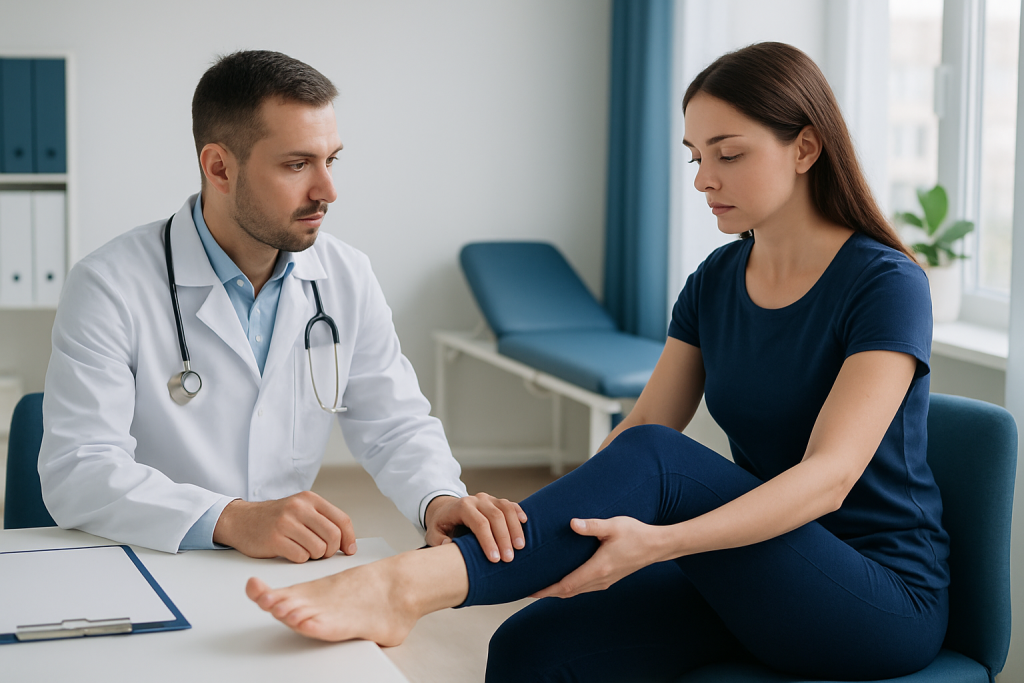
IT band syndrome is usually related to overuse rather than a single injury. Repetitive motion can irritate tissues around the outer knee, especially when training volume or intensity increases quickly. This is why the condition is common in runners, cyclists, hikers, and other people who perform repeated knee flexion and extension.
Biomechanics also play a role. Weakness in the hip abductors and gluteal muscles may allow the thigh to move inward more than usual during activity, increasing stress along the outer side of the leg. Limited flexibility, changes in footwear, differences in leg alignment, or reduced movement control at the pelvis and hip may contribute as well.
Risk factors often include:
- Sudden increase in mileage, pace, or hill training
- Running on sloped, cambered, or uneven surfaces
- Long cycling sessions or poor bike fit
- Hip or glute muscle weakness
- Previous lower-limb injury
- Inadequate recovery between training sessions
Although many people focus only on a “tight IT band,” the condition is usually more complex than simple tightness. That is why treatment often emphasizes movement quality and muscle conditioning, not only stretching.
How stretching fits into recovery
Stretching can be part of care, but it should be viewed as one tool rather than the main treatment. Some people feel temporary relief from gentle stretches that target the outer thigh, hip muscles, and surrounding tissues. Stretching may improve comfort before or after exercise and may help reduce the sense of stiffness.
Still, the iliotibial band itself is a very strong structure and is not easily lengthened in the way a muscle is. For this reason, experts often place more emphasis on improving flexibility in nearby muscles, such as the gluteal muscles, hip flexors, quadriceps, and hamstrings, while also strengthening the hips and core.
In general, stretching should be gentle and should not sharply increase pain. Helpful self-care habits may include:
- Warm up before activity
- Use slow, controlled stretches rather than bouncing
- Stop if a stretch causes sharp outer-knee pain
- Combine stretching with strengthening and load modification
- Return to sports gradually rather than all at once
If symptoms continue despite home care, a clinician or physical therapist can guide a more structured program. Rehabilitation may also overlap with care used for sports injuries affecting the knee, hip, or lower limb.
Diagnosis and what a doctor may check
Diagnosis is usually based on the person’s symptoms, training history, and physical examination. A doctor or physical therapist will often ask when the pain began, what activities trigger it, and whether training patterns recently changed. The location of pain on the outer knee is an important clue.
During the examination, the clinician may assess tenderness along the outside of the knee and thigh, hip strength, flexibility, walking or running mechanics, and joint movement. The goal is not only to identify IT band syndrome, but also to look for contributing factors that may have led to it.
Imaging tests are not always needed. X-rays do not show the IT band itself, but they may be used if another bone or joint problem is suspected. Ultrasound or MRI may be considered when symptoms are unusual, severe, or do not improve, or when the doctor wants to rule out other causes of persistent lateral knee pain.
If a broader assessment is needed, orthopedic evaluation and orthopedic care may help clarify whether the pain comes from the IT band region or from another structure around the knee or hip.
Treatment options beyond stretching
Most people improve with conservative treatment. The first step is often to reduce or pause the activity that triggers symptoms, especially high-impact or repetitive exercise. This does not always mean complete rest; instead, it may involve switching temporarily to lower-impact activity while the area settles.
Ice, short-term pain-relief strategies recommended by a doctor, and targeted exercise therapy are commonly used. Physical therapy is often especially helpful because it addresses the factors that drive symptoms, such as weak hip stabilizers, poor movement mechanics, and training errors. A structured physical therapy and rehabilitation plan may include hip strengthening, balance work, gait retraining, and flexibility exercises.
Some people benefit from changes in footwear, bike fit adjustments, or a review of running technique. Foam rolling may feel helpful for some individuals, although it should be used carefully and should not replace strengthening. In selected cases with ongoing pain, a doctor may consider additional options such as injections, but these are not first-line treatment for most patients.
Surgery is rarely needed and is usually considered only when symptoms remain significant after a prolonged course of well-supervised conservative care. If symptoms involve wider joint issues or are linked with alignment or cartilage problems, specialists in knee surgery may be involved to assess other causes.
Prevention and self-care for active people
Preventing recurrence usually depends on how activity is managed over time. A gradual increase in training volume, intensity, and hills is safer than a sudden jump. Rest and recovery days matter because repeated strain without enough recovery can allow small problems to build into persistent pain.
Strength training is one of the most useful preventive strategies. Exercises that target the gluteal muscles, hip abductors, core, and leg control can improve alignment and reduce stress on the outside of the knee. Many people who improve initially with rest return to symptoms if they skip this part of rehabilitation.
Practical self-care steps include:
- Increase mileage or training load slowly
- Replace worn shoes when needed
- Vary training surfaces and routes
- Warm up before exercise and cool down afterward
- Include hip and core strengthening in the weekly routine
- Do not train through worsening pain
For international patients who need multidisciplinary assessment, Acibadem International’s JCI-accredited hospitals evaluate and treat musculoskeletal conditions with orthopedic and rehabilitation specialists.
When to seek medical care
Medical care is appropriate if outer knee pain lasts more than a short period, returns repeatedly, or limits exercise despite rest and stretching. It is also wise to seek assessment if symptoms interfere with walking, stairs, work, or sleep.
Prompt evaluation is especially important when pain follows a fall or twist, or when there is marked swelling, knee locking, instability, redness, fever, or inability to bear weight. These features may suggest a problem other than uncomplicated IT band syndrome.
Even when the condition is not urgent, professional guidance can shorten recovery and reduce the chance of recurrence. A doctor or physical therapist can confirm the diagnosis, look for biomechanical causes, and build a plan that is safer than repeatedly trying to exercise through pain.
Frequently asked questions
Does iliotibial band syndrome stretching cure IT band syndrome?
Stretching alone usually does not cure IT band syndrome. It may relieve tightness and improve comfort, but most people recover best when stretching is combined with activity modification, hip strengthening, and gradual return to exercise.
What does IT band syndrome pain feel like?
It most often feels like sharp, burning, or aching pain on the outer side of the knee. The pain commonly appears during running, cycling, or downhill walking and may improve with rest at first.
Should a person stop running completely with IT band syndrome?
Not always, but running often needs to be reduced or temporarily paused if it triggers pain. A doctor or physical therapist can help decide when lower-impact activity is safe and how to return to running gradually.
How long does IT band syndrome take to improve?
Recovery time varies depending on symptom severity, training habits, and whether underlying muscle weakness is addressed. Some people improve within weeks, while others need a longer rehabilitation period if symptoms have been present for some time.
Can foam rolling help IT band syndrome?
Foam rolling may help some people feel less tightness around the outer thigh and hip. However, it should be used gently and is generally most useful as part of a broader plan that includes strengthening and load management.
When should someone see a doctor for outer knee pain?
A doctor should be consulted if pain persists, keeps coming back, or affects walking and daily activities. Medical review is also important if there is swelling, instability, locking, fever, or pain after an injury.
References
- American Academy of Orthopaedic Surgeons
- American College of Sports Medicine
- National Institute of Arthritis and Musculoskeletal and Skin Diseases
- National Health Service
- American Physical Therapy Association
This article is for general information only and is not a substitute for professional medical advice. Please consult a qualified doctor about your individual situation.
Joint and spine care in Turkey — expert assessment & treatment
JCI-accredited · board-certified surgeons · reply within 24h
Add us as a Preferred Source to see more of our trusted health content across Google Search, AI Overviews and Discover.