Image of a Total Knee Replacement: Procedure, Recovery and Results
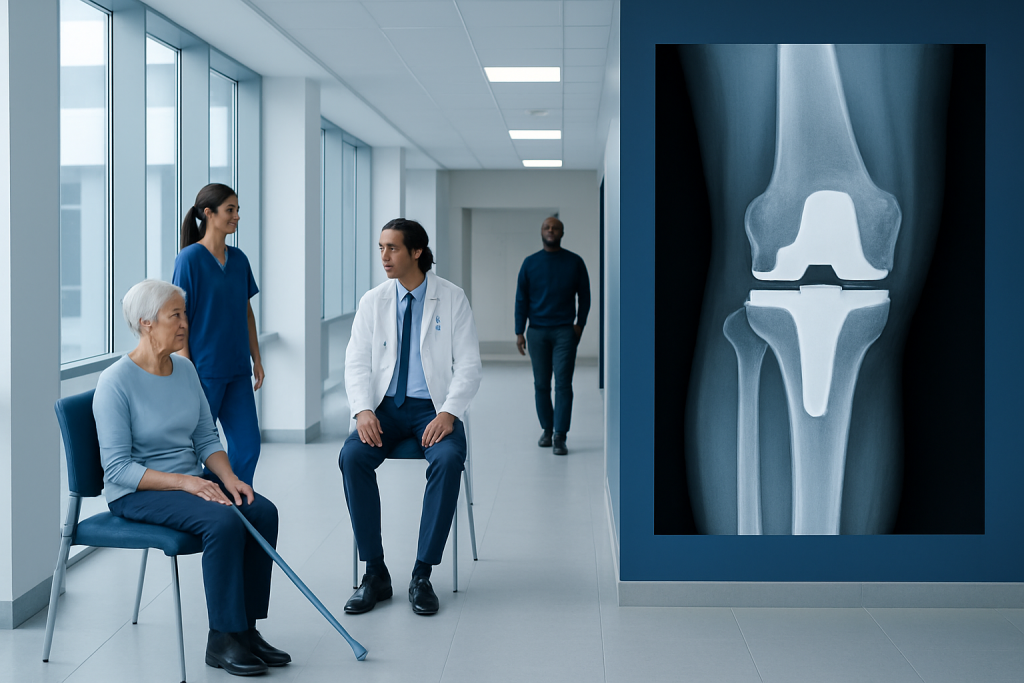
A total knee replacement resurfaces damaged knee joint surfaces with metal and medical-grade plastic components. It is usually considered for severe arthritis-related pain, stiffness, and loss of function after appropriate non-surgical treatment.
Key Takeaways
- A total knee replacement resurfaces damaged knee joint surfaces with metal and medical-grade plastic components.
- It is usually considered for severe arthritis-related pain, stiffness, and loss of function after appropriate non-surgical treatment.
- Early rehabilitation, pain management, wound care, and regular follow-up are central to recovery.
- Most people improve gradually over months; swelling, stiffness, and variable energy levels can persist during healing.
- Like all major operations, knee replacement has risks that should be discussed with an orthopaedic surgeon.
An image of a total knee replacement typically shows the damaged ends of the thighbone and shinbone resurfaced with metal components, separated by a durable plastic spacer. This operation, also called total knee arthroplasty, may help relieve severe knee pain and improve mobility when non-surgical care no longer provides enough benefit.
Overview: what an image of a total knee replacement shows
An image of a total knee replacement usually illustrates the knee after damaged joint surfaces have been removed and resurfaced. The lower end of the thighbone (femur) is covered with a shaped metal component, the top of the shinbone (tibia) receives a metal baseplate, and a smooth plastic insert sits between them. In many operations, the back surface of the kneecap may also be resurfaced with a plastic component.
The purpose is not to replace every structure in the knee. The surgeon preserves as much healthy bone and soft tissue as possible while replacing the worn joint surfaces that cause pain and reduced movement. The components are designed to help the knee bend, straighten, and bear weight more comfortably.
Total knee replacement is also called total knee arthroplasty. It is most often performed for advanced osteoarthritis, but inflammatory arthritis, post-traumatic arthritis, or certain joint deformities may also lead to consideration of surgery. It is a planned procedure, based on symptoms, examination findings, imaging, overall health, and personal goals.
How total knee replacement works and who may be a candidate
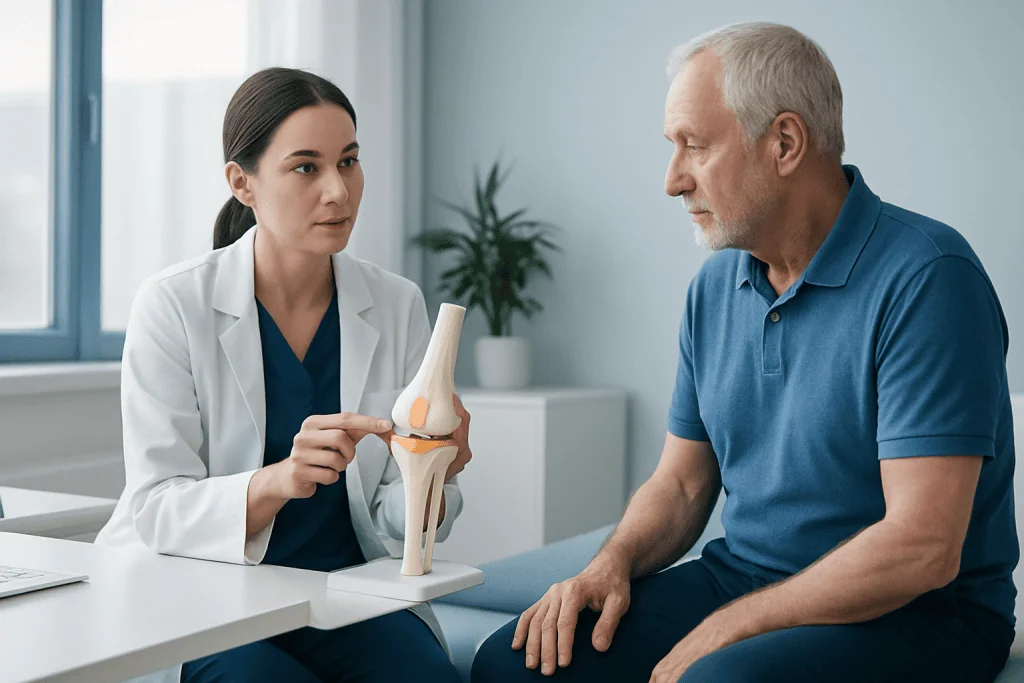
In a healthy knee, cartilage covers the ends of the bones and allows them to glide smoothly. Arthritis can gradually damage this cartilage. The result may be pain with walking or stairs, stiffness after rest, swelling, reduced range of motion, a feeling of instability, and difficulty with daily activities.
A person may be considered for total knee replacement when knee pain and functional limitation remain substantial despite appropriate non-surgical care. This may include exercise-based physiotherapy, weight management where relevant, activity adjustment, walking aids, medicines recommended by a clinician, or injections in selected situations. An X-ray can show joint-space narrowing, bone changes, or deformity, but the decision is based on the whole clinical picture rather than an image alone.
Age by itself does not determine suitability. The orthopaedic team considers the severity and pattern of symptoms, knee stability and alignment, medical conditions, infection risk, smoking status, medicines, home support, and ability to participate in rehabilitation. A careful discussion of expected benefits and limitations helps a person make an informed choice.
People with arthritis affecting other joints may also need an individualized plan. For example, osteoarthritis can involve the hips, hands, spine, or other areas in addition to the knee, which can influence rehabilitation goals.
Step by step: what happens during the procedure
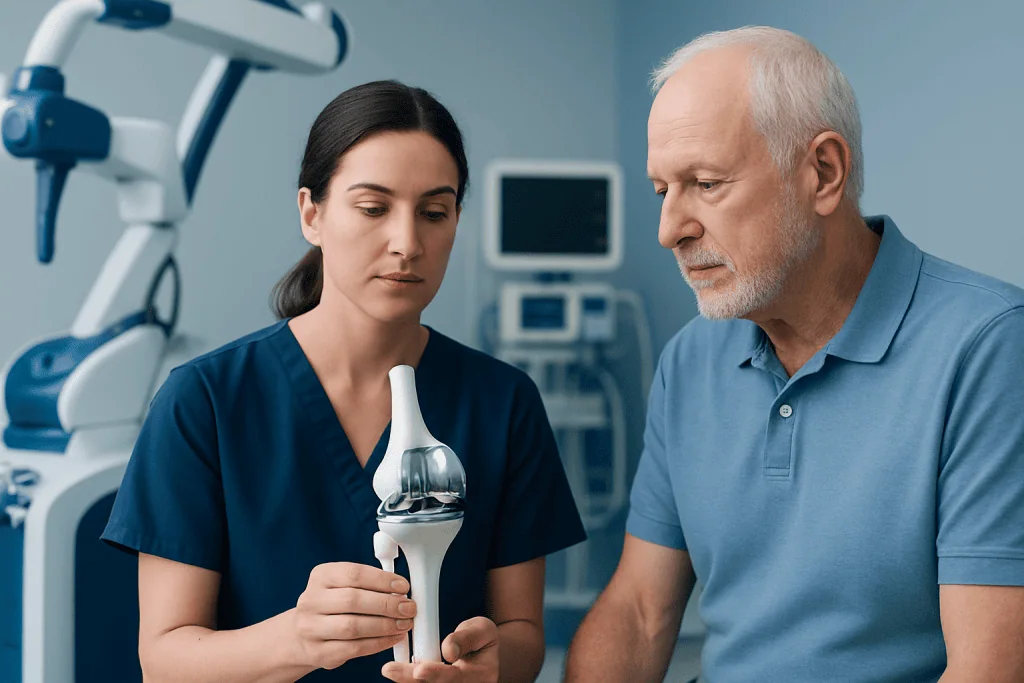
Before surgery, the care team reviews medical history, current medicines, allergies, blood tests when needed, and anaesthetic options. Patients may be asked to stop or adjust certain medicines before the operation, but they should only do this under the direction of their own clinician. Planning may include X-rays and, in some cases, additional imaging to help select implant size and alignment.
During the operation, the patient receives anaesthesia so that they are asleep or numb and comfortable. The surgeon makes an incision over the front of the knee, moves the soft tissues carefully aside, and removes a small amount of damaged bone and cartilage from the femur and tibia. The bone surfaces are shaped to fit the replacement components.
The metal components may be secured with bone cement, press-fit techniques that allow bone to grow into the implant, or a combination chosen for the individual situation. A polyethylene, or medical-grade plastic, spacer is placed between the metal surfaces. The surgeon checks alignment, stability, and motion before closing the wound with sutures, staples, or another suitable method.
After the procedure, patients recover in a monitored area before transfer to a ward or, for selected patients, discharge planning. Knee replacement surgery includes coordinated anaesthesia, surgical care, nursing support, pain management, and rehabilitation planning.
Recovery timeline and what full recovery can look like
Recovery begins soon after surgery. Depending on the person’s health, surgical approach, and local care plan, supported standing and walking may begin on the day of surgery or the following day. A physiotherapist teaches safe transfers, walking with a walker or crutches, knee exercises, and strategies for stairs if needed.
During the first several weeks, swelling, bruising, warmth around the knee, sleep disruption, and fatigue are common. The knee generally becomes more comfortable and mobile in stages rather than all at once. Pain-relief medicines, ice or cold therapy when advised, elevation, regular movement, and prescribed exercises can support recovery. The wound should be kept and monitored according to the surgical team’s instructions.
Many people transition from a walker to a cane and then to independent walking as strength, balance, and confidence improve. Return to desk-based work may be possible earlier than return to physically demanding work, but timing varies. Driving should only resume when a person can safely control the vehicle, is no longer taking medicines that impair driving, and has been cleared by the clinical team.
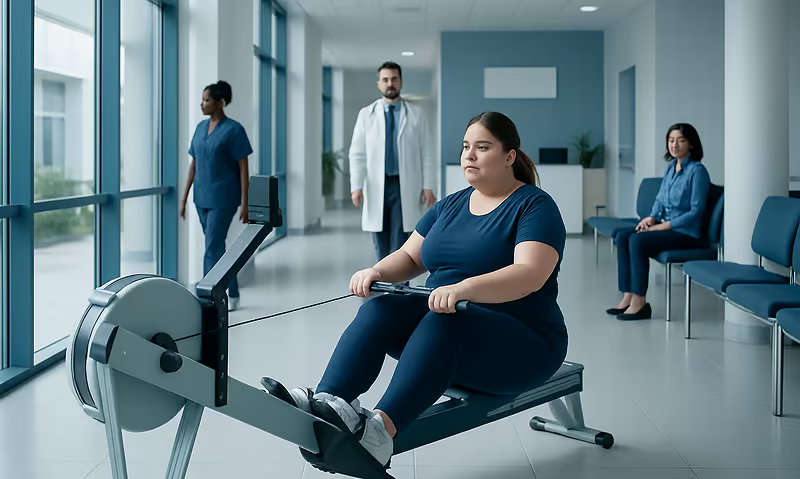
Full recovery often continues for many months. A person may notice gradual improvements in strength, flexibility, endurance, and confidence for up to a year or longer. The aim is improved comfort and function, not necessarily a knee that feels identical to a natural joint. Physical therapy and rehabilitation helps patients build movement, strength, and safe daily activity after surgery.
What is the hardest part of knee replacement recovery?
For many people, the hardest part of knee replacement recovery is the early period of managing pain and swelling while doing regular rehabilitation exercises. The new joint needs movement to prevent stiffness and restore function, but exercises can feel demanding when the knee is tender, swollen, and weak. Progress is often uneven from day to day.
Regaining knee bending and straightening can require steady effort, especially during the first weeks. Sleep may also be temporarily disturbed by discomfort, positioning difficulties, or the need to change activity patterns. Emotional adjustment is common as people move from dependence on assistance toward greater independence.
The safest approach is to follow the individualized rehabilitation plan rather than compare progress with another person’s timeline. Patients should tell their care team if pain is preventing exercise, if swelling is worsening rather than gradually settling, or if they are struggling with mood, sleep, or practical support at home.
How painful is a knee replacement on a scale of 1 to 10?
There is no reliable single number for how painful a knee replacement will be because pain is personal and varies with the procedure, pre-existing pain, anaesthesia, health conditions, and recovery support. In the first days after surgery, many people experience moderate to significant pain, but modern care plans aim to keep it manageable enough to allow safe walking, breathing exercises, sleep, and physiotherapy.
Care teams commonly use multimodal pain management, meaning several approaches may be combined to reduce reliance on any one medicine. These can include regional nerve blocks, local anaesthetic techniques, non-opioid pain medicines when suitable, short-term stronger medicines when needed, cold therapy, positioning, and gradual activity.
Patients should report their pain honestly. Pain that is uncontrolled, suddenly much worse, or accompanied by concerning symptoms needs prompt assessment. Good pain control does not mean feeling no discomfort; it means having symptoms managed safely enough to participate in recovery.
How long does it take to walk normally after a full knee replacement?
Walking improves at different rates. Many patients begin walking with a walker or crutches shortly after surgery and gradually reduce support over the following weeks. Some may walk independently within several weeks, while others need a cane or other aid for longer because of muscle weakness, balance concerns, other joint problems, or medical conditions.
Walking “normally” can mean different things: walking safely without an aid, walking without a limp, or being able to walk longer distances comfortably. A smoother gait often returns gradually as knee extension, bending, thigh strength, and confidence improve. It is common for endurance to take longer than basic indoor walking.
People should not stop using an aid simply to meet a perceived deadline. Using a walker or cane correctly can reduce fall risk and help avoid developing an uneven gait. A physiotherapist can assess walking pattern and advise when it is appropriate to progress.
Benefits, risks, and when to seek medical care
The main potential benefits of total knee replacement are less arthritis pain, improved ability to walk and manage daily activities, better knee alignment in some cases, and improved quality of life. Results depend on factors such as the condition of the knee before surgery, rehabilitation participation, general health, and realistic expectations. High-impact activities are often discouraged after replacement because they may place excess stress on the implant.
Possible complications include blood clots, infection, bleeding, stiffness, wound-healing problems, nerve or blood-vessel injury, persistent pain, instability, fracture, and loosening or wear of the implant over time. These complications are not inevitable, and the surgical team uses preventive measures such as early mobilization, infection-control practices, and medication when appropriate to reduce risk.
Patients should seek urgent medical care for chest pain, shortness of breath, coughing up blood, fainting, or sudden severe symptoms. They should contact their surgical team promptly for increasing redness, drainage, fever, worsening wound pain, new calf swelling or pain, a sudden inability to bear weight, or a marked decline in knee movement. These symptoms need assessment but do not always mean a serious complication.
Acibadem International’s multidisciplinary specialists and JCI-accredited hospitals diagnose and treat knee conditions for international patients, with care plans that can include orthopaedic assessment and rehabilitation support.
Frequently asked questions
What does full knee replacement recovery look like?
Full knee replacement recovery is a gradual return to comfortable movement, stronger leg muscles, improved balance, and greater independence in daily activities. Early recovery focuses on wound healing, controlling swelling, and walking safely; later recovery focuses on endurance, knee motion, and confidence. Improvements can continue for many months, and some people notice progress for up to a year or longer.
How long does a total knee replacement operation take?
The operation itself commonly takes around one to two hours, although the full time in the operating and recovery areas is longer. The exact duration depends on the knee anatomy, the complexity of surgery, and whether any additional procedures are needed. The surgical team can explain what to expect for an individual case.
Will a knee replacement set off airport security?
A knee implant may be detected by some security screening systems. Patients can tell airport security staff that they have a joint replacement, but implant identification cards are not always required or accepted as an alternative to screening. Security procedures vary by airport and country.
Can a person kneel after total knee replacement?
Some people can kneel after healing, but it may feel uncomfortable, numb, or unfamiliar at the front of the knee. Kneeling does not usually damage a well-functioning implant, but it should be approached gradually and only after the surgeon or physiotherapist says it is appropriate. A cushion or kneeling pad may improve comfort.
What activities should be avoided after knee replacement?
Low-impact activities such as walking, cycling, swimming, and some forms of golf are often suitable after recovery, subject to medical advice. High-impact running, jumping, contact sports, and activities with a high risk of falls may be discouraged because they can increase stress on the implant. Recommendations should be tailored to the person’s fitness, joint function, and surgical advice.
How long does a total knee replacement last?
Modern knee replacements are designed to provide long-term function, but no implant lasts forever. How long an implant performs well depends on factors such as activity level, body weight, implant type, surgical factors, and overall joint health. Regular follow-up helps identify concerns early, especially if new pain, instability, or reduced function develops.
References
- American Academy of Orthopaedic Surgeons
- National Institute of Arthritis and Musculoskeletal and Skin Diseases
- National Health Service
- Mayo Clinic
- Centers for Disease Control and Prevention
This article is for general information only and is not a substitute for professional medical advice. Please consult a qualified doctor about your individual situation.
Joint and spine care in Turkey — expert assessment & treatment
JCI-accredited · board-certified surgeons · reply within 24h
Add us as a Preferred Source to see more of our trusted health content across Google Search, AI Overviews and Discover.

More from the Health Library


Related Specialists

Assoc. Prof. Dr. Burak Elmas
Vitro Fertilization and Reproductive Medicine Center
Assoc. Prof. Dr. Mehmet Barburoğlu
Interventional Neuroradiology
Assoc. Prof. Dr. Mehmet Altıparmak
Aesthetic Plastic & Reconstructive Surgery
Dr. Nevin Çokpınar
Neurology