Immunotherapy for Bile Duct Cancer: How It Works, Results and What to Expect

Immunotherapy may be part of first-line treatment for some people with unresectable or metastatic bile duct cancer. Tumor biomarker testing helps identify people who may benefit from certain immunotherapy approaches.
Key Takeaways
- Immunotherapy may be part of first-line treatment for some people with unresectable or metastatic bile duct cancer.
- Tumor biomarker testing helps identify people who may benefit from certain immunotherapy approaches.
- Treatment is usually given by intravenous infusion and requires regular monitoring for immune-related side effects.
- Immunotherapy can control cancer for some people, but it is not a guaranteed cure for advanced bile duct cancer.
- Survival and disease progression vary widely, so individual outlook should be discussed with the treating oncology team.
Immunotherapy for bile duct cancer uses medicines that help the body’s immune system recognize and attack cancer cells. It may be combined with chemotherapy for advanced disease or used for selected tumors with specific biomarker results, with treatment decisions guided by a multidisciplinary cancer team.
Overview: How Immunotherapy for Bile Duct Cancer Works
Immunotherapy for bile duct cancer is a treatment that strengthens or redirects the immune system’s ability to detect and attack cancer cells. It is most often considered when bile duct cancer, also called cholangiocarcinoma, cannot be removed with surgery, has returned after treatment, or has spread to other parts of the body. In some situations, an immunotherapy medicine is used together with chemotherapy as an initial treatment for advanced disease.
Many immunotherapy medicines used in this setting are called immune checkpoint inhibitors. Cancer cells can use normal “checkpoint” signals to reduce immune activity and avoid attack. Checkpoint inhibitors block selected signals, such as PD-1, PD-L1, or CTLA-4 pathways, allowing immune cells to respond more actively. The treatment does not work in exactly the same way for every tumor, and benefit can range from no response to durable cancer control in some individuals.
Bile duct cancer includes cancers arising inside the liver, near the liver hilum, or in the bile ducts closer to the pancreas and small bowel. Although these cancers share important features, their location, stage, biology, and treatment options can differ. A care plan should therefore be tailored after careful staging, pathology review, and discussion by specialists in medical oncology, hepatobiliary surgery, gastroenterology, radiology, pathology, and supportive care.
Who May Be a Candidate for Immunotherapy?
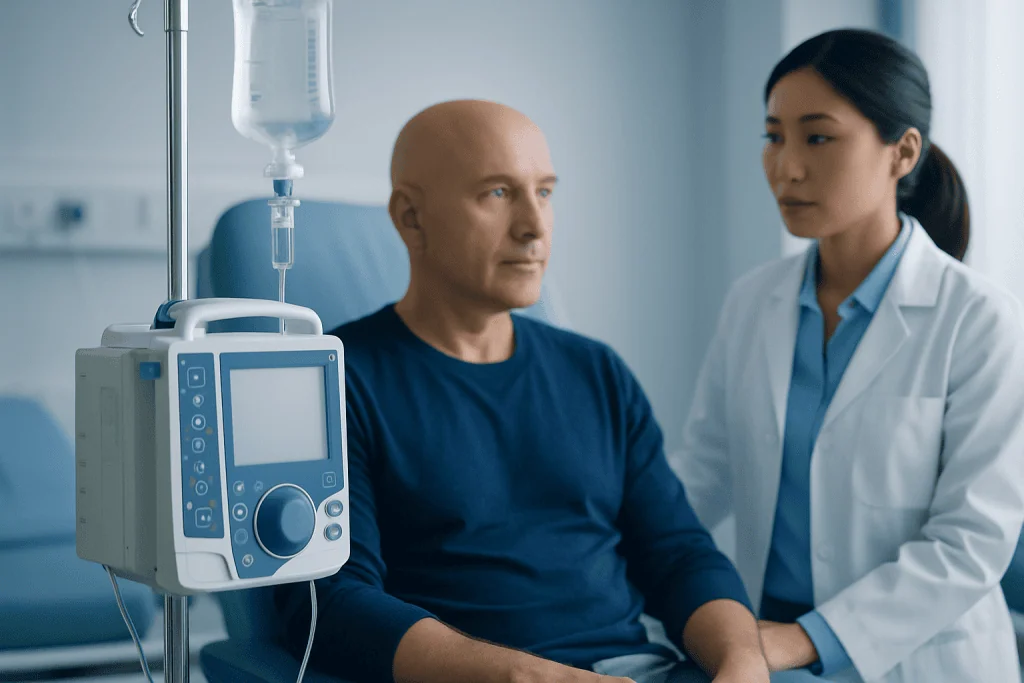
Candidacy depends on the cancer stage, previous treatments, general health, liver function, symptoms, and tumor test results. For people with newly diagnosed advanced or metastatic bile duct cancer, an immune checkpoint inhibitor may be offered alongside a chemotherapy combination when clinically appropriate. For other people, immunotherapy may be considered after earlier treatment has stopped working or when a tumor has a biomarker associated with a higher likelihood of response.
Biomarker testing is an important part of modern bile duct cancer care. The oncology team may request testing of tumor tissue and, in some cases, blood. Results can include mismatch repair deficiency or microsatellite instability, tumor mutational burden, and other molecular changes that may guide treatment choices. Broad molecular profiling can also identify non-immunotherapy targeted treatment options, which may be relevant at different points during care.
Autoimmune conditions, prior organ transplantation, chronic viral infections, and the use of medicines that suppress the immune system do not automatically rule out immunotherapy. However, they require individualized assessment because immune activation can worsen autoimmune inflammation or affect a transplanted organ. The care team balances possible benefit with these risks and may involve other specialists before treatment begins.
- Medical history and current medicines are reviewed before treatment.
- Blood tests assess liver, kidney, thyroid, blood cell, and other organ functions.
- Scans establish a baseline for measuring response over time.
- Pathology and molecular testing help define the most suitable treatment strategy.
What Happens During Treatment: Step by Step

Before the first infusion, the oncology team explains the purpose of treatment, expected schedule, possible side effects, and monitoring plan. A person may have a physical examination, blood tests, and imaging studies. If bile flow is blocked, procedures such as stent placement may be needed to relieve jaundice or infection before systemic treatment can safely proceed.
Immunotherapy is generally given through a vein at an outpatient infusion center. The infusion itself commonly takes less than a few hours, depending on the medicine and whether chemotherapy is administered on the same day. Some people receive treatment through a standard intravenous line, while others who need frequent intravenous therapy may use an implanted venous access device.
During the visit, nurses check vital signs and ask about new symptoms. An infusion reaction is uncommon but can occur, so the team observes the patient and can provide treatment if needed. If chemotherapy is combined with immunotherapy, the visit may be longer and supportive medicines may be used to reduce treatment-related nausea or other effects.
Treatment is delivered in repeated cycles, with the exact timing determined by the regimen. Blood tests and clinical reviews are repeated regularly. Imaging is commonly performed after several treatment cycles to assess whether tumors are shrinking, stable, or growing. A scan can sometimes show temporary inflammatory changes, so results are interpreted alongside symptoms and laboratory findings.
Benefits, Risks and Recovery Timeline
The main potential benefit of immunotherapy is improved cancer control. In appropriate patients, combining an immune checkpoint inhibitor with chemotherapy can extend the time before cancer progresses and may improve overall outcomes compared with chemotherapy alone. A smaller group of people with particular biomarkers may experience substantial and sometimes long-lasting responses to immunotherapy. However, not every person responds, and the treatment’s effect cannot be predicted with certainty.
Immunotherapy is not associated with a surgical recovery period. Most people return home after each infusion and may continue many usual activities if they feel well enough. Tiredness can occur on treatment days or in the days afterward, especially when chemotherapy is also being given. The practical recovery timeline varies according to symptoms from the cancer, nutrition, liver function, other treatments, and any side effects.
Because immunotherapy stimulates immune activity, it can cause the immune system to inflame healthy tissues. Possible immune-related side effects include skin rash, itching, diarrhea or colitis, liver inflammation, lung inflammation, thyroid or other hormone gland changes, kidney inflammation, and less commonly neurologic or heart inflammation. These effects can begin during treatment or, occasionally, after treatment has ended.
Prompt reporting is important because many immune-related side effects can be managed effectively when identified early. Depending on severity, the oncology team may pause treatment, prescribe corticosteroids or other immune-suppressing medicines, arrange specialist review, or stop immunotherapy permanently. Patients should not start or stop medicines for suspected side effects without medical guidance.
Can Immunotherapy Cure Bile Duct Cancer?
Immunotherapy can be an important treatment for bile duct cancer, but it is not generally considered a reliable cure for cancer that has spread or cannot be completely removed. In advanced disease, its usual goal is to slow or control cancer growth, reduce cancer-related symptoms when possible, and help people live longer with the best achievable quality of life.
In a minority of people, especially those whose tumors have certain immune-sensitive biomarkers, immunotherapy can produce a deep and durable response. Even then, continued follow-up is essential because response duration differs from person to person. The treating oncologist can explain whether the aim of treatment is cure, long-term control, shrinking a tumor before another treatment, or symptom relief.
For localized bile duct cancer, complete surgical removal offers the main potential route to cure when it is feasible and safe. Systemic treatments, including chemotherapy and sometimes immunotherapy in selected settings, may be used before or after surgery in carefully planned situations. Decisions should be made through a multidisciplinary review rather than based on one treatment alone.
Can You Get Better From Bile Duct Cancer?
Some people can get better from bile duct cancer, particularly when it is diagnosed at an early stage and can be completely treated with surgery. Outcomes depend on the cancer’s location, stage, whether it can be removed, lymph node involvement, tumor biology, and overall health. Follow-up remains important after potentially curative treatment because recurrence is possible.
When bile duct cancer is advanced, many people can still benefit from treatment. Chemotherapy, immunotherapy, targeted medicines for selected genetic changes, radiation in certain circumstances, and procedures to improve bile drainage can control disease or symptoms. Supportive care for pain, nutrition, fatigue, itching, emotional wellbeing, and other concerns is an active part of treatment at every stage.
It is appropriate to ask the oncology team about the individual treatment goal and what improvement may look like. Improvement may mean less jaundice, better appetite and energy, fewer symptoms, stable scans, reduced tumor size, or more time with controlled disease. These outcomes are personal and should be reviewed regularly as treatment continues.
What Is the Average Life Expectancy for Someone With Stage 4 Bile Duct Cancer?
There is no single average life expectancy that accurately predicts what will happen for an individual with stage 4 bile duct cancer. Stage 4 usually means the cancer has spread to distant organs or tissues, but outcomes vary considerably according to the person’s general health, extent and location of spread, liver and bile duct function, tumor biology, response to treatment, and access to supportive care.
Published survival figures describe groups of patients treated in different places and at different times; they cannot account for newer therapies, molecular test results, or a person’s unique circumstances. They are often reported as medians, meaning that some people live less time and others live substantially longer. For this reason, online numbers can be distressing or misleading when applied to one person.
For an individualized discussion, the oncology team can review staging scans, pathology, biomarker testing, treatment options, and current symptoms. Asking what the team expects over the coming weeks or months, what treatment may realistically achieve, and how progress will be assessed can support clear and compassionate planning.
How Long Does It Take for Bile Duct Cancer to Spread?
Bile duct cancer does not spread according to a fixed timetable. Some tumors grow and spread relatively slowly, while others behave more aggressively. The speed of progression can be influenced by tumor subtype, molecular features, where the cancer began, liver function, and whether treatment is controlling the disease.
Because early bile duct cancer may cause few or nonspecific symptoms, it is sometimes diagnosed after it has already grown locally or spread. This does not mean that a person has done anything wrong or that spread occurred over a known number of weeks or months. Only comparison of imaging studies over time can provide information about how a particular cancer is behaving.
Regular follow-up scans, blood tests, and symptom reviews allow the care team to evaluate treatment response and detect changes. New or worsening jaundice, fever, abdominal pain, vomiting, marked fatigue, unexplained weight loss, or rapidly increasing abdominal swelling should be reported promptly, as these symptoms may need assessment even if they are not necessarily caused by cancer progression.
When to Seek Medical Care
Medical care should be sought promptly for yellowing of the skin or eyes, dark urine, pale stools, persistent itching, abdominal pain, unexplained weight loss, poor appetite, or ongoing nausea. These symptoms can have causes other than bile duct cancer, but they deserve timely assessment, particularly if they are new or worsening.
Urgent medical evaluation is important for fever or chills with jaundice, severe abdominal pain, confusion, persistent vomiting, dehydration, shortness of breath, chest pain, or a sudden decline in wellbeing. A blocked or infected bile duct can become serious and may require urgent treatment. People receiving immunotherapy should also contact their oncology team quickly for new diarrhea, breathing changes, yellowing of the eyes, severe rash, unusual weakness, or other concerning symptoms.
At Acibadem International, multidisciplinary specialists in JCI-accredited hospitals can assess and treat bile duct cancer for international patients, coordinating oncology, hepatobiliary, gastroenterology, imaging, pathology, and supportive care. A second opinion may be helpful when reviewing pathology, biomarker results, surgical options, or the role of systemic therapy.
Frequently asked questions
Is immunotherapy used alone for bile duct cancer?
It can be used alone in selected situations, particularly when a tumor has biomarkers that suggest a higher chance of response. More commonly in newly diagnosed advanced disease, an immune checkpoint inhibitor may be combined with chemotherapy. The appropriate approach depends on prior treatment, tumor testing, and overall health.
How is response to immunotherapy monitored?
The oncology team monitors symptoms, physical wellbeing, blood tests, and imaging scans. Scans are usually repeated after a planned number of treatment cycles rather than after every infusion. Response assessment also considers liver and bile duct function, because these can affect symptoms and treatment safety.
What side effects should be reported immediately during immunotherapy?
New or worsening shortness of breath, persistent diarrhea, severe abdominal pain, fever, yellowing of the eyes or skin, a widespread rash, confusion, chest pain, or major weakness should be reported urgently. These symptoms may have several causes, including immune-related inflammation, infection, bile duct blockage, or cancer-related complications. Early assessment helps the care team provide appropriate treatment.
Do all bile duct cancers respond to immunotherapy?
No. Some tumors do not respond, and the degree and duration of benefit vary widely. Biomarker testing can help identify tumors that may be more likely to respond, but it does not guarantee an outcome.
Can immunotherapy be given if a person has an autoimmune disease?
Sometimes, but it requires careful individualized planning. Immunotherapy may worsen an existing autoimmune condition or cause new inflammation, especially in people taking immune-suppressing medication. The oncologist may consult the relevant specialist and discuss alternative treatments or closer monitoring.
Is immunotherapy the same as targeted therapy?
No. Immunotherapy acts on the immune system so it can better recognize cancer cells. Targeted therapy acts directly on specific molecular changes within the cancer, such as certain gene alterations identified through tumor testing. Both may be relevant in bile duct cancer, but they are selected for different clinical reasons.
References
- National Cancer Institute
- American Cancer Society
- European Society for Medical Oncology
- National Comprehensive Cancer Network
- World Health Organization
This article is for general information only and is not a substitute for professional medical advice. Please consult a qualified doctor about your individual situation.
Immunotherapy in Turkey — costs, top hospitals & a free quote
JCI-accredited · board-certified surgeons · reply within 24h
Add us as a Preferred Source to see more of our trusted health content across Google Search, AI Overviews and Discover.

Medical Oncology Department
Medical treatment of cancer with chemotherapy, immunotherapy and targeted therapies under a multidisciplinary tumor board.
60 specialists in this unitMore from the Health Library



Related Specialists

Assoc. Prof. Dr. Mahmut Subaşı
Thoracic Surgery
Dr. Teoman Şen
Pediatric Surgery
Prof. Dr. Şahin Şenay
Cardiovascular Surgery
Ebru Uzun Saral
Physical Medicine & Rehabilitation