Implantation Cramps: Candidacy, Procedure Steps, and Recovery Timeline

Implantation cramps are typically mild, brief, and felt around the time a period is due. Not everyone has implantation cramps, and their absence does not mean pregnancy has not occurred.
Key Takeaways
- Implantation cramps are typically mild, brief, and felt around the time a period is due.
- Not everyone has implantation cramps, and their absence does not mean pregnancy has not occurred.
- A pregnancy test and medical evaluation are more reliable than symptoms alone.
- Severe pain, heavy bleeding, dizziness, or one-sided pain needs prompt medical attention.
- Evaluation may include pelvic examination, blood tests, ultrasound, or [[TREATMENT:ivf-in-vitro-fertilization|fertility care]] when pregnancy timing is important.
Implantation cramps are mild, short-lived sensations some people notice in very early pregnancy when a fertilized egg attaches to the lining of the uterus. They can feel similar to light period cramps, but they are usually brief, not severe, and do not confirm pregnancy on their own.
Overview: what implantation cramps are
Implantation cramps are mild, short-lasting sensations that some people notice when a fertilized egg attaches to the uterine lining. This process, called implantation, usually happens several days after ovulation and before a missed period. The feeling is often described as light pulling, twinges, or gentle lower abdominal cramping rather than intense pain.
Because implantation happens very early, these cramps can be confused with premenstrual symptoms. Some people also notice light spotting, breast tenderness, fatigue, or bloating at the same time. However, symptoms vary widely, and many early pregnancies happen without any noticeable implantation signs.
The most important point is that implantation cramps are not a diagnosis. They can overlap with many other common causes of pelvic discomfort, including menstrual changes, ovulation pain, digestive upset, or stress. A home pregnancy test taken at the right time, followed by medical confirmation when needed, gives a clearer answer.
How implantation works and who may notice it
After ovulation, an egg may be fertilized in the fallopian tube. The fertilized egg then travels toward the uterus and develops into a blastocyst. Implantation begins when this early embryo attaches to the uterine lining, allowing pregnancy hormones to start rising.
Some people are more likely to pay close attention to early body changes, especially if they are trying to conceive or are having fertility treatment. In these situations, mild cramping may be noticed more clearly. People undergoing IVF treatment may also be advised about early symptoms, although symptoms alone still cannot confirm implantation.
There is no special “candidacy” for implantation cramps in the way there is for a medical procedure. A person may notice them whether pregnancy happened naturally or with fertility treatment, but many do not feel anything at all. What matters most is the overall context: menstrual timing, whether there has been unprotected intercourse or embryo transfer, and whether symptoms stay mild and short-lived.
Symptoms, timing, and how implantation cramps may feel

Implantation cramps are usually felt in the lower abdomen or pelvis. They are often described as mild pressure, light aching, fluttering, or brief pinching sensations. Unlike stronger menstrual cramps, they generally do not worsen steadily or interfere with normal daily activities.
The timing is usually early: often around 6 to 12 days after fertilization, which may place the symptoms in the days before an expected period. Because exact ovulation timing differs from person to person, many people cannot identify implantation with certainty based on timing alone.
Possible accompanying signs can include:
- Very light spotting or pink-brown discharge
- Breast fullness or tenderness
- Bloating
- Fatigue
- Mild nausea later on as pregnancy hormones rise
These symptoms are nonspecific. Similar sensations can happen with normal menstrual hormonal shifts, endometriosis, or ovarian cysts. For that reason, symptoms should be interpreted carefully and never used as the only way to confirm pregnancy.
When cramping may be caused by something else
Not all early pregnancy-like cramping is related to implantation. Common non-pregnancy causes include ovulation pain, constipation, gas, pelvic floor muscle tension, urinary problems, or the normal start of menstruation. In some cases, underlying gynecologic conditions can also cause recurrent pelvic pain.
Doctors may think about other possibilities if the pain is stronger than expected, lasts more than a day or two, comes with fever, or is focused on one side. Conditions such as ovarian cysts or pelvic infection can sometimes mimic early pregnancy sensations. If pregnancy is possible, an ectopic pregnancy must also be considered because it can begin with pain and spotting.
For people trying to conceive over time, repeated cycles of cramping without pregnancy may lead to a broader fertility assessment. Depending on the situation, this can include hormone testing, pelvic ultrasound, semen analysis for a partner, or advanced reproductive support such as intrauterine insemination or IVF.
Diagnosis: what doctors look for
There is no test that specifically proves a cramp was caused by implantation. Diagnosis focuses instead on confirming or ruling out pregnancy and checking for other causes of pain or bleeding. A doctor will ask about menstrual dates, ovulation timing, intercourse or fertility treatment, the character of the pain, and any associated symptoms.
A home pregnancy test can become positive around the time of a missed period, but very early testing may be negative even if pregnancy has occurred. If the result is unclear, a clinician may order a blood test for human chorionic gonadotropin, also called hCG, and repeat it over time if needed.
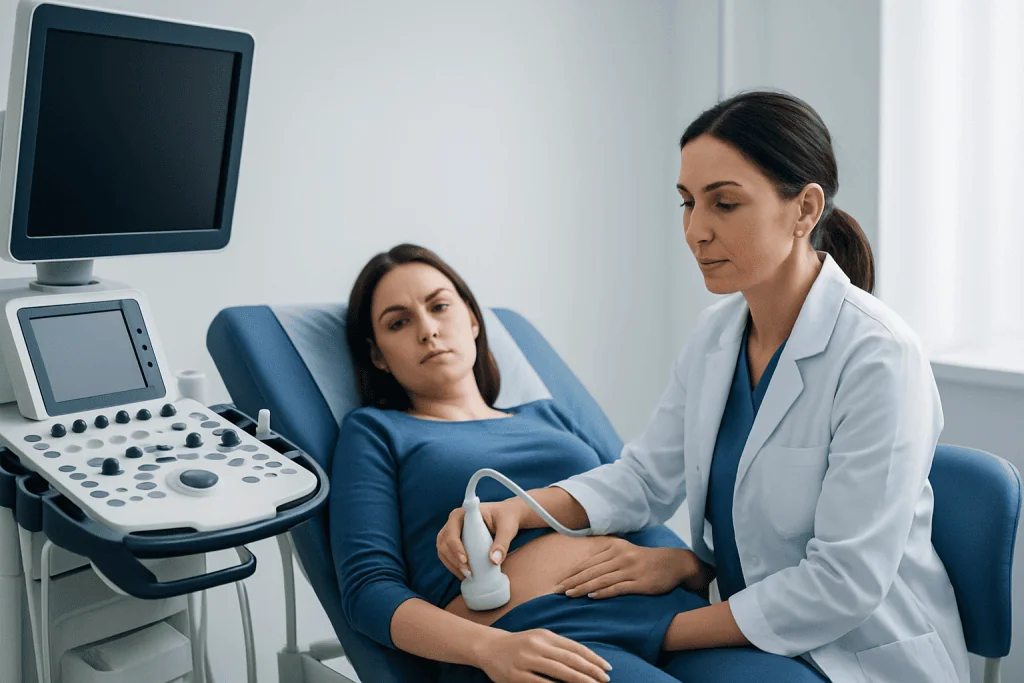
If there is pain, bleeding, or concern about a pregnancy problem, pelvic ultrasound may be recommended. This helps assess the uterus and ovaries and can identify issues such as cysts, fibroids, or signs that need urgent attention. In complex cases, a person may be referred for gynecologic evaluation or fertility care. The goal is not to label every early cramp, but to make sure the pregnancy status and pelvic health are understood safely.
Recovery timeline, self-care, and what to expect next
If the sensation truly is implantation-related, it usually resolves quickly. Many people who notice it say it lasts for a few hours or up to one or two days. It should remain mild rather than progressively painful.
During this short period, simple self-care is usually enough. Rest, staying hydrated, gentle movement, and monitoring symptoms may help. It is best to avoid assuming pregnancy too early based on symptoms alone, as this can create unnecessary worry during the normal waiting period before testing.
After implantation, pregnancy hormone levels gradually rise. A home pregnancy test is generally more reliable from the day a period is due or later. If a test becomes positive, arranging routine prenatal care is the next step. If the test is negative but the period does not come, repeating the test in a few days or speaking with a doctor is reasonable.
People who are receiving fertility treatment often follow a planned testing schedule set by their care team. For international patients who need coordinated reproductive assessment and follow-up, Acibadem International’s multidisciplinary specialists in JCI-accredited hospitals provide diagnosis and treatment support.
Benefits, risks, and when to seek medical care
Implantation itself is a normal biological step in early pregnancy, not a harmful event. The possible “benefit” of noticing implantation cramps is simply that they may prompt awareness of an early pregnancy. However, symptoms are too unreliable to use as proof, and the main medical priority is recognizing when cramping does not fit the expected mild pattern.
Seek medical care promptly if there is severe pain, pain mainly on one side, heavy bleeding, fainting, dizziness, shoulder pain, fever, or worsening discomfort. These symptoms can suggest miscarriage, pelvic infection, or ectopic pregnancy, which requires urgent evaluation. People with a positive pregnancy test and pelvic pain should not ignore these warning signs.
Medical advice is also important if cramping keeps recurring, periods are unusually painful, or pregnancy is not happening after months of trying. In that setting, doctors may evaluate for hormonal, structural, or reproductive conditions and discuss options ranging from cycle tracking to advanced fertility treatment. A calm, timely assessment helps distinguish normal early symptoms from conditions that need care.
Frequently asked questions
What do implantation cramps feel like?
They are usually described as mild twinges, pulling, light pressure, or gentle lower abdominal cramping. Most people who notice them say they are much milder than typical menstrual cramps and do not last long.
How long do implantation cramps last?
If they happen, implantation cramps are generally brief and may last a few hours or up to one or two days. Pain that becomes stronger, persistent, or disruptive is less typical and should be discussed with a doctor.
Can implantation cramps happen without bleeding?
Yes. Some people have mild cramping without any spotting at all. Others may have a small amount of light pink or brown discharge, while many early pregnancies cause no noticeable implantation symptoms.
How are implantation cramps different from period cramps?
Implantation cramps are often lighter, shorter, and less intense than period cramps. However, the two can feel similar, so timing and symptom pattern alone cannot confirm pregnancy.
When should someone take a pregnancy test after implantation cramps?
Testing is usually more reliable on or after the day a period is due. Testing too early can give a false-negative result because hCG levels may not be high enough yet.
Are implantation cramps common in IVF pregnancy?
Some people undergoing IVF report mild cramping around the time they are waiting for results, but symptoms alone cannot show whether implantation has occurred. The scheduled blood test recommended by the fertility team is the most reliable way to confirm pregnancy.
When are cramps in early pregnancy a medical concern?
Medical attention is important if cramping is severe, one-sided, associated with heavy bleeding, or comes with dizziness, fainting, fever, or shoulder pain. These symptoms can point to ectopic pregnancy or another urgent condition and should not be ignored.
References
- American College of Obstetricians and Gynecologists
- National Health Service
- Mayo Clinic
- Cleveland Clinic
- Office on Women's Health
This article is for general information only and is not a substitute for professional medical advice. Please consult a qualified doctor about your individual situation.
IVF & fertility treatment in Turkey — success rates and costs
JCI-accredited · board-certified surgeons · reply within 24h
Add us as a Preferred Source to see more of our trusted health content across Google Search, AI Overviews and Discover.
Check your numbers in seconds
BMI, calories, due date, blood pressure and 30+ more clinical calculators — free, instant, doctor-reviewed ranges.