In Vitro in: A Complete Medical Overview

In vitro means “in glass” and describes tests or procedures done outside the body. In fertility care, in vitro usually refers to IVF, where fertilization happens in a laboratory.
Key Takeaways
- In vitro means “in glass” and describes tests or procedures done outside the body.
- In fertility care, in vitro usually refers to IVF, where fertilization happens in a laboratory.
- IVF may be considered for blocked fallopian tubes, ovulation problems, male factor infertility, endometriosis, unexplained infertility, or use of donor eggs or sperm.
- Diagnosis before IVF often includes hormone testing, semen analysis, ultrasound, and evaluation of the uterus and fallopian tubes.
- IVF treatment involves ovarian stimulation, egg retrieval, laboratory fertilization, embryo culture, and embryo transfer.
- A fertility specialist can explain whether IVF or another treatment is the most appropriate option for an individual or couple.
In vitro in medicine means a process that happens outside the body, usually in a laboratory setting such as a test tube, dish, or culture system. In everyday health searches, in vitro in most often refers to in vitro fertilization (IVF), a fertility treatment in which eggs and sperm are combined in the lab before an embryo is placed in the uterus.
Overview: what “in vitro” means in medicine
The term in vitro comes from Latin and means “in glass.” In modern medicine, it refers to tests, observations, or treatments performed outside the body in a controlled laboratory environment. This may include examining cells, growing tissues, testing blood samples, or combining eggs and sperm during fertility treatment.
Many people searching for in vitro in are really asking what the phrase means and how it relates to health care. The broad meaning is simple: something is done in the lab rather than inside the body. In contrast, in vivo means inside a living body, and in situ means in its original place within the body.
In everyday medical use, the phrase is especially associated with in vitro fertilization, or IVF. IVF is one form of assisted reproductive technology in which eggs are collected from the ovaries, fertilized with sperm in the laboratory, and then one or more embryos are transferred to the uterus. This article explains both the general meaning of in vitro and its most common use in fertility care.
How in vitro is used beyond fertility

In vitro methods are common across many areas of medicine because they allow specialists to study cells, tissues, or biological samples under carefully controlled conditions. For example, laboratory professionals may perform in vitro testing to identify infections, measure hormone levels, assess blood chemistry, or study how cells respond to a substance.
These laboratory approaches help doctors make diagnoses, monitor treatment, and understand disease processes. In vitro work is also important in research, where scientists examine how cells grow, divide, or react to medications before treatments are used in people. While this kind of testing happens outside the body, its purpose is often to guide real-world care.
Another reason the term appears frequently is that some diagnostic techniques are described as in vitro diagnostics. These include blood tests, genetic tests, and many pathology laboratory assessments. In other words, the phrase is not limited to reproduction, but in patient-facing information it most often leads to questions about IVF.
In vitro fertilization (IVF): what it involves
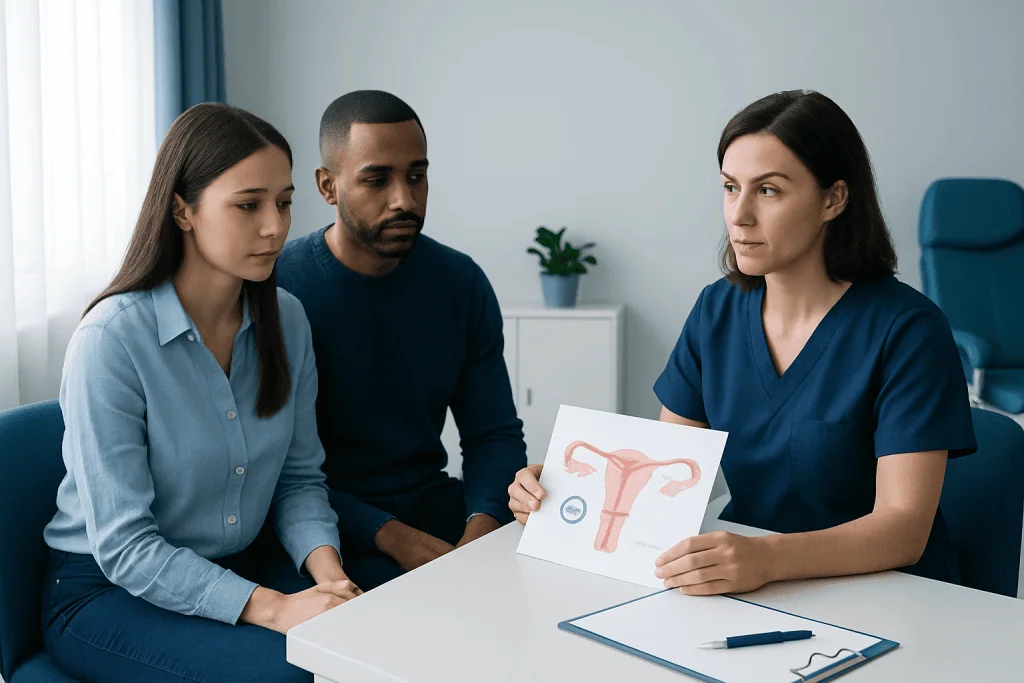
In vitro fertilization is a fertility treatment used when pregnancy has not happened naturally or when another approach offers a better chance of conception. During IVF, the ovaries are stimulated to produce multiple eggs, the eggs are collected, and sperm is prepared in the laboratory. Fertilization then takes place outside the body, and the developing embryo is monitored before transfer to the uterus.
IVF can be recommended for many reasons, including blocked or damaged fallopian tubes, ovulation disorders, reduced ovarian reserve, endometriosis, male factor infertility, unexplained infertility, or the need for donor eggs or sperm. It may also be considered when simpler treatments have not been successful. For some patients, doctors may discuss related methods such as IVF treatment or ICSI treatment, in which a single sperm is injected directly into an egg.
The steps of IVF vary somewhat between clinics and individual treatment plans, but often include:
- Hormonal medication to stimulate egg development
- Ultrasound and blood tests to monitor the ovaries
- Egg retrieval using a guided procedure
- Laboratory fertilization with sperm
- Embryo culture for several days
- Embryo transfer into the uterus
Not every embryo develops in the same way, and not every IVF cycle leads to pregnancy. A fertility specialist helps decide how many embryos to transfer, whether to freeze additional embryos, and whether any extra laboratory steps may be appropriate.
Who may benefit from IVF and related fertility evaluation
IVF is not the right first step for everyone, but it can be very helpful in selected situations. A doctor may consider IVF when there are structural problems such as blocked fallopian tubes, problems with ovulation, low sperm count or poor sperm movement, advanced maternal age, repeated pregnancy loss with a need for further evaluation, or infertility with no clear cause after standard testing.
Couples or individuals may also seek IVF when they want to use donor sperm, donor eggs, or previously frozen eggs or embryos. In some cases, IVF offers a way to preserve fertility before certain medical treatments. It may also be discussed when there is a known inherited condition and doctors recommend a specialized reproductive plan.
Before IVF is advised, fertility specialists usually review medical history in detail and look for potentially treatable causes of infertility. This broader assessment is important because some people may conceive with lifestyle changes, ovulation support, treatment of polycystic ovary syndrome or other hormonal issues, surgery for a pelvic problem, or less complex fertility treatments. The goal is to match the treatment to the person’s needs rather than assume IVF is always necessary.
Diagnosis and pre-treatment assessment
A careful fertility workup helps clarify whether IVF is likely to help and whether any health issues should be addressed first. For the female partner or person planning pregnancy, assessment may include hormone testing, pelvic ultrasound, ovarian reserve testing, and review of menstrual history. Doctors may also evaluate the uterus and fallopian tubes with imaging or procedures if needed.
For the male partner or sperm source, semen analysis is a key test. Depending on results, repeat testing, hormone assessment, or examination by a urology or andrology specialist may be recommended. If severe male factor infertility is present, doctors may discuss options such as sperm retrieval techniques together with laboratory fertilization methods.
Doctors also review general health before treatment. Thyroid disease, diabetes, obesity, smoking, alcohol use, nutritional status, and some medications can affect fertility or pregnancy outcomes. Infectious disease screening and counseling about prenatal vitamins, especially folic acid, may be part of preparation as well.
In some situations, specialists recommend genetic counseling or additional testing. The exact evaluation depends on age, medical history, prior pregnancies, and how long infertility has been present. An individualized plan helps make treatment safer and more efficient.
Benefits, limitations, and possible risks of IVF
One of the main benefits of IVF is that it can bypass certain barriers to natural conception, especially problems involving the fallopian tubes or severe sperm-related issues. It also gives specialists the opportunity to observe fertilization and early embryo development in the laboratory. For some patients, this can provide information that simpler treatments cannot.
At the same time, IVF has limitations. It does not guarantee pregnancy, and success depends on many factors such as age, egg quality, sperm factors, embryo development, and the health of the uterus. Emotional stress, repeated appointments, and uncertainty can also be part of the process, which is why clear counseling and support matter.
As with any medical procedure, there are possible risks. These may include side effects from hormonal stimulation, discomfort related to egg retrieval, multiple pregnancy if more than one embryo is transferred, and in some cases ovarian hyperstimulation syndrome. Ectopic pregnancy and miscarriage can still occur even after IVF, although specialists take steps to reduce risks where possible.
People considering treatment often benefit from discussing expected steps, likely timelines, and alternatives with their doctor. A realistic understanding of benefits and limits can make decision-making easier and more informed.
Self-care, preparation, and emotional support during treatment
While lifestyle changes cannot solve every fertility problem, they can support overall reproductive health. Doctors often advise stopping smoking, limiting alcohol, maintaining a healthy weight, getting regular exercise, and following a balanced diet. Good sleep and stress management may also help people cope better with treatment demands.
It is also important to review medications and supplements with a qualified doctor before trying to conceive or starting IVF. Some treatments for chronic conditions may need adjustment, while others should be continued for maternal health. Prenatal vitamins are commonly recommended, but the exact plan should be individualized.
Emotional well-being deserves attention throughout fertility care. IVF can bring hope, but it can also be physically and emotionally demanding. Many people find it helpful to seek support from a counselor, fertility nurse, psychologist, partner, family member, or a structured support group.
Near the end of the care journey, patients may want to ask practical questions about embryo freezing, follow-up after transfer, and next steps if a cycle is unsuccessful. At centers such as Acibadem International, multidisciplinary specialists in JCI-accredited hospitals evaluate and treat fertility conditions for international patients with individualized planning.
When to seek medical care
Medical advice is appropriate when pregnancy has not occurred after regular unprotected intercourse for a period that fits a person’s age and situation. In general, people under age 35 often seek evaluation after 12 months, while those 35 and older may be advised to seek help after 6 months. Earlier assessment may be recommended if menstrual cycles are irregular, there is known pelvic disease, prior surgery, recurrent pregnancy loss, or concerns about sperm quality.
People should also speak with a doctor sooner if they have symptoms such as severe pelvic pain, very heavy periods, absent periods, signs of hormonal imbalance, or a history of chemotherapy or radiation. Men should seek evaluation for testicular problems, sexual dysfunction, prior genital surgery, or abnormal semen results. Prompt medical review can identify treatable causes and help guide the next step.
If IVF is being considered, the safest approach is a consultation with a reproductive endocrinologist or fertility specialist. They can explain whether IVF is appropriate, whether other options should be tried first, and what testing is needed to make a personalized treatment plan.
Frequently asked questions
What does in vitro mean in simple terms?
In vitro means that something happens outside the body in a laboratory setting. In medicine, this can refer to tests on blood or cells, or to fertility procedures such as IVF.
Is in vitro the same as IVF?
Not exactly. In vitro is a broad medical term, while IVF is one specific fertility treatment that uses in vitro fertilization of eggs with sperm in the laboratory.
Why might a doctor recommend IVF?
A doctor may recommend IVF for blocked fallopian tubes, ovulation problems, male factor infertility, endometriosis, unexplained infertility, or use of donor eggs or sperm. The decision depends on age, test results, and previous fertility treatments.
How is IVF different from natural fertilization?
In natural conception, fertilization usually happens inside the fallopian tube. In IVF, fertilization happens in the laboratory, and the resulting embryo is later transferred to the uterus.
Does IVF always work on the first try?
No. IVF can improve the chance of pregnancy for some people, but it does not guarantee success in a single cycle. Outcomes vary based on age, embryo quality, sperm factors, and overall reproductive health.
Are there risks with IVF?
Yes, though many people complete treatment safely under specialist care. Possible risks include medication side effects, discomfort from egg retrieval, multiple pregnancy if more than one embryo is transferred, and ovarian hyperstimulation syndrome in some cases.
References
- World Health Organization
- American Society for Reproductive Medicine
- Centers for Disease Control and Prevention
- National Institute for Health and Care Excellence
- American College of Obstetricians and Gynecologists
This article is for general information only and is not a substitute for professional medical advice. Please consult a qualified doctor about your individual situation.
IVF & fertility treatment in Turkey — success rates and costs
JCI-accredited · board-certified surgeons · reply within 24h
Add us as a Preferred Source to see more of our trusted health content across Google Search, AI Overviews and Discover.
Check your numbers in seconds
BMI, calories, due date, blood pressure and 30+ more clinical calculators — free, instant, doctor-reviewed ranges.

More from the Health Library

Sulfur Burps Zepbound: A Complete Medical Overview

Purulent: A Complete Medical Overview

Laryngomalacia: An Evidence-Based Guide for Patients

Lymphatic Drainage Massage — Explained by Medical Evidence, Not Myths

Kohlrabi: What Patients Need to Know