Incline Dumbbell Press: A Complete Medical Overview

Incline dumbbell press primarily works the upper chest, front deltoids, and triceps. A moderate bench angle is usually more shoulder-friendly than a very steep incline.
Key Takeaways
- Incline dumbbell press primarily works the upper chest, front deltoids, and triceps.
- A moderate bench angle is usually more shoulder-friendly than a very steep incline.
- Good technique includes shoulder blade support, controlled lowering, and avoiding excessive elbow flare.
- Common problems include shoulder irritation, chest muscle strain, wrist discomfort, and overuse injuries.
- People with pain, recent injury, or heart-related symptoms during exercise should seek medical evaluation.
Incline dumbbell press is a resistance exercise that mainly trains the upper chest, front shoulders, and triceps. When performed with the right bench angle, controlled movement, and appropriate load, it can support strength and fitness while reducing unnecessary strain on the shoulders and chest.
Overview
The incline dumbbell press is a strength-training exercise performed lying on an inclined bench while pressing a dumbbell in each hand away from the chest. It is commonly used to develop the upper portion of the pectoral muscles, along with the front of the shoulders and the triceps. Compared with a flat press, the incline position changes the line of force and often places greater emphasis on the clavicular, or upper, chest fibers.
From a medical and movement-health perspective, the exercise is not simply about muscle growth. Technique, joint alignment, mobility, and training load all affect whether the movement is comfortable and productive or whether it contributes to shoulder, chest, neck, or wrist strain. This makes the incline dumbbell press relevant not only to athletes and gym users, but also to anyone returning to exercise after inactivity or rehabilitation.
Unlike many fitness-only discussions, a medical overview focuses on how the exercise interacts with anatomy and common injury patterns. Dumbbells allow each arm to move more independently than a barbell, which may help some people find a more natural path of motion. At the same time, this freedom can make control more demanding, especially for beginners or for people with reduced shoulder stability.
How the Incline Dumbbell Press Affects the Body
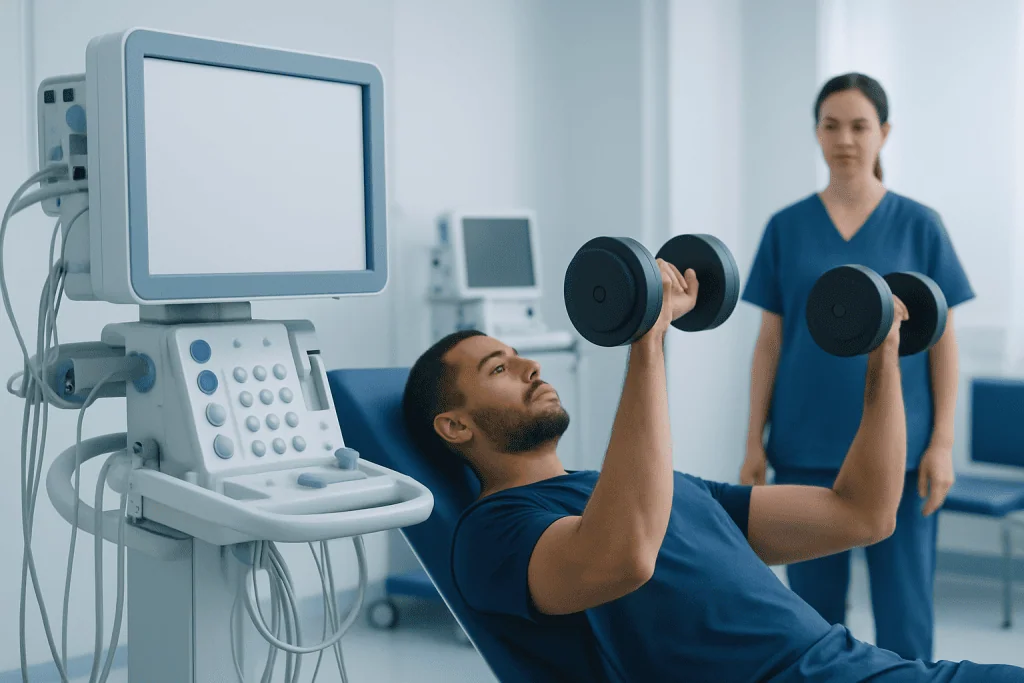
The main muscles involved are the pectoralis major, particularly its upper fibers, the anterior deltoid at the front of the shoulder, and the triceps, which extend the elbows. The upper back and rotator cuff muscles also contribute by stabilizing the shoulder joint and helping maintain a safe pressing pattern. The core and feet play a supporting role by creating a steady base on the bench.
Bench angle matters. A modest incline generally increases upper-chest involvement while still keeping the chest as the main driver of the movement. As the angle becomes steeper, the exercise often shifts more work toward the shoulders. For some people, a very high incline may also increase shoulder discomfort, especially if there is limited mobility, poor scapular control, or a history of shoulder impingement.
Dumbbells can be useful because they allow slight adjustments in wrist rotation and arm position. This may reduce stress for some individuals compared with more fixed movement patterns. However, if shoulder pain is already present, discomfort during pressing can sometimes reflect an underlying problem such as rotator cuff irritation or shoulder impingement syndrome, and the exercise may need to be modified or paused until assessed.
Proper Form and Common Technical Mistakes

For most people, the movement begins with the back supported on the bench, feet planted firmly, and the shoulder blades gently drawn back and down to create a stable upper-body position. The dumbbells are lowered in a controlled manner toward the upper chest area, with the wrists kept neutral and the elbows following a comfortable path rather than flaring straight out to the sides. The weights are then pressed upward without bouncing or arching excessively through the lower back.
Good form usually includes moving through a pain-free range, keeping the neck relaxed, and maintaining steady breathing. The tempo should be controlled on the way down, as many strains occur during uncontrolled lowering. A load that is too heavy often causes shaking, wrist bending, shortened range of motion, or loss of shoulder position.
Common mistakes include setting the bench too steeply, dropping the elbows far below a comfortable range, forcing the shoulders forward at the top, and pressing despite pain in the front of the shoulder. Other frequent issues are using momentum, lifting the feet off the floor, and attempting weights that cannot be lowered safely. For people learning the movement, guidance from a qualified trainer, sports physician, or physical therapy and rehabilitation specialist can help improve mechanics and reduce injury risk.
- Use a moderate incline rather than an almost upright bench.
- Keep wrists stacked and avoid excessive backward bending.
- Lower the dumbbells with control instead of letting gravity pull them down.
- Stop if there is sharp pain, instability, or a sudden pulling sensation.
Benefits, Limitations, and Who Should Be Cautious
When done correctly, incline dumbbell press can help build upper-body strength, improve muscular balance between the right and left sides, and add variety to a resistance-training program. Because each arm works independently, the exercise may reveal side-to-side weakness that is hidden during bilateral barbell work. It can also be useful in broader fitness plans aimed at bone health, healthy aging, and metabolic well-being when combined with appropriate overall exercise.
Still, it is not essential for everyone. Some people may get similar training benefits from machine presses, push-up variations, or cable work if dumbbells are uncomfortable. Individuals with reduced shoulder mobility, previous chest surgery, neck problems, or elbow and wrist pain may need a modified approach. In these cases, exercise selection should match medical history, symptoms, and functional goals rather than following a generic workout plan.
Special caution is sensible for people recovering from shoulder injury, breast or chest procedures, or prolonged inactivity. Pregnant individuals, older adults, and people with chronic conditions can often continue strength training safely, but exercise intensity and position should be individualized. If there is persistent pain or movement restriction, evaluation in orthopedic rehabilitation or a sports medicine setting may be helpful.
Possible Injuries and Risk Factors
Although the incline dumbbell press is widely used, it can contribute to injury when form, recovery, or loading is poor. The most common concerns include shoulder irritation, pectoral muscle strain, triceps tendon overload, wrist discomfort, and neck tension. In some cases, people may feel delayed-onset muscle soreness, which is expected after unfamiliar training, but soreness should improve over time and should not be confused with joint pain or a tearing sensation.
Risk factors include lifting more weight than can be controlled, increasing volume too quickly, skipping warm-up work, and training through fatigue. Limited thoracic mobility, poor scapular stability, prior dislocation, and existing rotator cuff problems can also affect how well the shoulder tolerates pressing. A bench angle that is too high may further shift stress to the shoulders and reduce comfort.
A sudden sharp pain, bruising, weakness, or a popping sensation during the press can suggest muscle or tendon injury and should not be ignored. Gradual pain at the front or top of the shoulder may signal overuse or mechanics that need correction. In some cases, assessment with MRI or other imaging may be recommended if symptoms are persistent, severe, or associated with loss of strength or range of motion.
Prevention, Self-care, and Recovery
Prevention begins with selecting an appropriate load and using a gradual progression. A brief warm-up that includes light cardiovascular activity, shoulder mobility, and low-load pressing or rowing can prepare the joints and muscles for heavier work. Adequate rest between sessions is also important, since repeated pressing without recovery can lead to overuse symptoms.
Self-care after mild exercise-related soreness may include reducing training load temporarily, reviewing technique, applying short-term ice or heat according to comfort, and emphasizing sleep and hydration. People often benefit from balancing pressing exercises with upper-back strengthening to support shoulder mechanics. If one side feels consistently weaker or less stable, targeted corrective exercises may help under professional guidance.
It is generally best to avoid pressing through significant pain, numbness, tingling, or a feeling of instability. If symptoms persist beyond a few days, recur every time the exercise is attempted, or interfere with daily activity, medical evaluation is advisable. Near the end of the care pathway, if further assessment or treatment is needed, Acibadem International’s multidisciplinary specialists in JCI-accredited hospitals diagnose and treat musculoskeletal and sports-related conditions for international patients.
When to Seek Medical Care
Medical care is appropriate if the incline dumbbell press causes sudden severe pain, visible deformity, marked weakness, swelling, bruising, or an inability to move the shoulder or arm normally. These features can suggest a more significant muscle, tendon, or joint injury. Ongoing pain that lasts for more than a short period despite rest and technique changes also deserves evaluation.
People should also seek medical advice if exercise triggers chest pressure, unexplained shortness of breath, dizziness, faintness, or pain spreading to the jaw, back, or arm. Although many symptoms during exercise are musculoskeletal, chest symptoms should be treated seriously because they can sometimes reflect a heart-related problem rather than a simple exercise strain.
For non-urgent concerns, a physician, sports medicine specialist, orthopedist, or rehabilitation professional can help identify whether the problem is related to technique, mobility, overuse, or an underlying condition. Assessment may include a physical examination and, when needed, imaging or referral for structured rehabilitation. Early evaluation often helps people return to training more safely and with fewer setbacks.
Frequently asked questions
What muscles does incline dumbbell press work?
It mainly works the upper part of the chest, the front of the shoulders, and the triceps. Smaller stabilizing muscles in the upper back and rotator cuff also help control the movement.
Is incline dumbbell press better than flat dumbbell press?
Neither is universally better; they emphasize the chest somewhat differently. Incline dumbbell press usually places more focus on the upper chest and front shoulders, while flat pressing often distributes more work across the middle chest.
What bench angle is usually best for incline dumbbell press?
Many people tolerate a moderate incline better than a very steep one. A higher angle tends to shift more work to the shoulders, which may be less comfortable for those with shoulder irritation or limited mobility.
Can incline dumbbell press cause shoulder pain?
Yes, it can contribute to shoulder pain if technique is poor, the load is too heavy, or there is an existing shoulder problem. Pain is more likely when elbows flare excessively, the bench is set too steeply, or the exercise is continued despite discomfort.
Should beginners do incline dumbbell press?
Beginners can often perform it safely with light weights and proper instruction. Starting with controlled movement and manageable resistance is more important than lifting heavy.
When is chest soreness normal after incline dumbbell press?
Mild muscle soreness that appears after an unfamiliar workout and improves within a few days is usually expected. Sharp pain, bruising, weakness, or pain located in a joint rather than the muscle should be assessed by a clinician.
References
- American College of Sports Medicine
- National Institute of Arthritis and Musculoskeletal and Skin Diseases
- American Academy of Orthopaedic Surgeons
- Centers for Disease Control and Prevention
- National Strength and Conditioning Association
This article is for general information only and is not a substitute for professional medical advice. Please consult a qualified doctor about your individual situation.
Joint and spine care in Turkey — expert assessment & treatment
JCI-accredited · board-certified surgeons · reply within 24h
Add us as a Preferred Source to see more of our trusted health content across Google Search, AI Overviews and Discover.