Infant in Crib: An Evidence-Based Guide for Patients

Place babies on their back for every nap and nighttime sleep until their first birthday. Use a safety-approved crib, bassinet, or play yard with a firm, flat mattress and fitted sheet.
Key Takeaways
- Place babies on their back for every nap and nighttime sleep until their first birthday.
- Use a safety-approved crib, bassinet, or play yard with a firm, flat mattress and fitted sheet.
- Keep the sleep area empty except for the baby; avoid pillows, blankets, toys, nests, and sleep positioners.
- Room-share without bed-sharing whenever possible, especially during the first months of life.
- Contact a healthcare professional promptly if a baby has breathing difficulty, unusual color changes, poor feeding, or extreme sleepiness.
An infant in crib is safest when placed on their back for every sleep on a firm, flat mattress with a fitted sheet and no loose bedding, pillows, toys, or positioners. A safe sleep space supports normal breathing and reduces the risk of sleep-related infant deaths.
Infant in Crib: What Safe Sleep Means
An infant in crib should be placed on their back, rather than on their side or stomach, for every nap and nighttime sleep. The crib should have a firm, flat mattress covered only by a tightly fitted sheet. This simple setup helps keep the baby’s face and airway clear while they sleep.
Safe sleep guidance applies to all babies, including those who can roll over. Once a baby can roll independently in both directions, caregivers should still begin each sleep by placing the baby on their back, but do not need to repeatedly turn the baby over if they roll during sleep. The sleep space should remain free of loose or soft items.
These recommendations are designed to reduce sleep-related risks, including sudden unexpected infant death. They are not intended to make parents fearful; instead, they offer practical steps that can make the sleep environment more consistently safe.
Creating a Safer Crib Environment
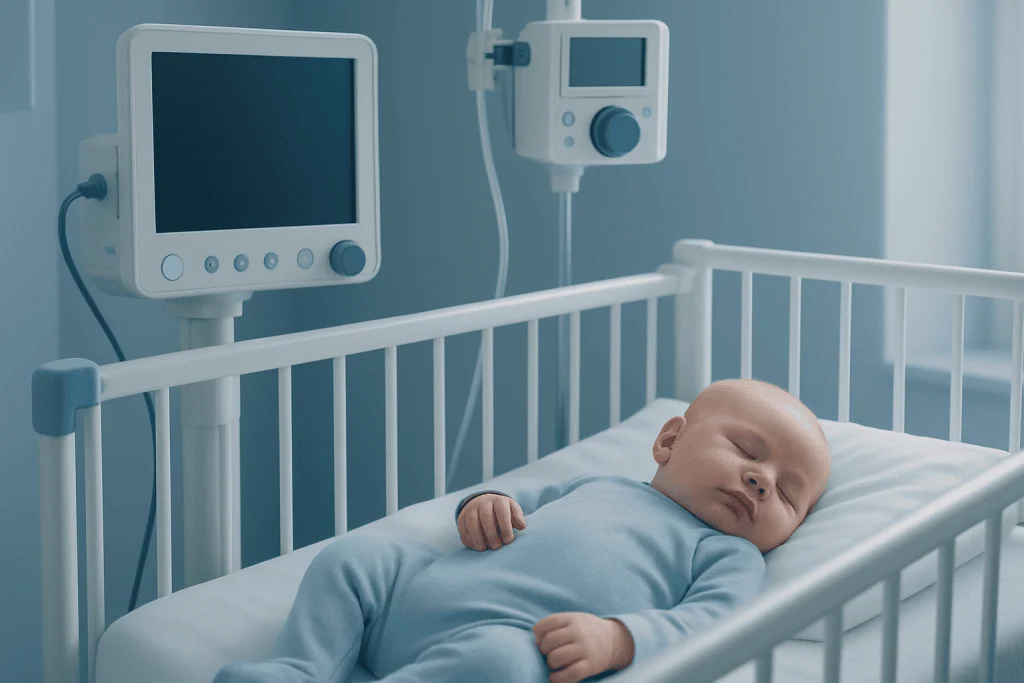
A crib, bassinet, or play yard should meet current safety standards and be used according to the manufacturer’s instructions. The mattress should fit snugly, with no gaps around the edges where a baby could become trapped. A firm surface is important because soft surfaces can conform around an infant’s face and make breathing more difficult.
The safest crib setup is intentionally simple. Only a fitted sheet should be in the sleep area. Items that may look comfortable or decorative can create hazards for a sleeping infant, particularly during the first year of life.
- Use a firm, flat mattress designed for the crib, bassinet, or play yard.
- Use one fitted sheet made for that mattress.
- Keep pillows, quilts, comforters, loose blankets, stuffed toys, and crib bumpers out of the crib.
- Avoid sleep positioners, nests, wedges, inclined sleepers, and other products that are not intended for routine infant sleep.
- Do not cover the baby’s head or face with a hat, blanket, or cloth while sleeping indoors.
Wearable blankets or appropriately sized sleep sacks can provide warmth without loose bedding. Caregivers should choose a product that fits around the chest and arms as directed, and avoid overheating the baby.
Back Sleeping, Rolling, and Everyday Sleep Questions

Back sleeping is the recommended position for healthy babies during routine sleep. Babies may spit up while lying on their backs, but research and clinical experience show that back sleeping does not increase choking risk in healthy infants. Natural airway anatomy and protective reflexes help babies clear secretions.
Side sleeping is not recommended because babies can more easily roll onto their stomachs from this position. Stomach sleeping also increases sleep-related risk, especially for babies who are not accustomed to it. Parents and caregivers should use back sleeping consistently, including for naps and when a baby is cared for by relatives, friends, or childcare providers.
Supervised tummy time while awake is different from sleep. It is valuable for a baby’s motor development and can help prevent flat spots on the back of the head. Starting with short, frequent periods of tummy time when the baby is alert and observed can gradually build comfort and strength.
Room-Sharing and Feeding During the Night
Keeping the baby’s crib or bassinet in the same room as a parent or caregiver can make feeding, comforting, and observation easier. Room-sharing is generally preferred over bed-sharing, particularly in the early months when infants are most vulnerable to sleep-related hazards.
Adult beds are not designed for infant sleep. Mattresses, pillows, loose bedding, headboards, gaps near walls, and another person’s body can create risks of suffocation, entrapment, or falls. Sofas, armchairs, and recliners are especially unsafe places to fall asleep with a baby because an infant can become wedged between cushions or the adult’s body.
During nighttime feeding, it can help to plan ahead. If a caregiver brings the baby into bed for feeding or comforting, the baby should be returned to their own empty sleep space before the caregiver becomes drowsy or falls asleep. Families who are exhausted may benefit from discussing practical feeding and sleep support with a pediatric healthcare professional.
Temperature, Clothing, and Monitoring Devices
Babies do not need heavy layers or a very warm room to sleep safely. Overheating may increase sleep-related risk. In general, a baby may need one more light layer than an adult would be comfortable wearing in the same environment, although room conditions and individual needs vary.
Signs that a baby may be too warm include sweating, flushed skin, a hot chest, or rapid breathing. The baby’s chest or back is a more useful place to assess warmth than hands and feet, which may feel cool even when the baby is comfortable. If needed, a wearable blanket can be used instead of a loose blanket.
Commercial breathing, movement, or oxygen monitors may reassure some families, but they do not replace safe sleep practices or routine medical care. Unless a clinician has prescribed monitoring for a specific medical reason, consumer monitors should not be relied upon to prevent sleep-related infant deaths. Alerts can also cause unnecessary anxiety or false alarms.
Special Circumstances: Prematurity, Reflux, and Illness
All babies benefit from a safe sleep environment, and the guidance is particularly important for infants born prematurely or with a low birth weight. These babies may have additional medical needs, so families should follow the individualized recommendations provided by their neonatal or pediatric team after hospital discharge.
Babies with reflux are usually safest sleeping on their backs on a flat surface. Elevating the head of the crib, using wedges, or placing a baby in an inclined position does not reliably treat reflux and can allow the baby to slide into a position that affects breathing. A clinician can advise when reflux symptoms need assessment.
Some medical conditions may require specific positioning or equipment under specialist guidance. Parents should not change sleep position, use a positioning device, or add padding to the crib based on online advice alone. A pediatrician can help distinguish normal newborn behaviors from symptoms that need evaluation.
When to Seek Medical Care
Caregivers should seek urgent medical care if an infant has trouble breathing, pauses in breathing, blue or gray lips or skin, is difficult to wake, has a seizure, or appears suddenly very unwell. Emergency evaluation is also appropriate if a baby is injured in a fall or becomes trapped in bedding or furniture.
A pediatrician should be contacted promptly for concerns such as poor feeding, fewer wet diapers than expected, repeated forceful vomiting, fever in a young infant, persistent cough or wheezing, or unusual sleepiness. Parents should trust their instincts when a baby’s behavior seems significantly different from usual.
For non-urgent questions about crib safety, feeding overnight, reflux, or a baby’s sleep pattern, a scheduled discussion with a pediatric healthcare professional can provide personalized support. Acibadem International’s multidisciplinary specialists and JCI-accredited hospitals support international patients requiring pediatric assessment and care.
Frequently asked questions
Can an infant sleep in a crib with a blanket?
Loose blankets should not be placed in an infant’s crib because they can cover the baby’s face or create entanglement risk. If extra warmth is needed, a properly fitted wearable blanket or sleep sack is generally a safer option. The crib should otherwise contain only a firm mattress and fitted sheet.
When can a baby sleep with a pillow or stuffed toy?
Soft objects, pillows, and stuffed toys should be kept out of the sleep space during the first year of life. They can obstruct breathing or increase the risk of entrapment. A pediatrician can offer age-appropriate guidance as the child grows.
What if a baby rolls onto their stomach in the crib?
Caregivers should always place the baby on their back at the start of sleep. If the baby can roll independently from back to stomach and stomach to back, they may be left in the position they choose. The crib must remain empty, and the baby should not be swaddled once they show signs of trying to roll.
Is it safe for a baby to sleep in a car seat after travel?
Car seats are important for travel but are not recommended as routine sleep spaces. If a baby falls asleep in a car seat, move them to a firm, flat crib, bassinet, or play yard as soon as practical after travel. This is especially important when the car seat is no longer being used in the vehicle.
Does room-sharing mean the baby should sleep in the parents' bed?
No. Room-sharing means the infant sleeps in a separate crib, bassinet, or play yard in the same room as the parent or caregiver. Adult beds and soft furniture have hazards that make them unsuitable for routine infant sleep.
Can a baby with reflux sleep on an incline?
Most babies with reflux should sleep flat on their backs in their own safe sleep space. Inclined products, wedges, and raised crib mattresses can allow a baby to slide into an unsafe position. A pediatrician should assess reflux that affects feeding, growth, breathing, or comfort.
References
- American Academy of Pediatrics
- Centers for Disease Control and Prevention
- National Institutes of Health
- World Health Organization
This article is for general information only and is not a substitute for professional medical advice. Please consult a qualified doctor about your individual situation.
Persistent digestive symptoms? Get evaluated in Turkey
JCI-accredited · board-certified surgeons · reply within 24h
Add us as a Preferred Source to see more of our trusted health content across Google Search, AI Overviews and Discover.