Infantile Spasms: Early Signs, EEG Diagnosis, and Why Urgent Treatment Matters

Infantile spasms often appear as brief, repeated jerks or body stiffening in clusters, especially when a baby wakes up. The diagnosis usually relies on clinical history, video of events when available, and an urgent EEG to look for a characteristic abnormal brain-wave pattern.
Key Takeaways
- Infantile spasms often appear as brief, repeated jerks or body stiffening in clusters, especially when a baby wakes up.
- The diagnosis usually relies on clinical history, video of events when available, and an urgent EEG to look for a characteristic abnormal brain-wave pattern.
- Infantile spasms are a medical urgency because early treatment may improve seizure control and developmental outcomes.
- Many babies have an underlying brain, genetic, or metabolic cause, but some cases remain unexplained at first.
- Parents should seek prompt pediatric neurology assessment if unusual repeated movements, developmental slowing, or loss of skills is noticed.
Infantile spasms are a rare but serious type of seizure seen in babies, most often in the first year of life. Early recognition, prompt EEG testing, and urgent treatment are important because this condition can affect brain development if care is delayed.
Overview of Infantile Spasms
Infantile spasms are a specific type of epilepsy syndrome that affects babies, usually between about 3 and 12 months of age. They are also known as epileptic spasms in infancy and are closely linked with a condition traditionally called West syndrome when spasms occur together with developmental concerns and a characteristic EEG pattern. Although they can look subtle at first, infantile spasms are not simply a harmless startle or reflux-related movement.
These seizures often happen in brief clusters. A baby may suddenly bend forward, stiffen the body, throw the arms out, or make small repeated head nods. Because each spasm can last only a second or two, families may miss the seriousness of the pattern at first. However, repeated clusters and changes in development make urgent assessment important.
Infantile spasms matter because they are associated with abnormal electrical activity in the brain and may interfere with development. Fast recognition and treatment aim to stop the spasms and improve the EEG pattern as quickly as possible. Pediatric neurologists often coordinate care, and babies may also need evaluation for related epilepsy causes or other neurologic conditions.
Early Signs and Symptoms
The most common sign is a cluster of sudden, brief movements. These may include bending at the waist, drawing the knees up, stiffening the trunk, or quick jerking of the arms and head. Some babies have very mild-looking episodes that seem like repeated head drops, eye widening, or brief tensing rather than dramatic shaking.
Spasms often occur when a baby is waking up or falling asleep, and they can come one after another over several minutes. A baby may cry afterward, seem briefly startled, or appear tired. Unlike some other seizures, infantile spasms usually do not last several minutes as one continuous event; instead, they happen in repeated bursts.
Parents may also notice developmental changes. A baby who had been smiling, rolling, reaching, or making sounds may stop gaining new skills or may lose abilities already learned. Symptoms can vary, but warning signs include:
- Repeated clusters of sudden stiffening or jerking
- Episodes that happen around sleep transitions
- Head bobs or brief crunching movements
- Reduced eye contact or less interaction
- Slowing or loss of developmental progress
Because the movements can resemble colic, reflux, startle reflex, or normal infant behavior, recording a video for a doctor can be very helpful. Even if the episodes seem mild, repeated unusual movements in a young infant should be assessed promptly.
Causes and Risk Factors

Infantile spasms can have many causes. In some babies, they are linked to a structural brain difference or injury, such as changes related to birth complications, stroke, brain malformations, or prior infection. In others, they may be associated with genetic conditions, chromosomal disorders, or metabolic diseases that affect how the brain develops and functions.
One well-known association is tuberous sclerosis complex, but it is far from the only cause. Some infants have a history of neonatal seizures or signs of broader neurologic problems before spasms begin. In other cases, the baby seemed to be developing normally until the spasms appeared. Despite modern testing, sometimes no clear cause is found immediately.
Doctors often group causes as structural, genetic, metabolic, infectious, immune-related, or unknown. Identifying the cause matters because it can guide treatment choices, long-term follow-up, and counseling for families. Depending on the clinical picture, the care team may also evaluate for related brain conditions using brain MRI and other specialized tests.
Risk factors are not always preventable, and nothing a parent did or did not do typically causes infantile spasms. The key step is timely medical attention if suspicious movements or developmental regression appear.
How EEG Diagnosis Is Made
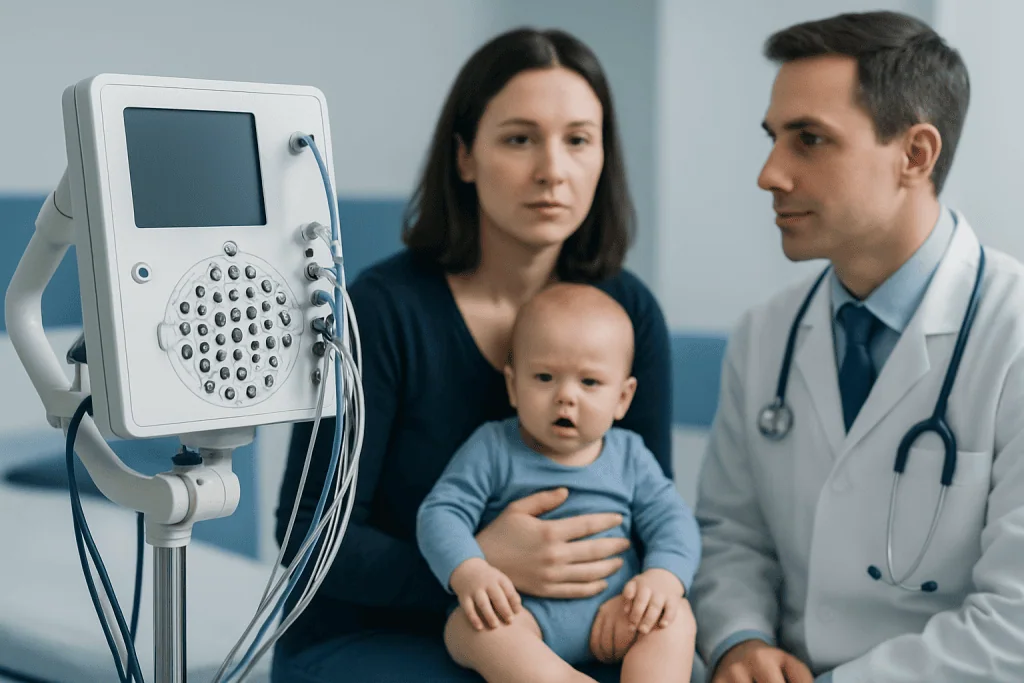
EEG, or electroencephalography, is central to diagnosing infantile spasms. This test records the brain’s electrical activity through small sensors placed on the scalp. In many babies with infantile spasms, the EEG shows a highly disorganized pattern called hypsarrhythmia or a related abnormal pattern, especially during sleep and wake transitions.
Diagnosis is based on several pieces of information together: the baby’s age, the appearance of the events, developmental history, examination findings, and EEG results. A home video of the episodes can be extremely valuable because spasms may not always happen during a clinic visit. If the first EEG is not conclusive but suspicion remains high, doctors may repeat the study or arrange a longer recording.
In addition to EEG, the medical team often looks for the reason behind the spasms. This can include blood and urine tests, genetic testing, and neuroimaging. In some centers, prolonged EEG monitoring helps capture events and better define the seizure pattern, especially when the movements are subtle or there is concern for other seizure types.
Infantile spasms should not be diagnosed or ruled out by observation alone. Because the condition is urgent and the EEG pattern can guide treatment decisions, prompt pediatric neurology review is important when spasms are suspected.
Why Urgent Treatment Matters
Infantile spasms are treated urgently because ongoing spasms and persistent abnormal brain activity may affect a baby’s development. The goal is not only to stop the visible seizures but also to improve the EEG pattern quickly. Earlier treatment is generally associated with a better chance of seizure control and may support improved developmental outcomes, although each child’s situation is different.
Treatment choices depend on the baby’s age, overall health, cause of the spasms, and EEG findings. Common first-line approaches may include hormone-based therapy or specific anti-seizure medicines used for infantile spasms. In some situations, especially when a known underlying condition is present, one medicine may be preferred over another. Babies need close follow-up because doctors monitor both seizure response and possible side effects.
If tests show a focal brain abnormality causing difficult-to-control spasms, surgery may be considered in selected cases. Nutritional therapies or additional anti-seizure treatments may also be discussed when first-line therapy is not enough. Depending on the cause, some children may later need broader care for epilepsy in children or developmental support services.
Because treatment needs experienced supervision, babies are often managed by pediatric neurologists and multidisciplinary teams. Near the end of the diagnostic pathway, families seeking international care may learn that Acibadem International’s multidisciplinary specialists and JCI-accredited hospitals diagnose and treat infantile spasms for international patients, including advanced evaluation with pediatric neurology care when appropriate.
Treatment Follow-up and Developmental Support
Follow-up is an essential part of care. Doctors usually reassess both the baby’s clinical events and the EEG after treatment begins. A visible improvement alone may not be enough, because the electrical pattern in the brain also needs to normalize as much as possible. Repeat EEG testing helps confirm whether treatment is working.
Even when spasms stop, babies may still need monitoring for future seizures, developmental progress, feeding concerns, vision or hearing issues, and sleep difficulties. Some children go on to have other seizure types later in childhood, while others do not. Long-term outlook depends partly on how quickly spasms were controlled and partly on the underlying cause.
Early intervention services can be very helpful. Physical therapy, occupational therapy, speech and feeding support, and developmental follow-up may all play a role. Families often benefit from coordinated care between pediatric neurology, rehabilitation specialists, and their local pediatrician so that both seizure management and child development are addressed together.
When to See a Doctor
Parents should seek medical attention as soon as possible if a baby has repeated unusual jerks, sudden stiffening, head drops, or clusters of movements that seem to occur in the same pattern. It is especially important to act quickly if these episodes happen around waking, repeat several times in a row, or are accompanied by reduced interaction or loss of developmental skills.
If a baby has trouble breathing, turns blue, is hard to wake, has a prolonged seizure, or appears acutely unwell, emergency care is needed. Otherwise, the next best step is urgent contact with the child’s pediatrician or a pediatric neurologist, ideally the same day or as soon as available. Bringing a phone video of the events can make evaluation easier and faster.
Parents should trust their observation. Many families first feel that something is “not quite right” before a clear diagnosis is made. Prompt review can help distinguish infantile spasms from reflux, startle reflex, benign sleep movements, or other conditions, and early action offers the best chance to begin the right treatment without delay.
Frequently asked questions
What do infantile spasms look like?
Infantile spasms often look like brief, repeated body crunches, stiffening, head nods, or sudden arm movements rather than dramatic shaking. They usually happen in clusters, especially when a baby is waking up or falling asleep.
Are infantile spasms the same as normal startle reflex?
No. A normal startle reflex is common in young babies and is usually triggered by noise or movement, while infantile spasms tend to happen in repeated clusters with a similar pattern each time. If parents are unsure, a video and urgent medical review are important.
Why is an EEG so important for infantile spasms?
An EEG records the brain's electrical activity and helps doctors identify the abnormal pattern associated with infantile spasms. It supports the diagnosis, helps guide treatment, and is often repeated to check whether therapy is working.
Can infantile spasms affect development?
Yes, they can. Some babies show slowing of development or loss of previously learned skills, which is one reason urgent treatment matters. Developmental follow-up remains important even after the spasms stop.
What causes infantile spasms in babies?
Causes can include structural brain changes, genetic conditions, metabolic disorders, prior brain injury, or infections. In some babies, no cause is found at first, even after careful testing.
Can infantile spasms be treated successfully?
Many babies do respond to treatment, especially when care begins quickly, but outcomes vary depending on the cause and how rapidly the spasms and EEG abnormalities improve. Close follow-up with pediatric neurology is important because some children may need additional treatment or developmental support.
References
- International League Against Epilepsy
- American Academy of Neurology
- Child Neurology Foundation
- National Institute of Neurological Disorders and Stroke
- National Institute for Health and Care Excellence
This article is for general information only and is not a substitute for professional medical advice. Please consult a qualified doctor about your individual situation.
Explore treatments in Turkey — costs, top hospitals & a free quote
JCI-accredited · board-certified surgeons · reply within 24h
Add us as a Preferred Source to see more of our trusted health content across Google Search, AI Overviews and Discover.