Inguinal Hernia: When Groin Pain or a Bulge Should Be Checked

An inguinal hernia commonly causes a bulge or heaviness in the groin that may become more noticeable with coughing or straining. Some inguinal hernias cause only mild discomfort, but others can lead to complications that require urgent care.
Key Takeaways
- An inguinal hernia commonly causes a bulge or heaviness in the groin that may become more noticeable with coughing or straining.
- Some inguinal hernias cause only mild discomfort, but others can lead to complications that require urgent care.
- Diagnosis is often made with a physical examination, and imaging may be used when the diagnosis is unclear.
- Treatment may include watchful waiting in selected cases or surgery to repair the weakness in the abdominal wall.
- Sudden severe pain, nausea, vomiting, or a bulge that cannot be pushed back needs prompt medical attention.
An inguinal hernia happens when tissue, often part of the intestine or fatty tissue, pushes through a weak area in the lower abdominal wall near the groin. It may cause a visible bulge, discomfort, or pressure, and it should be assessed if it becomes painful, larger, or difficult to push back in.
Overview
An inguinal hernia is one of the most common types of hernia. It develops in the groin when tissue pushes through a weak spot in the lower abdominal wall. In many cases, the tissue is fatty tissue or part of the intestine. The result may be a visible lump, a feeling of pressure, or discomfort that comes and goes.
Inguinal hernias can occur at any age, but they are more common in men. Some are present from birth because of the way the groin area develops before delivery. Others appear later in life as muscles and connective tissues become weaker or are placed under repeated strain.
Not every inguinal hernia causes pain right away. Some people first notice a small bulge while standing, lifting, coughing, or exercising. Because symptoms can be mild at first, it is easy to ignore them. However, a medical assessment is important so a doctor can confirm the diagnosis and discuss whether monitoring or treatment is the safest choice.
Symptoms of an Inguinal Hernia
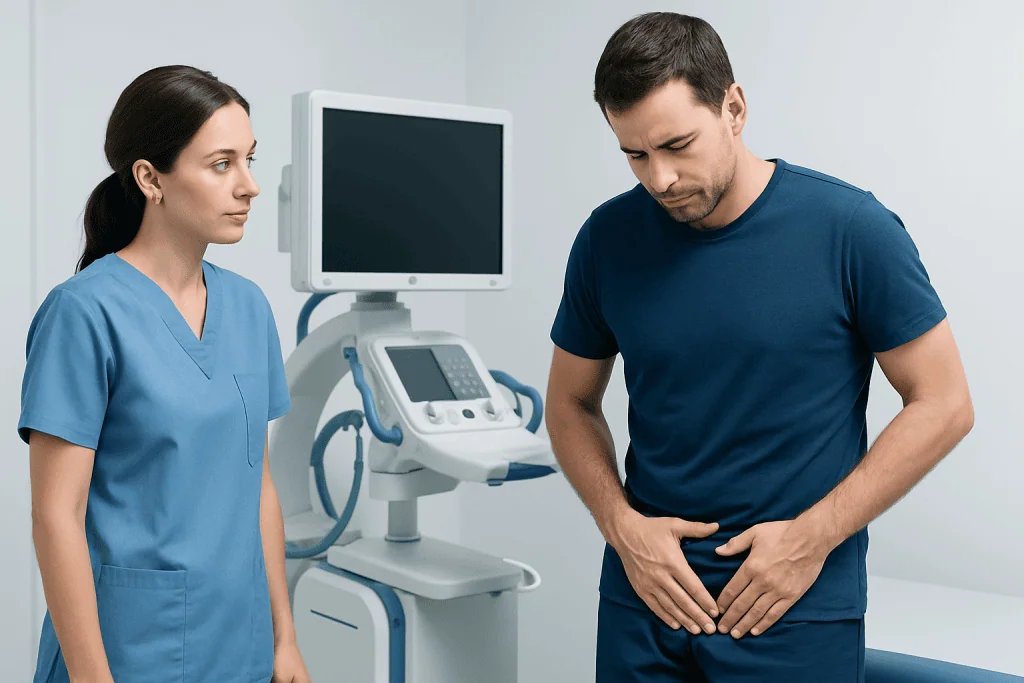
The most typical sign of an inguinal hernia is a bulge in the groin. It may be more obvious when standing up and may become less noticeable or disappear when lying down. Some people describe a dragging, heavy, or burning sensation in the area rather than pain.
Other symptoms can include discomfort when coughing, bending, lifting, or straining during bowel movements. The groin may feel tender, and clothing may rub against a swollen area. In men, an inguinal hernia can sometimes extend into the scrotum and cause swelling there as well.
Symptoms vary from person to person. Common complaints include:
- A visible or palpable groin bulge
- A feeling of pressure or fullness in the lower abdomen or groin
- Pain or discomfort with activity
- Symptoms that improve with rest or lying down
- Scrotal swelling in some men
If the bulge becomes hard, very tender, or cannot be pushed back in, the hernia may be trapped. This can become an emergency, especially if it is accompanied by nausea, vomiting, abdominal swelling, or worsening pain.
Causes and Risk Factors
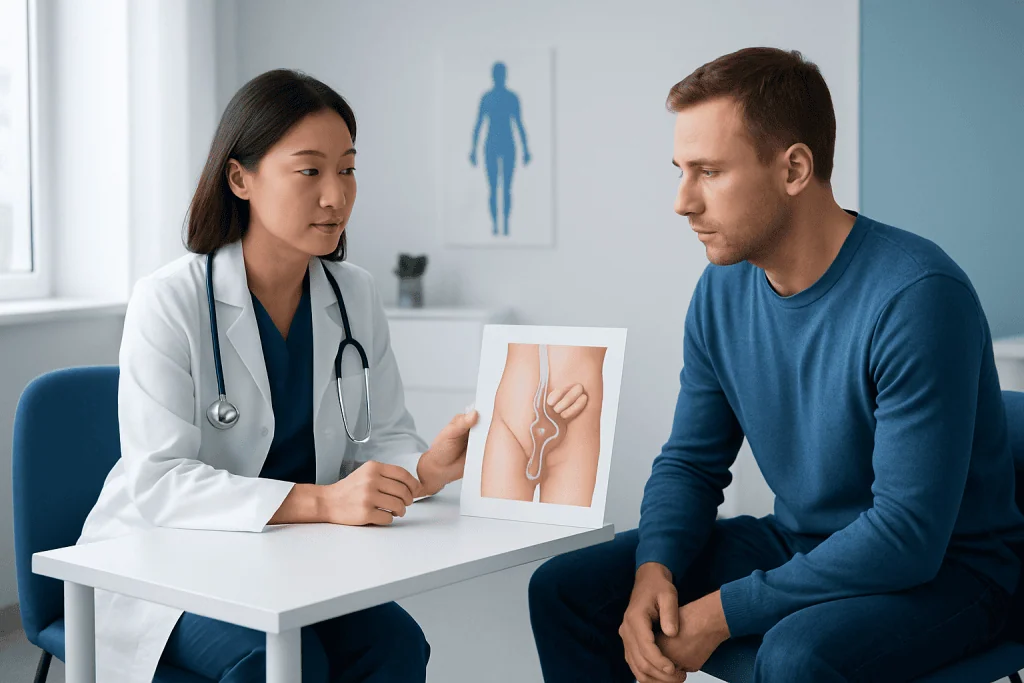
An inguinal hernia forms when there is both a weakness in the abdominal wall and pressure pushing tissue against that weakness. In some people, the weak area is congenital, meaning it has been present since birth. In others, it develops over time as tissues stretch and lose strength.
Activities and conditions that increase pressure inside the abdomen can make an inguinal hernia more likely or make an existing one more noticeable. These include heavy lifting, chronic coughing, constipation with straining, obesity, pregnancy, and fluid buildup in the abdomen. Repeated physical strain may not be the only cause, but it can contribute.
Age, male sex, family history, and previous hernias also increase risk. People who smoke may be more prone to hernias because smoking affects connective tissue and can cause chronic coughing. A prior abdominal or groin operation can also change tissue strength and contribute to weakness in the area.
How Doctors Diagnose It
Diagnosis often begins with a careful medical history and physical examination. A doctor usually examines the groin while the person is standing and may ask them to cough or strain gently. This helps reveal a bulge that may not be obvious at rest.
In many cases, a physical examination is enough to diagnose an inguinal hernia. If the findings are uncertain, especially when pain is present without a clear bulge, imaging tests may be helpful. Ultrasound is commonly used because it can show soft tissues and movement during straining. In selected cases, CT or MRI may also be considered.
Doctors also look for other causes of groin pain or swelling. These may include enlarged lymph nodes, muscle strain, fluid collections, or other hernia types. The goal is not only to confirm whether a hernia is present, but also to assess its size, symptoms, and risk of complications so treatment can be tailored to the individual.
Treatment Options
Treatment depends on symptoms, examination findings, overall health, and how much the hernia affects daily life. Small inguinal hernias that cause little or no discomfort may sometimes be monitored with a doctor’s guidance. This approach is often called watchful waiting. It does not make the hernia go away, but it may be reasonable in carefully selected people who understand when to seek re-evaluation.
When symptoms are persistent, the hernia is growing, or there is concern about trapping of tissue, surgery is usually recommended. The aim of surgery is to return the protruding tissue to its normal place and reinforce the weak area in the abdominal wall. Repair may be done through open surgery or by minimally invasive techniques such as laparoscopic surgery, depending on the hernia and the patient’s needs.
Most modern repairs use a surgical mesh to support the tissue, although the exact method depends on the surgeon’s assessment and the patient’s situation. Recovery time varies, but many people gradually return to normal activities within weeks while following advice about lifting, wound care, and pain management. It is important to discuss benefits, possible risks, and recovery expectations with a qualified surgeon.
Because a groin bulge may occasionally be confused with other conditions, some patients may also need assessment in broader general surgery services. International patients seeking evaluation can also be assessed by multidisciplinary specialists at Acibadem International’s JCI-accredited hospitals.
Prevention and Self-care
Not all inguinal hernias can be prevented, especially those related to natural anatomy or inherited tissue weakness. Still, practical steps may help reduce strain on the abdominal wall and lower the chance of symptoms getting worse. A doctor can advise which measures are most appropriate for each person.
Helpful self-care strategies include maintaining a healthy body weight, treating chronic cough, avoiding tobacco, and preventing constipation with adequate fluid, fiber, and medical guidance when needed. Learning safer lifting techniques can also reduce unnecessary pressure on the groin area.
If a hernia has already been diagnosed, self-care does not replace medical follow-up. Support garments or trusses are not a cure and should only be used if a doctor specifically recommends them. It is also wise to avoid delaying evaluation if the bulge is increasing, discomfort is becoming more frequent, or daily activities are being limited.
When to See a Doctor
A person should arrange a medical evaluation if they notice a new bulge in the groin, repeated groin discomfort, or a feeling of heaviness that appears with standing or straining. Even when symptoms seem mild, an examination can clarify whether the problem is an inguinal hernia and whether treatment is needed.
Urgent medical attention is important if the hernia suddenly becomes very painful, firm, red, or impossible to push back in. Nausea, vomiting, fever, or abdominal swelling along with a groin bulge may suggest that tissue is trapped and its blood supply could be affected. This situation can require emergency treatment.
Medical care is also appropriate if symptoms interfere with work, exercise, sleep, or quality of life. Early assessment allows safer planning and helps reduce uncertainty. For some people, the diagnosis may lead to a referral for a hernia repair procedure after discussion of the available techniques and expected recovery.
Frequently asked questions
Can an inguinal hernia go away on its own?
No, an inguinal hernia usually does not heal by itself because the weakness in the abdominal wall remains. Symptoms may come and go, and the bulge may flatten when lying down, but the underlying problem is still present. A doctor can advise whether monitoring or surgery is the better option.
Is every inguinal hernia painful?
No, some inguinal hernias cause little or no pain, especially early on. A person may notice only a bulge or a feeling of heaviness in the groin. Even without significant pain, it is still worth having the area checked.
What makes an inguinal hernia worse?
Activities or conditions that raise pressure in the abdomen can make symptoms more noticeable. These include heavy lifting, coughing, straining with constipation, and prolonged standing. Managing these factors may help with comfort, but it does not repair the hernia.
When is an inguinal hernia an emergency?
It may become an emergency if the bulge is suddenly very painful, cannot be pushed back in, or is associated with nausea, vomiting, fever, or abdominal swelling. These signs can mean the hernia is trapped or that the blood supply to the tissue is affected. Immediate medical attention is important.
How is inguinal hernia surgery done?
Surgery can be performed through an open incision or through minimally invasive methods using small incisions. In both approaches, the surgeon returns the tissue to its normal position and strengthens the weak area, often with mesh. The best method depends on the person's health, the hernia type, and the surgeon's assessment.
How long does recovery take after treatment?
Recovery varies depending on the type of repair, the person's overall health, and the nature of their daily activities. Many people resume light activity fairly soon, while heavy lifting may need to wait longer. The surgical team gives individualized guidance about work, exercise, and wound care.
References
- National Institute of Diabetes and Digestive and Kidney Diseases
- American College of Surgeons
- National Health Service
- Mayo Clinic
- MedlinePlus
This article is for general information only and is not a substitute for professional medical advice. Please consult a qualified doctor about your individual situation.
Persistent digestive symptoms? Get evaluated in Turkey
JCI-accredited · board-certified surgeons · reply within 24h
Add us as a Preferred Source to see more of our trusted health content across Google Search, AI Overviews and Discover.