Inner Thigh Muscle: What Patients Need to Know

The inner thigh muscles are mainly the adductor muscles, which help bring the leg inward and support balance and pelvic stability. Inner thigh pain commonly results from muscle strain, overuse, tendon irritation, or reduced flexibility, especially after sudden movement or sport.
Key Takeaways
- The inner thigh muscles are mainly the adductor muscles, which help bring the leg inward and support balance and pelvic stability.
- Inner thigh pain commonly results from muscle strain, overuse, tendon irritation, or reduced flexibility, especially after sudden movement or sport.
- Mild strains often improve with temporary activity reduction, ice, gradual stretching, and guided strengthening.
- Severe pain, swelling, bruising, trouble walking, or symptoms that do not improve may need medical evaluation and imaging.
- Prevention focuses on warm-up, progressive training, hip and core strength, and avoiding sudden increases in activity.
The inner thigh muscle group helps stabilize the pelvis and move the legs, especially during walking, turning, and sports. Pain in this area is often related to a strain or overuse injury, but symptoms can also come from the hip, tendons, nerves, or nearby structures, so a careful assessment matters when pain is persistent or severe.
Overview: what the inner thigh muscle does
The term inner thigh muscle usually refers to a group of muscles on the inside of the thigh called the adductors. These muscles help bring the leg toward the body’s midline, support the pelvis, and assist with movements such as walking, climbing stairs, changing direction, and stabilizing the hips during standing and exercise. When people feel pain high on the inside of the thigh or near the groin, the adductors are a common source.
Inner thigh discomfort is often caused by a mild strain, meaning the muscle or tendon has been overstretched or partly torn. This can happen during sports, fast directional changes, slipping, or even unaccustomed exercise. In other cases, the pain may come from irritation where the tendon attaches, reduced flexibility, a hip problem, or less commonly a hernia or nerve-related issue.
Most minor inner thigh injuries improve with simple care and a gradual return to activity. Still, the location can be confusing because groin, hip, pelvic, and lower abdominal conditions can feel similar. For that reason, persistent symptoms deserve a professional evaluation rather than repeated self-treatment.
Symptoms and how an inner thigh problem may feel
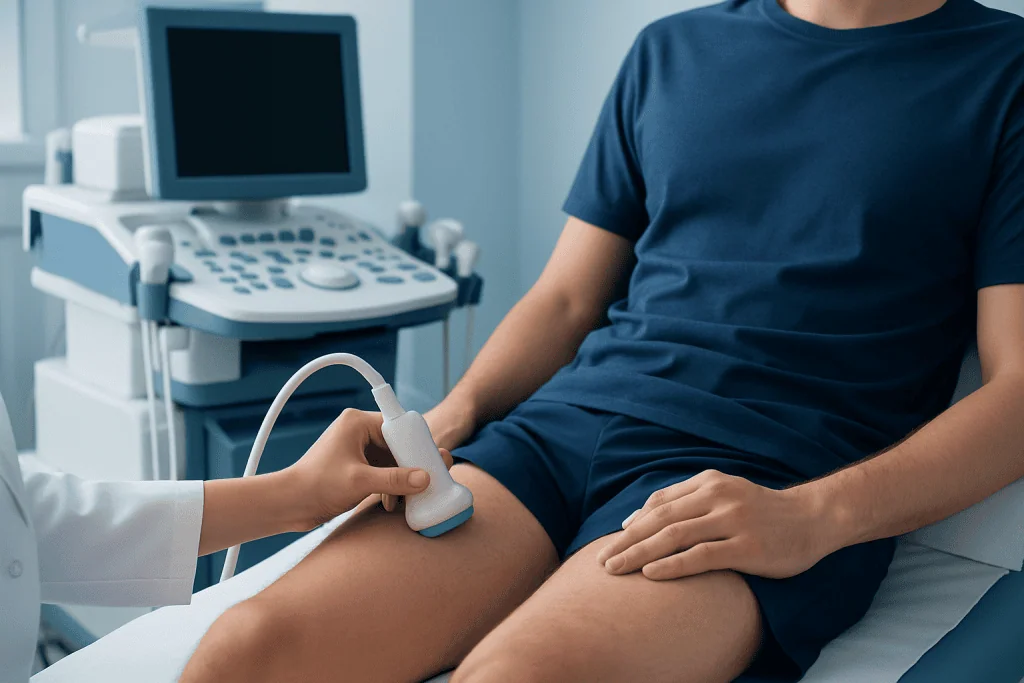
Symptoms can vary depending on whether the problem is a mild overuse irritation or a more significant strain. Many patients describe an ache, tightness, pulling sensation, or sharp pain on the inside of the thigh. The discomfort may start suddenly during a sprint, kick, lunge, split-like movement, or awkward step. It can also come on gradually after repetitive activity.
A strained inner thigh muscle may feel tender to touch and more painful when the leg is brought inward against resistance. Some people notice stiffness first thing in the morning or after sitting, while others feel pain when walking quickly, climbing stairs, getting in and out of a car, or turning in bed. Bruising and swelling can appear if the strain is more pronounced.
Associated symptoms can offer clues about the cause. Clicking in the hip, pain deep in the groin, numbness, visible swelling, fever, or pain that radiates below the knee may suggest something other than a simple muscle strain. If pain seems centered in the joint rather than the muscle, clinicians may also consider related conditions such as hip pain.
- Mild strain: tightness, soreness, and discomfort with activity
- Moderate strain: pain with walking or leg movement, tenderness, and reduced strength
- More severe injury: sudden sharp pain, bruising, swelling, limping, or inability to continue the activity
Common causes and risk factors

The most common cause of inner thigh muscle pain is an adductor strain. This often happens when the muscle lengthens while trying to contract, such as during sprinting, cutting, skating, kicking, or recovering balance during a slip. Sports that involve rapid side-to-side movement are especially associated with groin and adductor problems, but everyday activities can also trigger symptoms in people who have become deconditioned.
Overuse can be just as important as one sudden injury. Repeating the same movement without enough recovery may irritate the muscle-tendon unit over time. Tight hip muscles, weak core or gluteal muscles, poor conditioning, previous groin injury, and sudden increases in training load can all make the inner thigh more vulnerable. In some patients, reduced hip mobility changes movement patterns and places extra stress on the adductors.
Not all pain in this region is purely muscular. Doctors may also consider tendon inflammation or tendinopathy, sports hernia-related groin pain, hip joint disorders, enlarged lymph nodes, referred pain from the lower back, or less common causes such as a blood clot or infection, depending on the full clinical picture. Nearby joints and soft tissues may need attention too, especially when symptoms overlap with knee pain or lower back discomfort.
How doctors diagnose inner thigh muscle pain
Diagnosis starts with a medical history and physical examination. A doctor will usually ask when the pain began, whether it started suddenly or gradually, what movements provoke it, and whether there are symptoms such as bruising, swelling, fever, numbness, or trouble bearing weight. This helps distinguish a likely muscle strain from conditions involving the hip, pelvis, abdomen, or nerves.
During the examination, the clinician may check walking pattern, range of motion in the hip, tenderness along the adductor muscles and tendons, muscle strength, and pain during resisted leg adduction. Specific tests may help identify whether the pain is coming from the muscle belly, the tendon attachment near the pubic bone, or the hip joint itself. The goal is not only to confirm an inner thigh muscle injury but also to avoid missing a different diagnosis.
Imaging is not always needed for a mild strain that is improving as expected. However, ultrasound or MRI may be useful if the diagnosis is uncertain, if a significant tear is suspected, or if symptoms persist despite conservative care. X-rays may be used when doctors need to evaluate the hip or pelvis for bony causes of groin pain.
Treatment options and recovery
For many patients, the first steps are relative rest, ice, and temporary reduction of activities that trigger pain. Relative rest means avoiding movements that worsen the injury while still staying gently mobile within comfort. In the early phase, this can help reduce pain and allow the healing process to begin. Supportive pain relief strategies may be recommended by a clinician based on the individual’s needs and medical history.
As pain begins to settle, recovery usually depends on a gradual rehabilitation plan rather than complete inactivity. Gentle stretching may be introduced at the right stage, followed by strengthening of the adductors, hips, gluteal muscles, and core. This matters because the inner thigh muscles do not work in isolation; they are part of a larger movement system. For persistent symptoms or repeated injury, structured physical therapy and rehabilitation can help restore flexibility, strength, balance, and confidence in movement.
More significant tears, ongoing tendon problems, or pain linked to another structure may need a different approach. Occasionally, doctors may recommend additional imaging, injection-based treatments, or referral to an orthopedic or sports medicine specialist. When the source is not the adductors alone, treatment may focus on the hip or surrounding tissues, including specialist evaluation through orthopedics and traumatology. Surgery is uncommon for simple muscle strains but may be considered in selected cases with severe structural injury or a different underlying diagnosis.
Prevention, exercise habits, and self-care
Prevention is usually based on preparation and progression. A consistent warm-up before exercise helps the muscles and joints get ready for loading, especially when an activity involves sprinting, cutting, kicking, or wide stepping. Sudden jumps in intensity, duration, or frequency are a common reason previously quiet tissues become painful, so gradual progression is often one of the most effective preventive steps.
Strength and control around the hips, pelvis, and core can reduce strain on the inner thigh. Balanced training that includes gluteal strengthening, mobility work, and sport-specific movement patterns may be more helpful than stretching alone. For patients returning after an injury, building tolerance step by step is important, even if the muscle feels better after a few days.
At home, self-care may include short-term ice, gentle range-of-motion exercises, comfortable walking, and attention to posture and daily movement habits. Stretching should not be forced, especially in the early phase when the tissue is irritated. People with recurrent groin pain may benefit from a tailored rehabilitation plan rather than repeatedly resting and restarting exercise without guidance.
When to seek medical care
Many mild inner thigh muscle injuries improve within days to a few weeks, especially when activity is modified early. Medical assessment is sensible if pain is severe, the patient cannot walk normally, there is marked swelling or bruising, or symptoms keep returning. It is also worth seeking care if the pain is not improving with rest and gradual self-care, or if it interferes with work, sport, or sleep.
Urgent evaluation is important when inner thigh pain is accompanied by fever, a growing lump, numbness, weakness, sudden leg swelling, chest symptoms, or pain after a major fall or trauma. These features can point to causes other than a routine muscle strain and should not be ignored.
Specialist care can help when the diagnosis is unclear or recovery is slower than expected. Acibadem International’s multidisciplinary specialists in JCI-accredited hospitals diagnose and treat musculoskeletal conditions for international patients, including groin and inner thigh problems that may need coordinated imaging, rehabilitation, or orthopedic evaluation.
Frequently asked questions
What is the inner thigh muscle called?
The inner thigh muscles are commonly called the adductor muscles. This group includes several muscles that bring the leg inward and help stabilize the pelvis during standing, walking, and sports.
Why does my inner thigh muscle hurt when I walk?
Pain while walking often happens when the adductor muscle or tendon is irritated or strained. Walking places repeated demand on the hips and pelvis, so even a mild injury can become noticeable during steps, turning, or climbing stairs.
How can someone tell if it is a strain or something more serious?
A strain often causes localized tenderness, tightness, and pain with movement, especially when bringing the leg inward. Severe pain, large bruising, inability to bear weight, numbness, fever, or persistent symptoms should be checked by a doctor because they may suggest a more significant tear or another cause.
How long does an inner thigh muscle strain take to heal?
Recovery time depends on how mild or severe the injury is. Minor strains may improve within days to a few weeks, while more significant injuries can take longer and often benefit from guided rehabilitation.
Should the area be stretched right away?
Not usually with forceful stretching in the very early stage. When the tissue is freshly irritated, aggressive stretching may worsen pain, so it is often better to begin with relative rest and then reintroduce gentle mobility and strengthening as symptoms allow.
Can inner thigh pain come from the hip instead of the muscle?
Yes. Deep groin or inner thigh pain can sometimes come from the hip joint, surrounding tendons, the lower back, or other nearby structures. This is one reason persistent or unclear pain benefits from a professional assessment.
This article is for general information only and is not a substitute for professional medical advice. Please consult a qualified doctor about your individual situation.
Joint and spine care in Turkey — expert assessment & treatment
JCI-accredited · board-certified surgeons · reply within 24h
Add us as a Preferred Source to see more of our trusted health content across Google Search, AI Overviews and Discover.

More from the Health Library

Cochlea Function: An Evidence-Based Guide for Patients

Lump on Forehead: What Patients Need to Know

Physical Exam: A Complete Medical Overview

10 Panel Drug Test — Explained by Medical Evidence, Not Myths
Thorax — Explained by Medical Evidence, Not Myths

Msm Benefits — Explained by Medical Evidence, Not Myths
Physical Medicine & Rehabilitation Specialists at Acibadem

Assoc. Prof. Dr. Burak Özturan
Orthopedic Surgery & Traumatology
Burcu Kocabey
Physical Medicine & Rehabilitation
Fzt. Busenur Sezer
Physical Medicine & Rehabilitation
Büşra Zeybek
Physical Medicine & Rehabilitation