Interventional Neurology vs Endovascular Neurosurgery: What Is the Difference?

Both specialties use image-guided catheters to reach blood vessels in the brain, neck, or spine. The procedures often overlap, especially in stroke care, aneurysm treatment, and vascular malformations.
Key Takeaways
- Both specialties use image-guided catheters to reach blood vessels in the brain, neck, or spine.
- The procedures often overlap, especially in stroke care, aneurysm treatment, and vascular malformations.
- The key distinction is usually the doctor’s training pathway: neurology versus neurosurgery.
- Hospital experience, 24/7 emergency access, and multidisciplinary teamwork matter as much as the specialty title.
- Patients benefit from asking who will perform the procedure, why it is recommended, and what recovery may involve.
Interventional neurology and endovascular neurosurgery both use minimally invasive, catheter-based techniques to diagnose and treat disorders of the brain, spine, and blood vessels. The main difference usually lies in the specialist’s training background and how they work within a multidisciplinary team, rather than in a strict difference in the procedures themselves.
Overview: what do these specialties do?
Interventional neurology and endovascular neurosurgery are closely related fields focused on diagnosing and treating conditions that affect the brain, spinal cord, head, neck, and the blood vessels that supply them. Both rely on minimally invasive techniques, usually performed by guiding thin tubes called catheters through blood vessels under real-time imaging. This approach may help treat serious conditions without the need for a large surgical incision.
In everyday practice, the procedures performed by these specialists can be very similar. They may treat acute ischemic stroke by removing a clot, close off a brain aneurysm from inside the vessel, or manage vascular malformations and narrowed arteries. Because of this overlap, patients often hear the two terms used interchangeably, especially in hospitals where specialists work together in a neurovascular or stroke team.
The most practical difference is often the physician’s original specialty training. An interventional neurologist usually begins in neurology, with deep expertise in disorders of the nervous system and stroke care. An endovascular neurosurgeon usually begins in neurosurgery, with training in both open and minimally invasive surgical treatment of brain and spine conditions. Both may complete advanced fellowship training in neurointerventional procedures.
How training and background differ
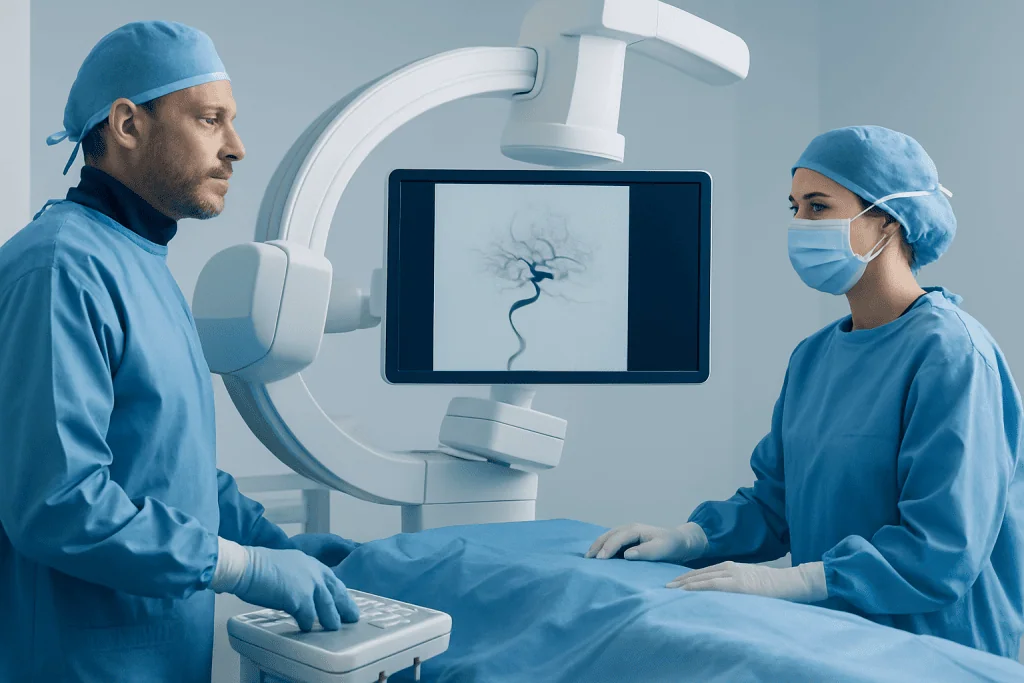
An interventional neurologist typically trains first as a neurologist. This means the doctor develops strong expertise in diagnosing and managing conditions such as stroke, transient ischemic attack, seizures, headaches, and other nervous system disorders. After this, the physician completes additional fellowship training in catheter-based neurovascular procedures.
An endovascular neurosurgeon usually trains first in neurosurgery. This background includes open brain and spine surgery, critical care, and the surgical management of tumors, aneurysms, hemorrhage, and trauma. Additional fellowship training then focuses on image-guided endovascular techniques performed through the blood vessels.
For patients, this difference may matter most when treatment options include both open surgery and catheter-based therapy. For example, some aneurysms or vascular malformations can be treated in more than one way. In these cases, a team may include neurologists, neurosurgeons, neuroradiologists, stroke physicians, and rehabilitation specialists to recommend the safest and most effective approach.
It is also helpful to know that hospitals and countries may use different titles. Some centers group specialists under names such as neurointerventional surgery, interventional neuroradiology, or endovascular neurology. The title alone does not always reveal the doctor’s exact experience, so asking about training, case type, and team structure can be more useful than focusing only on the label.
Conditions they commonly treat

Both interventional neurologists and endovascular neurosurgeons commonly care for disorders that involve blood flow to the brain and spine. One of the best-known examples is acute ischemic stroke caused by a blocked artery. In selected patients, a catheter procedure called mechanical thrombectomy may be used to remove the clot and restore circulation. This may be part of broader stroke care that also includes brain imaging, intensive monitoring, and rehabilitation.
Another common area is the treatment of brain aneurysms, which are weakened areas in a blood vessel wall that may bulge and, in some cases, rupture. Catheter-based methods can sometimes seal the aneurysm from inside the vessel, helping reduce the risk of bleeding. Depending on the aneurysm’s shape and location, treatment may involve coiling, stents, flow-diverting devices, or surgical clipping by a neurosurgical team. Patients may learn more about brain aneurysm evaluation and treatment options as part of this decision-making process.
These specialists may also treat arteriovenous malformations, dural arteriovenous fistulas, carotid or intracranial artery narrowing, and some causes of bleeding in or around the brain. In certain spinal vascular disorders, endovascular techniques may reduce abnormal blood flow or prepare a patient for surgery. Some procedures are performed urgently, while others are carefully planned after imaging review and multidisciplinary discussion.
- Acute ischemic stroke
- Brain aneurysms
- Arteriovenous malformations and fistulas
- Carotid or intracranial artery stenosis
- Some causes of brain hemorrhage
- Selected spinal vascular conditions
What procedures may be used
Most neurointerventional procedures are performed by entering a blood vessel, often through the wrist or groin, and guiding a catheter toward the area being treated. X-ray-based imaging, contrast dye, and advanced navigation tools help the doctor see the blood vessels in detail. This can allow diagnosis and treatment in a way that is less invasive than traditional surgery for certain conditions.
In emergency stroke treatment, one of the most important procedures is mechanical thrombectomy, in which devices are used to remove a clot from a blocked artery. In aneurysm care, the goal may be to prevent blood from entering the aneurysm sac. This can sometimes be done with aneurysm coiling, stent-assisted techniques, or flow diversion, depending on the patient’s anatomy and risk profile.
Other procedures may include cerebral angiography, in which contrast imaging maps the brain’s blood vessels in detail; embolization, in which materials are used to block abnormal or dangerous blood flow; and carotid or intracranial stenting in selected cases. Some patients may be offered cerebral angiography first to confirm a diagnosis before deciding on the best treatment plan.
Not every condition is best treated endovascularly. Some patients need open surgery, medication alone, close monitoring, or a combination of approaches. The decision depends on the exact diagnosis, symptoms, bleeding risk, age, overall health, and the location and structure of the blood vessel problem.
How doctors decide which specialist or treatment is right
For most patients, the central question is not which title sounds better, but which team has the right expertise for the specific condition. A person with a large-vessel stroke may need the fastest available thrombectomy team. A person with a complex aneurysm may benefit from discussion between an endovascular specialist and an open cerebrovascular neurosurgeon. The safest plan is usually the one tailored to the disease, not the professional label alone.
Several factors help guide the choice. These include the urgency of the condition, whether open surgery may also be needed, the anatomy of the blood vessels, the hospital’s imaging and intensive care resources, and the experience of the treating team. Many leading centers use a multidisciplinary conference model in which scans are reviewed together before treatment recommendations are made.
Patients and families may find it helpful to ask clear questions: What is the diagnosis? Why is this procedure recommended? What are the alternatives? Who will perform it, and how experienced is the team with similar cases? What benefits, risks, and recovery issues should be expected? These conversations can make a complex situation easier to understand and can support informed decision-making.
Benefits, risks, and recovery
One reason these specialties are so important is that minimally invasive treatment may shorten hospital stay, reduce tissue disruption, and avoid a large incision in selected patients. For conditions such as stroke, speed matters, and catheter-based therapy can be lifesaving or disability-reducing when used in the right patient at the right time. For aneurysms and vascular malformations, endovascular options may offer an effective alternative to open surgery in many cases.
At the same time, every procedure has risks. Possible complications may include bleeding, vessel injury, stroke, reaction to contrast dye, infection, or problems at the catheter entry site. In some cases, a procedure may not fully treat the problem, and further treatment or monitoring may be needed. Doctors weigh these risks carefully against the natural risks of the underlying disease.
Recovery depends on why the procedure was done and whether it was performed in an emergency or electively. Some patients go home within a day or two after a planned angiogram or uncomplicated endovascular treatment. Others, especially those treated for stroke or hemorrhage, may need intensive care, rehabilitation, and longer follow-up.
Follow-up imaging is often important. For example, aneurysm treatment may require repeat scans to confirm the vessel remains sealed over time. Stroke patients may need ongoing care for blood pressure, cholesterol, heart rhythm, diabetes, and lifestyle factors to help reduce the risk of future events.
When to seek care and what to expect at a specialist center
Emergency symptoms should never be ignored. Sudden facial drooping, arm weakness, speech difficulty, severe sudden headache, loss of vision, confusion, or balance problems need immediate medical attention. These can be warning signs of stroke or bleeding in the brain, and urgent assessment is essential because time-sensitive treatment may be possible.
Not all referrals are emergencies. Some patients are sent to a neurovascular specialist after a scan incidentally finds an aneurysm, narrowed artery, or vascular malformation. In these cases, the visit often includes a review of symptoms, medical history, medications, and prior imaging, followed by discussion of whether monitoring, medication, endovascular treatment, or surgery is most appropriate.
At a specialist center, care is often coordinated across neurology, neurosurgery, neuroradiology, anesthesia, intensive care, and rehabilitation. This team-based approach can be especially helpful when a condition has more than one reasonable treatment option. Near the end of the care journey, some international patients may seek evaluation at centers such as Acibadem International, where multidisciplinary specialists in JCI-accredited hospitals diagnose and treat complex neurovascular conditions.
Whether care is received locally or at a referral center, patients should feel comfortable asking for explanations in plain language. Understanding the diagnosis, the reason for a recommended procedure, and the plan for recovery and follow-up can make treatment decisions feel more manageable and less overwhelming.
Frequently asked questions
Is interventional neurology the same as endovascular neurosurgery?
They are not exactly the same, but they overlap significantly. Both use minimally invasive catheter-based procedures to treat blood vessel disorders of the brain and spine, and the biggest difference is usually the doctor’s original training background.
Which specialist treats stroke with thrombectomy?
Mechanical thrombectomy may be performed by an interventional neurologist, an endovascular neurosurgeon, or another fellowship-trained neurointerventional specialist, depending on the hospital. What matters most is rapid access to an experienced team that can evaluate and treat eligible patients quickly.
Who treats brain aneurysms?
Brain aneurysms may be treated by endovascular specialists using catheter-based techniques or by neurosurgeons using open surgical clipping. The best option depends on the aneurysm’s size, shape, location, rupture status, and the patient’s overall health.
Are these procedures safer than open surgery?
In some situations, minimally invasive endovascular treatment may lower recovery burden and avoid a large incision. However, it is not automatically safer for every condition, and the best approach depends on careful evaluation of the disease and the patient.
How should a patient choose between specialists?
It often helps to focus less on the title and more on the team’s experience with the specific condition. Patients can ask who will perform the procedure, what alternatives exist, whether open surgery might also be needed, and how follow-up care will be organized.
Will recovery be quick after a neurointerventional procedure?
Recovery varies widely. A planned diagnostic angiogram may involve a short stay, while treatment for stroke or brain bleeding can require intensive monitoring and rehabilitation. The doctor can explain the expected recovery based on the exact procedure and condition.
References
- World Stroke Organization
- American Heart Association
- National Institute of Neurological Disorders and Stroke
- Society of NeuroInterventional Surgery
- Brain Aneurysm Foundation
This article is for general information only and is not a substitute for professional medical advice. Please consult a qualified doctor about your individual situation.
Interventional Neurology in Turkey — costs, top hospitals & a free quote
JCI-accredited · board-certified surgeons · reply within 24h
Add us as a Preferred Source to see more of our trusted health content across Google Search, AI Overviews and Discover.