Interventional Neurology vs Neurosurgery: How Treatment Choices Are Made

Interventional neurology uses minimally invasive, image-guided techniques inside blood vessels. Neurosurgery uses open or microsurgical operations when direct access to the brain, spine, or nerves is needed.
Key Takeaways
- Interventional neurology uses minimally invasive, image-guided techniques inside blood vessels.
- Neurosurgery uses open or microsurgical operations when direct access to the brain, spine, or nerves is needed.
- Many conditions can be treated by either approach, so the decision is individualized.
- Treatment choice depends on the condition, anatomy, timing, risks, and expected recovery.
- A multidisciplinary team often decides whether a catheter-based procedure, surgery, or a combination is best.
Interventional neurology and neurosurgery can both treat serious brain, spine, and blood vessel conditions, but they use different techniques. The best choice depends on the diagnosis, how urgent the problem is, the patient’s overall health, and which option offers the safest and most effective result.
Overview: how the two specialties differ
When people hear about treatment for a brain or spinal condition, they may be unsure whether they need interventional neurology or neurosurgery. Although these fields often work closely together, they are not the same. Interventional neurology focuses on diagnosing and treating certain disorders of the brain, spine, and blood vessels using catheters, wires, and other devices passed through blood vessels under imaging guidance. Neurosurgery focuses on operative treatment of the brain, spine, nerves, and surrounding structures, often through open, microscopic, or endoscopic surgery.
In simple terms, interventional neurology usually reaches the problem from inside the blood vessels, often through a small puncture in the wrist or groin. Neurosurgery usually reaches the problem more directly through an incision, especially when tissue must be removed, pressure relieved, or structures repaired. Neither approach is automatically better than the other. The right choice depends on what is being treated and what offers the best balance of safety and effectiveness.
These specialties frequently overlap in conditions such as stroke, brain aneurysm, arteriovenous malformation, carotid artery disease, and some tumors or spine problems. In many hospitals, decisions are made by a team that may include interventional neurologists, neurosurgeons, stroke neurologists, neuroradiologists, anesthesiologists, and rehabilitation specialists. This team-based approach helps match the treatment to the patient rather than fitting the patient to one specialty.
What interventional neurology is used for
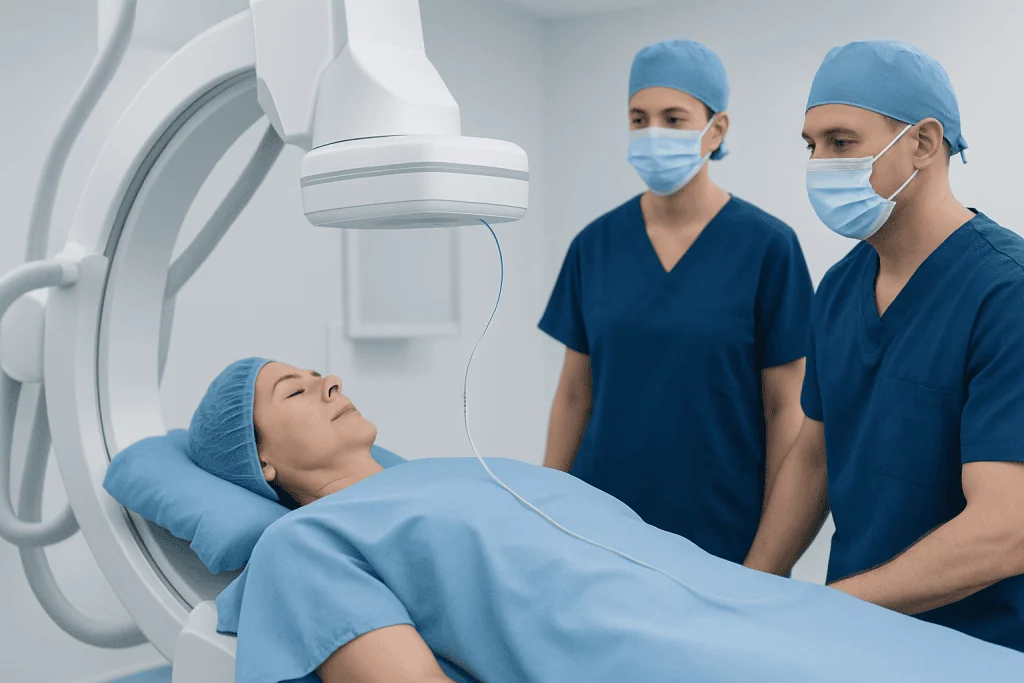
Interventional neurology is most often used for conditions involving blood flow to or within the brain and spinal cord. A common example is acute ischemic stroke caused by a blocked artery. In selected patients, specialists may perform a thrombectomy, a catheter-based procedure that removes the clot and aims to restore blood flow quickly. This may be used alongside standard stroke treatments depending on timing and eligibility.
Other examples include treatment of brain aneurysms, narrowing of neck or brain arteries, vascular malformations, and some causes of bleeding. Catheter-based techniques can place coils, stents, flow-diverting devices, or other materials to close or support abnormal blood vessels. These methods are part of interventional neurology treatment and are especially valuable when a less invasive route can reduce trauma to surrounding tissues.
Because these procedures are guided by advanced imaging, they can be highly precise. Recovery may be faster than with open surgery in some cases, but minimally invasive does not mean minor. These are still specialized procedures used for important medical problems, and careful patient selection is essential. Risks and benefits must be reviewed in detail with an experienced team.
When neurosurgery may be the better option

Neurosurgery may be recommended when direct access to the brain, spine, or nerves is necessary. This can include removing a brain tumor, relieving pressure caused by bleeding or swelling, repairing structural problems, treating certain forms of epilepsy, or operating on spinal conditions that compress nerves or the spinal cord. In these situations, surgery may provide the clearest and most definitive way to treat the problem.
Neurosurgeons also treat some vascular conditions, especially when clipping an aneurysm or removing an arteriovenous malformation is more suitable than a catheter-based approach. They may be involved when a condition has caused severe bleeding, when anatomy is not favorable for endovascular treatment, or when previous treatment has not fully solved the issue. In some cases, microsurgical techniques allow treatment while protecting nearby healthy tissue as much as possible.
Some patients worry that surgery always means a longer or more difficult recovery. Recovery varies widely and depends on the type of operation, the patient’s health, and the condition being treated. Modern neurosurgery may include minimally invasive, microscopic, or endoscopic techniques, so surgery itself is not always the same as a large open procedure.
How doctors decide between the two
The choice between interventional neurology and neurosurgery starts with the diagnosis. Doctors first need to identify exactly what the problem is, where it is located, how severe it is, and how urgently it needs treatment. A blocked artery in an acute stroke, for example, may call for immediate endovascular treatment if imaging shows salvageable brain tissue. A growing tumor pressing on the brain may require surgical removal or biopsy instead.
Anatomy is another major factor. The size, shape, and location of a blood vessel abnormality can make one method safer or more effective than another. For example, some aneurysms are well suited to coiling or flow diversion, while others may be more safely clipped with surgery. The same principle applies to vascular malformations, carotid narrowing, and other neurovascular conditions.
Patient factors also matter. Age, general health, medicines such as blood thinners, previous procedures, and other medical conditions can affect the decision. Some people may be better candidates for a less invasive catheter-based procedure, while others may benefit more from surgery because it offers a more complete or durable solution for their specific condition.
Finally, doctors consider the expected outcome. They weigh the chance of controlling the disease, preventing recurrence, relieving symptoms, preserving function, and reducing complications. In many cases, the answer is not simply one specialty versus the other. A patient may need a staged plan, such as endovascular treatment first and surgery later, or surgery followed by close imaging follow-up.
Common conditions where both approaches may be considered
Several neurological conditions can be approached in more than one way. Acute stroke is a key example. Patients with certain large-vessel blockages may benefit from stroke treatment that includes endovascular clot removal, while others may need medication, intensive monitoring, or treatment of complications. Timing is critical, and rapid evaluation in a specialized stroke center is very important.
Brain aneurysms are another condition where both interventional and surgical treatment may be appropriate. Some aneurysms can be treated with coils or flow-diverting stents placed through a catheter, while others are better managed with surgical clipping. The decision depends on aneurysm size, neck shape, location, whether it has ruptured, and the patient’s overall situation. Patients may also hear this discussed in relation to brain aneurysm care.
Arteriovenous malformations, carotid artery disease, and some causes of brain bleeding can also involve both specialties. In selected cases, one method is used to support the other. For instance, an endovascular procedure may reduce blood flow to a vascular lesion before surgery, making the operation safer. This highlights why multidisciplinary planning is so valuable in complex neurological care.
Tests and imaging used to guide treatment choice
Choosing the right treatment usually requires detailed imaging. Common tests include CT, MRI, CT angiography, MR angiography, and cerebral angiography. These studies help doctors see whether there is bleeding, a blocked artery, a narrowed vessel, an aneurysm, or another structural problem. They also show how accessible the lesion is and what important brain or spinal structures are nearby.
For stroke, imaging may determine how much brain tissue is already injured and how much might still be saved. For aneurysms and vascular malformations, imaging defines the anatomy needed to compare catheter-based treatment with surgery. In spine or tumor cases, scans help show whether the main issue is compression, instability, bleeding, or another process that may be better addressed surgically.
Doctors may also use blood tests, heart evaluation, and anesthesia assessment to understand the patient’s procedural risk. This broader evaluation is important because treatment planning is not based on scans alone. It also reflects the patient’s medical condition, symptoms, functional status, and personal goals after a clear discussion of options.
Benefits, risks, recovery, and follow-up
Interventional neurology often offers the advantages of smaller access sites, less tissue disruption, and shorter hospital stays in selected patients. It can be especially helpful in urgent vascular conditions where speed matters. However, it still carries risks such as bleeding, vessel injury, stroke, reactions to contrast dye, or the need for repeat treatment or additional procedures in the future.
Neurosurgery may offer a more direct solution for some structural or complex conditions. It can allow complete removal of a lesion, relief of pressure, tissue diagnosis, or durable repair of an abnormality. Its risks depend on the operation and may include infection, bleeding, neurological deficits, seizures, or longer recovery. The care team explains these risks in relation to the exact procedure rather than in general terms.
Follow-up is important with both approaches. Some vascular conditions need repeat imaging months or years later to confirm that the problem remains sealed or controlled. Patients recovering from stroke or surgery may also need rehabilitation, medication review, and management of risk factors such as high blood pressure, diabetes, smoking, or high cholesterol. In international centers such as Acibadem International, multidisciplinary specialists in JCI-accredited hospitals evaluate and treat these conditions for patients coming from abroad.
When to seek urgent medical care and questions to ask
Urgent medical attention is needed for sudden neurological symptoms. These include weakness on one side, facial drooping, trouble speaking, severe sudden headache, loss of vision, confusion, seizures, or sudden loss of balance. These symptoms can signal stroke, bleeding, or another emergency, and rapid assessment can strongly affect treatment choices and outcomes.
For non-emergency problems, patients benefit from asking practical questions during consultation. Useful questions include: What exactly is the diagnosis? Why is one treatment preferred over another? What are the main risks and benefits? Will more than one procedure be needed? What should recovery and follow-up look like?
It can also help to ask whether the case has been reviewed by both interventional and surgical specialists. This is especially important when more than one reasonable treatment option exists. Shared decision-making allows patients and families to understand the plan clearly and feel more confident about why a specific approach has been recommended.
Frequently asked questions
Is interventional neurology the same as neurosurgery?
No. Interventional neurology mainly uses catheter-based, image-guided procedures from inside blood vessels, while neurosurgery uses operative techniques to directly reach the brain, spine, or nerves. They often work together and may treat some of the same conditions.
Which is safer: interventional neurology or neurosurgery?
Neither option is always safer in every situation. Safety depends on the exact diagnosis, the patient’s anatomy and overall health, and the experience of the treating team. Doctors choose the option that offers the best balance of benefit and risk for that particular case.
Can a patient need both interventional treatment and surgery?
Yes. Some conditions are best treated with a combination approach. For example, an endovascular procedure may be done first to stabilize a blood vessel problem before surgery, or surgery may be needed if a catheter-based treatment is incomplete.
What conditions are commonly treated by interventional neurology?
Common examples include certain strokes caused by blocked arteries, brain aneurysms, narrowed neck or brain arteries, and some vascular malformations. These are usually conditions where reaching the problem through blood vessels can be effective. Not every patient with these conditions is a candidate, so imaging and specialist review are important.
How quickly are treatment decisions made in stroke?
In stroke, decisions are often made very quickly because time can affect how much brain tissue can be saved. Emergency imaging helps determine whether a clot is present, whether there is bleeding, and which treatment is appropriate. This is why immediate medical attention for sudden neurological symptoms is so important.
Will recovery be easier with a minimally invasive procedure?
Recovery may be faster after some minimally invasive procedures, but that is not always the case. The underlying condition, any complications, and the patient’s general health can have a major effect on recovery. A smaller incision does not necessarily mean the medical problem itself is minor.
References
- World Stroke Organization
- American Heart Association
- National Institute of Neurological Disorders and Stroke
- European Stroke Organisation
- American Association of Neurological Surgeons
This article is for general information only and is not a substitute for professional medical advice. Please consult a qualified doctor about your individual situation.
Interventional Neurology in Turkey — costs, top hospitals & a free quote
JCI-accredited · board-certified surgeons · reply within 24h
Add us as a Preferred Source to see more of our trusted health content across Google Search, AI Overviews and Discover.

More from the Health Library



Related Specialists

Dr. Selahattin Özen
Clinical Laboratory
Prof. Dr. Şule Arslan
Physical Medicine & Rehabilitation
Asst. Prof. Dr. Hilal Kurtoğlu Gümüşel
Cardiology
Dr. Abdulkadir Kırkgöz
Pediatrics