

Intraductal Papillary Mucinous Neoplasm: What Patients Need to Know

An intraductal papillary mucinous neoplasm, or IPMN, is a mucus-producing cystic growth in the pancreatic ducts. Not every IPMN becomes cancer, but some types and features raise the risk and require careful evaluation.
Key Takeaways
- An intraductal papillary mucinous neoplasm, or IPMN, is a mucus-producing cystic growth in the pancreatic ducts.
- Not every IPMN becomes cancer, but some types and features raise the risk and require careful evaluation.
- Doctors usually diagnose IPMN with imaging such as MRI, CT, or endoscopic ultrasound, sometimes with cyst fluid analysis.
- Treatment ranges from regular surveillance to surgery, depending on the cyst’s size, location, symptoms, and risk features.
- People should seek medical advice for jaundice, unexplained weight loss, pancreatitis, or persistent upper abdominal pain.
Intraductal papillary mucinous neoplasm is a type of pancreatic cyst that forms in the ducts of the pancreas and produces mucus. Many IPMNs are found incidentally and can be safely monitored, but some have a higher chance of turning into cancer and need closer follow-up or surgery.
Overview: What an intraductal papillary mucinous neoplasm is
An intraductal papillary mucinous neoplasm is a type of pancreatic cyst that develops in the ducts that carry digestive juices through the pancreas. It produces thick mucus and can cause the duct to widen. Many people learn they have one after imaging is done for another reason, such as abdominal pain or a routine health check.
The main reason IPMN matters is that it is considered a precancerous lesion. This does not mean it is already cancer or that it will definitely become cancer. Instead, it means the cyst deserves expert assessment because some IPMNs remain stable for years, while others can develop changes that lead to pancreatic cancer over time.
Doctors often describe IPMNs by where they are located. A main-duct IPMN affects the main pancreatic duct and usually carries a higher risk of cancerous change. A branch-duct IPMN affects the smaller side branches and is often less risky, though it still needs proper follow-up. Some people have a mixed-type IPMN involving both areas.
Because pancreatic cysts can include several different conditions, it is important not to assume that every cyst is an IPMN. In practice, specialists distinguish IPMN from other cystic lesions and from pancreatic cancer itself, since the next steps can be very different.
Symptoms and how IPMN may be found
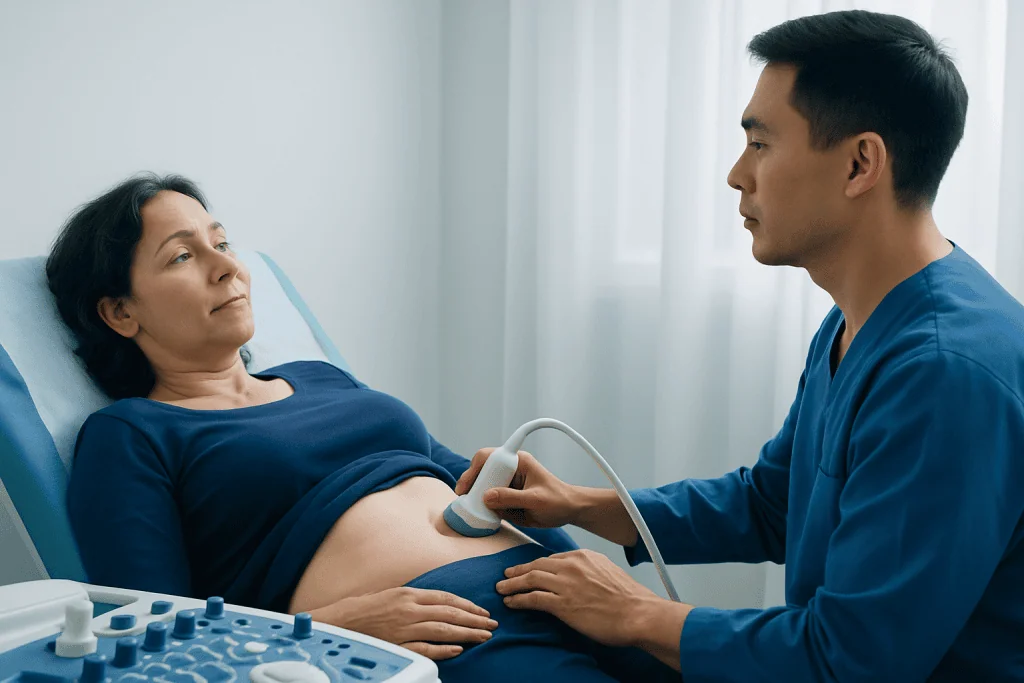
Many intraductal papillary mucinous neoplasms cause no symptoms, especially when they are small. In these cases, they are often discovered incidentally during an ultrasound, CT scan, or MRI done for another issue. This is one reason patient discussions can feel confusing: a person may feel completely well yet be told that further pancreatic evaluation is needed.
When symptoms do happen, they are often non-specific. A person may notice upper abdominal discomfort, back pain, nausea, poor appetite, bloating, or unexplained weight loss. These symptoms are not unique to IPMN and can have many causes, so they do not confirm the diagnosis on their own.
Some IPMNs can block pancreatic ducts and lead to pancreatitis, which is inflammation of the pancreas. This may cause more sudden and significant pain, vomiting, or tenderness in the upper abdomen. In some cases, if the bile duct is affected, a person may develop jaundice, with yellowing of the skin or eyes, dark urine, or pale stools.
Doctors also pay attention to symptoms because they can signal a higher-risk cyst. For example, new jaundice, repeated pancreatitis, or worsening weight loss often prompts faster and more detailed investigation rather than routine observation.
Causes, types, and risk factors

The exact cause of intraductal papillary mucinous neoplasm is not fully understood. It develops when cells lining the pancreatic ducts grow abnormally and form papillary, or finger-like, structures that produce mucus. Over time, some of these cells may acquire changes that move from low-grade abnormality to high-grade dysplasia and, in some cases, invasive cancer.
Risk tends to increase with age, and IPMNs are more often diagnosed in middle-aged and older adults. Personal or family history of pancreatic disease may also be relevant. Smoking, chronic pancreatitis, and some inherited cancer syndromes can increase concern about pancreatic abnormalities in general, although they do not mean a person will definitely develop IPMN.
Doctors classify IPMNs in ways that help estimate risk. Main-duct lesions usually deserve especially close attention because they are more strongly associated with malignant change. Branch-duct lesions are often less aggressive, but large size, growth over time, nodules within the cyst, or a widened main duct can shift management toward a more active approach.
It is also important to recognize that pancreatic cysts are not all the same. Some are inflammatory, some are benign, and some are precancerous. That is why specialist review by gastroenterology, radiology, surgery, and pathology teams can be helpful when the diagnosis is uncertain.
How doctors diagnose and assess cancer risk
Diagnosis begins with a careful review of symptoms, personal history, family history, and imaging findings. MRI with MRCP is often particularly useful because it can show how a cyst communicates with the pancreatic ducts. CT scans can also help define the cyst’s size, location, and whether there are signs suggesting more advanced disease.
If more detail is needed, doctors may recommend endoscopic ultrasound. This test places a flexible scope through the mouth into the stomach and small intestine so that ultrasound images can be taken very close to the pancreas. During the same procedure, a doctor may collect fluid from the cyst for laboratory analysis. This can help identify the cyst type and look for abnormal cells or markers linked to risk.
Specialists look for what are often called high-risk stigmata or worrisome features. These may include jaundice related to the cyst, a significantly enlarged main pancreatic duct, a solid component or mural nodule, cyst growth over time, pancreatitis caused by the cyst, or suspicious cytology. The presence of these features does not automatically mean cancer is present, but it often changes the urgency of treatment planning.
Because the pancreas is complex and pancreatic cysts can evolve, diagnosis is not always a one-time decision. Some patients need repeat imaging after a set interval so doctors can compare findings and determine whether the lesion appears stable or is developing concerning changes.
Treatment options: surveillance, endoscopy, and surgery
Treatment for intraductal papillary mucinous neoplasm depends on balancing two goals: avoiding unnecessary surgery for low-risk cysts and not missing lesions that are becoming dangerous. For many branch-duct IPMNs without concerning features, the safest plan is active surveillance. This means scheduled imaging and specialist follow-up rather than immediate removal.
Surveillance intervals vary according to cyst size, growth, symptoms, and imaging features. A small, stable cyst may be checked less often than a larger or changing one. Regular follow-up is important because an IPMN can remain quiet for years and then develop changes that require a different plan.
When the cyst has higher-risk features, surgery may be recommended to remove the affected part of the pancreas. The type of operation depends on where the lesion is located. Some patients may need evaluation by teams experienced in pancreatic surgery, while others may first undergo further testing with endoscopic ultrasound to better define the risk before an operation is advised.
In selected cases, care may involve specialists in gastroenterology and pancreatic oncology, especially if there is concern that invasive disease has already developed. At centers such as Acibadem International, multidisciplinary specialists in JCI-accredited hospitals evaluate pancreatic cysts and tailor treatment plans for international patients according to the cyst type and risk profile.
Living with IPMN: follow-up, self-care, and questions to ask
Being told there is a pancreatic cyst can feel stressful, especially when the cyst is described as precancerous. Many patients find reassurance in understanding that surveillance is an active medical strategy, not a passive one. If a doctor recommends monitoring rather than surgery, it usually means the current risk appears low enough that careful observation is safer than an operation at that moment.
During follow-up, patients can help by keeping appointments, reporting new symptoms promptly, and bringing previous imaging results to specialist visits. It may be useful to ask whether the cyst is main-duct, branch-duct, or mixed type; whether there are nodules or duct dilation; how often imaging is needed; and what changes would make surgery more likely.
General pancreatic health advice also matters. Avoiding smoking, limiting alcohol if advised by a doctor, maintaining a balanced diet, and managing conditions such as diabetes may support overall health, even though these steps do not remove the cyst itself. If a person has had pancreatitis or has a strong family history of pancreatic disease, they should make sure each clinician involved knows this.
Patients who are also learning about related pancreatic conditions may benefit from understanding how IPMN differs from pancreatitis or other causes of abdominal pain. Clear communication with a qualified doctor helps ensure that new symptoms are not automatically blamed on a known cyst without proper assessment.
When to seek medical care
Prompt medical assessment is important if a person develops yellowing of the eyes or skin, unexplained weight loss, persistent upper abdominal pain, repeated vomiting, fever, or new back pain that does not improve. These symptoms do not always mean the IPMN has worsened, but they should not be ignored.
Urgent care is especially important if there are signs of pancreatitis, such as severe abdominal pain that may spread to the back, nausea, and vomiting, or if a person cannot keep fluids down. New diabetes, changes in stool color, or dark urine should also be discussed with a doctor.
People who already know they have an IPMN should contact their care team if scheduled follow-up has been missed or if symptoms change between scans. Those with a strong family history of pancreatic cancer or inherited cancer syndromes may need more individualized planning and should ask whether specialist genetic or high-risk screening advice is appropriate.
Frequently asked questions
Is an intraductal papillary mucinous neoplasm cancer?
No, an intraductal papillary mucinous neoplasm is not automatically cancer. It is a precancerous pancreatic cyst, which means some lesions remain low risk while others can develop cancerous changes over time.
Does every IPMN need surgery?
No. Many low-risk branch-duct IPMNs can be monitored safely with regular imaging and specialist follow-up. Surgery is more often considered when there are symptoms, concerning imaging features, or a higher estimated risk of cancer.
How is IPMN different from a simple pancreatic cyst?
IPMN is a specific type of pancreatic cyst that communicates with the pancreatic ducts and produces mucus. A simple description like "pancreatic cyst" does not explain the exact type, and management depends heavily on that distinction.
What tests are usually used to evaluate IPMN?
Doctors commonly use MRI with MRCP, CT scans, and endoscopic ultrasound. In some cases, cyst fluid is sampled during endoscopic ultrasound to help clarify the diagnosis and estimate risk.
Can IPMN cause pancreatitis?
Yes, it can. Mucus from the cyst may block pancreatic ducts and trigger pancreatitis, which can cause significant upper abdominal pain, nausea, and vomiting.
How often should an IPMN be checked?
There is no single schedule that fits everyone. Follow-up depends on the cyst’s size, location, growth, symptoms, and whether any high-risk features are present, so the plan should be individualized by a qualified doctor.
References
- World Health Organization
- National Cancer Institute
- American Gastroenterological Association
- International Association of Pancreatology
- National Comprehensive Cancer Network
This article is for general information only and is not a substitute for professional medical advice. Please consult a qualified doctor about your individual situation.
Oncology care in Turkey — second opinion and treatment plan
JCI-accredited · board-certified surgeons · reply within 24h
Add us as a Preferred Source to see more of our trusted health content across Google Search, AI Overviews and Discover.

More from the Health Library



Related Specialists

Prof. Dr. İftahar Köksal
Infectious Diseases & Clinical Microbiology
Prof. Dr. Muhsin Eraslan
Ophthalmology
Dr. Fabjola Ora
Emergency Service
Dr. İffet Ebru Saraç
Gynecology & Obstetrics