Intussusception in Children: Sudden Belly Pain, Vomiting, and Emergency Care

Intussusception is a medical emergency that can block the intestine and reduce blood supply. Common early signs include sudden episodes of severe abdominal pain, crying, drawing the knees up, and vomiting.
Key Takeaways
- Intussusception is a medical emergency that can block the intestine and reduce blood supply.
- Common early signs include sudden episodes of severe abdominal pain, crying, drawing the knees up, and vomiting.
- Diagnosis usually involves a physical exam and ultrasound, and treatment often uses an air or contrast enema.
- Fast treatment improves the chance of avoiding complications and helps most children recover well.
Intussusception in children happens when one part of the intestine slides into the next, causing a blockage and cutting off blood flow. It often begins with sudden, severe belly pain and vomiting, and it needs urgent medical evaluation.
Overview
Intussusception in children is a condition in which one segment of the intestine folds into a nearby segment, much like a telescope closing. This can narrow or block the bowel and may reduce blood flow to the affected area. Because of that, it is treated as an urgent medical problem.
This condition is one of the more common causes of intestinal blockage in young children, especially in infants and toddlers. It can happen suddenly in a child who had seemed well only hours earlier. Parents often first notice repeated episodes of intense crying or obvious abdominal pain.
Although the symptoms can be frightening, prompt diagnosis and treatment are usually very effective. Many children can be treated without surgery, but quick medical attention is important to lower the risk of bowel injury, infection, or dehydration.
Symptoms of Intussusception in Children
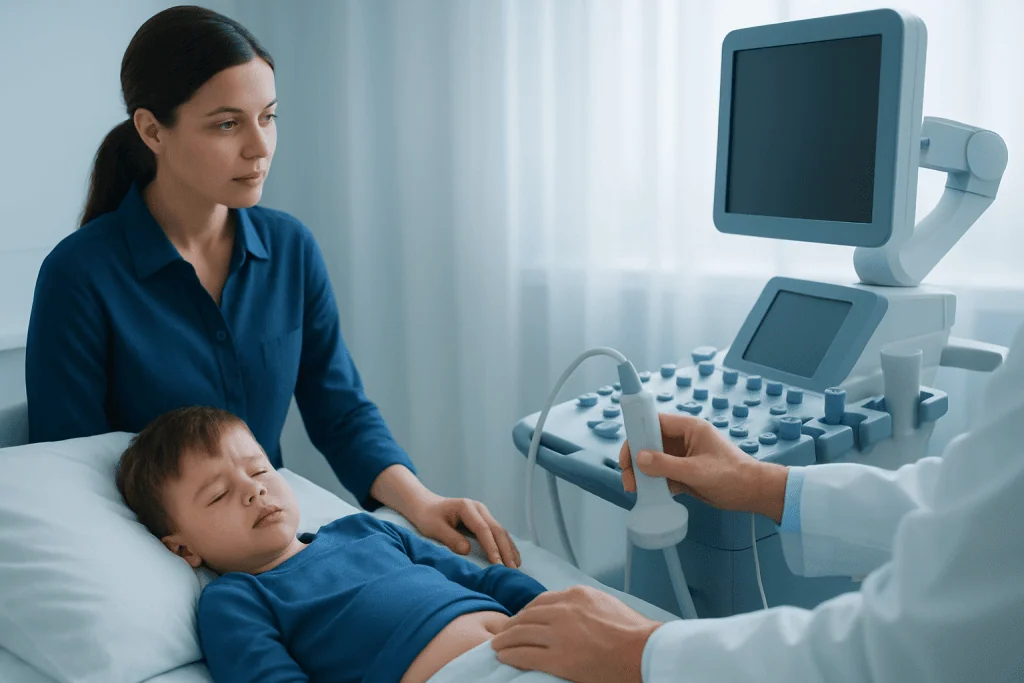
The most classic symptom is sudden, severe abdominal pain that comes and goes. During a painful episode, a child may cry hard, become very irritable, pull the knees toward the chest, and then seem tired or relatively calm between episodes. These attacks often repeat every several minutes.
Vomiting is also common and may begin early. At first, the vomit may contain food or stomach contents, but repeated vomiting can become more concerning over time. Some children look pale, sleepy, or weak, especially if the condition has lasted for several hours.
As the bowel becomes more irritated, stools may change. A small number of children pass stool mixed with blood and mucus, sometimes described as looking like red currant jelly. This symptom is well known, but it does not appear in every case and may occur later rather than at the beginning.
- Sudden episodes of strong belly pain
- Crying with knees pulled up
- Vomiting
- Swollen or tender abdomen
- Unusual sleepiness or low energy
- Blood- or mucus-streaked stool
Causes and Risk Factors
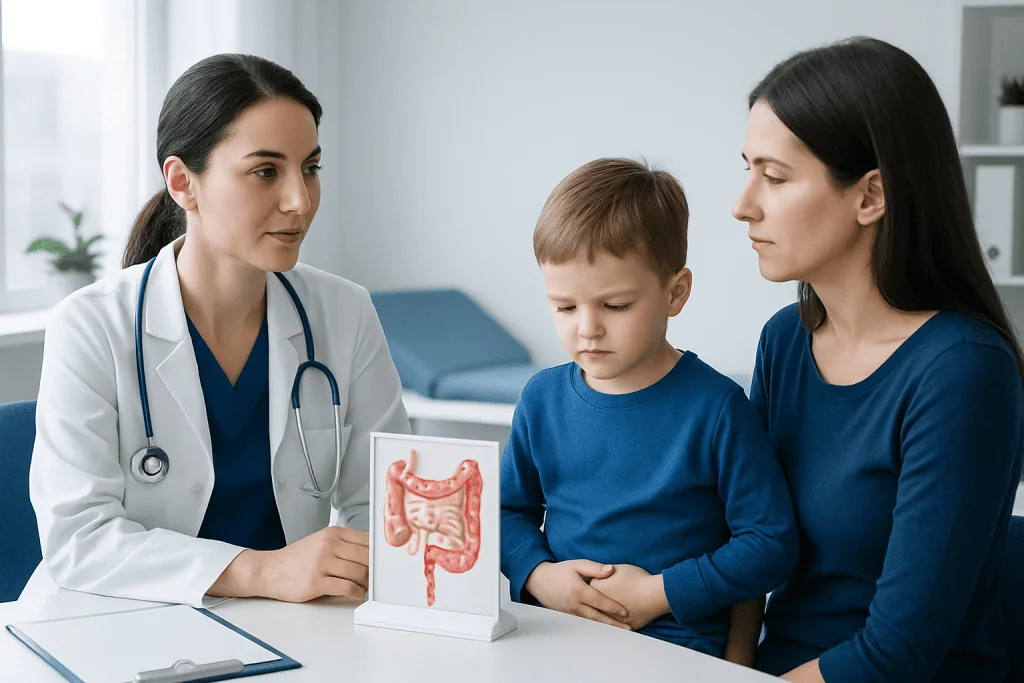
In many children, no exact cause is found. Doctors call this idiopathic intussusception, meaning it happens without a clear trigger. It is thought that swelling in the intestinal wall or enlarged lymph tissue after a viral illness may sometimes contribute by changing the way the bowel moves.
Intussusception is most often seen in infants and young children, particularly under 3 years of age. It is less common in older children, and when it occurs later, doctors may look more closely for an underlying cause. Boys are affected somewhat more often than girls.
Sometimes there is a specific “lead point,” which is something in the bowel that makes one part more likely to slide into another. Examples can include a polyp, Meckel diverticulum, intestinal duplication, or, more rarely, another bowel problem. In older children or in cases that keep returning, the care team may evaluate for other digestive conditions, including Crohn's disease when symptoms and findings suggest ongoing bowel inflammation.
How Doctors Diagnose It
Diagnosis begins with a careful medical history and physical examination. The doctor asks when the pain started, how often it comes and goes, whether vomiting is present, and whether the child has passed blood or mucus in the stool. On exam, the abdomen may be tender, swollen, or occasionally have a sausage-shaped mass.
Ultrasound is the most common imaging test used to confirm intussusception in children. It is painless, does not use radiation, and often shows a very characteristic appearance of the folded bowel. In some situations, abdominal X-rays may also be used to look for signs of blockage or complications.
An enema using air or contrast material may serve two roles: diagnosis and treatment. During this procedure, doctors use imaging guidance to see the bowel and, in many cases, gently unfold the telescoped intestine at the same time. If a child has severe symptoms, signs of perforation, or a very unwell appearance, the team may move quickly toward children's emergency care and urgent specialist management.
Treatment Options and Emergency Care
Intussusception needs treatment in a hospital. The first steps usually include checking hydration, giving fluids through a vein if needed, managing pain, and monitoring the child closely. If vomiting has been frequent, the child may be asked not to eat or drink until the bowel is evaluated and treatment is underway.
For many children, the main treatment is an air enema or contrast enema performed under imaging guidance. This can both confirm the diagnosis and push the folded bowel back into its normal position without an operation. The child is observed afterward because symptoms can occasionally return, especially in the first day or two.
Surgery may be needed if the enema does not work, if the bowel has perforated, if there are signs of dead bowel tissue, or if the child is too unstable for nonoperative treatment. Surgical care may involve manually reducing the intussusception or removing a damaged part of intestine if necessary. Depending on the situation, doctors may involve pediatric surgery and, if further bowel imaging or specialist digestive assessment is needed, gastroenterology teams.
Near the end of treatment planning, families may also discuss the reason the problem happened and whether any follow-up is needed to look for a lead point. For international patients, Acibadem International’s multidisciplinary specialists in JCI-accredited hospitals diagnose and treat pediatric digestive emergencies with coordinated care.
Recovery, Prevention, and Self-Care
After successful treatment, most children recover well. The care team watches for a return of pain, vomiting, abdominal swelling, fever, or blood in the stool. Some children can go home the same day after a period of observation, while others may stay longer depending on age, hydration, response to treatment, and whether surgery was needed.
At home, parents are usually advised to offer fluids and food as directed by the medical team and to monitor the child closely for renewed symptoms. Rest is helpful, but most children gradually return to normal activity once they are comfortable and eating well again. Any medicine should be given only as prescribed or recommended by the child’s doctor.
There is no reliable way to prevent most cases of intussusception because the exact cause often is not known. The most practical form of prevention is early recognition. Prompt attention to sudden severe belly pain, repeated vomiting, or unusual lethargy can lead to earlier treatment and a smoother recovery.
When to See a Doctor
A child with repeated episodes of sudden, severe belly pain should be assessed urgently, especially if the pain comes in waves and the child draws the knees up or cries intensely. Vomiting, weakness, unusual sleepiness, a swollen abdomen, or blood in the stool make prompt evaluation even more important.
Parents should seek emergency care right away if the child looks very unwell, is difficult to wake, has trouble keeping fluids down, develops worsening abdominal swelling, or has signs of dehydration such as very dry mouth or fewer wet diapers. It is safer not to wait for the symptoms to become constant or for blood in the stool to appear.
Because symptoms can overlap with other problems, including stomach infections and other causes of appendicitis-like abdominal pain, a medical examination is the best way to find the cause. Rapid assessment can help doctors relieve the blockage early and protect the bowel.
Frequently asked questions
Is intussusception in children an emergency?
Yes. Intussusception can block the intestine and reduce blood flow to the bowel, so it needs urgent medical care. Quick treatment lowers the risk of complications and often allows treatment without surgery.
What does intussusception pain look like in a child?
The pain often comes in sudden waves rather than staying constant at first. A child may cry intensely, pull the knees to the chest, look pale, and then seem calmer between episodes.
Does every child with intussusception have bloody stool?
No. Blood- or mucus-streaked stool can happen, but it is not present in every child and may appear later. A child can still have intussusception even without this classic sign.
How is intussusception diagnosed?
Doctors usually diagnose it with a physical exam and an ultrasound. In many cases, an air or contrast enema is also used because it can confirm the diagnosis and treat the problem at the same time.
Will my child need surgery?
Not always. Many children are treated successfully with an air or contrast enema, but surgery may be needed if that does not work or if there are signs of bowel damage or perforation.
Can intussusception come back after treatment?
Yes, it can recur in some children, especially soon after treatment. That is why doctors often observe the child for a period of time and advise parents to return right away if symptoms come back.
References
- American Academy of Pediatrics
- National Institute of Diabetes and Digestive and Kidney Diseases
- National Health Service
- MedlinePlus
- American College of Radiology
This article is for general information only and is not a substitute for professional medical advice. Please consult a qualified doctor about your individual situation.
Persistent digestive symptoms? Get evaluated in Turkey
JCI-accredited · board-certified surgeons · reply within 24h
Add us as a Preferred Source to see more of our trusted health content across Google Search, AI Overviews and Discover.

Pediatrics
Complete healthcare for infants, children and adolescents across all sub-specialties.
232 specialists in this unitMore from the Health Library



Related Specialists
Asst. Prof. Dr. Hamdi Toköz
Cardiovascular Surgery
Dt. Pelin Dülgeroğlu Karamık
Oral & Dental Health
Dr. Gansukh Bataa
Anesthesiology
Dr. Rana Özgüven
Emergency Service