Iontophoresis: What Patients Need to Know

Iontophoresis most often helps treat excessive sweating of the hands, feet, or underarms. The treatment uses a gentle electrical current and is usually done in repeated sessions.
Key Takeaways
- Iontophoresis most often helps treat excessive sweating of the hands, feet, or underarms.
- The treatment uses a gentle electrical current and is usually done in repeated sessions.
- Side effects are typically mild and may include skin dryness, redness, or tingling.
- It is not suitable for everyone, especially people with some implanted electronic devices or certain medical conditions.
- A doctor can help decide whether iontophoresis is appropriate and whether another treatment may be better.
Iontophoresis is a non-surgical treatment that uses a low electrical current to move substances through the skin or to help control excessive sweating. It is commonly used for hyperhidrosis and, in some settings, to deliver certain medicines through the skin under medical supervision.
Overview: What iontophoresis is and what it treats
Iontophoresis is a treatment that uses a mild electrical current to move charged particles across the skin. For most patients, the term refers to a practical treatment for excessive sweating, especially on the hands, feet, or underarms. In some clinical settings, it may also be used to help deliver medication through the skin in a controlled way.
What makes iontophoresis different from many other treatments is that it works locally. Instead of affecting the whole body, it targets a specific area. This can make it a useful option for people whose symptoms are limited to certain parts of the body and who want to avoid more invasive procedures.
For excessive sweating, the exact mechanism is not fully understood, but the treatment appears to temporarily reduce sweat gland activity. It does not cure the underlying tendency to sweat, so maintenance sessions are often needed. Even so, many patients find that a regular schedule meaningfully improves comfort, daily function, and confidence.
Iontophoresis is often considered when sweating is persistent, bothersome, and not fully controlled with topical products such as antiperspirants. People with diagnosed hyperhidrosis may be offered iontophoresis as part of a broader treatment plan.
How iontophoresis works during a session
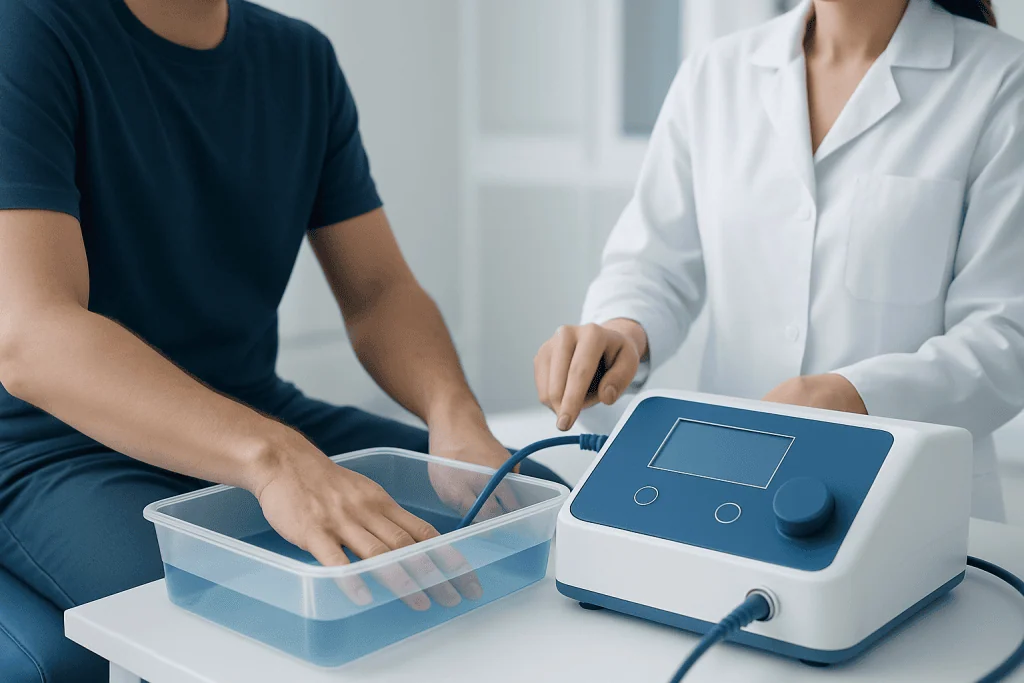
During iontophoresis, the affected area is placed in contact with tap water or a medicated solution while a low-voltage electrical current passes through it. For hands or feet, this usually means placing them in shallow trays of water attached to a treatment device. For underarms, specially designed pads or electrodes may be used.
The current is gradually increased to a level that feels noticeable but tolerable. Most people describe the sensation as tingling, warmth, or mild prickling rather than pain. A session commonly lasts around 20 to 40 minutes, although the exact timing depends on the area being treated, the device used, and the treatment plan recommended by the clinician.
Treatment is usually done more frequently at the beginning, then less often once symptoms improve. This initial phase may involve several sessions per week. After good control is reached, maintenance treatments are spaced out according to how quickly symptoms return.
Patients may receive iontophoresis in a clinic or, in selected cases, use a home device after medical guidance. Home use can be convenient, but it is important to understand proper technique, safety precautions, and when to stop and ask for advice if skin irritation or other concerns develop.
Who may benefit from iontophoresis

The best-known use of iontophoresis is for focal hyperhidrosis, meaning excessive sweating that mainly affects specific areas. It is especially helpful for palms and soles, where creams and sprays may be difficult to use consistently. Underarm sweating may also improve, although treatment methods can differ slightly from those used for hands and feet.
People often consider iontophoresis when sweating interferes with work, writing, handshakes, sports, footwear, or daily comfort. It can also be useful when strong antiperspirants have not helped enough or have caused irritation. In these situations, iontophoresis offers a non-surgical option that does not involve needles or recovery time.
In some rehabilitation or sports medicine settings, iontophoresis may be used to deliver anti-inflammatory medication through the skin to a localized area. This use is more selective and depends on the condition being treated, the medicine chosen, and local clinical practice. It should always be guided by a qualified healthcare professional.
When sweating remains severe despite first-line care, a dermatologist may discuss additional options such as Botox treatment for focal sweating or, in carefully selected cases, surgery. The most appropriate choice depends on symptom pattern, medical history, and patient preference.
Benefits, limitations, and possible side effects
A key benefit of iontophoresis is that it is non-invasive and generally well tolerated. It can be repeated as needed, and many patients appreciate that it targets only the areas causing trouble. For sweating of the hands and feet in particular, it is a well-established treatment with a long track record in clinical practice.
Another advantage is that it can reduce reliance on treatments that may irritate the skin or affect larger areas of the body. Because the treatment is localized, systemic side effects are typically limited. For some people, having a home device also makes long-term management more practical.
However, iontophoresis does have limitations. It requires time, consistency, and ongoing maintenance. Results are not immediate for everyone, and some patients find the routine inconvenient. It may also be less suitable if sweating affects broad body areas rather than mainly the hands, feet, or underarms.
Side effects are usually mild and temporary. They may include:
- Dryness or peeling of the skin
- Redness or mild irritation
- Tingling or prickling during treatment
- Small blisters in sensitive skin
- Discomfort if the current is set too high
Applying moisturizer after treatment and following device instructions carefully can help reduce irritation. If symptoms are significant or persistent, treatment should be paused and reviewed by a clinician.
Who should avoid iontophoresis and important safety points
Iontophoresis is not right for every patient. It may be unsuitable for people with a pacemaker or other implanted electronic device, certain metal implants near the treatment area, or some heart rhythm conditions. It is also commonly avoided during pregnancy unless a doctor specifically advises otherwise.
Open cuts, active skin infections, severe eczema, or broken skin in the treatment area can increase discomfort and irritation. In these situations, treatment may need to be postponed until the skin has healed. People with reduced sensation in the area being treated should be especially cautious, because they may not feel excessive current or early skin injury.
Before starting treatment, patients should remove jewelry from the treatment area and discuss their medical history, medications, and any skin conditions with a healthcare professional. This helps identify risks and choose the safest settings. A clinician may also suggest protective measures such as petroleum jelly on small cuts or sensitive spots.
If iontophoresis is being considered as part of a broader skin care plan, the clinician may also evaluate for conditions that can mimic or worsen sweating problems, including stress-related symptoms, hormonal changes, or other dermatologic issues.
Diagnosis and treatment planning
Before recommending iontophoresis, a doctor first looks at why the symptoms are happening. For excessive sweating, this usually means distinguishing primary focal hyperhidrosis from sweating caused by another medical issue, medication, infection, or endocrine problem. The pattern of sweating, age at onset, family history, and whether symptoms occur during sleep can all be helpful clues.
The examination may be simple and focused, especially when the pattern is typical. In some cases, additional tests are needed to rule out underlying causes. This step matters because iontophoresis helps manage symptoms, but if sweating is secondary to another condition, the underlying issue also needs attention.
Once iontophoresis is chosen, the treatment plan usually covers how often to perform sessions, how to care for the skin, and how progress will be judged. Patients should know that improvement often builds over time rather than after a single session. Follow-up helps adjust current levels, timing, and maintenance frequency.
If symptoms are difficult to control, a specialist may discuss other approaches such as prescription topical medicines, oral medication in selected cases, or procedures including dermatology care and, rarely, thoracic surgery for carefully selected severe sweating disorders.
Self-care, practical tips, and what to expect long term
Patients often do best with iontophoresis when they treat it as part of a routine rather than a one-time fix. Keeping a simple schedule, tracking when sweating improves, and noting any irritation can make the treatment more effective and easier to continue. Consistency is usually more important than intensity.
Simple skin care can improve comfort. Hands and feet should be clean before each session, and moisturizer can be applied afterward if the skin becomes dry. If tiny cuts are present, they may sting during treatment, so it is sensible to protect them as advised by a clinician.
It is also helpful to identify triggers that can make sweating worse, such as heat, stress, occlusive footwear, or certain fabrics. While trigger control alone may not solve hyperhidrosis, it can complement medical treatment. Breathable clothing, moisture-wicking socks, and absorbent shoe inserts may improve daily comfort.
Long-term expectations should be realistic and reassuring. Iontophoresis often controls symptoms well, but ongoing maintenance is common. For patients who need specialist evaluation, Acibadem International’s multidisciplinary teams in JCI-accredited hospitals diagnose and treat sweating disorders and related skin conditions for international patients.
When to seek medical care
Medical advice is important if excessive sweating begins suddenly, becomes generalized across the whole body, or is accompanied by symptoms such as unexplained weight loss, fever, chest discomfort, palpitations, or shortness of breath. These features can point to an underlying condition that needs assessment rather than symptom treatment alone.
Patients should also seek care if sweating causes major disruption to work, school, sleep, relationships, or emotional well-being. A doctor can confirm whether the pattern fits primary hyperhidrosis and can discuss options beyond over-the-counter products. This is especially relevant if symptoms started in adulthood or differ from a person’s usual pattern.
During iontophoresis treatment, medical review is sensible if there is significant skin pain, blistering, marked redness, signs of infection, or no meaningful benefit after an appropriate trial. These situations may mean the technique, settings, or diagnosis needs to be reconsidered.
Children, pregnant patients, and people with implanted devices or chronic medical conditions should not start iontophoresis without professional guidance. A qualified clinician can explain whether it is safe, whether another option is better, and how to use the treatment correctly if it is prescribed.
Frequently asked questions
What is iontophoresis mainly used for?
Iontophoresis is mainly used to treat excessive sweating of the hands, feet, and sometimes the underarms. In some medical settings, it may also be used to help deliver medication through the skin to a localized area.
Does iontophoresis hurt?
Most people do not describe iontophoresis as painful. It usually causes a mild tingling, prickling, or warm sensation, and the current can be adjusted to a comfortable level.
How long does it take for iontophoresis to work?
Improvement often develops over a series of treatments rather than after one session. Some patients notice benefit within a couple of weeks, while others need a longer initial treatment period before maintenance sessions begin.
Are the results of iontophoresis permanent?
No, iontophoresis does not usually provide a permanent cure. It typically controls symptoms for a period of time, and maintenance treatments are often needed to keep sweating reduced.
Who should not use iontophoresis?
People with pacemakers or certain other implanted electronic devices generally should not use iontophoresis unless specifically cleared by a doctor. It may also be unsuitable during pregnancy or when the skin in the treatment area is broken, infected, or severely irritated.
Can iontophoresis be done at home?
Yes, some patients use home iontophoresis devices after assessment and instruction from a healthcare professional. Safe home use depends on choosing the right device, following directions carefully, and knowing when to stop and seek advice.
This article is for general information only and is not a substitute for professional medical advice. Please consult a qualified doctor about your individual situation.
Explore treatments in Turkey — costs, top hospitals & a free quote
JCI-accredited · board-certified surgeons · reply within 24h
Add us as a Preferred Source to see more of our trusted health content across Google Search, AI Overviews and Discover.

More from the Health Library

Pictures of Poison Ivy: An Evidence-Based Guide for Patients

Blood Glucose Monitoring Device: An Evidence-Based Guide for Patients

Boniva — Explained by Medical Evidence, Not Myths

Fugue — Explained by Medical Evidence, Not Myths

Methenamine: What Patients Need to Know