Pictures of Poison Ivy: An Evidence-Based Guide for Patients

Poison ivy causes an allergic skin reaction after contact with urushiol oil. The rash often appears as itchy red patches, swelling, and small blisters.
Key Takeaways
- Poison ivy causes an allergic skin reaction after contact with urushiol oil.
- The rash often appears as itchy red patches, swelling, and small blisters.
- Pictures of poison ivy are most useful when combined with exposure history and symptom pattern.
- The rash is not contagious, but urushiol oil on skin, clothing, tools, or pets can spread exposure.
- Most mild cases improve with washing the skin, avoiding re-exposure, and symptom relief.
- Medical care is important for severe rash, facial or eye involvement, breathing symptoms, or signs of infection.
Pictures of poison ivy can help patients recognize the typical rash, but they do not confirm the diagnosis on their own. The pattern of the rash, recent outdoor exposure, and a clinician’s assessment together give the clearest answer.
Overview: What Pictures of Poison Ivy Can and Cannot Show
Pictures of poison ivy can be a helpful starting point for patients who notice an itchy rash after gardening, hiking, or outdoor work. In many cases, the rash appears red, swollen, and intensely itchy, sometimes with small fluid-filled blisters. However, photographs alone cannot confirm that poison ivy is the cause, because several other skin conditions can look similar.
Poison ivy rash is a form of allergic contact dermatitis. It happens when the skin reacts to urushiol, an oily substance found in poison ivy, poison oak, and poison sumac. Even a very small amount of this oil can trigger a reaction in sensitive people.
When patients search for pictures of poison ivy, they are usually trying to answer two questions: what does the rash look like, and when should medical advice be sought? A reliable answer depends not only on appearance, but also on the timing of the rash, where it is located, and whether there was likely contact with plants, contaminated clothing, gardening tools, or pets.
What Poison Ivy Usually Looks Like on the Skin
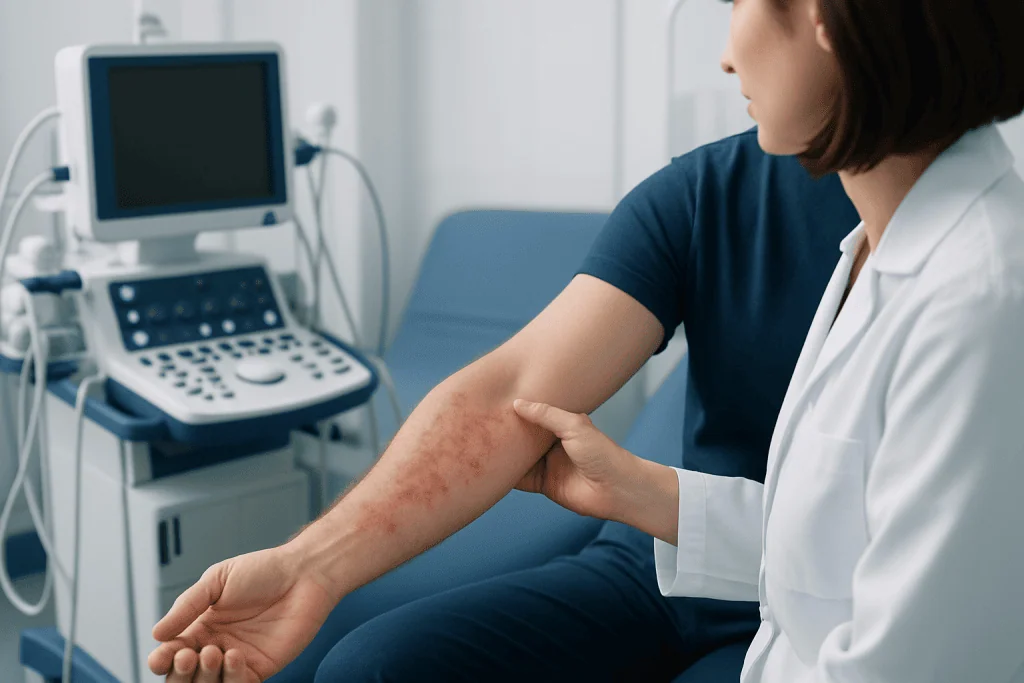
Classic pictures of poison ivy often show red streaks or patches on exposed skin. This streaky pattern may happen when leaves or stems brush across the body, transferring urushiol in lines. The affected area can become swollen, very itchy, and tender, and small blisters may develop over hours to a few days.
The rash can appear anywhere urushiol touched the skin, but it is common on the hands, wrists, forearms, ankles, legs, and face. In some patients, different areas break out at different times. This does not usually mean the rash is spreading from blister fluid. More often, it reflects different amounts of urushiol exposure or differences in skin thickness and sensitivity.
Pictures of poison ivy may show a range of severity. Mild cases look like a limited red, itchy patch. More significant reactions may include pronounced swelling, clusters of blisters, and larger inflamed areas. On darker skin tones, the rash may look violet, brownish, or darker than the surrounding skin rather than bright red, which is important to keep in mind when comparing online images.
- Common features include intense itching
- Red, pink, brown, or violet inflamed patches
- Linear or streak-like markings
- Small blisters or oozing areas
- Swelling, especially around the eyes or face
Why the Rash Happens: Urushiol and Allergic Contact Dermatitis
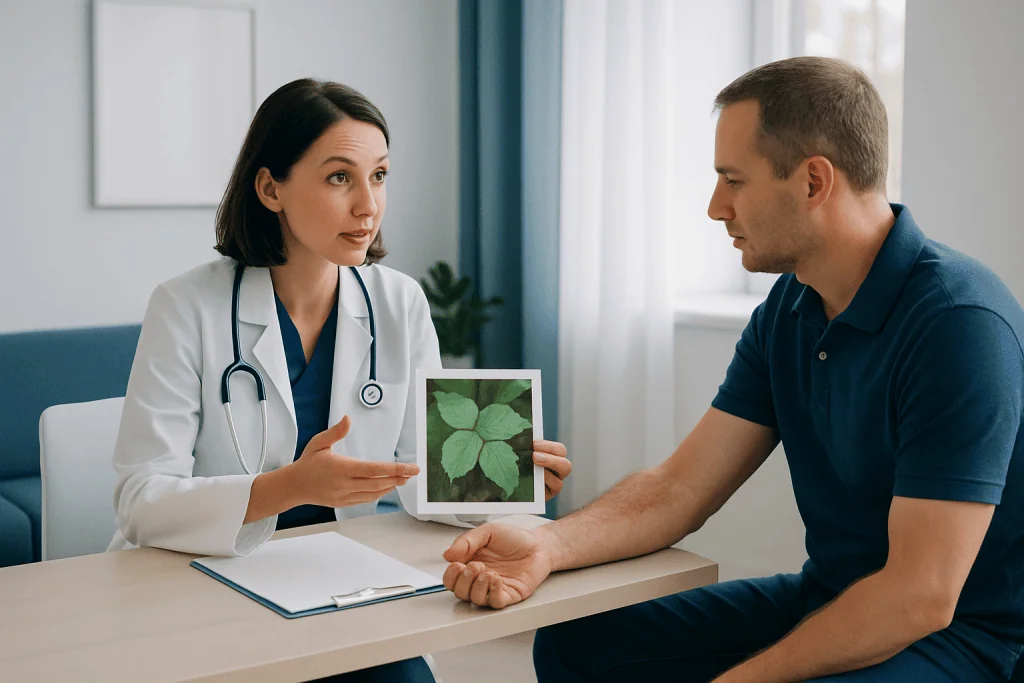
Poison ivy itself does not sting or inject venom. The problem is urushiol oil, which is present in the plant’s leaves, stems, and roots. When the oil touches the skin, the immune system may recognize it as harmful and trigger an allergic inflammation. This is why the rash is called allergic contact dermatitis.
The reaction does not always appear immediately. Some people notice symptoms within several hours, while others develop the rash after one to three days. Patients who have been exposed before are often more likely to react, although a first known reaction can happen at any age.
Urushiol can also remain active on objects. Clothing, shoes, gloves, garden tools, camping gear, and pet fur can carry the oil and lead to indirect exposure. This is one reason why a poison ivy rash may seem confusing at first. The skin reaction can look similar to eczema or other forms of dermatitis, but the history of outdoor exposure is often the key clue.
Common Look-Alikes and How Doctors Tell the Difference
Many rashes can resemble poison ivy in pictures. Other plant-related reactions, insect bites, heat rash, fungal infections, irritant dermatitis, and eczema may all cause redness and itching. Some blistering rashes can also mimic poison ivy, especially if only one photograph is available without any information about symptoms or exposure.
Clinicians usually diagnose poison ivy by combining the appearance of the rash with a simple history. Helpful details include recent time outdoors, yard work, contact with vines or brush, whether others in the same setting were exposed, and whether the rash started on skin that was uncovered. The shape and distribution of the rash are often more informative than the color alone.
Unlike infections such as impetigo or cellulitis, poison ivy usually begins with prominent itching rather than pain, warmth, or fever. Blister fluid does not spread the rash. If new areas continue to appear, it often means that urushiol remained on another surface or that some areas absorbed the oil later than others. If the diagnosis is uncertain, a dermatologist may help assess whether symptoms fit poison ivy or another skin condition.
Diagnosis and What to Do First After Exposure
In most cases, poison ivy is diagnosed clinically, meaning by medical history and skin examination rather than a special test. Patients do not usually need blood work or imaging. If the rash is severe, recurrent, or unusual in appearance, a doctor may consider other causes of contact dermatitis or refer the patient for further evaluation.
If poison ivy exposure is suspected, the first step is prompt washing. Washing the skin with lukewarm water and soap as soon as possible may help remove some urushiol before it binds fully to the skin. Fingernails should also be cleaned, because oil trapped under the nails can be transferred elsewhere. Clothing, shoes, and equipment should be washed carefully as well.
It may also help to avoid scratching, since scratching can worsen skin irritation and increase the risk of secondary infection. If symptoms are significant or widespread, a doctor may recommend evaluation and, when appropriate, dermatology care to confirm the cause and guide treatment.
Treatment Options and Symptom Relief
Most poison ivy rashes improve with time and supportive care. Cool compresses, oatmeal baths, gentle cleansing, and fragrance-free moisturizers may help soothe irritated skin. Over-the-counter anti-itch products can also be useful for some patients, though people with severe symptoms should seek professional advice rather than relying only on self-treatment.
Doctors may recommend topical corticosteroid creams for localized inflammation or other prescription treatments if symptoms are more bothersome. When the rash is widespread, involves sensitive areas such as the face or genitals, or causes marked swelling, stronger treatment may be needed. Patients should use medications exactly as directed and avoid applying potentially irritating home remedies.
If scratching has damaged the skin or there are signs of infection, medical review is important. In some situations, patients may benefit from assessment in allergy or skin clinics if reactions are severe, repeated, or difficult to distinguish from other allergic skin disorders. Acibadem International’s multidisciplinary specialists and JCI-accredited hospitals diagnose and treat skin and allergy-related conditions for international patients.
Prevention and Practical Self-Care
The most effective prevention is avoiding contact with poison ivy and related plants. Patients spending time outdoors may wish to learn how these plants typically grow and to use protective clothing such as long sleeves, long trousers, gloves, and closed shoes when in brushy or wooded areas. Barrier awareness matters because urushiol can be present year-round, even when leaves are not obvious.
After outdoor activities, washing exposed skin and cleaning potentially contaminated items can lower the chance of a delayed reaction. Pets that run through wooded areas may carry urushiol on their fur, so bathing or wiping them down may help if exposure is suspected. Gloves used for gardening should also be cleaned or replaced if they may have touched the plant.
Self-care also includes protecting the skin while it heals. Loose clothing, gentle cleansing, and avoiding harsh scrubs or fragranced products may reduce further irritation. Patients with a history of sensitive skin or chronic rashes may already be familiar with care plans used for skin rashes, but any new or severe eruption should still be reviewed by a qualified clinician.
When to Seek Medical Care
Medical advice is recommended if the rash is severe, very widespread, or does not improve as expected. Care is also important if the rash affects the face, eyes, mouth, genitals, or large areas of the body, or if swelling makes it hard to open the eyes or carry out usual activities. These situations may require prescription treatment rather than home care alone.
Urgent care is needed if there is trouble breathing, wheezing, or swelling involving the mouth or throat, especially after possible inhalation of smoke from burning plants. Patients should also seek medical help if they develop fever, increasing pain, spreading warmth, pus, honey-colored crusting, or other signs that suggest a skin infection.
Children, older adults, and people with chronic skin disease or reduced immune function may need earlier assessment. If there is any doubt about whether a rash is poison ivy or another condition, a doctor can provide a safer and more accurate diagnosis than pictures alone.
Frequently asked questions
Can pictures of poison ivy confirm that a rash is poison ivy?
No. Pictures can help patients recognize common features, but they cannot confirm the diagnosis by themselves. A doctor usually considers the rash’s appearance together with recent outdoor exposure and the timing of symptoms.
What does poison ivy rash usually look like?
It often appears as an itchy, inflamed rash with red or darker streaks, patches, swelling, and small blisters. The pattern may be linear if the plant brushed across the skin. On darker skin tones, the color may look brown, purple, or deeper than the surrounding skin rather than bright red.
How long does poison ivy rash last?
Many mild cases improve over one to three weeks, although the exact course varies. More severe reactions can last longer and may need prescription treatment. If symptoms are worsening or not improving, medical review is sensible.
Can poison ivy spread from person to person?
The rash itself does not spread from blister fluid or by touching the rash. However, urushiol oil can spread if it remains on skin, clothing, tools, or pet fur. Washing exposed items helps prevent repeated contact.
What should someone do right after possible poison ivy exposure?
The skin should be washed promptly with soap and lukewarm water, and any contaminated clothing or gear should be cleaned. It also helps to clean under the nails and avoid touching other body areas before washing. Quick removal of the oil may reduce the severity of the reaction.
When is poison ivy considered an emergency?
Emergency care is needed for breathing difficulty, wheezing, or swelling of the mouth or throat, especially after smoke exposure from burning plants. Severe facial swelling or symptoms suggesting a serious allergic reaction should also be assessed urgently. Most skin-only rashes are not emergencies, but they may still need prompt treatment if extensive.
References
- American Academy of Dermatology
- American Academy of Allergy, Asthma & Immunology
- Mayo Clinic
- MedlinePlus
- National Institute for Occupational Safety and Health
This article is for general information only and is not a substitute for professional medical advice. Please consult a qualified doctor about your individual situation.
Explore treatments in Turkey — costs, top hospitals & a free quote
JCI-accredited · board-certified surgeons · reply within 24h
Add us as a Preferred Source to see more of our trusted health content across Google Search, AI Overviews and Discover.