Boniva — Explained by Medical Evidence, Not Myths

Boniva contains ibandronate, a prescription bisphosphonate used for osteoporosis treatment. It works by slowing bone resorption, which can help maintain or improve bone strength over time.
Key Takeaways
- Boniva contains ibandronate, a prescription bisphosphonate used for osteoporosis treatment.
- It works by slowing bone resorption, which can help maintain or improve bone strength over time.
- Boniva is commonly used in postmenopausal osteoporosis, but it is not suitable for everyone.
- Safe use depends on correct dosing instructions, kidney function, calcium and vitamin D status, and dental history.
- Like other osteoporosis medicines, it has possible side effects and should be reviewed regularly with a doctor.
Boniva is the brand name for ibandronate, a bisphosphonate medicine used to treat certain cases of osteoporosis by slowing bone breakdown. It is not a general pain medicine or a vitamin; it is a prescription treatment that may help reduce fracture risk in appropriately selected patients.
What Boniva is and what it is used for
Boniva is the brand name for ibandronate, a prescription medicine in the bisphosphonate family. It is used to treat osteoporosis, a condition in which bones become less dense and more fragile. In simple terms, Boniva helps slow the natural process of bone breakdown so the body has a better chance to maintain bone strength.
People often search for Boniva to find out whether it builds bone, prevents fractures, or causes major side effects. The evidence-based answer is that Boniva can be helpful for selected patients with osteoporosis, especially postmenopausal women, but it is not the right choice for every person with bone loss. Its benefits and risks need to be assessed individually by a clinician.
Boniva is not a calcium supplement and does not replace healthy lifestyle measures. It is usually one part of a broader osteoporosis plan that may also include calcium and vitamin D, weight-bearing exercise, fall prevention, and monitoring with bone density testing. For readers wanting background on osteoporosis, understanding the condition itself can make Boniva easier to place in context.
How Boniva works in the body
Bone is living tissue that is constantly being renewed. Specialized cells remove older bone, while other cells build new bone. In osteoporosis, the balance shifts so that bone breakdown happens faster than bone rebuilding. Over time, this can weaken the skeleton and increase fracture risk.
Boniva works by attaching to bone and reducing the activity of the cells that break down bone. This process is called antiresorptive therapy. By slowing bone loss, ibandronate may help stabilize or improve bone mineral density over time.
It is important to understand that Boniva does not work overnight. Bone remodeling is gradual, so treatment benefits are usually measured over months to years rather than days or weeks. Doctors may use bone density scans, fracture history, age, menopause status, and other risk factors to decide whether a medicine like Boniva is appropriate.
Boniva is one of several medicines used for bone health. Depending on a patient’s overall health, fracture risk, and test results, a doctor may discuss other approaches as well, including broader osteoporosis treatment options when needed.
Who may benefit from Boniva

Boniva is most commonly used for postmenopausal osteoporosis in women who have low bone density or an increased risk of fractures. It may be considered when lifestyle measures alone are not enough to protect bone health. The decision is usually based on a full clinical picture rather than a single test result.
Doctors may look at several factors before prescribing Boniva, including age, prior fractures, family history, steroid use, smoking, alcohol intake, body weight, menopause history, and bone density results. A person with a previous fragility fracture or very low bone density may need medicine sooner than someone with mild bone loss and few risk factors.
Boniva is not suitable for everyone. It may not be appropriate for people with certain swallowing problems, low blood calcium, significant kidney disease, or those who cannot follow the instructions for taking the oral form safely. In some cases, another osteoporosis medicine may be more effective or practical.
Because osteoporosis often has no symptoms until a fracture occurs, proper assessment matters. Evaluation may include bone density testing and a broader review of bone metabolism, nutrition, medications, and fall risk.
How Boniva is taken and why the instructions matter
Boniva may be prescribed in different forms, including an oral tablet or an intravenous option, depending on the treatment plan and the patient’s needs. Oral bisphosphonates require careful use because the medicine can irritate the esophagus if it does not reach the stomach properly. This is why the exact dosing instructions matter.
Patients are usually advised to take the oral form with plain water on an empty stomach and then remain upright for a period of time before eating, drinking anything besides water, or taking other medicines. The purpose is to improve absorption and reduce the chance of irritation in the throat or esophagus. A doctor or pharmacist should explain the exact instructions for the prescribed formulation.
People should not change how they take Boniva without medical advice. Skipping instructions, lying down too soon, or taking the medicine with food or supplements can reduce absorption or increase side effects. Calcium, iron, magnesium, and some antacids may interfere with the medicine if taken too close together.
For some patients, an intravenous bisphosphonate may be considered if oral dosing is difficult or poorly tolerated. The most appropriate route depends on medical history, kidney function, convenience, and overall fracture risk.
Possible side effects, warnings, and common concerns
Like all prescription medicines, Boniva can cause side effects. Commonly discussed issues include indigestion, stomach discomfort, nausea, heartburn, or irritation of the esophagus with the oral form. Some patients also report muscle, joint, or bone pain. These effects are often manageable, but persistent symptoms should be reviewed by a doctor.
There are also less common but important safety concerns. Bisphosphonates have been associated with low calcium levels, kidney-related cautions, and rare complications such as osteonecrosis of the jaw or unusual thigh bone fractures, especially with long-term use in selected patients. These risks are uncommon, but they are the reason doctors ask about dental procedures, kidney health, and new thigh or groin pain.
Before starting Boniva, clinicians usually review calcium and vitamin D intake and may correct deficiencies first. Dental health is also relevant. Good oral hygiene and routine dental care are important, and patients should tell both their doctor and dentist that they use a bisphosphonate.
Some people worry that Boniva is “dangerous” in general. A more accurate way to view it is that Boniva has real benefits and real risks, like many medicines. The goal is to use it in the right patient, for the right reason, with appropriate follow-up and periodic reassessment.
Diagnosis and monitoring during treatment
Boniva is usually prescribed after a doctor confirms osteoporosis or judges that fracture risk is high enough to justify treatment. Diagnosis often involves a clinical review, medical history, fracture history, and bone mineral density testing. In some cases, blood tests are used to look for contributing factors such as vitamin D deficiency, calcium imbalance, or underlying endocrine problems.
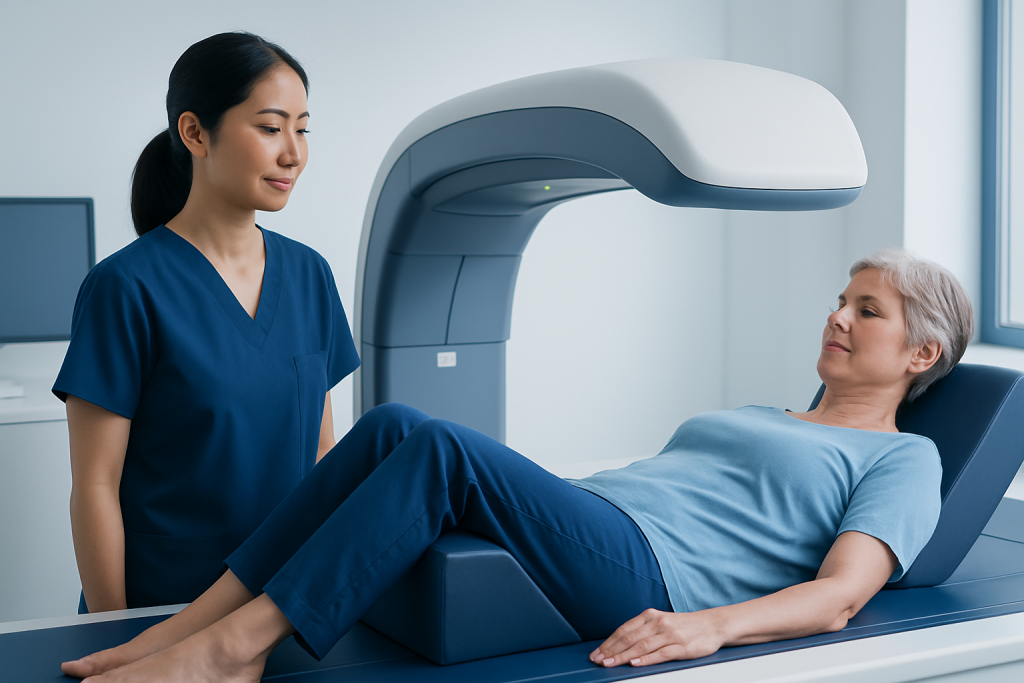
Bone density is commonly measured with a DXA scan. This test helps estimate bone strength and can guide treatment decisions, although it is not the only factor that matters. A person with a prior low-trauma fracture may need treatment even if the bone density result is not in the most severe range.
Monitoring continues after treatment begins. Doctors may repeat bone density testing at intervals to see whether bone loss is stabilizing and to reassess fracture risk. They may also review symptoms, adherence to dosing instructions, calcium and vitamin D intake, and whether any side effects are developing.
Osteoporosis management is not only about a medication. Some patients benefit from an evaluation for vertebral fractures, posture changes, chronic back pain, or mobility concerns. In selected cases, consultation with specialists in orthopedics or metabolic bone disease may be helpful.
Lifestyle measures that support Boniva treatment
Boniva works best as part of a complete bone-health strategy. Most patients are advised to maintain adequate calcium and vitamin D intake through diet and supplements if needed, based on medical guidance. These nutrients help support normal bone metabolism, but they should not be started casually in high amounts without professional advice.
Regular physical activity is also important. Weight-bearing exercise, resistance training, balance work, and posture-focused movement can help support bone health, muscle strength, and fall prevention. The right plan depends on age, fracture history, and overall fitness, so exercise may need to be individualized.
Other supportive steps include stopping smoking, limiting excessive alcohol intake, checking vision and footwear, and making the home safer to reduce falls. Even highly effective osteoporosis medicine cannot completely protect bone if repeated falls continue to occur.
Patients should also keep an up-to-date list of all medicines they take. Some drugs can affect bone health or raise fall risk through dizziness or sedation. Reviewing medications regularly with a clinician can be an important part of fracture prevention.
When to seek medical care
Medical care should be sought promptly if a person taking Boniva develops difficulty swallowing, severe chest pain, painful swallowing, vomiting blood, black stools, or severe stomach symptoms. These may suggest irritation or injury in the upper digestive tract and should not be ignored. New severe bone, joint, or muscle pain also deserves medical review.
A doctor should also be contacted if there is new thigh or groin pain, symptoms of low calcium such as muscle cramps or tingling, or if a major dental procedure is planned. People with a sudden fracture after a minor fall, loss of height, or persistent back pain may need reassessment for osteoporosis complications such as spinal compression fractures.
Anyone with kidney disease, difficulty remaining upright after taking the medicine, or uncertainty about how to use Boniva safely should ask for medical advice rather than guessing. Ongoing follow-up matters because treatment plans for osteoporosis often need adjustment over time.
Near the end of the care journey, some patients may benefit from coordinated specialist review. Acibadem International’s multidisciplinary specialists and JCI-accredited hospitals diagnose and treat bone health conditions for international patients when further evaluation is needed.
Frequently asked questions
Is Boniva the same as ibandronate?
Yes. Boniva is a brand name for the medicine ibandronate. Ibandronate belongs to a group of medicines called bisphosphonates, which are used to treat certain forms of osteoporosis.
What does Boniva do for bones?
Boniva slows the breakdown of bone, which can help maintain or improve bone density over time. By reducing bone resorption, it may lower the risk of some fractures in appropriately selected patients.
How long does Boniva take to work?
Boniva does not produce immediate changes that a person can feel from day to day. Its effects on bone remodeling happen gradually, and benefits are usually assessed over months or longer through follow-up and bone density monitoring.
Can Boniva cause side effects?
Yes. Possible side effects include stomach upset, heartburn, nausea, or irritation of the esophagus with oral use, as well as muscle or joint pain in some people. Rare but important risks also exist, so patients should discuss symptoms and follow-up with their doctor.
Who should not take Boniva?
Boniva may not be suitable for people with certain swallowing disorders, low calcium levels, significant kidney problems, or those who cannot remain upright after taking the oral medicine. A clinician should review medical history before prescribing it.
Do patients still need calcium and vitamin D if they take Boniva?
Often, yes. Boniva is not a substitute for adequate calcium and vitamin D, which are important for bone health. A doctor can advise how much is appropriate based on diet, blood tests, kidney function, and overall treatment goals.
This article is for general information only and is not a substitute for professional medical advice. Please consult a qualified doctor about your individual situation.
Explore treatments in Turkey — costs, top hospitals & a free quote
JCI-accredited · board-certified surgeons · reply within 24h
Add us as a Preferred Source to see more of our trusted health content across Google Search, AI Overviews and Discover.

More from the Health Library

Seed Corn on Foot: What Patients Need to Know

Buckwheat Noodles — Explained by Medical Evidence, Not Myths

Carbonate — Explained by Medical Evidence, Not Myths

Anxiolytic: A Complete Medical Overview

Tiny Hard Lump on Labia Majora — Explained by Medical Evidence, Not Myths