Seed Corn on Foot: What Patients Need to Know

A seed corn on foot is a small, concentrated build-up of hard skin linked to repeated pressure and friction. It often causes pinpoint pain, especially when standing, walking, or wearing tight shoes.
Key Takeaways
- A seed corn on foot is a small, concentrated build-up of hard skin linked to repeated pressure and friction.
- It often causes pinpoint pain, especially when standing, walking, or wearing tight shoes.
- Simple self-care may help, but cutting or digging at the lesion at home can worsen irritation or lead to infection.
- People with diabetes, poor circulation, or reduced foot sensation should have foot lesions assessed by a clinician.
- Treatment focuses on reducing pressure, softening thickened skin, and addressing the underlying cause.
A seed corn on foot is a tiny, well-defined area of thickened skin that often forms on pressure points and can feel sharp or tender when walking. It is usually not serious, but proper diagnosis matters because other foot conditions can look similar and need different care.
What Is a Seed Corn on Foot?
A seed corn on foot is a very small, round area of thickened skin that develops in response to repeated pressure or friction. It most often appears on the sole of the foot, especially in places that bear weight. Although the name can sound unusual, it refers to the corn’s tiny size and defined center rather than to any type of seed or infection.
Many people describe a seed corn as feeling like they are stepping on a grain of sand, a pebble, or a splinter. Unlike a broad callus, which tends to spread over a larger area, a seed corn is compact and focused. This concentrated thickening can make even a tiny spot surprisingly uncomfortable.
Seed corns are generally benign, meaning they are not cancerous and do not usually signal a serious disease on their own. However, they can be persistent if the source of pressure is not corrected. Because plantar warts, calluses, and other foot problems can look similar, it is helpful to have ongoing or painful lesions assessed by a qualified clinician.
How It Feels and What It Looks Like
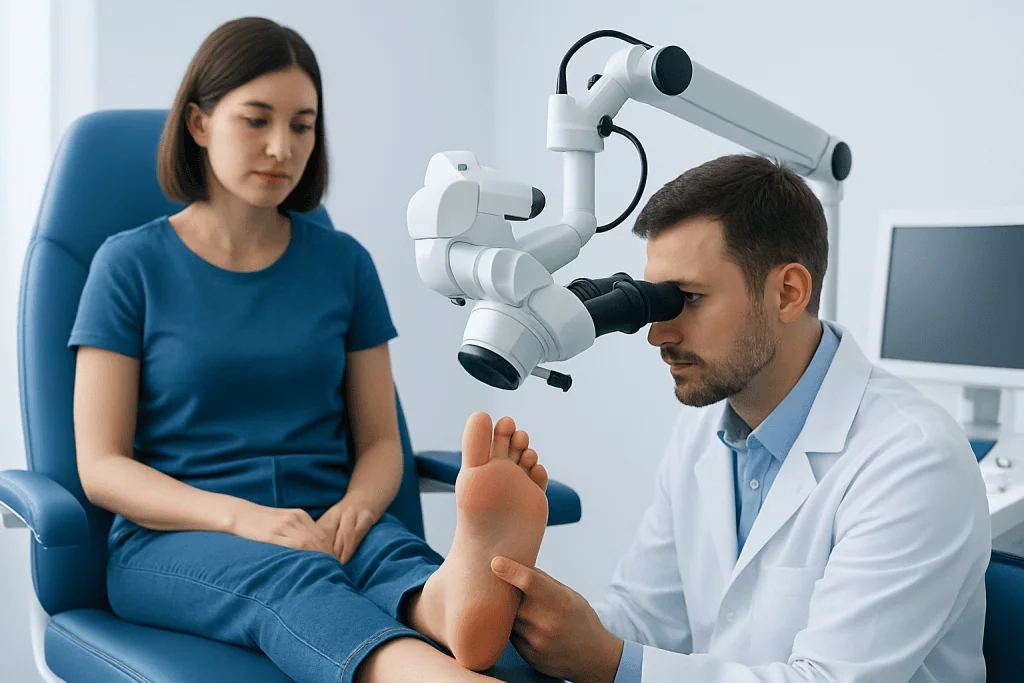
The most common symptom of a seed corn on foot is localized pain. This pain is often worse with walking, standing for long periods, or wearing shoes that increase pressure on the area. Some people notice tenderness only when direct pressure is applied, while others feel discomfort with each step.
Visually, a seed corn is usually small, round, and firm. The skin may look thickened, dry, or slightly yellowish. In the center, there may be a harder core that presses into deeper tissue and causes the characteristic pinpoint pain.
A seed corn can sometimes be confused with a plantar wart. Warts may interrupt normal skin lines and can show tiny dark dots from clotted blood vessels, while corns usually preserve skin lines and are more directly related to pressure points. Still, this distinction is not always obvious at home.
- Pinpoint tenderness on the sole of the foot
- A small, hard, well-defined spot of thickened skin
- Pain that worsens with pressure or tight footwear
- A sensation of walking on something sharp or embedded
Why Seed Corns Develop

Seed corns form when the skin tries to protect itself from repeated stress. Friction and pressure stimulate the outer layer of skin to thicken. Over time, this can create a small, dense area that presses inward rather than simply spreading outward.
Common triggers include poorly fitting shoes, high heels, thin soles, and walking patterns that place extra weight on one part of the foot. Foot shape and biomechanics also matter. For example, bony prominences, hammertoes, high arches, flat feet, or gait changes can create pressure points where corns are more likely to form.
Dry skin may contribute because it can become less flexible and more prone to localized thickening. In some people, repeated barefoot walking on hard surfaces plays a role. If a person has another foot condition that changes the way weight is distributed, the risk of a seed corn may increase. In some cases, a clinician may also assess for related structural concerns or conditions such as common foot problems that affect overall foot care and comfort.
Who Is More Likely to Get Them?
Anyone can develop a seed corn on foot, but some factors make it more likely. People who spend long hours standing or walking, wear narrow or rigid shoes, or participate in activities that repeatedly load the forefoot or heel may be at higher risk. Footwear that does not fit properly is one of the most common contributors.
Age can play a role as well. As people get older, the natural padding under the feet may become thinner, which can increase pressure in certain areas. Changes in foot shape over time may also contribute to friction and focal skin thickening.
Some people need extra caution with any foot lesion. Those with diabetes, poor circulation, peripheral neuropathy, or immune compromise should not assume a painful spot is just a corn. Because healing may be slower and the risk of infection higher, professional foot evaluation is especially important in these groups.
How Doctors Diagnose a Seed Corn
Diagnosis usually begins with a clinical examination. A doctor, dermatologist, podiatrist, or orthopedic specialist will look at the size, location, and surface of the lesion and ask about pain, footwear, activity, and how long the problem has been present. In many cases, the appearance and pressure pattern provide strong clues.
The main aim is to confirm that the lesion is a corn rather than something else. Conditions that can resemble a seed corn include plantar warts, calluses, small foreign bodies, cysts, and less commonly other skin lesions. If the diagnosis is unclear, the clinician may carefully pare down the thickened skin to better examine the area underneath.
When pressure patterns or structural foot problems appear to be contributing, the clinician may recommend further evaluation of gait or foot alignment. In selected cases, imaging can help if a retained foreign object or bone-related pressure point is suspected. Treatment planning may then include options used in orthopedic assessment and care when mechanical foot issues are part of the problem.
Treatment Options and Safe Self-Care
Treatment focuses on two goals: relieving the current corn and preventing it from returning. The most effective step is reducing the pressure or friction that caused it. This may include changing shoes, using cushioned insoles, adding protective pads, or addressing an abnormal pressure point.
For mild cases, soaking the foot and using a moisturizer or keratolytic product recommended by a healthcare professional may help soften thickened skin. Gentle filing with an appropriate foot file may also be advised for some people. However, cutting, shaving, or digging into a corn at home is not safe, especially for people with diabetes or poor circulation.
Clinicians can trim or pare the corn more safely in a sterile setting, which often provides quick symptom relief. If a foot deformity or gait issue is driving repeated corns, custom orthotics or targeted footwear changes may be recommended. When a lesion is actually a wart rather than a corn, management differs and may involve dermatology care. Persistent pain from pressure-related foot mechanics can also be reviewed through physical therapy and rehabilitation to improve load distribution and walking pattern.
In a small number of cases, recurrent corns are linked to structural foot problems that do not improve with conservative care. Then, a specialist may discuss whether correcting the underlying mechanical issue would help reduce recurrence.
Preventing Recurrence in Daily Life
Prevention is usually centered on pressure relief. Shoes should fit well, with enough room in the toe box and a sole that cushions impact. A comfortable fit matters more than appearance when recurrent corns are a problem. Socks that reduce friction and keep feet dry can also help.
Regular foot care is important. Keeping the skin moisturized may help reduce dryness and cracking, while checking the soles for early thickening can allow people to act before pain develops. If corns appear in the same spot repeatedly, it is worth asking whether footwear, posture, or walking mechanics are contributing.
People who are prone to foot problems may benefit from periodic professional foot assessment. This is particularly helpful if there are bunions, toe deformities, or changes in the way weight is distributed across the foot. Near the end of a care plan, some patients seek multidisciplinary review; Acibadem International’s specialists in JCI-accredited hospitals diagnose and treat foot conditions for international patients when further evaluation is needed.
- Choose supportive, properly fitting shoes
- Avoid repetitive pressure on the same area when possible
- Use cushioning pads or insoles if recommended
- Moisturize dry foot skin regularly
- Do not cut corns at home with blades or sharp tools
When to Seek Medical Care
Medical attention is a good idea if a suspected seed corn on foot is very painful, keeps returning, or does not improve with simple pressure relief and footwear changes. It is also important to seek assessment if the diagnosis is uncertain, because not every painful spot on the sole is a corn.
Prompt evaluation is especially important if there is redness, warmth, swelling, drainage, bleeding, or signs of infection. A clinician should also review any lesion that changes in appearance, grows, or is associated with severe tenderness. People with diabetes, nerve damage, circulation problems, or immune system conditions should seek professional foot care early rather than trying to manage the lesion themselves.
In short, a seed corn is often manageable, but persistent or complicated cases deserve expert review. A qualified doctor can confirm the diagnosis, relieve pressure safely, and look for underlying causes so that treatment addresses more than just the surface thickening.
Frequently asked questions
Is a seed corn on foot the same as a plantar wart?
No. A seed corn is a pressure-related thickening of skin, while a plantar wart is caused by human papillomavirus. They can look similar, so a clinician may be needed to tell the difference accurately.
Can a seed corn go away on its own?
It can improve if the pressure or friction causing it is removed. However, if the underlying trigger remains, the corn may persist or return. Proper footwear and pressure relief are important for lasting improvement.
Is it safe to cut out a seed corn at home?
No, this is not recommended. Cutting or digging at the lesion can injure healthy skin and increase the risk of infection, especially in people with diabetes or poor circulation. Professional care is safer if trimming is needed.
What kind of shoes help prevent seed corns?
Shoes with a roomy toe box, good cushioning, and a supportive sole are usually helpful. The best choice is one that reduces rubbing and does not create high-pressure points on the sole of the foot.
Why does a seed corn hurt so much if it is so small?
Even though it is tiny, the hard central core can press into deeper tissue during walking or standing. This focused pressure creates the sharp, pinpoint discomfort many people notice.
Should people with diabetes treat a seed corn themselves?
They should be especially cautious and generally avoid self-cutting or strong over-the-counter treatments unless advised by a clinician. Because diabetes can affect sensation and healing, professional foot assessment is usually the safest approach.
This article is for general information only and is not a substitute for professional medical advice. Please consult a qualified doctor about your individual situation.
Explore treatments in Turkey — costs, top hospitals & a free quote
JCI-accredited · board-certified surgeons · reply within 24h
Add us as a Preferred Source to see more of our trusted health content across Google Search, AI Overviews and Discover.

More from the Health Library

Third Nipple — Explained by Medical Evidence, Not Myths

Bumps on Forehead: What Patients Need to Know

Lactic Acid: A Complete Medical Overview

Ligament of Treitz: What Patients Need to Know

Foaming at the Mouth: What Patients Need to Know