Is Blood Blue? Causes, Explanations, and Next Steps

Human blood is always a shade of red, not blue. Veins can appear blue because of how light passes through skin and is reflected back to the eye.
Key Takeaways
- Human blood is always a shade of red, not blue.
- Veins can appear blue because of how light passes through skin and is reflected back to the eye.
- Bluish lips, fingertips, or skin may be a sign of low oxygen levels or poor circulation.
- Doctors assess symptoms, oxygen level, circulation, and blood tests to find the cause.
- Urgent care is needed if blue discoloration occurs with shortness of breath, chest pain, confusion, or sudden worsening.
No—human blood is not blue. In most cases, the idea comes from how veins look through the skin, but blue or bluish skin, lips, or nails can sometimes point to low oxygen levels or circulation problems and deserve medical attention.
Overview: Is Blood Really Blue?
No—human blood is not blue. Blood inside the body is always red, ranging from bright red when it carries more oxygen to darker red when it carries less oxygen. For many people, the question comes up because veins often look blue under the skin, which is a normal visual effect rather than a sign that the blood itself is blue.
In most situations, this is harmless and simply reflects how light interacts with skin, tissue, and blood vessels. However, if a person notices bluish skin, lips, nail beds, or fingertips rather than just blue-looking veins, that can be different. This type of color change may suggest that not enough oxygen is reaching the blood or tissues, or that blood flow is reduced.
That distinction is important. Blue-appearing veins alone are common and expected. Blue discoloration of the body, especially if new or accompanied by symptoms such as shortness of breath or dizziness, should be evaluated by a doctor.
Why Veins Look Blue Even Though Blood Is Red
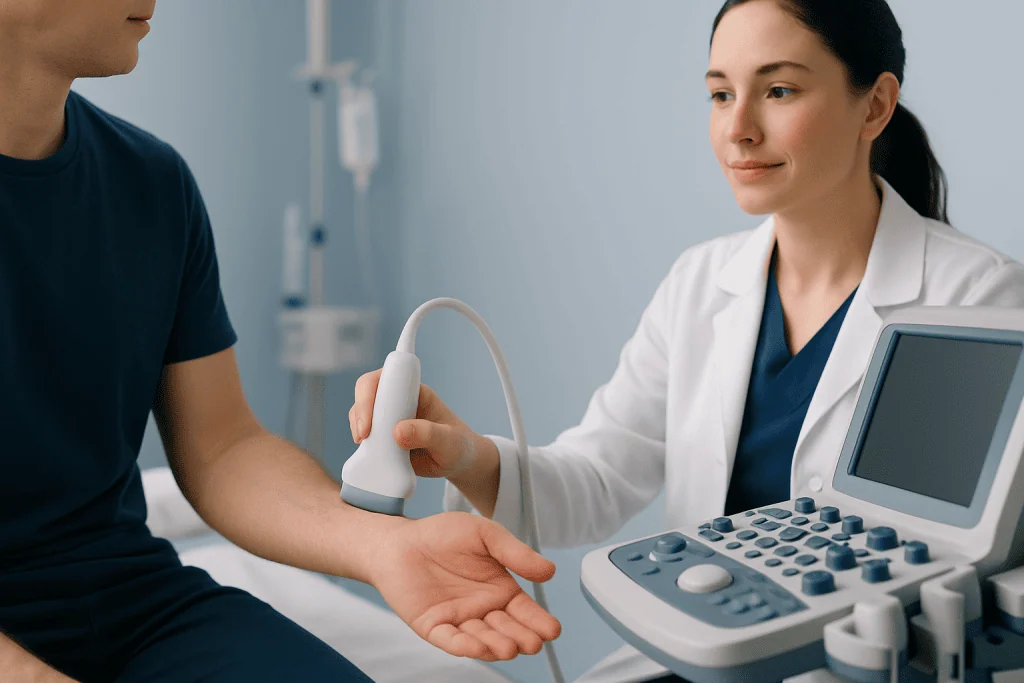
Veins can look blue because of the way light behaves when it passes through the skin. Different wavelengths of light penetrate to different depths and scatter in different ways. Blue light is reflected back to the eye more readily from superficial veins, while red light tends to travel deeper into tissue.
Skin thickness, skin tone, the depth of the vein, and surrounding tissue all affect how a vein appears. A vein close to the surface may look blue, green, or bluish-purple even though the blood inside it is still dark red. This optical effect explains why visible veins do not match the true color of blood.
Another common misunderstanding is that oxygen-poor blood is blue. In humans, oxygen-poor blood is not blue; it is a darker shade of red. Oxygen-rich blood is bright red, while oxygen-poor blood is deep red or maroon. Both are shades of red because of hemoglobin, the iron-containing protein in red blood cells.
When a Blue Color May Mean Something Medical

A bluish color in the lips, tongue, fingertips, nail beds, or skin can be a medical sign called cyanosis. Cyanosis happens when there is not enough oxygen in the blood reaching the tissues, or when blood flow is reduced enough to change the skin’s appearance. It is different from the normal blue look of veins under the skin.
Cyanosis may be central or peripheral. Central cyanosis tends to affect the lips, tongue, and central body and can suggest lower oxygen levels in the bloodstream. Peripheral cyanosis often affects the fingers, toes, or nail beds and may happen when circulation slows in the extremities, such as in cold exposure or some vascular conditions.
Not every bluish tone is an emergency, but context matters. Temporary color change from being cold can improve with warming. A new, persistent, or unexplained blue color—especially with breathing trouble, chest discomfort, faintness, fever, or confusion—needs prompt medical assessment. Some underlying causes relate to the heart, lungs, or blood and may require testing such as heart disease evaluation or lung disease assessment.
Possible Causes and Risk Factors
Low oxygen levels can develop for many reasons. Lung problems such as asthma flare-ups, pneumonia, chronic lung disease, or a blood clot in the lungs may reduce oxygen transfer. Heart conditions can also affect how oxygenated blood circulates through the body. In infants and some adults, certain structural heart conditions may lead to bluish discoloration.
Poor circulation can also make hands, feet, or nail beds look blue or purple. This may happen in cold weather, with narrowed blood vessels, or in disorders affecting blood flow to the extremities. Conditions such as Raynaud syndrome can cause fingers or toes to turn pale, blue, and then red in response to cold or stress.
Less commonly, changes in the blood itself can alter color or oxygen delivery. Severe anemia, abnormal forms of hemoglobin, or exposure to certain medications or chemicals can interfere with oxygen transport. Rare blood conditions may need specialist review, including anemia workup when fatigue, pallor, or weakness are also present.
Risk factors depend on the underlying cause and may include smoking, chronic lung or heart disease, recent infection, high-altitude exposure, severe cold, certain medications, and a history of circulation problems. Newborns, older adults, and people with known heart or lung disease may need quicker evaluation if blue discoloration appears.
How Doctors Find the Cause
When a person reports blue discoloration, a doctor usually begins by clarifying what is being seen: blue-looking veins, bluish skin, or color changes in the lips or fingers. The history often includes when the symptom started, whether it is constant or triggered by cold or exertion, and whether there are other symptoms such as cough, chest pain, fever, dizziness, numbness, or swelling.
The physical exam typically includes checking the skin and nail beds, listening to the heart and lungs, and measuring vital signs. Oxygen saturation is usually measured with pulse oximetry, a quick, noninvasive test on the finger. If oxygen levels are low or the situation is unclear, a doctor may order blood tests, including arterial blood gas analysis, complete blood count, and tests that look for abnormal hemoglobin.
Depending on the suspected cause, imaging or specialized studies may be needed. These can include a chest X-ray, electrocardiogram, echocardiogram, or vascular imaging. If the concern is circulation in the limbs, vascular surgery evaluation may be considered. If a heart-related cause is suspected, cardiology assessment can help identify rhythm, structural, or pumping problems.
Treatment Options and What Helps
Treatment depends on the reason for the color change rather than the color itself. If veins simply look blue under the skin and there are no other symptoms, no treatment is needed. Education and reassurance are often enough, since this is a normal effect of anatomy and light.
If low oxygen is the issue, treatment focuses on improving breathing and oxygen delivery. This may include oxygen therapy, medicines for airway or lung conditions, treatment of infection, or management of heart disease. Some people may need emergency care if oxygen levels are low or symptoms are severe.
When poor circulation is contributing, practical measures can help, such as warming the hands and feet, avoiding cold exposure, and managing underlying vascular problems. Persistent or recurrent circulation symptoms may benefit from cardiovascular surgery consultation or specialist vascular care when appropriate. Blood-related causes may require further laboratory testing and treatment directed by a hematology team.
Near the end of the diagnostic pathway, some patients may need coordinated care across specialties. Acibadem International’s multidisciplinary specialists in JCI-accredited hospitals diagnose and treat heart, lung, vascular, and blood-related conditions for international patients when further evaluation is needed.
Prevention and Self-Care
There is no need to prevent normal blue-looking veins, because this is not harmful. However, supporting heart, lung, and vascular health can lower the chance of medical causes of bluish discoloration. Not smoking, staying active, managing chronic conditions, and following treatment plans for asthma, heart disease, or circulation disorders are all helpful steps.
People who notice finger or toe color changes in the cold can try simple protective measures. Wearing gloves and warm socks, limiting sudden temperature changes, and managing stress may reduce episodes. Good hydration and regular movement can also support circulation, especially during long periods of sitting.
Self-checking can be useful, but it should stay simple. A person can note whether the color change affects only visible veins or whether it also involves lips, nail beds, fingers, or toes. It is also helpful to notice any associated symptoms such as breathlessness, chest discomfort, swelling, or fatigue. These observations can help a doctor decide what testing, if any, is needed.
When to Seek Medical Care
Medical review is appropriate if bluish skin, lips, tongue, nail beds, or fingertips are new, persistent, or unexplained. This is especially true when the change does not improve with warming, happens repeatedly, or appears to be getting worse. A routine appointment may also be reasonable for recurrent color changes in the hands or feet, even without severe symptoms.
Urgent care is needed if blue discoloration appears with shortness of breath, chest pain, confusion, severe dizziness, fainting, a rapid heartbeat, or sudden weakness. These symptoms can point to a problem affecting oxygen levels, the heart, the lungs, or circulation. Infants and young children with bluish lips or breathing difficulty should be assessed promptly.
For many people, the answer to “is blood blue?” is reassuring: no, and visible blue veins are usually normal. The time to act is when the blue color involves skin or lips, is accompanied by symptoms, or represents a clear change from usual health. In those situations, timely medical evaluation can identify the cause and guide the right treatment.
Frequently asked questions
Is blood blue before it leaves the body?
No. Human blood is always red, whether it is inside the body or outside it. Blood with more oxygen is brighter red, and blood with less oxygen is darker red, but neither is blue.
Why do my veins look blue or green?
This usually happens because of how light passes through the skin and reflects back to the eye. Vein depth, skin tone, and surrounding tissue all affect the color a person sees, even though the blood inside the vein is still red.
Does blue skin always mean low oxygen?
Not always, but it can. Cold exposure and reduced blood flow to the hands or feet can cause a bluish color, while bluish lips or tongue may suggest lower oxygen levels and need faster medical review.
What is cyanosis?
Cyanosis is a bluish discoloration of the skin, lips, or nail beds that can happen when oxygen levels are low or circulation is reduced. It is a clinical sign, not a diagnosis, so doctors look for the underlying cause.
When should someone worry about a blue color?
Blue-looking veins alone are usually not a problem. Concern is higher if the lips, tongue, fingertips, or skin turn blue, especially with shortness of breath, chest pain, confusion, fainting, or sudden worsening.
How do doctors test for the cause of bluish discoloration?
Doctors often start with a physical exam and a pulse oximeter to check oxygen saturation. Depending on the situation, they may also order blood tests, a chest X-ray, heart tests, or circulation studies.
References
- American Heart Association
- National Heart, Lung, and Blood Institute
- MedlinePlus
- Mayo Clinic
- Merck Manual Consumer Version
This article is for general information only and is not a substitute for professional medical advice. Please consult a qualified doctor about your individual situation.
Explore treatments in Turkey — costs, top hospitals & a free quote
JCI-accredited · board-certified surgeons · reply within 24h
Add us as a Preferred Source to see more of our trusted health content across Google Search, AI Overviews and Discover.