

Is Cataract Surgery Covered by Insurance: Procedure, Recovery and Results

Insurance commonly covers medically necessary cataract surgery, but benefit rules vary by plan and location. Coverage is usually based on functional visual difficulty rather than cataract appearance alone.
Key Takeaways
- Insurance commonly covers medically necessary cataract surgery, but benefit rules vary by plan and location.
- Coverage is usually based on functional visual difficulty rather than cataract appearance alone.
- Standard monofocal intraocular lenses are more likely to be covered than elective premium lens upgrades.
- Most people return to light daily activities within a few days, while visual recovery continues for several weeks.
- A preoperative eye assessment and insurer verification can clarify authorization, exclusions, and expected personal expenses.
Cataract surgery is often covered by health insurance when an eye specialist documents that cataracts are reducing vision and affecting everyday activities such as driving, reading, working, or recognizing faces. The exact coverage, lens options, deductibles, and personal costs depend on the insurance plan, country, provider network, and whether any elective upgrades are selected.
Is Cataract Surgery Covered by Insurance?
In many health systems, cataract surgery is covered by insurance when it is considered medically necessary. This generally means that the cataract is causing meaningful visual impairment that affects daily life, such as difficulty reading, driving safely, seeing screens, navigating stairs, or carrying out work and household tasks.
Coverage is not identical for every person. The insurer may require an examination by an ophthalmologist, documentation of reduced vision or glare symptoms, and confirmation that surgery is appropriate. Even when the operation is covered, the patient may still be responsible for deductibles, co-payments, coinsurance, facility charges, or services outside their policy network.
Insurance frequently covers the medically necessary components of standard cataract surgery, including removal of the cloudy lens and placement of a standard intraocular lens. Elective choices, such as some premium multifocal, extended-depth-of-focus, or astigmatism-correcting lenses, may involve additional personal payment. Patients should ask both the eye clinic and their insurer for a written benefit estimate before scheduling surgery.
Understanding Cataracts and When Surgery Is Considered
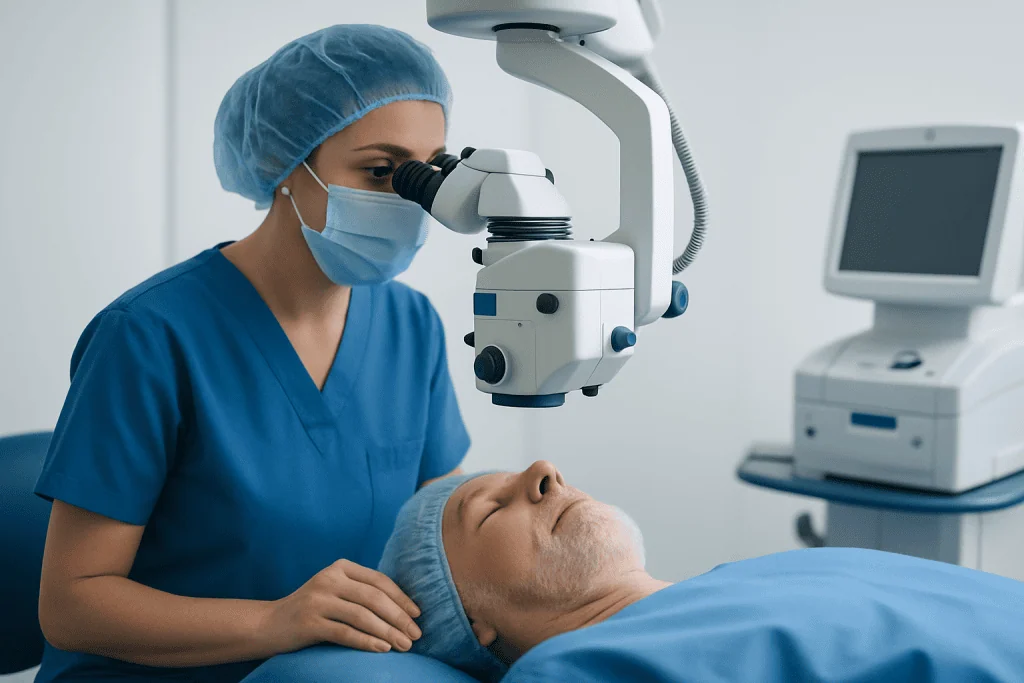
A cataract is clouding of the eye’s natural lens. It is most often related to aging, although it can also occur after eye injury, eye inflammation, certain medicines such as long-term corticosteroids, diabetes, previous eye surgery, or inherited conditions. Cataracts commonly develop gradually and may affect one or both eyes.
Typical symptoms include blurred or dim vision, fading or yellowing of colors, glare from headlights or sunlight, halos around lights, reduced night vision, and frequent changes in glasses prescriptions. More information about the condition is available in cataract information.
Surgery is the only treatment that removes a cataract. However, it does not need to be performed simply because a cataract is present. An ophthalmologist usually recommends surgery when vision problems interfere with the person’s safety, independence, work, hobbies, or quality of life, or when the cataract makes it harder to monitor or treat another eye condition.
How Bad Do Your Cataracts Have to Be for Insurance to Cover Surgery?

There is no single visual acuity number that applies to every insurer or country. In general, insurers focus on whether the cataract causes functional limitations rather than whether it looks severe during an eye examination. For example, a person may have relatively good chart vision in a bright clinic but still experience disabling glare while driving at night.
During the assessment, the ophthalmologist may document symptoms, visual acuity, glare-related difficulties, eye examination findings, and how vision affects normal activities. The clinician will also check whether another problem, such as uncorrected refractive error, dry eye, glaucoma, or retinal disease, may be contributing to the visual symptoms.
People considering surgery can prepare by noting specific activities that have become difficult. This may include reading medicine labels, using a computer, cooking, recognizing faces, driving, or working in low light. Clear, accurate descriptions help the clinical team evaluate whether surgery is appropriate and help support any insurance documentation requirements.
Cataract Surgery Procedure: How It Works and Who May Be a Candidate
Cataract surgery replaces the clouded natural lens with a clear artificial lens called an intraocular lens, or IOL. The most common technique is phacoemulsification. Through a very small incision, the surgeon uses ultrasound energy to break up and remove the cloudy lens, then inserts and positions the new lens inside the lens capsule.
Most adults with cataract-related visual impairment can be assessed as potential candidates. The evaluation includes eye measurements to select the lens power, review of current medications and medical conditions, and examination of the cornea, retina, optic nerve, and eye pressure. Conditions such as macular degeneration, diabetic retinopathy, glaucoma, or corneal disease do not always prevent surgery, but they may influence the expected visual outcome.
On the day of surgery, numbing eye drops and sometimes light sedative medication are used. The procedure is commonly performed as a day case, meaning the patient goes home the same day with a responsible adult. The eye is protected afterward, and prescription drops are typically used to reduce inflammation and lower the risk of infection. A detailed overview of cataract surgery can help patients understand the treatment pathway.
Lens selection is an important part of planning. A standard monofocal lens is usually set for one main distance, often distance vision, with glasses still needed for some tasks. Other lens designs may reduce dependence on glasses for particular distances, but suitability, visual trade-offs, and insurance coverage should be discussed individually with the surgeon.
Do They Cover Your Face During Cataract Surgery?
Yes. During cataract surgery, the face and body are covered with sterile surgical drapes to reduce the risk of contamination. An opening in the drape allows the surgeon to access the eye being treated, while the surrounding area remains protected.
Patients are usually awake but comfortable because the eye is numbed with drops or local anesthesia. The surgical team monitors the patient throughout the procedure and can communicate with them. Some people notice bright lights, movement, or vague shapes, but they should not feel sharp pain.
It is normal to feel concerned about having drapes placed over the face. The team can explain each step before surgery and make reasonable adjustments for comfort when possible. Patients with claustrophobia, breathing concerns, hearing difficulties, or anxiety should mention this during preoperative planning so the anesthesia and surgical teams can provide appropriate support.
How Many Days Rest Is Required After a Cataract Operation?
Most people need only a short period of rest after cataract surgery. Many can walk, eat, read briefly, watch television, and carry out gentle activities on the day after surgery. Vision may be blurry at first, and the eye can feel mildly scratchy, watery, or sensitive to light for a short time.
For the first several days, patients are generally advised to avoid rubbing or pressing on the eye, swimming, hot tubs, dusty environments, heavy lifting, strenuous exercise, and activities that could expose the eye to injury. A protective shield may be recommended while sleeping. The surgeon will provide individualized guidance based on the procedure and the person’s eye health.
Light desk work is often possible within a few days, but jobs involving physical exertion, dust, water exposure, driving, or safety-sensitive tasks may require more time. Many people notice improved vision within days, while final stabilization can take several weeks. If both eyes need surgery, the second eye is commonly treated after the first eye has been reviewed and is healing appropriately.
Benefits, Risks, Follow-Up and What Is the Average Out of Pocket Cost for Cataract Surgery?
The main benefit of cataract surgery is clearer vision and improved ability to manage daily activities. Surgery may reduce glare, improve contrast and color perception, and make it easier to update glasses. Results depend not only on successful cataract removal but also on the health of the retina, optic nerve, cornea, and other eye structures.
Cataract surgery is widely performed and generally has a high success rate, but all surgery has risks. Possible complications include infection, bleeding, inflammation, increased eye pressure, swelling of the retina, retinal detachment, lens-position problems, or persistent visual symptoms. A later clouding of the lens capsule can also occur; this is often treatable with a short laser procedure. Sudden vision loss, increasing pain, marked redness, flashes, or a curtain-like shadow require urgent assessment.
There is no reliable single average out-of-pocket cost for cataract surgery because it varies substantially by country, insurance design, surgeon and facility network, deductible status, anesthesia arrangements, and lens selection. Patients should request an itemized estimate from the provider and contact their insurer to ask what is covered, whether prior authorization is needed, and which charges may remain their responsibility. It is particularly important to ask whether an upgraded lens or refractive service creates a separate non-covered fee.
Acibadem International’s multidisciplinary eye specialists and JCI-accredited hospitals assess and treat cataracts for international patients, with care planning tailored to individual clinical needs.
When to Seek Medical Care
People should arrange an eye examination when gradually worsening vision, glare, night-driving difficulty, frequent prescription changes, or reduced ability to perform usual activities begins to affect daily life. Regular eye checks are especially important for people with diabetes, previous eye injury, long-term steroid use, or a family history of eye disease.
Urgent medical care is needed for sudden loss of vision, severe eye pain, significant redness, new flashes of light, a sudden increase in floaters, double vision that begins suddenly, or a dark curtain or shadow across vision. These symptoms are not typical of uncomplicated cataracts and may signal another condition that needs prompt evaluation.
Before surgery, patients should tell the eye team about all medical conditions, eye medications, blood-thinning medicines, allergies, and previous eye procedures. After surgery, attending follow-up appointments and using prescribed drops exactly as directed are important parts of safe recovery.
Frequently asked questions
Is cataract surgery covered by insurance?
Cataract surgery is commonly covered when an ophthalmologist determines that the cataract is impairing vision and daily functioning. Coverage depends on the individual policy, provider network, authorization rules, and local health system. Standard surgery and a basic intraocular lens may be covered differently from elective lens upgrades.
How bad do your cataracts have to be for insurance to cover surgery?
Insurance decisions are usually based on functional vision problems, not solely on how cloudy the lens appears. Difficulty with driving, reading, work, glare, mobility, or other daily activities may support medical necessity. The ophthalmologist's examination and documentation are used to assess whether surgery is appropriate.
How many days rest is required after a cataract operation?
Many people resume gentle daily activities within one or two days, although vision can be temporarily blurred. Strenuous exercise, heavy lifting, swimming, rubbing the eye, and dusty activities are usually avoided for a period advised by the surgeon. Complete visual stabilization may take several weeks.
Do they cover your face during cataract surgery?
Yes. Sterile drapes cover the face and surrounding area, leaving access to the eye being treated. The eye is numbed, and patients are generally awake and monitored throughout the procedure. Anyone worried about anxiety or claustrophobia should discuss this with the surgical team in advance.
What is the average out of pocket cost for cataract surgery?
A single average cannot accurately predict an individual's cost because insurance benefits and healthcare prices vary widely. Deductibles, co-payments, coinsurance, network status, facility charges, and selected lens type can all affect personal expenses. An itemized estimate from the clinic and confirmation from the insurer are the most reliable ways to plan.
Can cataracts return after surgery?
A removed cataract does not grow back because the natural cloudy lens has been replaced. Some people later develop clouding of the capsule behind the artificial lens, sometimes called a secondary cataract. This can usually be treated with a brief laser procedure if it affects vision.
References
- American Academy of Ophthalmology
- National Eye Institute
- Centers for Medicare & Medicaid Services
- Royal College of Ophthalmologists
- World Health Organization
This article is for general information only and is not a substitute for professional medical advice. Please consult a qualified doctor about your individual situation.
Cataract Surgery in Turkey — costs, top hospitals & a free quote
JCI-accredited · board-certified surgeons · reply within 24h
Add us as a Preferred Source to see more of our trusted health content across Google Search, AI Overviews and Discover.

Ophthalmology
Comprehensive eye care from laser vision correction to retina, cornea and cataract surgery.
75 specialists in this unitMore from the Health Library



Related Specialists

Assoc. Prof. Dr. Ali Özer
Liver Transplant Center
Prof. Dr. Derya Eroğlu
Gynecology & Obstetrics
Prof. Dr. Sinan Yavuz
Internal Medicine
Fzt. A.Sercan Soyarslan
Physical Medicine & Rehabilitation