Is Curly Hair Dominant or Recessive? A Doctor-Reviewed Answer

Curly hair is usually harmless and commonly runs in families. Hair texture is polygenic, meaning several genes help determine whether hair is straight, wavy, curly, or coily.
Key Takeaways
- Curly hair is usually harmless and commonly runs in families.
- Hair texture is polygenic, meaning several genes help determine whether hair is straight, wavy, curly, or coily.
- No single gene makes curly hair purely dominant or purely recessive in most people.
- Hair texture can change over time because of age, hormones, medicines, illness, or damage to the hair shaft.
- Medical review is helpful if hair changes are sudden, patchy, accompanied by hair loss, scalp symptoms, or other body changes.
Curly hair is usually a normal inherited trait, and in most people it does not signal a health problem. The short answer is that curly hair is not controlled by one simple dominant-or-recessive gene; instead, hair texture is influenced by several genes and can also change with age, hormones, and hair care practices.
Overview: the short answer
For most people, curly hair is simply a normal variation in human appearance. The answer to the question is curly hair dominant or recessive is that it is usually not explained by a single dominant-or-recessive pattern. Instead, hair texture is influenced by multiple genes, along with biological and environmental factors.
This is why hair traits in families can seem unpredictable. Two parents with wavy or straight hair may have a child with curlier hair, while curly-haired parents may have children with different textures. Older textbook examples sometimes described curly hair as dominant over straight hair, but modern genetics shows that this is an oversimplification.
Most of the time, curl pattern does not need medical attention. However, if hair texture changes suddenly, becomes much more fragile, or occurs with hair loss, scalp inflammation, or other symptoms, a doctor may look for underlying skin, hormonal, nutritional, or medical causes.
How hair texture is inherited
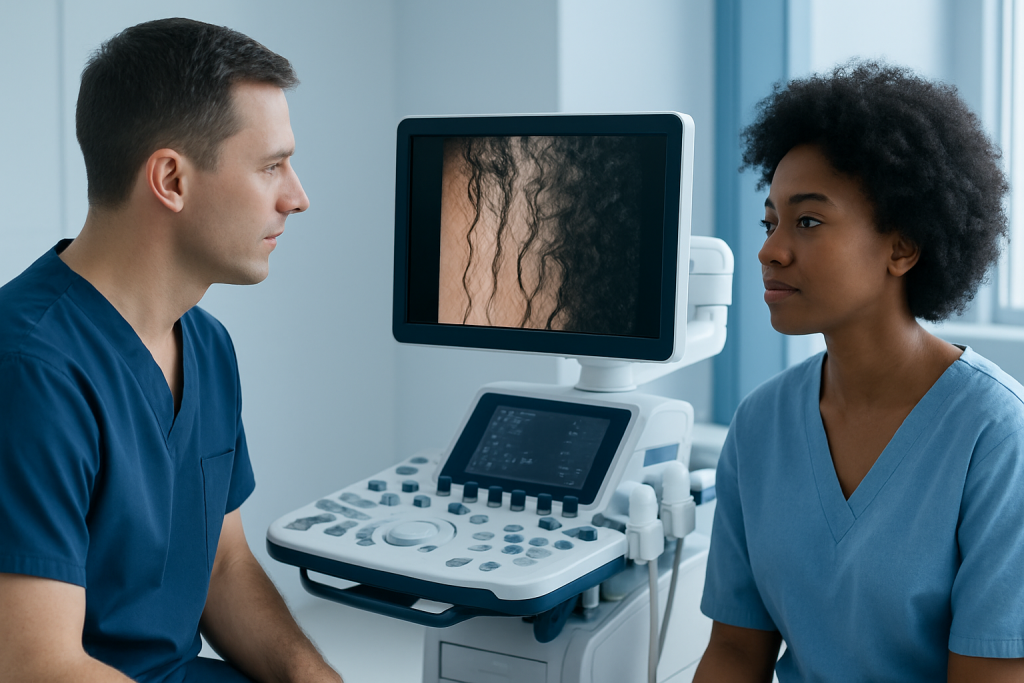
Hair texture develops from the shape of the hair follicle, the way the hair shaft forms, and the proteins that build the hair fiber. In general, straighter hair tends to come from more symmetrical follicle structure, while curlier hair is more often linked to a curved or asymmetrical follicle and uneven distribution of structural proteins in the shaft.
Rather than one “curly hair gene,” researchers have identified several genes that influence texture, thickness, growth pattern, and hair shaft shape. These genes interact with each other, so inheritance is called polygenic. This means a child inherits many small influences from both sides of the family, not one simple on-or-off trait.
Because of this, a family may include a range of textures such as straight, wavy, curly, or tightly coiled hair. Ethnic background and ancestral genetic diversity also play an important role. Even siblings can have clearly different hair textures because they inherit different combinations of the same family traits.
- Hair texture is influenced by multiple genes.
- Dominant/recessive rules do not fully explain most curl patterns.
- Family traits can appear differently across generations.
- Texture can vary even among brothers and sisters.
Why people still hear that curly hair is 'dominant'

The idea that curly hair is dominant comes from simplified school genetics models. These models are useful for teaching the basic concept of dominant and recessive inheritance, but they do not fully match how many visible human traits actually work. Hair texture is one of the best examples of a trait that is more complex than a single-gene chart.
In some families, curly hair may appear frequently enough that it seems dominant. A person may inherit a combination of genes that makes curls more likely, so the pattern can look straightforward from the outside. However, this does not mean there is one universal rule that curly hair always overrides straight hair.
Doctors and genetic specialists usually avoid giving a simple yes-or-no answer because it can be misleading. A more accurate explanation is that curliness exists on a spectrum and reflects many inherited influences. This is also why texture may be hard to predict before a child grows older and the hair pattern becomes clearer.
What else can affect hair texture over time
Genes are important, but they are not the only reason hair looks the way it does. Hair texture can change naturally through life. Many parents notice that a baby’s hair texture does not match the texture seen later in childhood. Puberty, pregnancy, menopause, and aging can also change how straight or curly hair feels and behaves.
Hormones can influence the hair follicle, and some medicines may affect the quality or structure of the growing hair shaft. Heat styling, chemical processing, bleaching, and repeated mechanical stress can also alter how hair appears. Sometimes the hair is not truly changing genetically, but damage makes it frizzier, drier, weaker, or less defined.
In some cases, texture changes may happen with medical conditions that affect the scalp or body more broadly. Scalp inflammation, autoimmune disease, nutritional deficiencies, thyroid disorders, and some inherited hair shaft disorders can all influence hair quality. A dermatologist may evaluate related concerns such as hair loss or persistent scalp symptoms if they occur alongside texture changes.
When a hair texture change may need medical review
Curly, wavy, straight, or coily hair by itself is usually not a sign of disease. Still, a doctor should assess hair changes when they are sudden, unexplained, or associated with other symptoms. The concern is usually not the curl pattern itself, but what may be affecting the hair follicle or scalp.
Medical review is especially important if texture changes happen with noticeable shedding, patchy thinning, scalp pain, scaling, redness, severe itching, or broken hairs. It is also worth seeking care if hair becomes much drier, more brittle, or difficult to manage after a new medicine, significant illness, childbirth, or a major hormonal change.
Children and adults should also be examined if hair changes are accompanied by skin changes, nail abnormalities, weight change, fatigue, menstrual irregularity, or signs of nutritional deficiency. In these situations, the doctor may look beyond hair itself to identify a broader explanation. In some people, a scalp condition such as seborrheic dermatitis may contribute to symptoms affecting both scalp comfort and hair appearance.
How doctors evaluate unusual hair changes
If someone seeks care for a change in hair texture, the first step is a medical history. A doctor will usually ask when the change started, whether it was gradual or sudden, what hair products or chemical treatments are used, and whether there are symptoms such as hair shedding, itching, pain, or scalp flaking. Family history can also help clarify whether the pattern is inherited or newly developed.
The next step is a physical examination of the hair and scalp. The doctor may look at the density of the hair, the pattern of breakage or thinning, signs of inflammation, and the condition of the skin. In some cases, a dermatoscope is used to inspect the scalp more closely. If a hormonal, autoimmune, infectious, or nutritional issue is suspected, blood tests may be advised.
Further assessment depends on the findings. Some people benefit from evaluation by a dermatologist, especially if they have persistent scalp symptoms or hair loss. Where treatment is needed, care may include management of scalp disease, changes in hair care routine, or in selected cases support from specialists in dermatology or hair restoration options.
Care, prevention, and everyday self-care
For healthy curly or wavy hair, gentle care matters more than trying to change the natural pattern. Many people do best with moisturizing routines, reduced heat exposure, and minimal harsh chemical processing. Wide-toothed combs, careful detangling, and limiting tight hairstyles can help reduce breakage.
Scalp health is just as important as hair shaft care. Persistent dandruff, itching, flaking, or inflammation should not be ignored, because a healthy scalp supports better hair growth and comfort. If over-the-counter care is not helping, a dermatologist can suggest a more tailored plan and evaluate whether a treatable scalp condition is present.
General health also supports hair quality. A balanced diet, good sleep, stress management, and treatment of underlying medical conditions can all help hair grow in the healthiest way possible. Near the end of the care journey, some international patients choose centers such as Acibadem International, where multidisciplinary specialists in JCI-accredited hospitals assess scalp and hair concerns and, when appropriate, offer services including skin and dermatology care.
Frequently asked questions
Is curly hair genetically dominant over straight hair?
Not in a simple universal way. Hair texture is influenced by several genes, so curly hair cannot usually be described as purely dominant or purely recessive. This is why inheritance patterns can look mixed within the same family.
Can two straight-haired parents have a child with curly hair?
Yes, this can happen. Each parent may carry different genetic influences related to hair texture, and a child can inherit a combination that results in curlier hair. Because multiple genes are involved, the outcome is not always easy to predict.
Why did my hair become curlier or straighter as I got older?
Hair texture can change with age, hormones, medicines, and hair care practices. Puberty, pregnancy, menopause, and aging may all affect the follicle and the growing hair shaft. Changes are often harmless, but a sudden or dramatic shift may deserve medical review.
Is curly hair a sign of a medical problem?
Usually no. Curly hair is most often a normal inherited trait and not a disease. Medical attention is more relevant when the change in texture comes with hair loss, scalp irritation, breakage, or other body symptoms.
How do doctors check whether a hair change is normal or medical?
A doctor typically starts with a history and scalp examination. They may ask about timing, family traits, medicines, hormones, and hair treatments. If needed, they can order blood tests or refer to a dermatologist for closer assessment.
Can hair products make hair seem curlier or less curly?
Yes. Moisture, styling methods, heat damage, chemical treatments, and product buildup can all change how hair behaves and how defined the curl pattern looks. These changes affect the appearance and condition of the hair, even when the underlying genetics stay the same.
References
- American Academy of Dermatology
- MedlinePlus
- National Human Genome Research Institute
- Genetics Home Reference
- Mayo Clinic
This article is for general information only and is not a substitute for professional medical advice. Please consult a qualified doctor about your individual situation.
Hair transplant in Turkey — costs, graft counts & a free assessment
JCI-accredited · board-certified surgeons · reply within 24h
Add us as a Preferred Source to see more of our trusted health content across Google Search, AI Overviews and Discover.

More from the Health Library



Related Specialists

Dr. Büşra Nur Enez Baş
Acibadem Life Clinical Service
Dr. Aliye Sevil Sarıkaya
Pediatric Endocrinology
Dr. Abdurrahman Şaban
Pulmonology
Tuğçe Doğan
Physical Medicine & Rehabilitation