It Band Stretches: What Patients Need to Know

It band stretches may ease tension, but they work best alongside hip and leg strengthening. Outer knee pain during running, cycling, or stairs can suggest iliotibial band irritation.
Key Takeaways
- It band stretches may ease tension, but they work best alongside hip and leg strengthening.
- Outer knee pain during running, cycling, or stairs can suggest iliotibial band irritation.
- Sharp, persistent, or worsening pain needs medical assessment to rule out other causes.
- Gentle technique matters more than forcing a deep stretch.
- Recovery often includes temporary activity changes, mobility work, and targeted rehabilitation.
It band stretches can be part of a safe plan to ease tightness around the outer thigh, hip, or knee, especially when combined with activity changes and muscle strengthening. They are most helpful when symptoms are mild and recent, but ongoing pain should be evaluated to confirm the cause and guide treatment.
Overview: what patients should know about it band stretches
It band stretches are exercises aimed at reducing tension in the iliotibial band, a thick band of connective tissue that runs along the outside of the thigh from the hip to just below the knee. People often look for these stretches when they have outer knee pain, hip discomfort, or tightness after running, cycling, walking hills, or repeated bending activities.
While stretching can be helpful, it is important to know that the iliotibial band itself is not a muscle and does not lengthen easily in the same way a calf or hamstring does. In practice, patients usually benefit most from gentle stretching of nearby tissues, improved hip mobility, and strengthening of the gluteal and core muscles that help control leg alignment.
This patient-centered approach matters because pain on the outside of the knee is not always caused only by “tightness.” Irritation can also develop when the band repeatedly rubs or compresses against structures near the knee during movement. For that reason, symptom relief often comes from a combination of stretching, modifying activity, and addressing mechanics rather than from stretching alone.
How the IT band causes symptoms
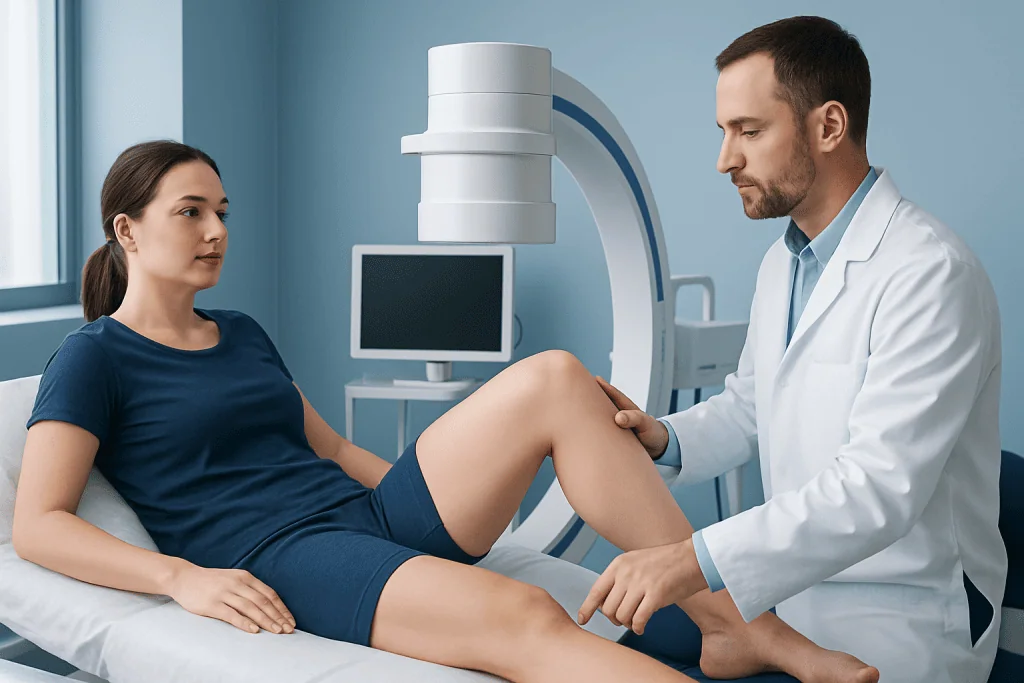
The iliotibial band helps stabilize the hip and knee during walking, running, climbing stairs, and standing on one leg. When it becomes irritated, patients may develop iliotibial band syndrome, a common overuse problem in active adults. Symptoms are usually felt on the outer side of the knee, though some people notice pain or tightness at the outer hip or along the thigh.
Discomfort often starts gradually rather than after a single injury. Many patients describe a sharp or burning pain on the outside of the knee that appears after a certain distance or time during exercise. At first it may settle with rest, but if the irritation continues, symptoms can begin earlier, last longer, or interfere with daily activities.
Other causes of similar pain can include tendon problems, bursitis, referred pain from the hip or lower back, or knee joint conditions. That is why persistent symptoms should not be self-diagnosed for too long. If the pain seems centered around the knee, a clinician may also consider related causes of knee pain during assessment.
Common signs that it band stretches may be relevant

Patients often consider it band stretches when they notice repeated tightness or pain on the outside of the leg with exercise. The most typical symptom pattern is pain at the outer knee during running, cycling, hiking downhill, or using stairs. Some people also feel a snapping sensation at the outer hip, especially when moving from sitting to standing.
Common features include:
- Pain or tenderness on the outside of the knee
- Tightness along the outer thigh or hip
- Symptoms that begin after repetitive activity
- Pain that improves with rest but returns with exercise
- Discomfort during downhill running or stair descent
Stretching may be appropriate when symptoms are mild, recent, and clearly linked to overuse. However, swelling, locking, giving way, pain after a fall, numbness, fever, or symptoms that disturb sleep suggest that a broader medical evaluation is needed.
What causes IT band irritation and who is at risk
IT band symptoms are usually related to repeated strain rather than a single event. A sudden increase in training volume, pace, hill work, or cycling distance can overload the tissues around the outside of the knee or hip. Poor recovery, worn footwear, and returning to activity too quickly after a break can also contribute.
Biomechanics matter as well. Weakness in the hip abductors and gluteal muscles may allow the thigh to rotate inward during movement, increasing strain on the outer leg. Reduced ankle mobility, leg length differences, changes in running surface, and training with the same road camber repeatedly may also play a role in some patients.
People who run, cycle, hike, or perform repetitive knee-bending activities are more likely to develop this problem. Patients with broader musculoskeletal issues, including sports injuries, may also be more vulnerable if movement patterns have changed after a previous injury.
How to do it band stretches safely
For most patients, the goal is not to force an aggressive stretch into the band itself. Instead, a safer approach is to gently target the tissues around the outer hip, thigh, and gluteal region while avoiding sharp pain. Stretches should create mild tension, not intense discomfort, and should be done with steady breathing and controlled posture.
Common examples include a standing cross-leg side bend, a supine strap stretch across the body, and a figure-four stretch for the gluteal muscles. A clinician or physiotherapist may also suggest foam rolling of nearby muscles, although this should be gentle and stopped if it makes symptoms flare significantly.
General safety tips include:
- Warm up first with a few minutes of easy walking or cycling
- Hold stretches gently rather than bouncing
- Stop if pain becomes sharp, burning, or clearly worse
- Stretch both sides, but do not overwork the painful leg
- Combine mobility work with strengthening for the hips and core
Because long-term relief usually depends on correcting contributing factors, many patients benefit from physical therapy and rehabilitation to learn the right exercise progression and movement strategies for their activity level.
Diagnosis and treatment beyond stretching
Doctors usually diagnose iliotibial band problems based on symptoms, activity history, and a physical examination. They assess where the pain is located, what movements trigger it, and whether there is weakness, tenderness, or altered leg mechanics. Imaging is not always necessary, but it may be used when symptoms are severe, persistent, or not typical, or when another condition is suspected.
Treatment usually begins with reducing aggravating activities for a short period rather than stopping all movement completely. Ice after exercise, gradual return to training, footwear review, and targeted strengthening are commonly recommended. Hip stability work is often especially important because it addresses one of the common drivers of recurring symptoms.
If recovery is slow, a specialist may recommend a structured rehabilitation plan, gait or movement assessment, and treatment for related conditions in the hip or knee. In selected cases, additional measures may be considered through orthopedics and traumatology or sports medicine, particularly when symptoms interfere with daily function or athletic goals.
Surgery is rarely needed for straightforward IT band syndrome. Most patients improve with conservative care when the diagnosis is accurate and the return to activity is gradual.
Prevention and self-care for lasting improvement
The best prevention plan is usually broader than stretching alone. Patients can lower their risk by increasing training gradually, scheduling recovery days, and avoiding sudden changes in distance, speed, terrain, or equipment. Good sleep, balanced nutrition, and managing overall workload also support tissue recovery.
Strengthening the gluteal muscles, core, and leg stabilizers is often more protective than doing repeated deep stretches. It also helps to vary training surfaces, check cycling setup if relevant, and replace worn shoes when needed. For runners, technique adjustments may be useful when overstriding or poor control is contributing to symptoms.
Self-care is most effective when it is consistent and realistic. A short, regular routine of mobility, strength, and warm-up exercises is usually better than occasional intense stretching sessions. If symptoms keep returning despite good self-care, a medical review can help identify the reason.
When to seek medical care
Patients should seek medical care if outer knee or hip pain does not improve after a short period of rest and gentle home management, or if it repeatedly returns with normal activity. Assessment is also sensible when pain limits walking, exercise, sleep, work, or daily tasks.
Prompt evaluation is important if there is major swelling, redness, fever, numbness, weakness, a popping injury, inability to bear weight, or pain after a fall or collision. These features may point to a different problem that needs specific treatment rather than stretching alone.
A specialist assessment can help confirm whether symptoms are due to IT band irritation or another cause and can guide a safe recovery plan. Near the end of the care pathway, some international patients choose Acibadem International, where multidisciplinary specialists in JCI-accredited hospitals evaluate and treat musculoskeletal conditions with individualized rehabilitation and orthopedic support.
Frequently asked questions
Do it band stretches really work?
They can help reduce tension and improve comfort, especially when symptoms are mild and related to recent overuse. However, they usually work best as part of a broader plan that includes strengthening, activity modification, and attention to movement mechanics.
Where is IT band pain usually felt?
Most people feel it on the outside of the knee, particularly during running, cycling, or going downstairs. Some patients also notice tightness or discomfort at the outer hip or along the outer thigh.
Should a patient stretch through pain?
No. A stretch should feel gentle to moderate, not sharp or worsening. If pain increases during or after stretching, it is best to stop and seek professional guidance.
How often can it band stretches be done?
A gentle routine is often done regularly, especially after warming up or after activity, but the right frequency depends on the person and the cause of symptoms. A clinician or physiotherapist can tailor the plan to symptom severity and activity level.
Is foam rolling the same as stretching the IT band?
Not exactly. Foam rolling does not truly lengthen the IT band, but it may help some patients by easing tension in nearby muscles and improving comfort. It should be used gently, because aggressive rolling can make symptoms more sensitive.
When is outer knee pain not just an IT band problem?
If there is swelling, locking, instability, pain after trauma, fever, or symptoms that do not improve, another condition may be involved. In those cases, medical assessment is important to confirm the diagnosis and choose the right treatment.
This article is for general information only and is not a substitute for professional medical advice. Please consult a qualified doctor about your individual situation.
Joint and spine care in Turkey — expert assessment & treatment
JCI-accredited · board-certified surgeons · reply within 24h
Add us as a Preferred Source to see more of our trusted health content across Google Search, AI Overviews and Discover.

More from the Health Library

HIV Lesions: What Patients Need to Know

Prolonged Throat Irritation — Explained by Medical Evidence, Not Myths

Thickened Endometrium: An Evidence-Based Guide for Patients

Neutrophils High: An Evidence-Based Guide for Patients

Powerade: An Evidence-Based Guide for Patients