HIV Lesions: What Patients Need to Know

HIV lesions can affect the skin, mouth, genitals, and other body areas, and their appearance can vary widely. Many lesions in people with HIV are caused by opportunistic infections, inflammation, or medication side effects rather than HIV alone.
Key Takeaways
- HIV lesions can affect the skin, mouth, genitals, and other body areas, and their appearance can vary widely.
- Many lesions in people with HIV are caused by opportunistic infections, inflammation, or medication side effects rather than HIV alone.
- Diagnosis usually depends on a physical exam, HIV-related blood tests, and sometimes swabs, cultures, or a biopsy.
- Treatment focuses on the underlying cause and may include antiretroviral therapy, antiviral or antifungal medicines, or local skin care.
- New, painful, fast-spreading, bleeding, or persistent lesions should be assessed by a qualified doctor.
HIV lesions are changes on the skin, lips, mouth, genitals, or around the anus that may appear as spots, sores, ulcers, plaques, or rashes. They are not one single disease; instead, they can result from HIV itself, a weakened immune system, medication reactions, or other infections and need proper medical assessment.
Overview: what HIV lesions mean
HIV lesions are skin or mucosal changes that develop in some people living with HIV. They may appear as flat or raised spots, blisters, sores, ulcers, white patches, warts, or areas of discoloration. These changes can affect the face, trunk, arms, legs, scalp, mouth, lips, genitals, or the area around the anus.
Importantly, the term HIV lesions does not describe one specific condition. It is a broad term for visible changes that may be linked to HIV infection, reduced immune defenses, inflammatory skin disorders, sexually transmitted infections, fungal infections, viral infections, or reactions to medication. Because the possible causes are different, appearance alone cannot reliably show what is happening.
Lesions may occur at any stage of HIV, but they are more likely when the immune system is under strain or when HIV is not yet diagnosed or not well controlled. Some lesions are mild and temporary, while others may signal a more serious infection or a cancer that needs prompt evaluation. Early assessment helps identify the cause and can often improve comfort and healing.
How HIV lesions can look and feel
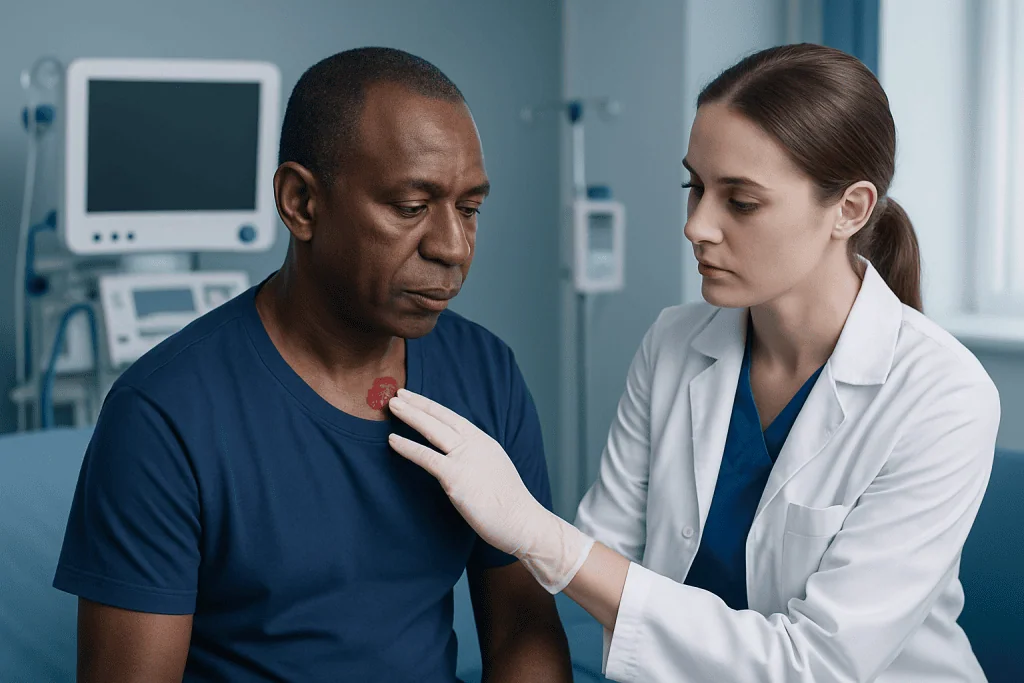
The appearance of HIV lesions varies a great deal. Some people notice a generalized red or pink rash during early HIV infection. Others develop mouth ulcers, white patches on the tongue, painful blisters, itchy bumps, purple or brown patches, or open sores that heal slowly. Lesions may be small and isolated or widespread.
Symptoms can also differ. Lesions may itch, sting, burn, bleed, crust, or become painful, especially in the mouth or genital area. In other cases, they may cause little discomfort but remain persistent or gradually enlarge. Mouth lesions may make eating, swallowing, or speaking uncomfortable, while genital or anal lesions may affect urination, bowel movements, or sexual activity.
Examples of lesions and changes seen in people with HIV can include:
- Red or purple patches or nodules
- White patches in the mouth that may be difficult to wipe away
- Painful ulcers on the lips, tongue, gums, or genitals
- Blistering eruptions caused by viral infections
- Warts or cauliflower-like growths
- Dry, scaly, itchy rashes or inflamed plaques
Because these findings overlap with many other conditions, a lesion should be evaluated in context, including overall health, current HIV treatment, recent infections, and other symptoms such as fever, weight loss, or swollen lymph nodes.
Common causes and related conditions
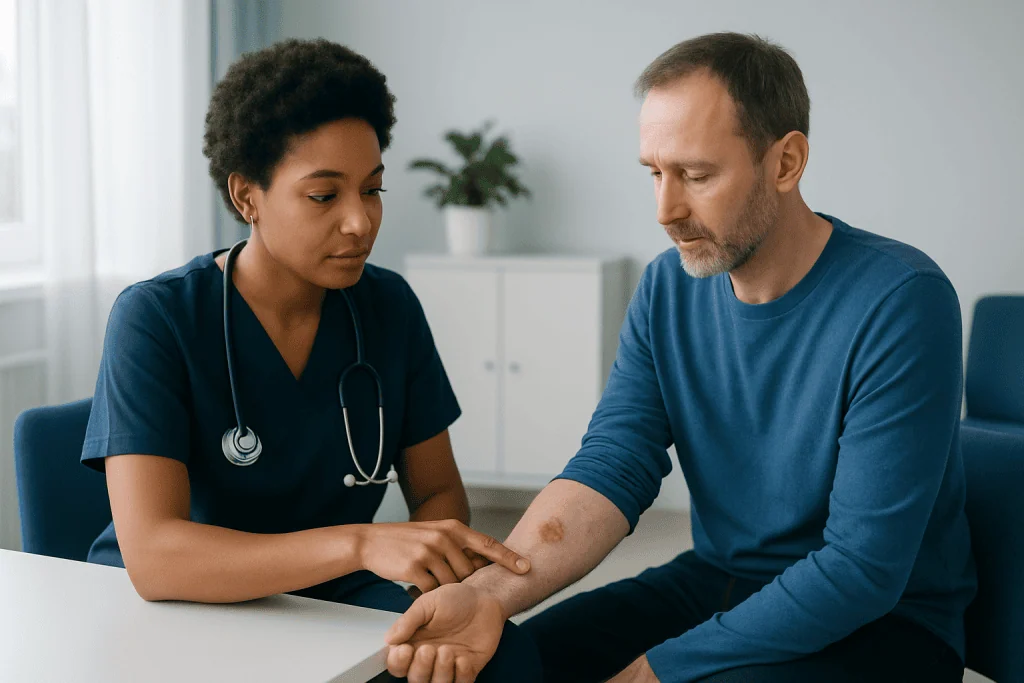
HIV can be associated with lesions in several ways. In early infection, some people develop a short-lived rash as part of the body’s initial response to the virus. Later, if immune function declines, the risk of opportunistic infections and certain cancers rises. This is why lesions in a person with HIV may reflect an infection such as herpes, shingles, fungal overgrowth, human papillomavirus, or bacterial skin disease rather than the virus itself.
Inflammatory skin disorders are also more common or more severe in people with HIV. Conditions such as seborrheic dermatitis, eczema-like rashes, psoriasis, or folliculitis can become more noticeable. In addition, some medicines used to treat HIV or other infections can trigger drug-related rashes, pigment changes, or severe skin reactions that need urgent care.
Certain lesions deserve particular attention because they may signal advanced immunosuppression or another important diagnosis. For example, persistent oral white patches may suggest thrush, while painful recurrent sores can be due to herpes simplex. Purple, red, or brown lesions may raise concern for Kaposi sarcoma, a cancer associated with immune suppression. Genital or anal growths may be linked to human papillomavirus, while widespread blistering or burning eruptions can occur with shingles or other viral conditions.
Not every rash or sore in a person with HIV is related to HIV. Allergies, irritation, insect bites, autoimmune disease, or unrelated skin disorders can cause similar changes. That is why a careful medical evaluation is more useful than self-diagnosis based on photos or internet descriptions.
Diagnosis: finding the cause behind the lesion
Diagnosis starts with a medical history and physical examination. A doctor will ask when the lesions began, whether they are painful or itchy, whether they are changing, and whether there are other symptoms such as fever, cough, diarrhea, weight loss, or night sweats. They will also review HIV status, recent CD4 count and viral load if known, current medicines, recent sexual history, travel, and any prior infections.
Visual examination may suggest likely causes, but additional tests are often needed. Depending on the lesion, a doctor may order blood tests, HIV testing if status is unknown, swabs for viral testing, fungal or bacterial cultures, or screening for sexually transmitted infections. For mouth lesions, a clinician may examine the oral cavity closely to identify signs of candidiasis, ulcers, leukoplakia, or trauma.
If the lesion is unusual, persistent, or suspicious for cancer, a biopsy may be recommended. This involves taking a small tissue sample for laboratory analysis. A biopsy can help distinguish between infection, inflammation, medication reaction, and conditions such as skin cancer or Kaposi sarcoma. In some situations, imaging or referral to dermatology, infectious diseases, oral medicine, gynecology, or oncology may also be appropriate.
Good diagnosis matters because treatment differs significantly. An antiviral medicine may help one patient, while another may need antifungal treatment, a change in medication, or cancer assessment. Treating the visible lesion without identifying the underlying cause may delay recovery.
Treatment options and medical care
Treatment for HIV lesions depends on what is causing them. A central part of care for many patients is effective antiretroviral therapy, which helps reduce viral activity, supports the immune system, and lowers the risk of recurrent infections and related skin or mouth problems. If HIV is newly diagnosed or not well controlled, a doctor may discuss starting or adjusting HIV/AIDS treatment as part of the overall plan.
When lesions are caused by infection, treatment may include antiviral, antifungal, antibacterial, or antiparasitic medicines. Mouth thrush may improve with antifungal treatment and careful oral hygiene. Herpes-related sores may need antiviral therapy. Bacterial skin infections sometimes require topical or oral antibiotics, and painful inflammation may be soothed with supportive local care recommended by a clinician.
If lesions are linked to inflammation or chronic skin disease, treatment may involve medicated creams, anti-itch measures, gentle cleansers, and avoidance of triggers. If a medicine reaction is suspected, the treating team may review all current drugs and decide whether a change is necessary. Severe skin reactions with blistering, fever, eye involvement, or widespread peeling require urgent medical care.
Some lesions need specialized treatment. Suspicious growths, persistent ulcers, or lesions associated with cancers may require procedures, surgery, or oncologic evaluation. Depending on the findings, a patient may be referred for medical oncology assessment or dermatology care. Near the end of the care pathway, patients may also benefit from a multidisciplinary approach; Acibadem International’s specialists in JCI-accredited hospitals diagnose and treat HIV-related skin and mucosal conditions for international patients.
Self-care, prevention, and reducing recurrence
Self-care does not replace medical treatment, but it can support healing and reduce discomfort. People with lesions should avoid scratching, picking, or trying to remove patches or sores at home. Gentle skin care, fragrance-free products, clean clothing, and keeping the affected area dry when appropriate may help protect the skin barrier. For mouth discomfort, avoiding very spicy, acidic, or rough-textured foods can sometimes make eating easier.
The most important preventive step for many people living with HIV is staying engaged in regular care and taking antiretroviral medicines as prescribed. Good HIV control helps strengthen immune function and lowers the chance of some infections and related lesions. Routine follow-up also makes it easier to identify oral, genital, or skin changes early.
Other prevention measures depend on the likely cause. Safer sex practices can help reduce exposure to sexually transmitted infections. Good oral hygiene may lower the burden of some mouth problems. Prompt treatment of new rashes or infections, careful medication review, and vaccination where appropriate may also reduce complications. If a person has repeated or difficult-to-control lesions, the care team may look for another underlying issue such as immune suppression, nutritional problems, or coexisting disease.
When to seek medical care
A person should arrange medical evaluation if a lesion is new, unexplained, painful, or does not improve. Medical attention is also important if lesions keep returning, spread quickly, interfere with eating or drinking, or appear together with fever, swollen glands, shortness of breath, severe headache, or unexplained weight loss. People who do not know their HIV status and develop persistent mouth or skin lesions may need HIV testing as part of the assessment.
Urgent care is recommended if there are signs of a severe drug reaction or serious infection. Warning signs include blistering skin, skin peeling, eye irritation, facial swelling, trouble breathing, rapidly enlarging sores, heavy bleeding, or severe pain. These symptoms do not always mean a dangerous condition, but they should be assessed promptly.
People already diagnosed with HIV should not stop antiretroviral medicines on their own because of a rash or lesion unless a doctor specifically advises it. Instead, they should contact their treating clinician quickly so the cause can be identified safely. Early treatment often improves comfort, protects overall health, and helps prevent complications.
Frequently asked questions
Are HIV lesions always a sign of advanced HIV?
No. Some lesions can appear early in HIV infection, while others develop later if the immune system becomes weakened. A lesion can also be caused by a common skin condition, another infection, or a medicine reaction, so medical assessment is important.
What do HIV lesions look like?
They do not have one single appearance. HIV lesions may look like a rash, blister, ulcer, white mouth patch, wart, scaly plaque, or purple-brown spot. Because many different conditions can cause these changes, appearance alone usually cannot confirm the diagnosis.
Can HIV lesions go away with treatment?
Often, yes, especially when the underlying cause is identified and treated properly. Lesions related to infections, inflammation, or poorly controlled HIV may improve with targeted treatment and effective antiretroviral therapy. Some conditions may recur and need ongoing follow-up.
Are mouth lesions common in people with HIV?
Mouth lesions can occur in people with HIV and may include ulcers, thrush, white patches, or gum inflammation. They may cause pain or difficulty eating and should be evaluated, especially if persistent or recurrent. Oral lesions can sometimes provide clues about immune status or other infections.
Should a person with HIV see a doctor for every new rash or sore?
Any new or unexplained lesion should be discussed with a doctor, particularly if it is painful, spreading, persistent, or associated with fever or other symptoms. Not every rash is serious, but early evaluation helps rule out infections, medication reactions, and other conditions that may need treatment.
Can HIV medicine itself cause skin lesions or rashes?
Yes. Some medicines, including treatments used in people with HIV, can cause rashes or other skin changes. Most are mild, but some reactions are serious, so new skin symptoms should be reported promptly rather than managed by stopping medication without advice.
References
- World Health Organization
- Centers for Disease Control and Prevention
- National Institutes of Health
- UNAIDS
- American Academy of Dermatology
This article is for general information only and is not a substitute for professional medical advice. Please consult a qualified doctor about your individual situation.
Hair transplant in Turkey — costs, graft counts & a free assessment
JCI-accredited · board-certified surgeons · reply within 24h
Add us as a Preferred Source to see more of our trusted health content across Google Search, AI Overviews and Discover.